Your 2026 Guide to Selecting a Coriander Sorting Machine
Processors face significant crop losses, with some estimates reaching 20% due to defects like damping-off. A modern coriander sorting machine mitigates these losses effectively. To select the right equipment, companies must first define their operational needs.
Pro Tip: Define clear requirements for throughput volume, final purity standards, and the types of defects to remove, such as foreign materials, discolored seeds, and stems.
Step 1: Assess Your Coriander Sorting Needs
A successful investment begins with a clear understanding of your operational requirements. Processors must first analyze their specific production goals. This initial assessment guides the selection of a coriander sorting machine that fits the business perfectly.
Determine Your Required Throughput
Throughput measures the volume of coriander a machine can process per hour (tons/hour). A facility should calculate its current and projected peak processing volumes. Selecting a machine with inadequate capacity creates bottlenecks. Conversely, oversized equipment leads to unnecessary capital expenditure and higher operational costs. Aligning machine throughput with production demand is crucial for efficiency.
Define Your Quality and Purity Standards
Every processor must establish clear purity targets. These standards dictate the acceptable level of defects in the final product. Common issues to eliminate include:
- Adulteration with fillers like sawdust, which can comprise up to 30% of a batch.
- Stale seeds that clump together instead of rolling freely.
- A musty smell indicating age, which replaces the desired citrus aroma.
Achieving a 99.9% purity level requires more advanced sorting technology than a 98% target. Clear standards ensure the final product meets market expectations.
Consider the Type of Coriander Processed
The machine must handle the specific form of coriander you process, whether whole seeds or split (split coriander). Each type has unique defects. For example, different grades of split coriander have distinct characteristics.
| Quality Grade | Common Defects/Characteristics |
|---|---|
| Eagle Quality | Minimal impurities, uniform size, superior split. |
| Scooter Quality | Slightly less uniformity than Eagle quality. |
| Single Parrot | Mix of different-sized pieces, some broken seeds. |
| Double Parrot | High percentage of broken seeds, foreign particles. |
A versatile machine capable of handling both whole and split seeds offers greater operational flexibility.
Step 2: Understand Key Technologies in a Coriander Sorting Machine

After defining your operational needs, the next step involves understanding the technologies that power modern sorting equipment. Each system uses a different method to detect and remove imperfections. A thorough grasp of these technologies enables processors to match machine capabilities with their specific quality control requirements.
Color Sorters (Optical Sorters)
Color sorters, also known as optical sorters, are the foundational technology for coriander processing. These machines use high-resolution cameras to scan each seed as it passes through the inspection zone. They identify and eject items that deviate from a pre-set color profile.
- Primary Function: They excel at removing discolored seeds (e.g., brown, black, or green), foreign grains, and other visually distinct foreign materials.
- Technology: Advanced models use Tri-chromatic RGB (Red, Green, Blue) cameras and CCD sensors to capture a full-color spectrum, allowing for subtle defect detection.
- Industry Examples: Leading manufacturers offer specialized equipment for this purpose. For instance, Promech Industries' 'Mark' brand provides a 'Coriander Coriander Color Sorting Machine' with a Tri-chromatic camera. Similarly, TOPSORT designs machines with the latest technology to accurately identify and separate various seeds for optimal quality.
Note: While highly effective for color defects, standard optical sorters cannot identify contaminants that share the same color as good coriander seeds, such as certain types of sticks or stones.
Infrared (IR) and InGaAs Technology
Infrared technologies inspect materials beyond the visible light spectrum, analyzing their chemical and molecular structure. This allows them to identify contaminants that look identical to coriander seeds.
Infrared (IR) Sorting: IR sensors are particularly effective at detecting foreign materials based on their organic composition. For example, machine learning-assisted Fourier transform infrared (FT-IR) spectroscopy can detect sawdust adulteration in coriander powder. This is a critical capability, as sawdust's similar coloration makes it nearly impossible to spot visually, and its presence poses health risks.
InGaAs (Indium Gallium Arsenide) Technology: InGaAs sensors operate in the short-wave infrared (SWIR) range (970 to 1700 nm). This technology is exceptionally precise for differentiating materials based on their unique chemical makeup.
- How it Works: InGaAs can distinguish between coriander seeds and foreign materials like salt, starch, or certain plastics, even if they are the same color. Studies using devices with uncooled InGaAs detectors have demonstrated 100% correct predictions for identifying adulterants like salt and sawdust.
- Application: This makes InGaAs indispensable for achieving the highest purity levels, as it effectively removes non-visible and chemical contaminants.
X-ray Sorting Technology
X-ray technology provides the ultimate level of food safety by detecting contaminants based on density differences. An X-ray beam passes through the product stream, and a sensor measures the absorption rate. Denser materials, like stones or metal, absorb more X-rays and are easily identified.
A modern coriander sorting machine with X-ray capabilities can precisely detect and remove high-density foreign objects. This includes contaminants like glass, metals, stones, and ceramic fragments that pose a significant safety hazard. Advanced systems even use deep learning to improve the detection of both internal and external foreign bodies.
Safety and Compliance: X-ray inspection systems are extremely safe for food processing. Emissions are minimal—lower than background radiation from natural sources like the sun or a transatlantic flight. However, processors must adhere to strict regulatory standards.
- Regulatory Registration: Systems must be registered with local health or emergency management departments. Staff require proper safety training (e.g., 21CFR 1020.40 for Cabinet X-ray systems).
- Food Safety Standards: Compliance with global standards like HACCP, BRCGS, and SQF is mandatory. These programs require regular calibration and verification of X-ray equipment to ensure it functions as a validated Critical Control Point (CCP).
By combining these technologies, processors can create a multi-stage sorting process that effectively removes a wide range of defects, from simple discoloration to hazardous, high-density contaminants.
Step 3: Evaluate Essential Machine Features
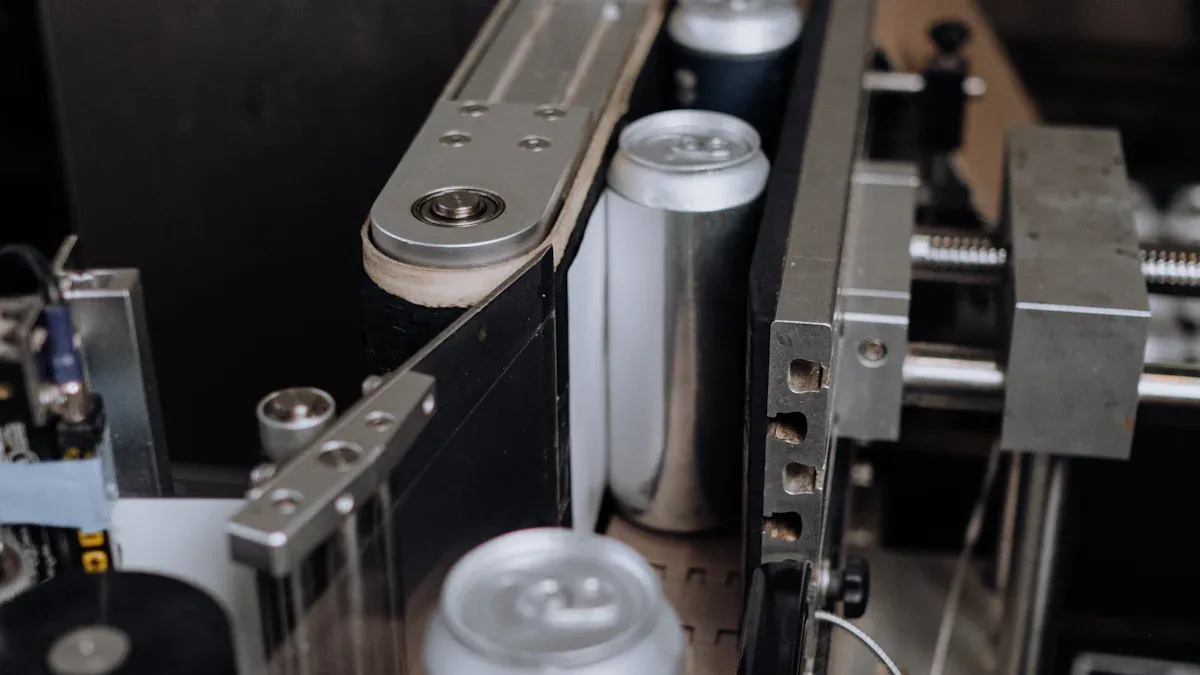
Technology provides the foundation, but a machine's physical and digital features determine its real-world performance and usability. Processors must scrutinize the mechanical components and software interface. These elements directly impact sorting accuracy, operational efficiency, and the total cost of ownership. A superior coriander sorting machine integrates these features seamlessly.
Ejection System Performance
The ejection system is the heart of the sorting process. After the sensors identify a defect, high-speed air valves, or ejectors, fire a precise puff of compressed air to remove the unwanted particle from the product stream. The performance of this system is critical.
- Precision and Speed: High-quality ejectors are incredibly fast and accurate. They target only the defective seed, minimizing the accidental removal of good product (known as the "good-in-bad" ratio). This precision maximizes yield and profitability.
- Durability: Ejectors must be built to last, with a lifespan rated for billions of cycles to ensure long-term reliability and reduce maintenance downtime.
Beyond performance, processors must consider the operational costs associated with the ejector system. The energy required to supply compressed air is a significant expense. A careful analysis of energy requirements is essential for determining the most economical solution. Modern machines often include air-saving functions that dramatically reduce consumption.
Cost Analysis: Ejector systems with air-saving technology can reduce annual energy costs by up to 75%, offering a rapid return on investment.
| Feature | Ejector without Air-Saving Function | Ejector with Air-Saving Function |
|---|---|---|
| Run Time per Unit | 2 seconds | 0.5 seconds |
| Annual Air Consumption | 48,480 m³ | 12,120 m³ |
| Annual Energy Cost | $1,066.56 | $266.64 |
| Annual Savings | N/A | $800 |
Chute Design and Material Handling
Effective sorting depends on how the coriander seeds are presented to the inspection system. The chute design and material handling components ensure a stable, uniform flow of product. If seeds are clumping, bouncing, or moving too quickly, even the best sensors cannot perform accurately.
Processors should look for chutes made from hard, anodized aluminum or other specialized materials. These surfaces reduce friction and static, ensuring seeds flow smoothly. The chutes often feature specially designed grooves that guide each seed into a single file line. This alignment stabilizes the product, presenting a consistent and predictable view to the cameras and sensors. A well-designed material handling system is essential for achieving top-tier sorting results.
Software and User Interface (UI)
The software is the brain of the sorting machine, while the user interface (UI) is the control panel. A powerful yet simple combination empowers operators to achieve optimal results with minimal training.
Pro Tip: A user-friendly, icon-based UI with touchscreen controls reduces the learning curve for operators. This simplicity minimizes setup errors and allows for quick adjustments to sorting parameters.
Modern software leverages artificial intelligence (AI) and machine learning to deliver unmatched precision. These intelligent systems go beyond simple color recognition. They learn and adapt to variations in the product stream. Key AI-powered features include:
- Machine learning algorithms that identify complex patterns to distinguish between good seeds and subtle defects or foreign materials.
- Deep convolutional neural networks that automatically extract defect features, eliminating the need for manual programming and enabling more powerful classification.
- Continuous improvement algorithms that refine sorting accuracy over time, adapting to new or highly variable materials.
Furthermore, cloud connectivity has transformed machine management. Cloud-enabled systems offer powerful tools for remote oversight and optimization. This connectivity provides:
- Remote Monitoring: Securely access machine performance data, error codes, and production statistics from anywhere in the world.
- Predictive Maintenance: Analyze operational data to identify potential issues before they cause downtime, allowing for proactive service scheduling.
- Fleet Management: Organize and monitor an entire fleet of sorters from a single, centralized dashboard, streamlining operations and data collection.
Step 4: Make the Final Decision
With a clear understanding of technology and features, processors can now move to the final evaluation phase. This step involves analyzing financial returns, vetting potential suppliers, and asking targeted questions to ensure the chosen equipment is a sound long-term investment.
Calculate Return on Investment (ROI)
A thorough ROI calculation justifies the capital expenditure. Processors should quantify the financial benefits of a new sorting machine. Key factors include increased yield from reduced good-product loss, higher revenue from premium-quality coriander, and lower labor costs. Companies must also account for operational expenses like energy consumption, maintenance, and consumables. Comparing the projected financial gains against the total cost of ownership reveals the machine's true value and payback period.
Evaluate Manufacturer and Supplier Support
Reliable post-sales support is as crucial as the machine itself. Processors should investigate a manufacturer's reputation for service and parts availability. A strong Service Level Agreement (SLA) provides a clear framework for support.
A typical SLA often includes:
- Scheduled preventive maintenance services.
- Predetermined rates for service calls.
- A defined level of emergency support.
- Training sessions for operators and staff.
Warranty is another key indicator of a manufacturer's confidence in their product. Warranty periods can vary.
| Manufacturer | Product Type | Warranty Period |
|---|---|---|
| CONNECT | Automatic Weight Sorting Machine | 1 year |
| Topsort | Grain Color Sorter | 2 years |
Key Questions to Ask a Vendor
Before signing a contract, processors should have a final list of questions for any potential vendor. These questions help clarify performance expectations and long-term viability.
- Performance: What is the machine's carryover rate? A good ratio, such as
≥10:1, means for every ten defective items removed, only one good seed is lost. - Training: What training programs do you offer? Vendors should provide comprehensive options, from on-the-job training for new operators (Level I) to advanced certification for experienced staff (Level III).
- Future-Proofing: Can the software and hardware be upgraded? Look for systems with a flexible, modular architecture and scalable controls that can adapt to future operational needs.
Processors select the best equipment by following a clear process. They first define needs and understand sorting technologies. Next, they evaluate machine features and verify supplier support. The right coriander sorting machine aligns with a company's capacity, quality goals, and budget, ensuring a profitable investment for 2026.
FAQ
What is the most important factor when choosing a machine?
Processors must first define their specific sorting needs. This includes required throughput, purity targets, and the types of defects to remove. A clear assessment guides the entire selection process.
How do color sorters and X-ray sorters differ?
Color sorters remove visually distinct defects like discolored seeds. X-ray sorters detect contaminants based on density, finding hidden hazards like small stones, glass, or metal fragments inside the product stream.
How much maintenance does a coriander sorter require?
Maintenance frequency depends on usage and operating conditions. Most manufacturers offer service level agreements (SLAs) that include scheduled preventive maintenance to ensure optimal performance and longevity of the equipment.
See Also
Essential Capsule Checkweighers For Smart Buyers To Consider In 2025
Exploring Trending Folder Gluer Innovations For 2025 Carton Production Lines
Tablet Sampling Machines Unveiled: A Comprehensive Guide For Lab Selection
The Top Three Industrial Checkweighers Crucial For Every Food Plant
Discovering The Premier Locations To Purchase X-Ray Inspection Machines In China