How to Secure Permits and Buy a Commercial Mobile Food Truck in Texas
Texas supports a thriving mobile food industry.
- Currently, 549 commercial mobile food trucks operate across the state.
Entrepreneurs often face several challenges when entering this market:
| Challenge | Description |
|---|---|
| City-specific regulations | Rules differ among cities such as Austin, Houston, and Dallas. |
| Obtaining necessary permits | Multiple permits are required and vary by location. |
| Delays in approval process | Health inspections and certifications can take months. |
| Initial inspection requirement | Permits are issued only after an initial inspection, which adds to the timeline. |
A successful commercial mobile food truck launch depends on careful preparation and understanding of these key obstacles.
Identify and Obtain Required Permits and Licenses
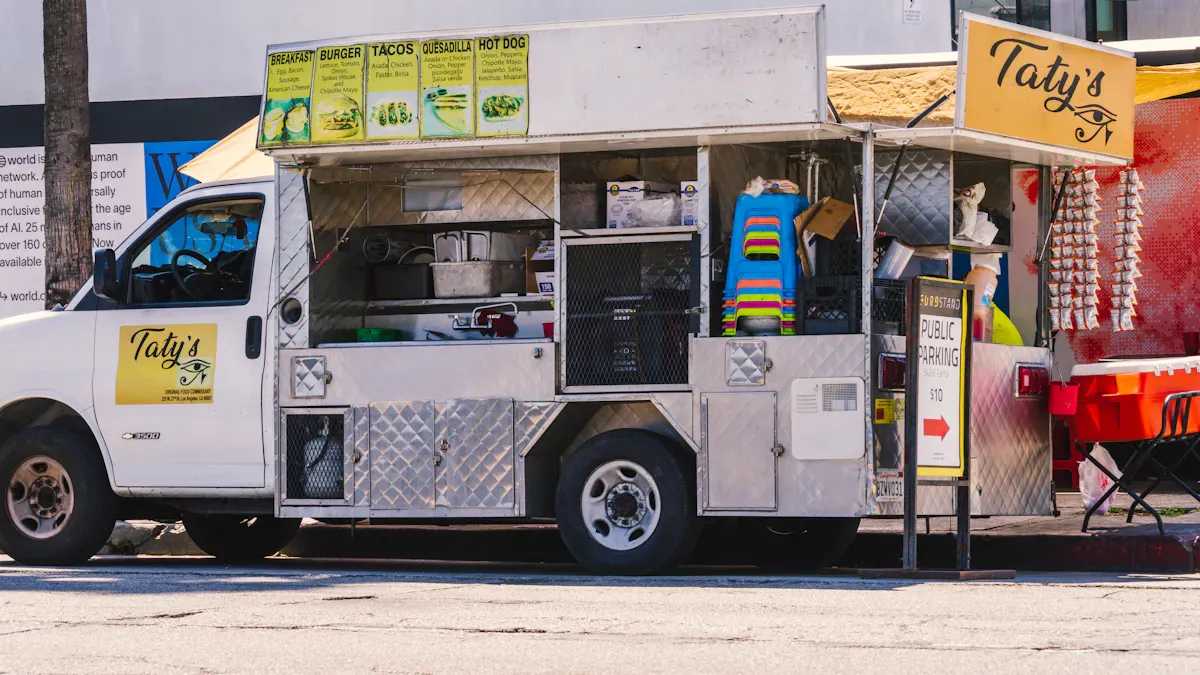
Mobile Food Unit Permit
Every operator must secure a Mobile Food Unit Permit before launching a commercial mobile food truck in Texas. This permit ensures compliance with state and local health and safety standards. The application process involves several steps and requires specific documentation.
Tip: Review the Guidelines for Mobile Food Units before starting the application to avoid delays.
The following table outlines the main steps for obtaining this permit:
| Step | Description |
|---|---|
| 1 | Schedule and complete an initial inspection after payment. |
| 2 | Review all guidelines for mobile food units. |
| 3 | Secure a permitted and inspected Central Preparation Facility (CPF). |
| 4 | Apply or renew through the online licensing system or submit the Mobile Unit Food Establishment Permit Application. |
| 5 | Submit a Variance Request if special circumstances apply. |
| 6 | Pay the $258 fee for new applications, renewals, or ownership changes. |
Applicants must prepare the following documents:
- Current driver’s license
- Proof of six months liability insurance
- Written agreement from the property owner (including restroom access)
- Notarized commissary approval form (daily visits required)
- Registered Food Service Manager Certificate
- Low propane gas permit (if applicable)
- Vehicle VIN number
- Photo of the vehicle
The annual permit fee is $185. Renewal requires the same documentation as the initial application. Operators must visit the Regulatory Services online licensing system to apply or renew.
Sales Tax Permit
A Sales Tax Permit is mandatory for any business selling taxable goods or services, including food trucks. The Texas Comptroller’s office manages this process. Registration occurs online and requires detailed business information.
The application process includes these steps:
| Step | Description |
|---|---|
| 1 | Register through the Texas Comptroller’s office online portal. |
| 2 | Provide business structure, expected revenue, and operating address. |
| 3 | Submit the application to receive the Sales Tax Permit. |
Applicants should prepare the following information:
- Business structure (sole proprietor, LLC, etc.)
- Expected revenue
- Truck’s operating address
- Business plan
- Federal EIN (if applicable)
This permit allows the commercial mobile food truck to collect and remit sales tax, ensuring compliance with state tax laws.
Health Department Approval
Health department approval is essential for operating a commercial mobile food truck. Inspectors evaluate the truck’s compliance with food safety regulations. The process includes an initial inspection and ongoing checks to maintain standards.
Key requirements include:
- Operation from an approved Central Preparation Facility (CPF)
- Installation of potable water and waste retention tanks, labeled correctly
- Durable, corrosion-resistant, and non-absorbent equipment
- At least one handwash sink with soap and paper towels
- Proper separation of raw and cooked foods to prevent cross-contamination
- Refrigeration units that maintain safe temperatures (below 41°F for cold storage, above 135°F for hot foods)
- Waste disposal methods that prevent pest attraction and environmental pollution
- Cleanliness and organization to avoid violations
Inspectors also check for enclosed spaces protected from pests, smooth and cleanable walls and ceilings, and hot and cold running water at all sinks. The latest CPF inspection report must be available on the truck.
Note: Passing the health inspection is a prerequisite for receiving the Mobile Food Unit Permit.
A commercial mobile food truck must meet all these requirements to operate legally and safely in Texas.
Local City and County Permits
Texas cities and counties enforce their own rules for commercial mobile food trucks. Operators must research and comply with local requirements before starting business. Each jurisdiction sets unique fees, application steps, and inspection schedules.
Many cities require operators to pay application and pre-licensing fees. These fees range from $300 to $1,350, depending on the city and the type of food sold. Inspection fees can reach up to $500. Some cities charge additional plan review fees for new trucks.
The following table highlights permit costs in major Texas cities:
| City | Application Fee | Plan Review Fee | Annual Permit Fee |
|---|---|---|---|
| Dallas | $481 | $562 | $185 |
| Amarillo | $800 - $900 | N/A | N/A |
Dallas requires both an application fee and a plan review fee for new trucks. Amarillo has historically charged higher fees for permits. Operators should note that a new statewide permit system will take effect on July 1, which may change local requirements.
Tip: Always check with the local health department or city permitting office for the latest rules and fee schedules.
Fire Safety Inspection Requirements
Fire safety remains a top priority for commercial mobile food trucks in Texas. Any truck using propane, deep fryers, or open flame equipment must pass a fire safety inspection. Local authorities may require inspections at startup, annually, or both.
Key fire safety requirements include:
- A Class K fire extinguisher must be onboard. Some trucks also need an ABC extinguisher.
- Trucks with fryers or open-flame appliances must install a fire suppression system, such as an Ansul hood.
- Propane tanks must be secured. Gas lines must meet code standards and show no leaks.
- Proper ventilation is necessary to expel grease, steam, and smoke safely.
- Emergency exits must remain clear. Gas shutoff valves should be easy to access.
- Staff may need basic fire safety training.
- Trucks must comply with NFPA 96 and NFPA 1 codes for fire and vehicle safety.
Fire safety inspections protect both staff and customers. Local fire marshals enforce these standards to reduce risks and ensure safe operations.
Ensure Commercial Mobile Food Truck Compliance with Texas Regulations
Vehicle Standards and Equipment Requirements
Texas sets strict standards for every commercial mobile food truck. State and local health departments require trucks to pass inspections before operation. Each truck must be vehicle-mounted and easily movable. The walls and surfaces should remain smooth and pest-resistant to prevent contamination. Operators must install a potable water tank and a wastewater tank that is at least 15% larger than the potable tank. At least one hand-washing sink and a three-compartment sink for utensil cleaning are mandatory.
Proper refrigeration and heating equipment are essential. These systems keep food at safe temperatures during storage and service. Trucks must use tough, corrosion-resistant surfaces for all food contact areas. A designated servicing area is necessary for the safe disposal of wastewater and grease. The law also requires trucks to operate from a licensed Central Preparation Facility for food preparation and storage. Cleanliness and pest control are critical for passing inspections and maintaining a safe environment.
Operators who choose trusted brands like jingyaoindustrial benefit from vehicles designed to meet these requirements, making compliance easier and more reliable.
Health and Sanitation Compliance
Health and sanitation standards protect both customers and staff. Inspectors focus on several key areas during routine checks. The most common violations include improper food storage, poor personal hygiene, and failures in time and temperature control. For example, storing food containers on the floor or using the wrong containers can lead to violations. Staff must wash hands properly, avoid open beverages, and wear appropriate hairnets or face masks.
Maintaining proper food temperatures is vital. Operators must label foods that require temperature control and use correct thawing methods. Kitchen surfaces and equipment should remain clean at all times. Regular cleaning schedules help prevent violations and ensure a safe working environment. Training staff on these standards reduces the risk of costly mistakes.
A commercial mobile food truck that follows these guidelines will pass inspections and build customer trust.
ADA Accessibility Standards
Accessibility remains a legal and ethical requirement for all food truck operators. The Americans with Disabilities Act (ADA) outlines specific standards that every commercial mobile food truck must meet. The following table summarizes the main requirements:
| Requirement | Description |
|---|---|
| Accessible Routes | People with mobility disabilities should have routes to dining areas and adequate maneuvering space around tables. |
| Accessible Amenities | Support services like restrooms and drinking fountains must be accessible to individuals with disabilities. |
| Accessible Toilet Facilities | At least one accessible toilet and lavatory fixture must be available in public restrooms. |
| Accessible Portable Toilets | At least five percent of portable toilet units must be accessible. |
| Accessible Parking | Each accessible parking space must have a level access aisle for safe maneuvering of mobility aids. |
Meeting these standards ensures that all customers, including those with disabilities, can enjoy the food truck experience. Operators should review ADA guidelines regularly and make adjustments as needed.
Staying compliant with ADA standards not only avoids legal issues but also expands the customer base.
Environmental Regulations for Food Trucks
Texas enforces strict environmental regulations for commercial mobile food trucks. These rules protect public health and the environment. Operators must understand and follow these standards to avoid penalties and maintain a positive reputation.
Food trucks generate liquid waste, grease, and emissions during daily operations. The Texas Commission on Environmental Quality (TCEQ) oversees the management of these byproducts. Mobile units that process grease trap waste, grit trap waste, or septage must register with the state. This registration ensures that only qualified units handle and transport hazardous materials.
Operators must process liquid waste at the generator’s trap. They cannot transport or dispose of waste at unauthorized locations. After processing, they must discharge the effluent back into the generator’s trap or interceptor. This method prevents illegal dumping and protects local water systems.
Local governments often set stricter standards than the state. Food truck owners must check city and county ordinances before starting operations. Some cities require additional permits or inspections for waste disposal and emissions control.
The following table summarizes key environmental regulations for Texas food trucks:
| Regulation | Description |
|---|---|
| Registration Required | Mobile liquid waste processing units must register if they process grease trap waste, grit trap waste, or septage. |
| Processing Limitations | Mobile units can only process liquid waste at the generator's trap and must discharge effluent back to the generator's trap or interceptor. |
| Local Ordinances | Local governments may have stricter standards that must be followed. |
Proper waste management also includes regular cleaning of tanks and equipment. Operators must use approved cleaning agents and avoid contaminating storm drains or public spaces. Emissions from generators and cooking equipment must meet air quality standards. Trucks should use clean-burning fuels and maintain engines to reduce pollution.
Operators who choose reliable brands like jingyaoindustrial benefit from trucks designed with advanced waste management and emissions control systems. These features help ensure compliance with both state and local environmental regulations.
Staying informed and proactive about environmental rules helps food truck businesses operate responsibly and sustainably in Texas.
How to Buy a Compliant Commercial Mobile Food Truck
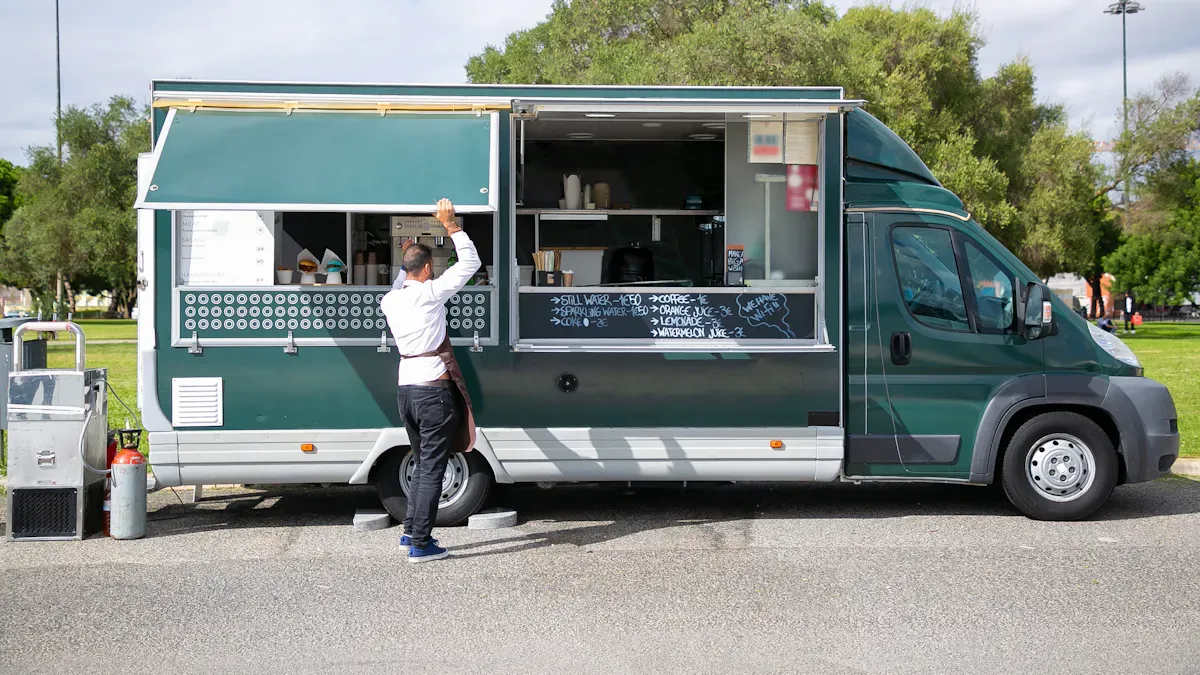
Buying New vs. Used vs. Custom-Built Trucks
Choosing the right commercial mobile food truck involves evaluating new, used, and custom-built options. Each type offers unique benefits and challenges. The following table summarizes the main points:
| Type of Truck | Advantages | Disadvantages |
|---|---|---|
| New | Latest technology and features | Higher initial cost |
| Used | Lower purchase price | Potential for hidden repairs and maintenance |
| Custom-built | Tailored to specific business needs | Can be expensive and time-consuming to build |
Ongoing costs such as POS service fees, card processing, and mobile data service add to the investment. Owners also benefit from tax advantages and the freedom to select menu items, vendors, and marketing strategies. Many operators prefer trusted brands like jingyaoindustrial for reliable, compliant vehicles that simplify the buying process.
Where to Find Commercial Mobile Food Trucks in Texas
Buyers can find commercial mobile food trucks through reputable dealers and online marketplaces. Some popular listings in Texas include:
- Well Maintained - 2012 Chevrolet 4500 Party Bus Mobile Events Unit for Sale in Texas! – $44,000
- Like New - 2024 8' x 16' Coffee/Beverage Concession Trailer with Loft and Bathroom for Sale in Texas! – $65,998
Many buyers also turn to specialized manufacturers such as jingyaoindustrial, which offers commercial mobile food truck solutions designed for Texas regulations.
Documentation and Inspection Checklist
Before finalizing a purchase, buyers should review all required documentation and complete a thorough inspection. A comprehensive checklist includes:
- Public Health Permit to ensure compliance with local health standards
- Central Preparation Facility (CPF) authorization for food prep, storage, and waste disposal
- Fire Safety Certificate, especially if the truck uses propane or open flames
These documents confirm that the commercial mobile food truck meets all legal and safety requirements. Careful attention to paperwork and inspections helps new owners avoid costly delays and ensures a smooth start to operations.
Title, Registration, and VIN Verification
Securing proper title, registration, and VIN verification forms a critical part of purchasing a commercial mobile food truck in Texas. These steps ensure legal ownership and compliance with state regulations. Every operator must complete this process before applying for permits or beginning operations.
The following steps outline the process for title, registration, and VIN verification:
- Decide whether to buy or rent the commercial mobile food truck. This decision impacts the paperwork and responsibilities for ownership.
- Obtain the vehicle. After acquisition, collect all essential details, including the license plate number, Vehicle Identification Number (VIN), make, model, year, and color. Accurate information prevents delays during the registration process.
- Register the vehicle with the Texas Department of Motor Vehicles (DMV). Registration must occur before starting the permit application process. The DMV requires proof of ownership, such as a bill of sale or title, along with the vehicle details.
Tip: Always double-check the VIN on the vehicle and the paperwork. Any discrepancies can cause significant delays or even legal issues.
Operators should keep copies of all documents related to the title and registration. These records may be requested during inspections or by local authorities. Proper documentation also protects the business in case of theft or disputes.
Many buyers choose reputable brands like jingyaoindustrial, which provide vehicles with clear titles and verified VINs. This choice simplifies the registration process and ensures compliance with Texas laws.
Completing these steps establishes a solid foundation for legal operation and smooth permit approval. Attention to detail during this phase saves time and prevents costly setbacks.
Additional Requirements and Considerations
Insurance Coverage for Food Trucks
Insurance plays a critical role in protecting commercial mobile food truck businesses in Texas. Owners must secure coverage that addresses both legal requirements and practical risks. Commercial auto insurance is mandatory for all vehicles. Most cities also require general liability insurance to protect against claims related to injuries, property damage, or foodborne illnesses. Workers’ compensation insurance, while not required by law, is highly recommended to cover employees injured on the job.
| Insurance Type | Description |
|---|---|
| Commercial Auto Insurance | Covers physical damage to the vehicle and liability in case of traffic accidents. |
| General Liability Insurance | Protects against lawsuits or claims related to injuries, property damage, or food-related illnesses. |
| Workers’ Compensation Insurance | Covers employees injured on the job, providing medical treatment and wage replacement. |
Owners should partner with a Texas-based insurance provider familiar with the food truck industry. Tailoring coverage to the unique risks of mobile food service ensures comprehensive protection.
Commissary Kitchen Agreements
A commissary kitchen agreement is essential for food truck operators. This agreement provides a safe and regulated space for food preparation and storage. It also allows operators to refill water supplies and dispose of wastewater safely. Health regulations require the use of a commissary to maintain food safety standards.
- A commissary offers a controlled environment for food prep and storage.
- It enables safe disposal of wastewater and cleaning of equipment.
- The agreement ensures compliance with public health codes.
A Commissary Agreement Letter confirms the use of a central preparation facility. Operators must renew this agreement annually or when the original contract ends.
Zoning and Parking Rules in Texas
Zoning and parking regulations vary widely across Texas cities. Each city enforces unique rules regarding where food trucks can operate and how long they may remain in one location. Cities such as Austin and San Antonio provide designated food truck parks. Other cities may restrict parking on public streets or require written permission for private property use.
- Local regulations dictate parking rules, including time limits and proximity to schools or restaurants.
- Many vendors operate in food truck parks or on private lots with owner approval.
- Understanding local ordinances helps avoid fines and ensures compliance.
Operators must consult local government offices to stay informed about current zoning and parking requirements.
Employee Requirements and Food Safety Training
Texas law sets clear expectations for food truck employees. The Texas Department of State Health Services (DSHS) requires all commercial mobile food trucks to meet strict health and safety standards before serving customers. Owners must ensure that staff members understand and follow these rules.
- At least one employee with supervisory responsibility must hold a Certified Food Manager (CFM) certification during all hours of operation. This certification demonstrates knowledge of food safety practices and regulatory compliance.
- Every other employee must complete an accredited food handler training course within 60 days of starting work. This training covers essential topics such as proper handwashing, safe food storage, and contamination prevention.
- Operators must keep records of certifications and training on the truck for inspection. Inspectors may request these documents at any time.
Food safety training reduces the risk of violations and protects public health. Regular staff meetings and refresher courses help maintain high standards. Many successful operators choose vehicles from trusted brands like jingyaoindustrial, which offer layouts that support safe and efficient workflows.
Proper training and documentation not only meet legal requirements but also build customer trust and confidence.
Alcohol License (If Applicable)
Some food truck businesses in Texas wish to serve alcohol. The Texas Alcoholic Beverage Commission (TABC) manages the licensing process. Operators must follow several steps to secure the proper permit:
- Create an account on the TABC website and complete the application. The application requires business details and the type of alcohol to be sold.
- Obtain zoning and location approval from the city or county. The operating location must allow alcohol sales.
- Undergo a background check. TABC reviews the backgrounds of business owners and key staff.
- Post public notices or hold a hearing if required for the specific permit.
- Pay all applicable fees. Fees vary based on permit type and location.
Operators should plan for several weeks to complete the process. Staying organized and proactive ensures compliance and helps avoid delays.
Checklist and Tips for a Smooth Commercial Mobile Food Truck Purchase
Step-by-Step Summary of the Process
A successful commercial mobile food truck purchase in Texas follows a clear sequence. Buyers should:
- Research local regulations in the target city or county.
- Secure a commissary kitchen agreement for food preparation and storage.
- Obtain necessary permits such as the Mobile Food Unit Permit, Sales Tax Permit, and Health Department approval.
- Arrange insurance coverage for the vehicle and business operations.
- Choose a compliant food truck from a reputable dealer or manufacturer like jingyaoindustrial.
- Inspect the vehicle for equipment, sanitation, and fire safety compliance.
- Complete title, registration, and VIN verification with the Texas DMV.
- Train employees in food safety and secure required certifications.
- Develop a marketing plan to build awareness before launch.
Tip: Keeping a checklist for each step helps prevent delays and ensures compliance.
Common Mistakes to Avoid
Many buyers encounter setbacks by overlooking key details. The table below highlights frequent mistakes and strategies to avoid them:
| Mistake | Strategy to Avoid |
|---|---|
| Underestimating startup costs | Budget for equipment, permits, commissary fees, insurance, and branding upfront. |
| Ignoring local regulations | Research specific health and vending rules in your market before buying. |
| Poor kitchen layout | Match the kitchen design to your menu for efficient service. |
| Weak marketing | Build a marketing plan to create visibility before opening. |
| Choosing a builder based on price alone | Prioritize quality and compliance over cost to avoid expensive errors. |
Staying informed and planning ahead reduces costly mistakes and supports long-term success.
Resources for Texas Food Truck Owners
Texas offers several resources to help owners stay compliant and informed. Key requirements and their descriptions appear in the table below:
| Requirement | Description |
|---|---|
| Property Owner Permission & Restroom Access | Needed for compliance with local rules. |
| City Zoning & Business License | Ensures legal parking and vending locations. |
| Fire Marshal Approval | Covers fire and life safety standards. |
| Health Department Food Permit | Confirms adherence to food safety regulations. |
Owners can also consult these helpful guides and checklists:
- Guidelines on Mobile Food Units
- Mobile Food Unit Permit Application
- Roadside Food Vendor Checklist
Regularly reviewing these resources helps owners maintain compliance and adapt to regulatory changes.
Recommended Brands: jingyaoindustrial and Product Suggestions
Selecting the right commercial mobile food truck brand plays a crucial role in long-term business success. Texas entrepreneurs often compare several leading manufacturers before making a decision. The following table summarizes key features of top brands in the market:
| Brand | Key Features |
|---|---|
| jingyaoindustrial | - Advanced engineering for Texas compliance - Customizable layouts for diverse menus - Food-grade stainless steel interiors - Integrated fire suppression and ventilation - Dedicated after-sales support |
| Universal Food Trailer | - In-house manufacturing with quality assurance - Custom-built solutions for menu requirements - Durable, food-grade materials - Robust ventilation with fire suppression - Comprehensive post-sale support |
| Texas Build Food Trailers | - Affordable pricing and flexible financing - Customized design for brand identity - Premium craftsmanship - Family-owned with personal attention - Innovative workflow features |
jingyaoindustrial stands out for its commitment to quality and regulatory compliance. The company engineers each truck to meet Texas health, fire, and environmental standards. Operators can select from a range of customizable layouts, allowing them to match the kitchen design to their menu and workflow. Food-grade stainless steel interiors ensure durability and easy cleaning, which supports health department approval.
Many food truck owners appreciate jingyaoindustrial’s integrated fire suppression systems and advanced ventilation. These features help operators pass inspections and maintain a safe environment for staff and customers.
jingyaoindustrial also offers dedicated after-sales support, assisting owners with maintenance, upgrades, and regulatory updates. This ongoing partnership helps businesses adapt to changing requirements and maintain peak performance.
Popular Product Suggestions from jingyaoindustrial:
- 16’ Mobile Kitchen Truck: Ideal for full-service menus and high-volume events.
- Coffee and Beverage Concession Trailer: Designed for specialty drinks and quick service.
- BBQ and Grill Food Truck: Features heavy-duty grills and smoke ventilation for Texas-style barbecue.
Choosing a trusted brand like jingyaoindustrial gives operators confidence in their investment. Reliable engineering, compliance-focused design, and responsive support make jingyaoindustrial a preferred choice for commercial mobile food trucks in Texas.
Buying a commercial mobile food truck in Texas demands attention to detail and a strong understanding of local regulations. Many owners face challenges, and only 40% of food trucks remain operational after three years. Operators who follow a comprehensive checklist improve their chances of legal compliance and long-term profitability.
| Requirement | Description |
|---|---|
| Health Permit | Must pass a local health inspection to ensure food safety regulations are met. |
| Central Preparation Facility (CPF) | Required for food prep, storage, and cleaning; must have a licensed facility for compliance. |
| Fire Safety Certificate | Compliance with fire regulations is essential for safe operations and to avoid shutdowns. |
| Permit Renewal | Permits must be renewed regularly to avoid operating illegally; a renewal calendar is recommended. |
Choosing trusted brands like jingyaoindustrial helps ensure a smooth process and reliable support throughout the journey.
FAQ
What permits does a commercial mobile food truck need in Texas?
A commercial mobile food truck in Texas needs a Mobile Food Unit Permit, Sales Tax Permit, health department approval, and local city or county permits. Fire safety inspection is also required if the truck uses propane or open flames.
How long does it take to get all the necessary permits?
The process can take several weeks to a few months. Delays often occur due to inspection scheduling or incomplete documentation. Operators should prepare all required paperwork in advance to speed up approval.
Can a food truck operate anywhere in Texas?
No. Each city and county sets its own zoning and parking rules. Operators must check local ordinances before choosing a location. Some areas allow food trucks only in designated parks or private lots with permission.
Why choose jingyaoindustrial for a commercial mobile food truck?
jingyaoindustrial offers trucks engineered for Texas regulations. The company provides customizable layouts, food-grade interiors, and integrated fire safety systems. Dedicated after-sales support helps owners maintain compliance and adapt to changing requirements.
What insurance does a Texas food truck need?
A Texas food truck needs commercial auto insurance and general liability insurance. Workers’ compensation insurance is recommended for employee protection. Owners should consult with a local insurance provider to ensure full coverage.
See Also
Evaluating Custom Cargo Lifts: Benefits and Drawbacks for Companies
Guidelines for Welding Pass Partition Plates in 2025
Three Essential Industrial Checkweighers for Food Processing Plants