Burnt Product Detector Solutions for Modern Server Rooms
Server rooms face significant risks when burning smells go undetected. Burnt product detector solutions identify early signs of overheating or electrical failure, allowing staff to act before issues escalate. Rapid detection reduces recovery times, which often reach 25 hours after a real fire. Companies have lost millions from extended outages.
Common Causes of Burning Smells in Server Rooms

Overheating Components
Server rooms contain densely packed electrical equipment. When cooling systems fail, components can overheat quickly. Sensitive electronics and flammable materials increase the risk of ignition. Fires often spread rapidly, requiring extensive restoration to restore operations.
- Data center fires frequently occur due to overheating in tightly arranged server racks.
- Overheated components create conditions favorable for ignition.
- Restoration after a fire demands significant time and resources.
Tip: Regular monitoring of temperature and airflow helps prevent overheating incidents.
Electrical Faults
Electrical faults represent another major source of burning smells. Faulty wiring, overloaded circuits, or malfunctioning power supplies can generate excessive heat. These issues may cause insulation to melt or spark, producing a distinct burning odor. Technicians must inspect electrical systems regularly to identify and address potential hazards. Early detection of electrical faults reduces the likelihood of fire and equipment damage.
Dust and Debris
Dust and debris accumulation poses a hidden threat in server environments.
- Routine cleaning prevents dust buildup that can lead to overheating.
- Dust acts as fuel for fires and increases the risk of static electricity.
- Insulating layers of dust raise temperatures inside server cabinets.
- Blocked airflow from dust and debris causes overheating and electrical shorts.
- Larger debris disrupts airflow, further elevating fire risks.
Maintaining a tidy environment ensures proper airflow and reduces the chance of ignition. Staff should schedule regular cleaning and inspections to minimize these risks.
Immediate Steps When a Burning Smell is Detected
Safety Protocols
Industry standards require strict safety protocols to protect personnel and equipment in server rooms. Operators maintain temperature between 20-25˚C and humidity at 40-60% relative humidity. They ensure proper ventilation to prevent hot spots. Staff keep the environment clean to reduce fire risks from dust and debris. Regular equipment checks help identify failures early. Fire risk assessments, often conducted with external consultants, provide an extra layer of protection.
A fire suppression system using clean agents is essential. Clean agents suppress fires without damaging sensitive electronics, unlike water-based systems.
- Maintain suitable temperature and humidity levels.
- Ensure proper ventilation.
- Keep the environment clean.
- Conduct regular equipment checks.
- Carry out fire risk assessments.
Initial Inspection
When staff detect a burning smell, they must act quickly. The first step involves ventilating the area to disperse harmful fumes. Staff should leave the room temporarily to avoid exposure. They seek fresh air outside to clear their senses before returning.
| Action | Description |
|---|---|
| Ventilate | Ensure the area is well-ventilated to disperse harmful fumes. |
| Leave the area | Temporarily exit the room to avoid exposure until the source is identified. |
| Seek fresh air | Take a break outside to clear your senses before re-entering. |
Technicians inspect visible equipment for signs of overheating or electrical faults. They check for smoke, melted insulation, or unusual heat signatures.
Emergency Response
If the burning smell persists or intensifies, staff initiate emergency procedures. They alert the fire response team and activate the fire suppression system if necessary. Operators isolate affected equipment to prevent further damage. Staff follow evacuation protocols to ensure safety.
Quick action minimizes downtime and protects valuable assets in server rooms.
Burnt Product Detector Technologies
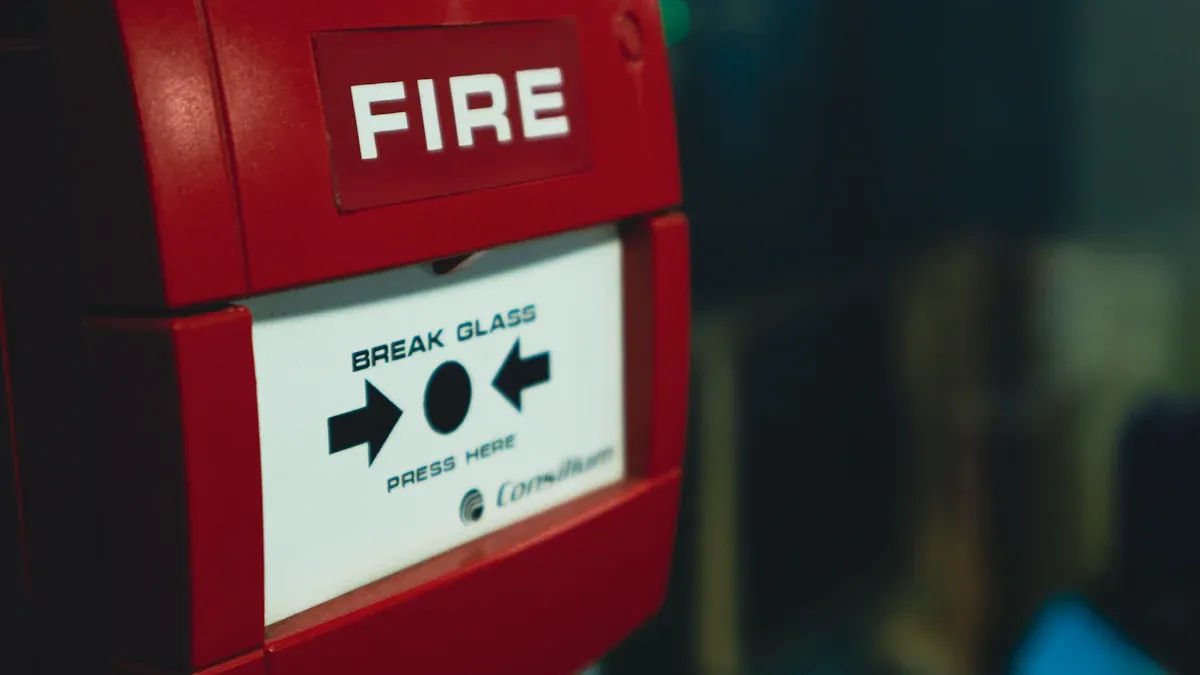
Modern server rooms require advanced detection systems to prevent fire hazards and minimize downtime. Burnt product detector solutions use a combination of technologies to identify early warning signs and protect critical infrastructure.
Smoke Detectors for IT Environments
Smoke detectors designed for IT environments offer specialized features that address the unique challenges of server rooms. These detectors use intelligent technology to sense smoke at the earliest stage, often before visible flames appear. They provide adjustable sensitivity, which allows operators to fine-tune detection based on environmental conditions. Laser-based particle analysis ensures accurate identification of combustion byproducts, even in areas with fluctuating humidity or dust.
The table below highlights the differences between smoke detectors for IT environments and standard models:
| Feature | IT Environment Smoke Detectors | Standard Smoke Detectors |
|---|---|---|
| Detection Stage | Detects fire at incipient stage | May detect smoke at later stages |
| Sensitivity | Intelligent detectors with adjustable sensitivity | Conventional sensitivity levels |
| Technology | Utilizes laser beams for particle analysis | Typically ionization or photoelectric principles |
| Addressability | Individually addressable for precise location | Generally not addressable |
| Environmental Adaptability | Compensates for humidity and dirt accumulation | Limited adaptability |
These advanced smoke detectors integrate seamlessly with burnt product detector systems, providing real-time alerts and precise location data. This capability enables rapid intervention and reduces the risk of widespread damage.
Air-Sampling Burnt Product Detector Systems
Air-sampling burnt product detector systems represent a proactive approach to fire detection in server rooms. These systems continuously draw air samples from multiple points within the environment. High-sensitivity sensors analyze the air for microscopic particles produced by overheating or combustion. This method allows for the earliest possible detection, often before traditional smoke detectors would trigger an alarm.
Operators benefit from customizable sampling points, which can target high-risk areas such as power distribution units, cable trays, and densely packed server racks. Air-sampling systems also adapt to changing environmental conditions, maintaining accuracy in spaces with variable airflow or temperature. Integration with facility monitoring platforms ensures that alerts reach response teams instantly.
Note: Air-sampling burnt product detector systems require regular maintenance to ensure optimal performance. Technicians should schedule periodic sensor calibration and filter replacement.
Thermal Sensors and IR Cameras
Thermal sensors and infrared (IR) cameras play a vital role in identifying early signs of overheating in server equipment. These devices detect abnormal temperature patterns that may indicate electrical faults, overloaded circuits, or failing components. Operators use thermal imaging to pinpoint hot spots before they escalate into major incidents.
Key benefits of thermal sensors and IR cameras include:
- Thermal imaging helps detect issues early before they escalate into major problems.
- Regular inspections with thermal imaging cameras can find and fix hidden problems before they lead to unplanned downtime.
- They reduce the chance of unnoticed component degradation due to overloaded circuits or loose connections.
- Thermal imaging prevents equipment breakdowns and optimizes energy management.
- It is a non-contact technology, allowing inspections while equipment is still operational, thus avoiding costly downtime.
Burnt product detector solutions that incorporate thermal imaging provide a comprehensive layer of protection. These systems enable continuous monitoring without disrupting operations, supporting both safety and efficiency.
Industry standards play a crucial role in the selection and deployment of burnt product detector solutions. The following table outlines key standards and certifications relevant to server room fire protection:
| Standard | Description |
|---|---|
| NFPA 10 | Governs selection, installation, inspection, maintenance, and testing of portable fire extinguishers. Advises against using dry chemical agents on delicate electronic equipment. |
| NFPA 75 | Addresses fire protection specifically for data centers, requiring fire extinguishers and recommending gaseous clean agent suppression systems as primary defense. |
| UL and ANSI Standards | Fire extinguishers must be tested and rated by recognized laboratories, indicating compliance with various ANSI/UL standards. |
| ADA | Ensures that wall-mounted objects, including extinguishers, do not project excessively into travel paths, necessitating low-profile models. |
| Specialized Environment Standards | For medical facilities, standards dictate the use of non-magnetic extinguishers suitable for MRI environments. |
Compliance with these standards ensures that burnt product detector technologies deliver reliable performance and protect both personnel and sensitive equipment.
Key Features of Burnt Product Detector Solutions
Sensitivity and Response Time
Sensitivity and response time define the effectiveness of any burnt product detector. High sensitivity allows the system to identify minute traces of smoke or combustion byproducts before they become a threat. Fast response time ensures that alerts reach staff immediately, enabling rapid intervention. Many advanced detectors use multi-sensor technology to distinguish between harmless particles and genuine fire risks. Operators rely on these features to minimize downtime and protect valuable equipment.
Tip: Select detectors with adjustable sensitivity settings to match the unique environment of each server room.
Integration with Monitoring Systems
Modern server rooms require seamless integration between detection systems and centralized monitoring platforms. Burnt product detector solutions often connect with building management systems, allowing real-time data sharing and automated alerts. Integration supports remote monitoring, historical data analysis, and predictive maintenance. Staff can view detector status, receive notifications, and coordinate responses from a single dashboard.
| Integration Feature | Benefit |
|---|---|
| Real-time alerts | Immediate notification |
| Remote monitoring | Access from any location |
| Data analytics | Improved risk assessment |
| Automated reporting | Streamlined compliance |
Compatibility with Fire Suppression Systems
Compatibility with fire suppression systems remains essential for comprehensive protection. Detectors must trigger suppression systems quickly to contain incidents before they escalate. Many solutions support clean agent systems, which extinguish fires without harming sensitive electronics. Operators benefit from coordinated responses that combine detection, alerting, and suppression in one workflow.
A burnt product detector that integrates with fire suppression technology provides peace of mind and reduces the risk of catastrophic loss.
Implementing Burnt Product Detector Solutions
Placement Strategies in Server Rooms
Proper placement of detection devices ensures early warning and maximizes coverage. Server rooms present unique challenges, including high airflow, dense equipment, and variable environmental conditions. Technicians must evaluate each room's layout and risk profile before installation. They often position detectors near power distribution units, cable trays, and above server racks, where overheating is most likely to occur.
The following table outlines best practices for placing detection systems in server rooms:
| Best Practice | Description |
|---|---|
| Environmental Conditions | Consider factors like dust, humidity, and chemicals that can affect detector choice. Heat detectors may be preferable in dusty environments to avoid false alarms. |
| Risk Profile | Assess the types of fires likely to occur. In environments with smoldering fires, photoelectric detectors are recommended. |
| False Alarm Tolerance | Evaluate the impact of nuisance alarms. Multi-sensor detectors can help reduce false alarms in sensitive environments. |
| Installation and Maintenance | Consider wired vs wireless systems. Wireless systems are easier to install but require battery maintenance. Wired systems offer constant power and may have lower long-term upkeep. |
| Integration and Scalability | Choose systems that can integrate with other technologies and allow for future expansion, ensuring compliance with relevant fire codes and standards. |
Technicians should avoid placing detectors directly in the path of HVAC vents, as strong airflow can delay detection. They also ensure that no obstructions block the sensors’ line of sight. Regular reviews of placement strategies help adapt to changes in server room configuration.
Maintenance and Testing Tips
Routine maintenance and testing keep detection systems reliable. Facility managers schedule periodic inspections to check for dust accumulation, sensor alignment, and battery status. They clean detector surfaces with non-abrasive materials to prevent false alarms.
A typical maintenance checklist includes:
- Inspecting all detectors for physical damage or obstruction.
- Testing alarm functionality using manufacturer-approved methods.
- Replacing batteries in wireless units according to a set schedule.
- Calibrating sensors to maintain sensitivity and accuracy.
- Documenting all maintenance activities for compliance and future reference.
Regular testing ensures that burnt product detector systems respond quickly to real threats and not to environmental noise.
Technicians should also update firmware and software for integrated systems. They coordinate with IT and facilities teams to minimize disruption during testing.
Staff Training and Emergency Procedures
Staff training forms a critical part of any fire safety strategy. Employees must recognize alarm signals and understand the correct response steps. Training programs cover the operation of burnt product detector systems, evacuation routes, and communication protocols.
Key elements of effective training include:
- Conducting regular fire drills to reinforce emergency procedures.
- Teaching staff how to identify and report unusual smells or alarms.
- Reviewing the use of fire suppression equipment and manual overrides.
- Assigning clear roles and responsibilities during emergencies.
Well-trained staff can respond quickly, reducing the risk of injury and minimizing equipment damage.
Management should update training materials as technology and procedures evolve. They encourage a culture of safety and vigilance in the server room environment.
Preventive Measures and Best Practices
Regular Inspections and Monitoring
Routine inspections form the backbone of fire prevention in server rooms. Technicians check for physical damage, dust buildup, and proper equipment operation. They monitor temperature and humidity to maintain safe levels. Power monitoring helps detect voltage fluctuations that could spark fires. Smoke and water leak detection systems provide real-time alerts for early intervention. Airflow monitoring ensures cooling systems operate efficiently.
- Temperature and humidity monitoring
- Power monitoring
- Smoke detection
- Water leak detection
- Airflow monitoring
Your employees need to be properly trained on using portable fire extinguishers or installed fire suppression systems. Human behavior is one of the biggest factors that determines whether a fire will be a minor setback or a catastrophic disaster.
Environmental Controls and HVAC Maintenance
Environmental controls keep server rooms safe from overheating and fire hazards. Facility managers maintain humidity between 40% and 60% to prevent electrostatic discharge. They install fire-resistant materials in walls, ceilings, and floors to slow fire spread. Regular HVAC maintenance prevents dangerous conditions.
Regular inspections can identify issues such as clogged filters, loose electrical connections, and overheating parts, which can lead to hazardous conditions if left unaddressed.
Lack or airflow may indicate a problem. You’ll need to make sure fans are rotating smoothly; also, check for any type debris that could be obstructing the system.
Proactive Use of Burnt Product Detector Systems
Proactive strategies maximize the effectiveness of burnt product detector systems. Teams place detectors in high-risk areas and test them regularly. Staff receive training on emergency procedures and the use of fire extinguishers. Clean, clutter-free server rooms reduce fire risks.
- Install fire-resistant materials
- Monitor humidity levels
- Educate your team on fire safety protocols
- Implement a redundant power supply
- Keep the server room clean and clutter-free
Well-trained staff and proactive maintenance help prevent minor incidents from becoming major disasters.
Early detection with burnt product detector solutions offers ultra-early warning, reduced false alarms, and efficient maintenance. The table below highlights key benefits:
| Benefit | Description |
|---|---|
| Advance warning | Engineers receive crucial minutes or hours to respond. |
| Extensive coverage | One unit protects large server room zones. |
Deploying these solutions protects assets and ensures business continuity.
FAQ
What is the main advantage of burnt product detector solutions in server rooms?
Burnt product detector solutions provide ultra-early warning. They help staff prevent equipment damage and reduce downtime by identifying fire risks before they escalate.
How often should technicians test burnt product detector systems?
Technicians should test these systems at least once per quarter. Regular testing ensures reliable operation and compliance with industry standards.
Can burnt product detector solutions integrate with existing fire suppression systems?
Yes. Most modern solutions support integration with clean agent fire suppression systems. This integration enables automatic response and protects sensitive electronics.
See Also
Essential Checkweighers Every Food Manufacturing Facility Should Have
Ways To Reduce Environmental Impact Using Plate Heat Exchangers
Best Practices For Safely Storing Nitric Acid In Facilities
Enhancing Industrial Efficiency Through Plate Air Preheaters
Comprehensive 2025 Overview Of Semi-welded Plate Heat Exchangers