What Is Bovine Gelatin Powder Made Of and How Is It Produced
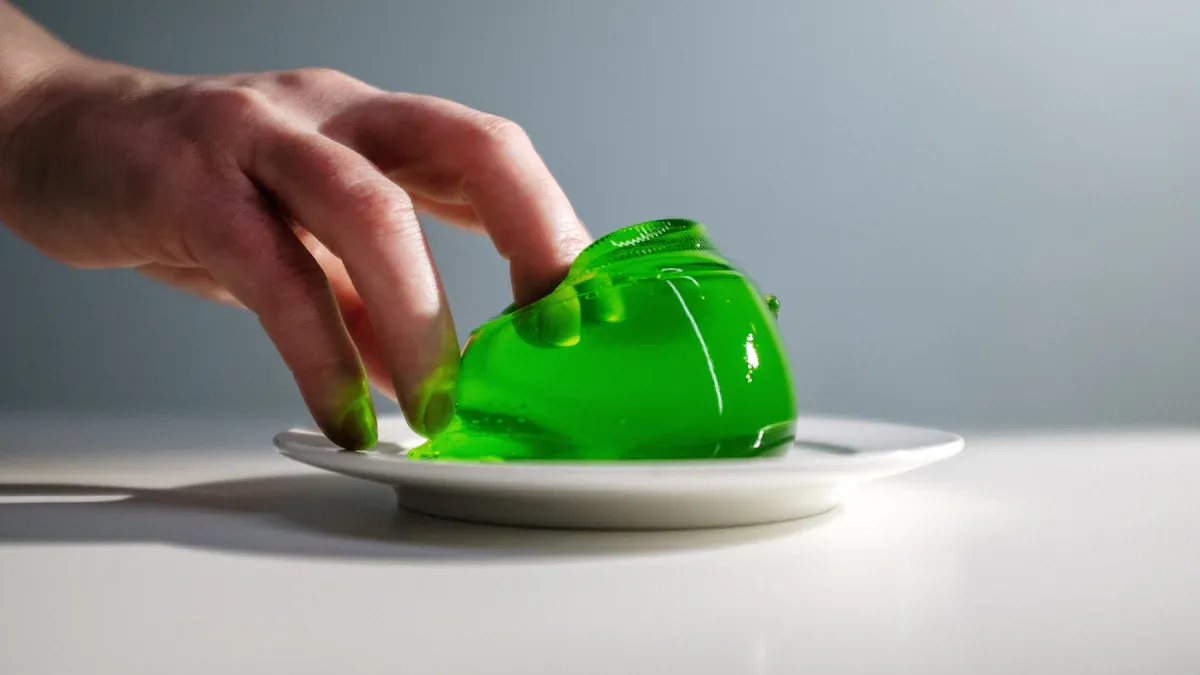
You encounter Bovine Gelatin Powder in many products because manufacturers extract collagen from cow hides, bones, and connective tissues. The global market is expanding as health-conscious consumers seek natural ingredients.
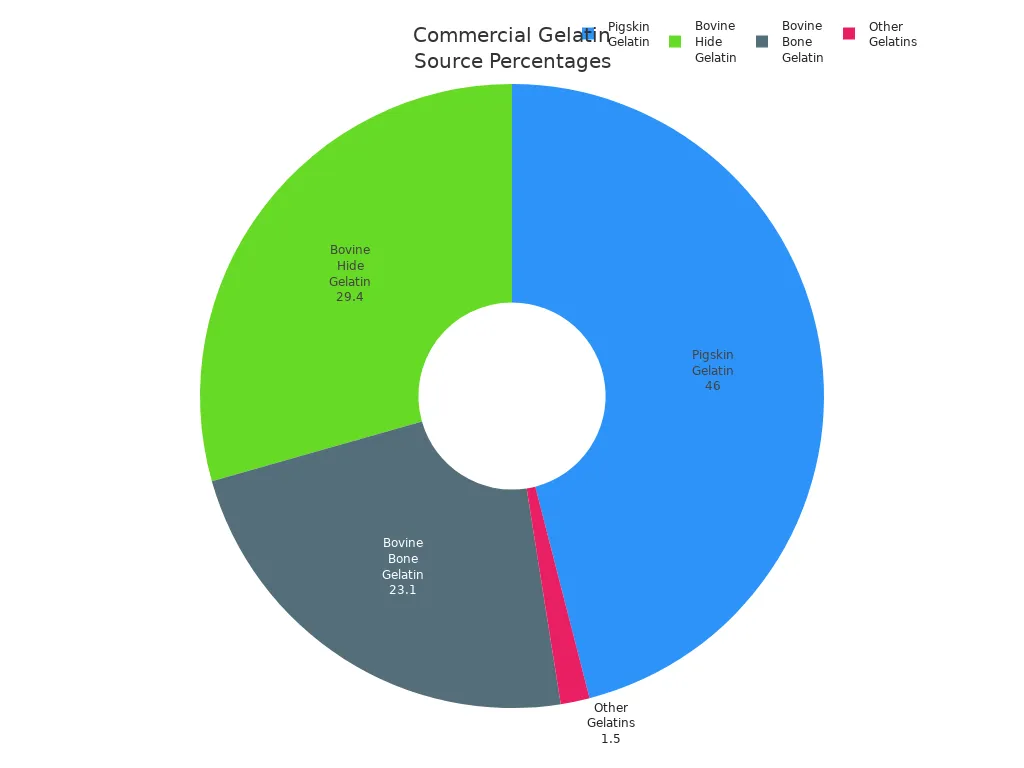
| Source | Percentage |
|----------------------|-------------|
| Pigskin Gelatin | 46.00% |
| Bovine Hide Gelatin | 29.40% |
| Bovine Bone Gelatin | 23.10% |
| Other Gelatins | 1.50% |
Bovine Gelatin Powder Ingredients and Production
Raw Materials Used
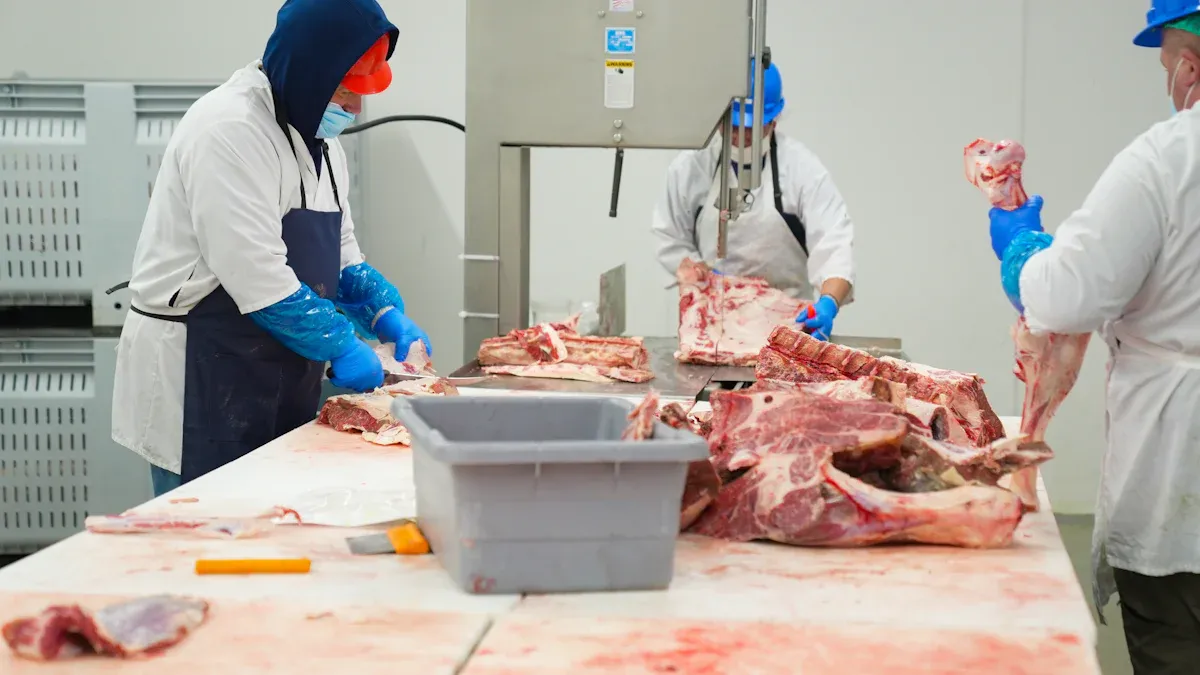
You find that the main ingredients in bovine gelatin powder come from specific parts of cattle. Manufacturers select cow hides, bones, and connective tissues because these parts contain high levels of collagen. Collagen is a structural protein that gives strength and elasticity to animal tissues. When you look at the composition, you see that these raw materials provide a rich source of amino acids, especially glycine, proline, and hydroxyproline. These amino acids play a crucial role in the gelling properties of the final product.
- Bovine gelatin powder is derived from:
- Cow hides
- Bones
- Tendons and connective tissues
- These materials are rich in:
- Collagen (Type I and Type III)
- 18 amino acids, including glycine, proline, and hydroxyproline
Quality standards for raw materials remain strict. You must ensure that all sources come from disease-controlled environments. Regulatory agencies like the US FDA and the European Union require traceability and safety. The table below summarizes the main quality standards:
| Quality Standard | Description |
|---|---|
| BSE/TSE risks | Must be sourced from BSE-free zones to prevent mad cow disease |
| Microbiological contamination | Must be free from pathogens like Salmonella and E. coli |
| Chemical residues | Should not contain antibiotics, pesticides, or hormones |
| Heavy metals | Must be tested for lead, cadmium, and arsenic |
| Cross-contamination | Must avoid allergens and non-compliant substances, especially for halal markets |
You also face challenges with raw material supply. Fluctuations in livestock production and international trade can affect availability and quality. Environmental regulations add another layer of complexity, increasing costs and requiring careful waste management.
Collagen Extraction Process
To produce bovine gelatin powder, you need to extract collagen from the raw materials. The process starts with cleaning and cutting the hides, bones, and connective tissues into smaller pieces. You then use chemical or enzymatic methods to break down the collagen and release it from the tissues.
Common extraction methods include:
- Acid hydrolysis: You use acids to break down collagen, especially for delicate tissues.
- Alkaline hydrolysis: You apply sodium hydroxide or potassium hydroxide, mainly for tougher materials like bone.
- Salt solubilization: You use neutral salts such as citrates or sodium chloride to help dissolve collagen.
- Enzyme hydrolysis: You add proteolytic enzymes like pepsin or trypsin. These enzymes offer better selectivity and cause less damage to the collagen structure.
Tip: Enzyme hydrolysis often produces higher-quality gelatin with fewer impurities and better functional properties.
Technological advancements have improved extraction efficiency. Automation and AI-driven process optimization help you reduce costs and minimize human error. Digital tools like blockchain now ensure traceability and transparency in the supply chain.
Purification and Drying Steps
After you extract the collagen, you must purify it to remove contaminants. The purification process targets bacteria, spores, and other microorganisms that could affect the safety and quality of bovine gelatin powder. The table below lists common contaminants removed during purification:
| Contaminant Type | Examples of Microorganisms Found |
|---|---|
| Spore-forming bacteria | Bacillus sp., Klebsiella sp., Proteus sp., Enterobacter sp., Pseudomonas sp., Clostridium sp. |
| Other bacteria | B. licheniformis, B. cereus group, B. coagulans, B. fumarioli, B. badius, B. subtilis, B. agri, Alicyclobacillus acidocaldarius, Paenibacillus cookii |
| Pathogenic potential | Some contaminants may pose health risks in food and pharmaceutical applications |
| Quality impact | Certain contaminants may affect the viscosity and gelling ability of gelatin |
You then concentrate the purified gelatin solution and dry it to form a powder. Several drying methods exist, each with its own benefits:
- Spray drying: Preserves functional properties like amphiphilicity and foaming ability. It also reduces degradation and retains more α chains, which improves hydrophobicity.
- Freeze drying: Maintains solubility and hydrophilicity but is less efficient than spray drying.
- Hot air drying (sometimes combined with infrared): Offers a cost-effective alternative while preserving many functional properties.
Note: Spray drying is the most effective method for maintaining the quality of bovine gelatin powder, but it can be costly.
You must also consider the environmental impact of production. The process uses significant amounts of water and energy. If you do not manage waste properly, you risk polluting local water sources and increasing carbon emissions. Innovations in extraction and purification now help reduce environmental impact and improve sustainability.
Bovine Gelatin Powder Properties and Uses
Physical and Nutritional Characteristics
You notice that Bovine Gelatin Powder appears as a fine, off-white powder with a neutral taste and odor. It dissolves easily in hot water, forming a clear, elastic gel when cooled. Compared to other types, bovine gelatin has a melting point of 108°C and a higher solubility rate due to its flexible structure.
| Gelatin Type | Melting Point (°C) | Solubility Characteristics |
|---|---|---|
| Bovine | 108 | Higher solubility rate due to lower crystallinity and increased flexibility |
| Fish | 118 | Higher solubility rate due to lower crystallinity and increased flexibility |
| Porcine | 110 | Lower solubility rate due to higher crystallinity and more ordered structure |
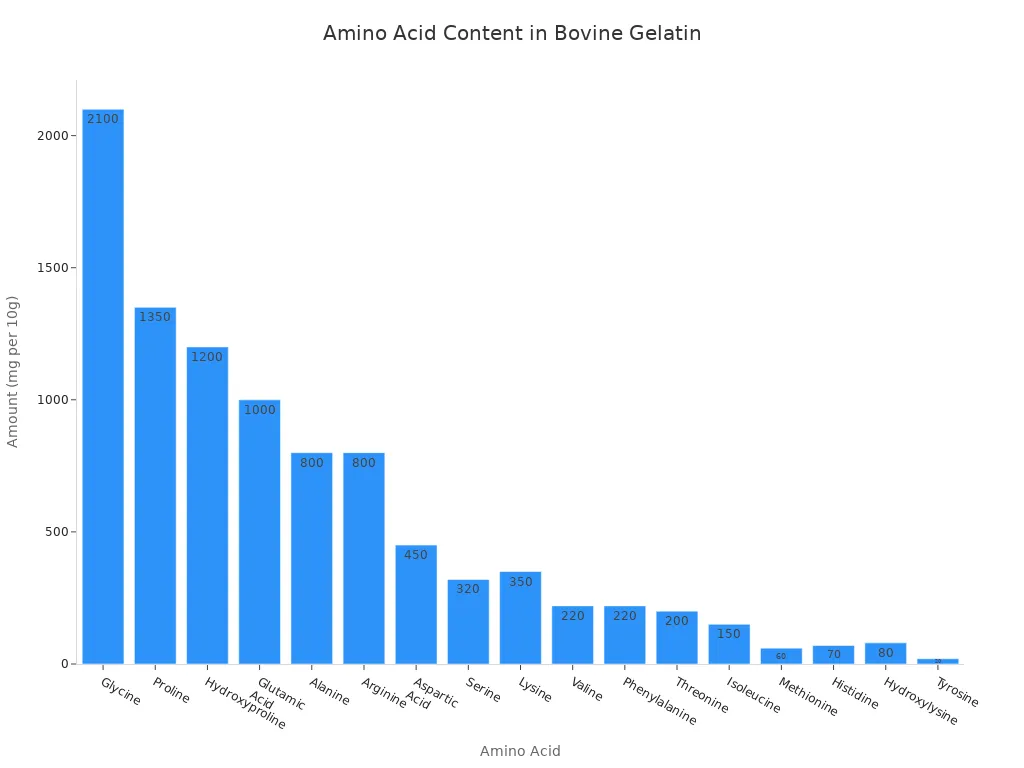
Nutritionally, you benefit from a product that is almost pure protein—about 98-99% by dry weight. One tablespoon provides around 35 calories and 9 grams of protein, with no fat, sugar, or carbohydrates. The amino acid profile supports joint, skin, and digestive health.
| Amino Acid | Percentage | Amount (mg) |
|---|---|---|
| Glycine | 21% | 2100 |
| Proline | 13.5% | 1350 |
| Hydroxyproline | 12% | 1200 |
| Glutamic Acid | 10% | 1000 |
| Alanine | 8% | 800 |
| Arginine | 8% | 800 |
| Aspartic Acid | 4.5% | 450 |
| Serine | 3.2% | 320 |
| Lysine | 3.5% | 350 |
| Valine | 2.2% | 220 |
| Phenylalanine | 2.2% | 220 |
| Threonine | 2% | 200 |
| Isoleucine | 1.5% | 150 |
| Methionine | 0.6% | 60 |
| Histidine | 0.7% | 70 |
| Hydroxylysine | 0.8% | 80 |
| Tyrosine | 0.2% | 20 |
Common Uses in Food and Industry
You encounter Bovine Gelatin Powder in a wide range of foods and industrial products. In the food industry, you find it in:
| Category | Examples |
|---|---|
| Confectionery | Jams, Jellies, Candies |
| Dairy | Yogurt, Ice Cream, Cream Cheese, Cottage Cheese |
| Convenience | Soups, Instant Gravies, Sauces |
| Desserts | Fruit-Based desserts, Milk-Based Desserts |
| Non-Alcoholic Beverages | Fruit Juices |
| Alcoholic Beverages | Wine, Beer |
| Others | Food Coatings, Capsules, Gums |
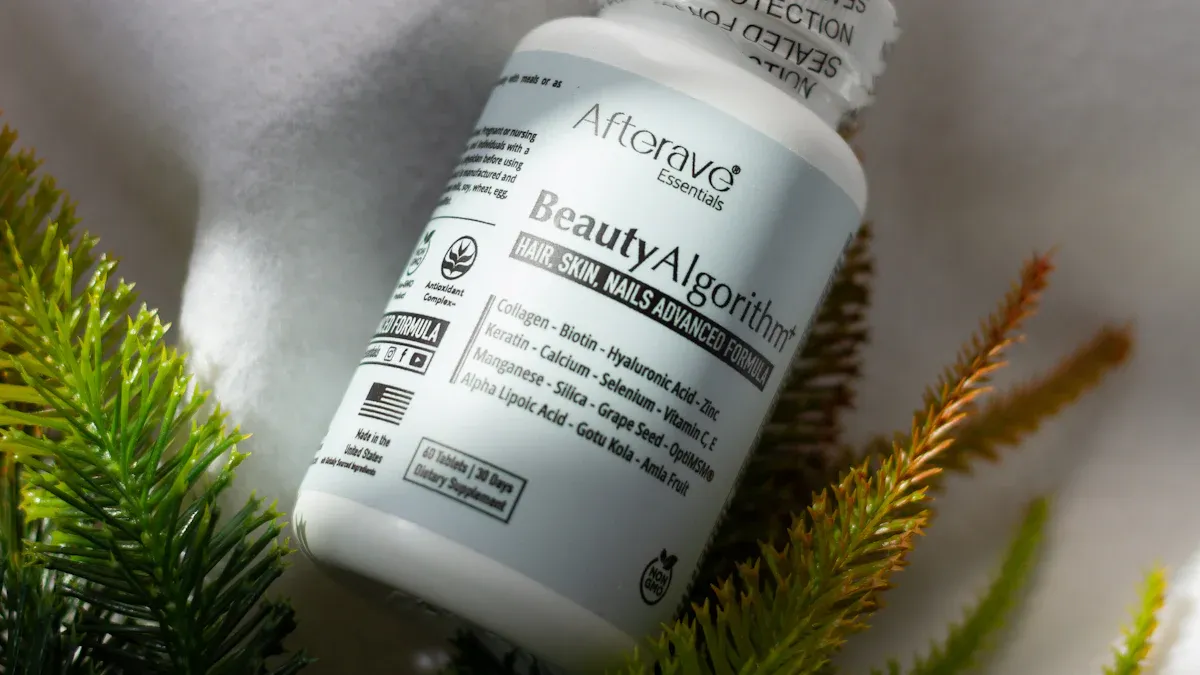
In pharmaceuticals, you rely on gelatin for capsule shells, which protect active ingredients and ensure proper delivery. Industrial applications include bookbinding, match manufacturing, coated abrasives, and paper sizing. Gelatin acts as a binder, adhesive, and coating agent, providing strength and flexibility.
Safety, Health Benefits, and Risks
You can trust that regulatory agencies like the FDA and USDA oversee the safety of Bovine Gelatin Powder in food and pharmaceuticals. Manufacturing processes reduce the risk of contaminants, and the product has a shelf life of up to three years when stored properly.
Tip: The National Institutes of Health recommends a daily intake of up to 10 grams for supplements.
You may experience several health benefits, such as improved joint health, better skin elasticity, and enhanced digestion. Studies show that gelatin can help reduce joint pain, support bone density, and promote a youthful appearance. Glycine in gelatin may also improve sleep quality and blood sugar management.
However, you should remain aware of potential risks. Some people may experience mild side effects like upset stomach, bloating, or sore throat. Rarely, allergic reactions can occur, especially if you have a history of meat or collagen allergies. Always consult a healthcare professional before starting new supplements.
You gain valuable benefits from products made with cow collagen, but you must consider safety and ingredient transparency. Many consumers now prefer plant-based or fish-derived gelatin due to health concerns and animal welfare. You can maximize benefits and minimize risks by making informed choices.
FAQ
What is the shelf life of bovine gelatin powder?
You can store bovine gelatin powder for up to three years in a cool, dry place. Always keep the container tightly sealed to maintain freshness.
Is bovine gelatin powder suitable for vegetarians or vegans?
You should avoid bovine gelatin powder if you follow a vegetarian or vegan diet. It comes from animal sources, not plants.
Can you use bovine gelatin powder as a protein supplement?
- Yes, you can add it to smoothies or recipes.
- It provides about 9 grams of protein per tablespoon.
- It does not replace complete protein sources.