Bovine collagen peptide for aging skin in 2026
The global market for bovine collagen peptide continues to expand as more people seek solutions for aging skin. In 2026, projected trends show significant growth in demand, driven by advancements in extraction technology and increased consumer awareness.
| Evidence Description | Projected Impact on Market Trends in 2026 |
|---|---|
| Bovine collagen peptides are expected to dominate the market due to their efficacy in improving skin elasticity and reducing signs of aging. | Significant growth in demand for collagen peptides targeting aging skin. |
| Technological advancements in collagen extraction and processing are enhancing product availability. | Increased consumer awareness of health benefits in cosmetics and personal care sectors. |
| The availability of raw materials from bovine sources supports economical production. | Market expansion driven by rising demand for natural and functional ingredients in beauty products. |
Bovine Collagen Peptide: How It Works and What Research Shows
What Is Bovine Collagen Peptide?
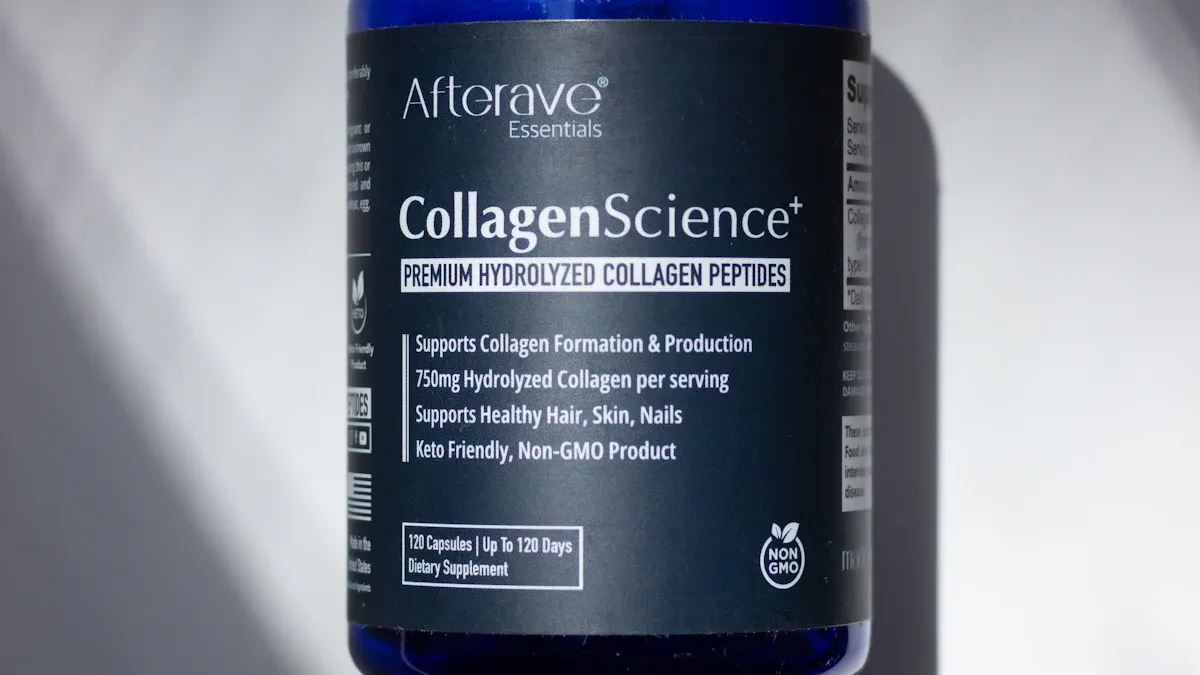
Bovine collagen peptide refers to hydrolyzed collagen derived from cow hides, bones, and tendons. Manufacturers extract these peptides using enzymatic pretreatment, acid or alkaline hydrolysis, and boiling. These sources often include parts considered waste in the meat industry, making production efficient and sustainable.
-
Main Sources:
- Cow hides
- Bones
- Tendons
-
Extraction Methods:
- Enzymatic pretreatment
- Acid or alkaline hydrolysis
- Boiling
The biochemical structure of bovine collagen peptide differs from other collagen types. Bovine collagen displays higher resistance to denaturation and superior thermal properties compared to pig collagen. Fish and sheep collagen possess unique amino acid compositions and strain characteristics. The table below highlights these differences:
| Collagen Type | Source | Amino Acid Composition | Thermal Properties | Resistance to Denaturation |
|---|---|---|---|---|
| Bovine Collagen | Bovine Skin | Varies | Higher than Pig | More resistant |
| Pig Collagen | Pig Skin | Varies | Lower than Bovine | Less resistant |
| Fish Collagen | Cod Skin | Higher mobility | Varies | Varies |
| Sheep Collagen | Sheep Skin | Higher strain | Higher than Cattle | More resistant |
Bovine collagen peptide offers high bioavailability, reaching up to 90%. Whole collagen proteins provide only 30% bioavailability. This high absorption rate allows the body to utilize most of the peptides consumed.
| Protein Type | Bioavailability |
|---|---|
| Collagen Peptides | Up to 90% |
| Whole Collagen Proteins | 30% |
How Bovine Collagen Peptide Supports Aging Skin
Bovine collagen peptide interacts with skin cells through several mechanisms. Hydroxyproline, a key component, forms stable peptide bonds and resists degradation. These dipeptides signal fibroblast proliferation, which promotes collagen and hyaluronic acid production in the skin.
The Nrf2 signaling pathway plays a crucial role in protecting skin from oxidative stress. Activation of Nrf2 scavenges reactive oxygen species and reduces oxidative damage. This pathway inhibits UV-induced photoaging, lowers melanin production, and strengthens the skin barrier.
Bovine collagen peptide inhibits enzymes that contribute to skin aging. The table below shows inhibition rates for key enzymes:
| Enzyme | Inhibition Rate (%) |
|---|---|
| Tyrosinase | 32.60 ± 3.41 to 68.63 ± 5.80 |
| HAase | 46.53 ± 1.66 to 80.53 ± 4.08 |
| Elastase | 80.49 ± 3.13 to 94.39 ± 3.20 |
| Collagenase | 68.97 ± 1.82 to 80.12 ± 1.47 |
Molecular studies show that oral administration of bovine collagen peptide increases collagen synthesis in aging skin. These peptides improve the ratio of type I to type III collagen and provide antioxidant effects that support skin health.
Note: Topical collagen does not rebuild the dermal structure effectively. The skin's absorption mechanisms limit penetration, so oral supplementation offers greater benefits.
Latest Research and Evidence in 2026
Recent clinical trials and systematic reviews confirm the effectiveness of bovine collagen peptide for aging skin. Oral supplementation improves skin barrier function by increasing stratum corneum water content and reducing transepidermal water loss. Collagen peptides elevate natural moisturizing factor levels, enhancing hydration.
- Oral collagen peptides improve skin barrier function.
- Supplementation increases natural moisturizing factor levels.
- Collagen peptides support collagen production and hyaluronic acid synthesis.
- Reduction in collagen degradation contributes to anti-aging effects.
A systematic review of 26 randomized controlled trials found that oral collagen supplements significantly enhance skin hydration and elasticity after eight weeks. Collagen hydrolysates rich in proline-hydroxyproline stimulate hyaluronic acid production in dermal fibroblast cells.
| Parameter | Measurement Before | Measurement After | Increase (%) |
|---|---|---|---|
| Skin Gross Elasticity (R2) | N/A | 18.70% | 18.70 |
| Net Elasticity (R5) | N/A | 15.50% | 15.50 |
| Biological Elasticity (R7) | N/A | 25.39% | 25.39 |
| Skin Moisture Content | N/A | 47.80% | 47.80 |
Long-term studies involving over 1,100 participants aged 20 to 70 report improved skin hydration, elasticity, and reduced wrinkles. Hydrolyzed collagen demonstrates easier absorption, supporting these findings.
| Study Type | Findings | Participants | Age Range |
|---|---|---|---|
| Review of 19 studies | Improved skin hydration, elasticity, and reduced wrinkles | 1,125 | 20-70 |
| Study Type | Findings | Source |
|---|---|---|
| Hydrolyzed collagen study | Easier absorption of collagen | PMC |
| Collagen supplementation studies | May improve skin hydration and elasticity | PMC |
Despite promising results, research faces several limitations. Methodological diversity, inconsistent dosing regimens, and variable outcome measures complicate comparisons. The lack of large randomized controlled trials and fragmentation across disciplines hinder the ability to draw firm conclusions.
| Limitation Type | Description |
|---|---|
| Methodological Diversity | Studies vary significantly in design and approach, complicating comparisons. |
| Inconsistent Dosing Regimens | Different studies use varying doses of collagen, leading to uncertainty in effective amounts. |
| Variable Outcome Measures | Outcomes are measured differently across studies, hindering the ability to draw firm conclusions. |
| Lack of Robust Evidence | There is a scarcity of large randomized controlled trials to substantiate claims of efficacy. |
| Fragmentation Across Disciplines | Research is scattered across fields like nutrition and dermatology, lacking a cohesive framework. |
Tip: Bovine collagen peptide should complement other skincare products, such as sunscreen and retinoids. It does not replace topical or medical treatments.
Bovine Collagen Peptide: Benefits, Safety, and Usage
Benefits for Aging Skin
Bovine collagen peptide offers several advantages for individuals seeking to address signs of aging skin. Clinical studies consistently show that oral supplementation with collagen peptides reduces the appearance of wrinkles and improves skin elasticity. Researchers have observed that these peptides stimulate dermal matrix synthesis, which supports the skin’s structural integrity.
The following table summarizes findings from recent randomized controlled trials:
| Study Title | Findings |
|---|---|
| Skin Anti-Aging and Moisturizing Effects of Low-Molecular-Weight Collagen Peptide Supplementation in Healthy Adults | Oral intake of specific bioactive collagen peptides reduces skin wrinkles and increases dermal matrix synthesis. |
| Oral Supplementation of Low-Molecular-Weight Collagen Peptides Reduces Skin Wrinkles and Improves Biophysical Properties of Skin | Daily oral supplementation with collagen peptides combined with vitamins improves skin elasticity. |
| Oral supplementation of specific collagen peptides has beneficial effects on human skin physiology | The study shows improvements in skin elasticity and collagen structure compared to placebo. |
These results indicate that regular use of bovine collagen peptide can enhance skin hydration, firmness, and elasticity. Many users report visible improvements within eight to twelve weeks of consistent supplementation. When combined with nutrients such as vitamin C and hyaluronic acid, collagen peptides further support the skin’s natural repair processes and moisture retention.
Tip: Combining collagen peptides with vitamin C or hyaluronic acid may maximize benefits for aging skin.
Safety and Potential Side Effects
Most clinical reviews in 2026 confirm that bovine collagen peptide is safe for healthy adults. No serious adverse events have been reported in the majority of studies. Mild reactions, such as transient pain or swelling, occasionally occur but resolve quickly without intervention. These reactions are more common with injectable or topical applications rather than oral supplements.
- No serious adverse events were reported in the studies reviewed.
- Adverse reactions noted were mild and self-limiting.
- Only 28% of the included studies explicitly reported adverse events.
- Among reported events, transient post-injection pain was noted in approximately 70% of patients, resolving within 4 hours.
- Mild pain and swelling were associated with the application of a paste for bone regeneration, with no significant differences between experimental and control groups.
Certain populations should exercise caution. Individuals with allergies to animal products, those with autoimmune diseases, or people with kidney disease should consult a healthcare provider before starting supplementation. Pregnant or nursing women should also seek medical advice due to limited safety data.
How to Use Bovine Collagen Peptide
Oral supplementation remains the most effective method for delivering collagen peptides to the skin. The body absorbs these peptides intact through the intestines and transports them directly to the skin, where they improve appearance, moisture, and elasticity.
- Recommended daily dosage: 5 to 15 grams
- Suggested starting dosage: 10 grams
- One scoop (10 grams) is considered ideal for skin health
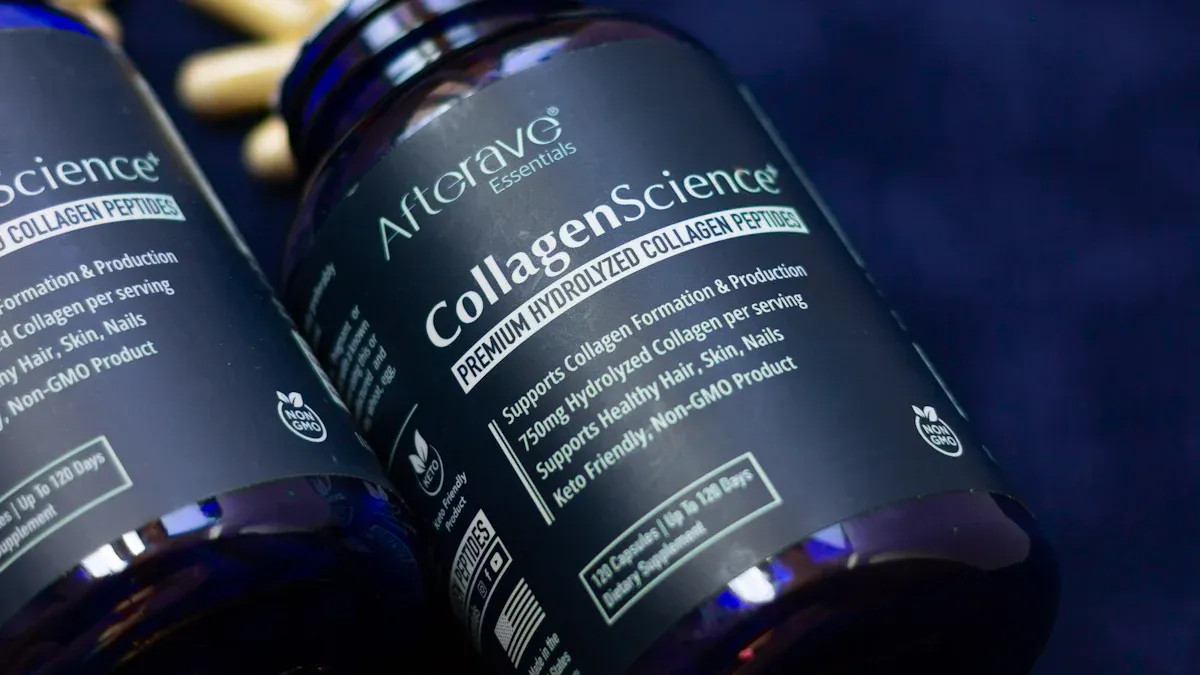
Collagen peptides are available in powder, capsule, and liquid forms. Powders allow for flexible dosing and can be mixed into beverages or foods. Liquids offer rapid absorption, with each 10ml sachet delivering a concentrated dose equivalent to 16 capsules. Capsules provide convenience but may require multiple pills to reach an effective dose.
| Form | Dosage per Serving | Absorption Rate |
|---|---|---|
| Powder | 5g to 15g | High |
| Capsule | 500mg to 1g | Moderate |
| Liquid | 8,000mg | Very High (90-95%) |
- Powders deliver higher doses in a single serving.
- Hydrolyzed collagen is easily absorbed in both forms.
- Liquid collagen has a significantly higher absorption rate (90-95%) compared to capsules (40-45%).
Note: For optimal results, users should take collagen peptides daily and combine them with a balanced diet and sun protection.
Comparison with Other Collagen Sources
Consumers often compare bovine collagen peptide with marine and plant-based alternatives. Marine collagen, derived from fish, contains predominantly Type I collagen, which is essential for skin health. It offers higher bioavailability due to smaller peptide size, resulting in faster improvements in skin elasticity and hydration. Studies show that marine collagen can significantly reduce wrinkle depth and enhance overall skin appearance.
| Aspect | Marine Collagen | Bovine Collagen |
|---|---|---|
| Bioavailability | Higher due to smaller peptides | Lower compared to marine collagen |
| Type of Collagen | Predominantly Type I | Various types, less effective for skin |
| Efficacy for Skin | More effective for elasticity and hydration | Less effective for skin-related concerns |
Bovine collagen peptide remains a cost-effective and widely available option, especially for those with shellfish allergies. However, environmental and ethical considerations differ between sources. Cattle ranching for bovine collagen contributes to deforestation and greenhouse gas emissions, while marine collagen production depends on sustainable fishing practices. Plant-based alternatives offer lower resource intensity and greater transparency but do not provide true collagen.
| Consideration | Bovine Collagen | Marine Collagen | Plant-Based Alternatives |
|---|---|---|---|
| Deforestation | Significant due to cattle ranching | Minimal, but depends on sourcing | None |
| Greenhouse Gas Emissions | High due to livestock farming | Moderate, varies with fishing practices | None |
| Resource Intensity | High (water and feed) | Moderate (depends on fishing methods) | Low (plant-based) |
| Animal Welfare | Concerns with factory farming | N/A | N/A |
| Sourcing Transparency | Often lacks transparency | Varies by supplier | Generally more transparent |
| Indigenous Rights and Land Use | Often displaces communities | N/A | N/A |
- Bovine collagen is relatively inexpensive due to the large beef industry.
- Marine collagen is generally more expensive but offers higher bioavailability.
- Bovine collagen is widely available at health and grocery stores.
- It is a cost-effective option compared to marine collagen.
- Bovine collagen is more cost-effective than marine collagen.
- It is a great choice for those with shellfish allergies.
Callout: Individuals should consider efficacy, cost, availability, and environmental impact when choosing a collagen supplement.
Bovine collagen peptide demonstrates effectiveness and safety for aging skin in 2026. Consumers should review supplement criteria, including origin, absorption, and dosage:
| Criteria | Description |
|---|---|
| Origin of collagen | Choose traceable, responsibly sourced collagen. |
| Absorption & bioavailability | Select hydrolyzed collagen for optimal absorption. |
| Dosage criterion | Use 2.5g to 5g daily, not exceeding 20g. |
Individuals must consult a healthcare provider before starting supplementation. Important factors include:
- Potential side effects like gastrointestinal discomfort or allergic reactions.
- Dietary restrictions and allergies.
- Limited research for pregnancy or breastfeeding.
FAQ
What is the best time to take bovine collagen peptide?
Most experts recommend taking bovine collagen peptide in the morning or evening. Consistency matters more than timing for optimal results.
Can vegetarians or vegans use bovine collagen peptide?
Bovine collagen peptide comes from animal sources. Vegetarians and vegans should consider plant-based alternatives, as true collagen only exists in animal tissues.
How long does it take to see results from supplementation?
Visible improvements in skin hydration and elasticity usually appear after eight to twelve weeks of daily use. Individual results may vary.
See Also
The Health Benefits of Bovine Gelatin Powder Explained
Understanding Bovine Gelatin Powder: Ingredients and Production Process
Comparing Bovine Gelatin Powder With Fish and Pork Varieties