Are Boiling Water Dispensers a Smart Kitchen Upgrade? The Pros and Cons
A boiling water dispenser can be a smart upgrade when its convenience outweighs the initial cost. This modern appliance gives you instant hot water for cooking and drinks.
Deciding if it's right for you means weighing the daily benefits against the upfront investment and future upkeep.
Key Takeaways
- Boiling water dispensers offer instant hot water. They make cooking and cleaning faster. They also free up counter space.
- Dispensers are safer than kettles. They have child-proof locks. Their spouts stay cool to the touch.
- Dispensers cost more money at first. They also need regular filter changes. Kettles are cheaper and simpler.
The Pros: Why It's a Smart Upgrade
A modern hot water tap offers more than just a quick cup of tea. You gain significant advantages in convenience, efficiency, and kitchen design. These benefits often make it a truly smart upgrade for many homes.
Unmatched Convenience on Demand
Imagine having near-boiling water available the moment you need it. You eliminate the wait for a kettle to boil. This instant access transforms your daily kitchen routine. You can speed up countless tasks and simplify your meal preparation.
A hot water tap streamlines more than just your morning coffee. It becomes an essential tool for cooking and cleaning throughout the day.
Many common kitchen jobs become faster and easier.
- Cooking Pasta and Vegetables: You can fill a pan with boiling water instantly. This gets your pasta or vegetables cooking in seconds.
- Sanitizing Items: You can quickly sterilize baby bottles or sanitize cutting boards without waiting.
- Cleaning Pots and Pans: A direct stream of very hot water helps dislodge stubborn, greasy food stains.
- Thawing Frozen Foods: You can safely and quickly thaw meat or other frozen items.
- Warming Baby Bottles: A dispenser provides a fast way to warm a baby's bottle to the right temperature.
Superior Energy and Water Efficiency
You might think keeping water hot all day uses a lot of energy. However, modern dispensers are highly insulated. They function like a thermos, using very little power to maintain the water's temperature. This is often more efficient than repeatedly boiling a kettle from cold.
A kettle uses a large burst of energy every time you turn it on. A dispenser uses small, infrequent bursts to stay ready. Let's compare the energy usage.
| Appliance | Typical Energy Consumption | Notes |
|---|---|---|
| Hot Water Dispenser | 0.5–1.0 kWh per day on standby | Keeps water hot and ready 24/7. |
| Electric Kettle (1.7L) | ~0.15 kWh per boil | Boiling 4 times a day uses ~0.6 kWh. |
While a single kettle boil is cheap, the costs add up. A dispenser's steady, low energy use can be more economical over a month, especially in a busy household. You also save water because you only dispense the exact amount you need. You no longer have to guess and re-boil a half-full kettle.
Sleek, Space-Saving Kitchen Design
A kettle takes up valuable counter space. A boiling water dispenser frees up that space for a cleaner, more organized look. The main tank sits hidden away under your sink. The only visible part is a slim, stylish tap next to your main faucet.
This minimalist approach is perfect for modern kitchens.
- Integrated Look: You can choose a tap style that matches your main faucet. Some models even combine hot, cold, and boiling water into a single fixture.
- Clutter-Free Countertops: Removing the kettle and its power cord creates a more open and streamlined work area.
- Compact Footprint: The under-sink unit is designed to be compact, leaving you with storage space for other essentials.
These dispensers feature sleek, vertical forms and clean lines. They fit seamlessly into your kitchen design instead of adding to the clutter.
Enhanced Safety Features
Many people worry about the safety of an instant hot water tap, especially with children in the house. Manufacturers have designed these appliances with multiple safety features that make them safer than a traditional kettle. You reduce the risk of spills and burns from handling a heavy, hot kettle.
Modern dispensers include several layers of protection:
- Child-Proof Locks: Most taps require a two-step action, like pushing down and turning a handle. This makes it very difficult for a small child to operate accidentally.
- Spring-Loaded Handles: The water flow stops the instant you let go of the handle. This prevents the tap from being left on.
- Insulated, Cool-Touch Spouts: The spout itself remains cool to the touch, even while dispensing boiling water. This feature prevents accidental contact burns.
- Controlled Water Flow: The water comes out in a steady, controlled stream, not a splashy gush. This reduces the risk of splashing and scalding.
These built-in mechanisms provide peace of mind and make the dispenser a secure choice for a family kitchen.
The Cons: Potential Downsides of a Boiling Water Dispenser
While a boiling water dispenser offers many benefits, you should also consider the potential drawbacks. These appliances are not the right fit for every kitchen or budget. Understanding the downsides helps you make a fully informed decision.
The High Initial Investment
The most significant barrier for many people is the upfront cost. A hot water dispenser is a considerable investment compared to a simple electric kettle. You are paying for advanced technology, professional-grade components, and a sleek design. The initial purchase price, and sometimes installation, can be substantial.
The price difference is not small. You can buy several high-quality kettles for the price of one entry-level dispenser system.
Let's look at a general cost comparison to put it in perspective.
| Product | Typical Initial Cost Range |
|---|---|
| Hot Water Dispensers | $100 - $200+ |
| Electric Kettles | $30 - $50 |
This table shows that even a basic dispenser costs significantly more than a premium kettle. High-end models with more features can cost much more, sometimes exceeding several hundred dollars.
Ongoing Maintenance and Filter Costs
Your spending does not stop after the initial purchase. These systems require regular maintenance to function correctly and safely. The two main ongoing costs are filter replacements and descaling. Filters remove impurities and protect the tank, while descaling prevents limescale buildup that can damage the heating element.
Regular upkeep is essential for several reasons:
- Improves Energy Efficiency: A clean heating tank uses less energy to stay hot.
- Extends Product Lifespan: Proper care helps the unit last for many years.
- Ensures Clean, Safe Water: It prevents limescale and residue from affecting water taste and clarity.
- Prevents Bacteria Growth: Cleaning stops microbes from growing in the warm water tank.
You should follow a consistent maintenance schedule. The frequency depends on your water hardness and how much you use the tap.
| Maintenance Item | Recommended Frequency (Home Use) |
|---|---|
| Descaling | Every 2–3 months |
| Filter Replacement | Every 9–12 months |
These costs add up over time. You must factor filter cartridges and descaling solutions into your long-term budget.
Under-Sink Installation Requirements
Unlike a kettle that you just plug in, a dispenser requires installation. The process involves both plumbing and electrical work under your sink. This can be a challenge, especially in older kitchens or small spaces.
You must have enough room for the boiler unit and proper connections.
- You need sufficient space to mount the hot water tank vertically.
- You need access to a cold water supply line.
- You must have a standard grounded electrical outlet nearby.
The installation itself has specific steps that may require a professional.
- Plumbing: You will need to attach a T-valve to your cold water supply line. You then connect tubing from the valve to the dispenser system. You should wrap all threaded connections with Teflon tape to prevent leaks.
- Electrical: The dispenser's heater needs its own power source. You should plug it into a GFCI (Ground Fault Circuit Interrupter) outlet for safety. You should never use an extension cord.
If you are not comfortable with plumbing or electrical work, you will need to hire a professional. This adds another expense to the total cost.
Limited Temperature and Flow Control
Most standard hot water dispensers deliver water at a single, preset temperature. This is usually just below boiling, around 200°F (93°C). This temperature is great for black tea, instant coffee, and cooking. However, it may be too hot for delicate beverages like green or white tea, which brew best at lower temperatures.
While convenient, a fixed temperature lacks the versatility that some users might want for specialty drinks.
Some premium models offer more control, but they come at a higher price.
- The InSinkErator HWT-300 has a digital touch-screen to set temperatures between 190°F and 210°F.
- The Waring WWB3G allows you to choose temperatures from 150°F to 205°F, making it suitable for a wider range of beverages.
The water flow is also fixed. It comes out as a steady, safe stream rather than a fast gush. This is a safety feature to prevent splashing, but it means filling a large pot will take longer than with a traditional faucet.
Boiling Water Dispenser vs. Traditional Kettle
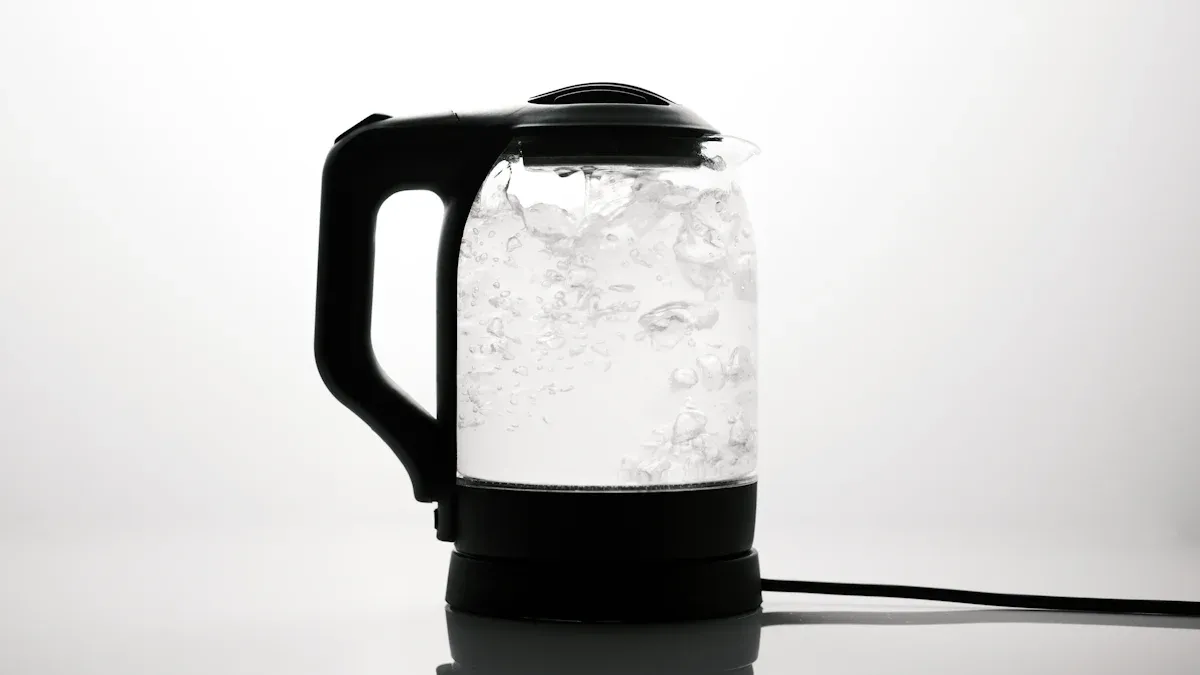
Choosing between a dispenser and a kettle depends on your budget, daily habits, and performance needs. You should compare them directly to see which appliance fits your kitchen best.
Cost Comparison: Upfront vs. Long-Term
A kettle has a very low upfront cost. A boiling water dispenser requires a much larger initial investment. However, the long-term costs can be different. A dispenser becomes more energy-efficient if you use hot water frequently throughout the day.
Keeping the dispenser's tank hot uses less energy than boiling a kettle from cold multiple times. You pay for round-the-clock convenience, which can be more economical for a high-use household.
Performance: Speed and Capacity
A dispenser gives you hot water instantly, while a kettle makes you wait. This speed difference is significant during a busy morning.
| Device Type | Time for One Cup |
|---|---|
| Instant Hot Water Dispenser | ~15 seconds |
| Standard Kettle | ~2 minutes |
Dispensers also offer a larger ready-to-use capacity. Most under-sink tanks hold between 2.5 and 4 liters. This means you can get many cups of hot water before the tank needs to reheat. A kettle holds less and requires a full re-boil each time it empties.
Lifestyle Fit: Which is Right for You?
The right choice depends on your daily routine. A dispenser is a smart upgrade if you value speed and convenience. It is ideal for busy people who need hot water on demand.
- You get instant hot water for coffee, tea, or cooking.
- You save time during your busy schedule.
- You can streamline tasks and improve your kitchen's efficiency.
If you only use hot water once or twice a day, a traditional kettle is a more practical and budget-friendly option.
Key Factors to Consider Before Buying
Before you decide, you should think about your specific needs, the available options, and the dispenser's long-term worth. Making a smart choice involves more than just looking at the price tag.
Assessing Your Household's Needs
Your daily habits and family size are the most important factors. A large, busy family has different needs than someone living alone.
For families with children, convenience and safety are top priorities. Instant access to hot water for meals and drinks simplifies daily routines, while child-safety locks are essential.
Consider your usage:
- High Use: A large family may need a unit with a bigger tank or a tankless design to keep up with demand.
- Low Use: If you only need hot water a few times a day, a smaller, more affordable model might be enough.
Understanding Different Dispenser Types
Dispensers come in several styles, each with its own pros and cons. The main types are under-sink units and countertop models. Your kitchen layout and budget will help you choose the right one.
| Dispenser Type | Best For | Key Feature |
|---|---|---|
| Under-Sink | Saving counter space | Hidden tank, integrated tap |
| Countertop | Renters or easy setup | Portable, lower initial cost |
| Tankless | High-volume use | Endless hot water, energy-efficient |
Evaluating Long-Term Value
A quality boiling water dispenser can last between 5 and 10 years. Its lifespan depends on build quality, your water hardness, and how well you maintain it. Regular filter changes and descaling are crucial to protect internal parts.
Beyond its lifespan, this appliance can add value to your home. It is a modern feature that many home buyers look for in a kitchen. This upgrade can make your home more appealing and may even provide a return on investment of 50-70% when you decide to sell.
A boiling water dispenser is a smart upgrade if you prioritize daily convenience and a streamlined kitchen. You must be prepared for the upfront cost and routine maintenance. If budget is your primary concern or your hot water needs are minimal, a traditional kettle remains a more practical choice.
Ultimately, the smarter choice depends on your personal priorities, budget, and how you use your kitchen every day.
FAQ
How hot is the water from a dispenser?
Most dispensers heat water to around 200°F (93°C). This is just below a full boil. Some high-end models let you adjust the temperature for different types of drinks.
How long does a boiling water dispenser last?
You can expect a quality dispenser to last 5 to 10 years. Its lifespan depends on the model, your water quality, and how well you perform regular maintenance.
Are boiling water dispensers safe for kids?
Yes, they are generally safer than kettles. Most models include child-proof safety locks and cool-touch spouts. These features prevent accidental burns and keep your family safe in the kitchen.