Zebra Blind Fabric The Definitive Buyer's Guide
The most critical factor in choosing a zebra blind is its fabric material, which dictates durability, style, and ease of care. The fabric's opacity level—light-filtering versus blackout—determines its performance in light control and privacy. With blinds capturing over 58% of market revenue in 2024, selecting the right zebra blind fabric is essential.
Key Takeaways
- Choose zebra blind fabric based on its material, how much light it blocks, and where it will be used.
- Polyester is strong and lasts a long time, while PVC-coated fabrics are good for wet places like kitchens.
- Light-filtering fabrics let some light in, but blackout fabrics block almost all light for bedrooms.
Key Zebra Blind Fabric Materials
The material of a zebra blind is the foundation of its performance, dictating everything from its appearance to its lifespan. Each fabric type offers a unique combination of durability, style, and functional benefits tailored to different needs and environments. Understanding these materials is the first step toward making an informed purchase.
Polyester: The Durable Standard
Polyester is the most common and versatile material for zebra blinds, establishing the industry standard for its exceptional durability and value. Unlike natural fibers that can fade within 2-3 years, high-quality polyester fabrics maintain their color for 8-10 years or more, even in direct sunlight. Premium polyester achieves a color fastness rating of Grade 4-5 on standard scales, ensuring minimal fading and providing up to 90-95% UV blockage.
The construction of the fabric plays a critical role in its function. Specific technical details determine the blind's light control, durability, and operational smoothness.
| Material Specification | Sheer Sections | Opaque Sections | Performance Impact |
|---|---|---|---|
| Fabric Weight | 150-200 GSM | 250-350 GSM | Durability, operation smoothness |
| Openness Factor | 15-25% | <2% | Light control, privacy levels |
| Weave Density | 12-18 threads/inch | 24-32 threads/inch | UV protection, view-through |
| Color Fastness | Grade 4-5 | Grade 4-5 | Fade resistance, appearance retention |
The quality grade of the polyester directly correlates with its expected lifespan and cost. Budget-grade options may require replacement sooner, while commercial-grade systems are built for long-term performance in high-use settings.
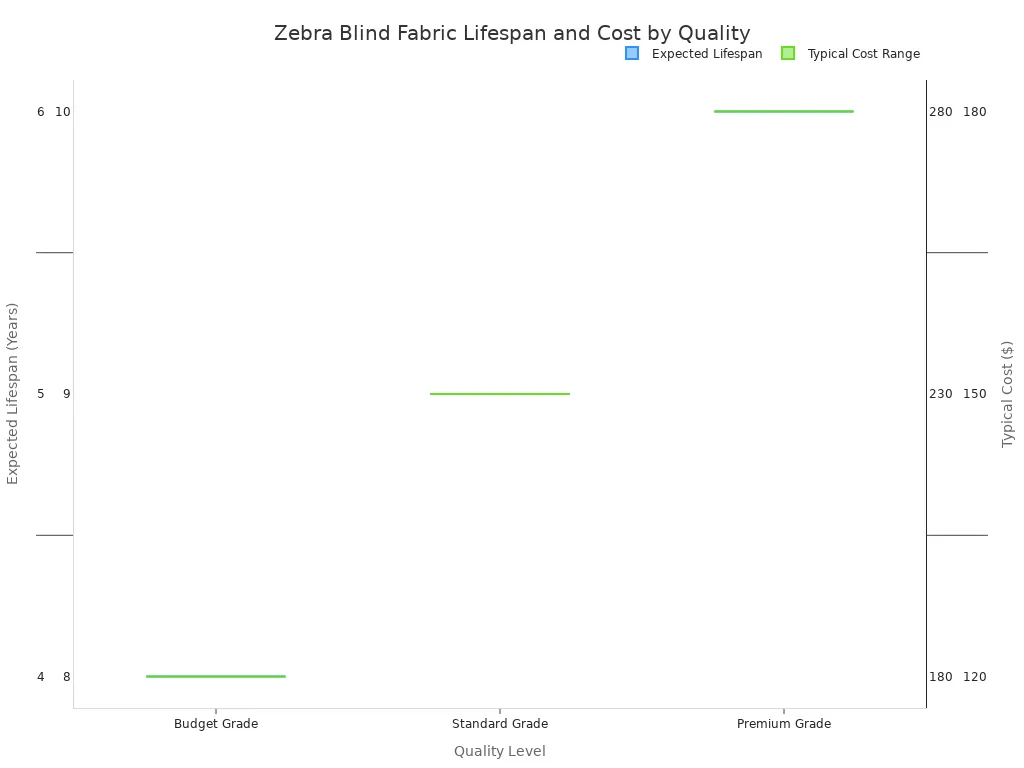
Note: Investing in a higher-grade fabric is often more cost-effective over time. Premium and commercial-grade blinds offer superior longevity and resistance to environmental factors like UV exposure and coastal air, reducing the need for frequent replacements.
| Quality Level | Expected Lifespan | Typical Cost Range |
|---|---|---|
| Budget Grade | 4-6 years | $120-180/window |
| Standard Grade | 8-10 years | $180-280/window |
| Premium Grade | 12-15 years | $280-420/window |
| Commercial Grade | 15+ years | $350-500/window |
Linen & Textured Blends: The Stylish Choice
For interiors demanding a touch of elegance and warmth, linen and textured blends provide a sophisticated alternative. These fabrics often use polyester as a base but feature weaves and finishes that mimic the organic, soft appearance of natural linen. This approach combines high-end aesthetics with the practical durability of synthetic fibers.
A prime example is a premium dual-layer fabric designed with precise, alternating stripes. With a 7.5cm solid band and a 5.5cm sheer band, this design allows users to seamlessly transition between gentle, filtered daylight and complete privacy. This dual-function "zebra effect" makes such stylish blends ideal for spaces that serve multiple purposes, including living rooms, home offices, and hotel suites where both visibility and discretion are valued.
PVC-Coated & Specialty Fabrics: The Performance Option
When a room presents unique challenges like high humidity or stringent safety requirements, PVC-coated and other specialty fabrics offer targeted performance. A PVC-coated zebra blind fabric is an excellent solution for kitchens, bathrooms, and laundry rooms.
These performance fabrics offer several key advantages:
- Excellent Moisture Resistance: A composition of up to 70% PVC makes the fabric highly resistant to moisture, preventing mold and mildew growth.
- Enhanced UV Protection: The coating adds another layer of defense against harsh sunlight, protecting interiors.
- Easy Maintenance: The smooth, non-porous surface is simple to wipe clean, making it practical for mess-prone areas.
Beyond moisture resistance, specialty fabrics can meet critical safety codes. Fire-retardant (FR) options are essential for commercial buildings, schools, and healthcare facilities. These fabrics undergo rigorous testing to comply with strict fire classification standards.
- Composition: Often a blend, such as 29% Polyester and 71% PVC.
- Fireproofing Grade: Certified to meet standards like NFPA 701, BS 5867 Part 2 Type B, and California Administrative Code Title 19.
These high-performance materials ensure that zebra blinds can be installed safely and effectively in virtually any environment, providing peace of mind alongside light control.
Opacity Explained: Light Control and Privacy
A fabric's opacity level directly governs its ability to manage sunlight and ensure privacy. This characteristic is the most important functional decision a buyer will make. The choice between light-filtering and blackout options determines how a room feels and operates throughout the day.
Light-Filtering Fabrics
Light-filtering fabrics are designed to gently diffuse incoming sunlight. They reduce harsh glare and block UV rays while illuminating a space with soft, natural light. This opacity level maintains daytime privacy, obscuring the view from the outside without sacrificing brightness. Their versatility makes them an excellent fit for various rooms.
Light-filtering options are ideal for social and productive spaces where complete darkness is unnecessary. Their best applications include:
- Living Rooms: They offer entertainment flexibility and enhance the room's style.
- Home Offices: They reduce screen glare and support a productive atmosphere.
- Kitchens: They provide brightness while being easy to maintain.
Room-Darkening vs. Blackout Fabrics
For spaces requiring superior light control, room-darkening and blackout fabrics offer distinct solutions. Room-darkening materials block the majority of light, allowing only 1% to 5% to pass through. This creates a dim, restful environment perfect for napping or reducing intense sunlight.
Blackout fabrics provide the ultimate level of light control. A high-quality blackout zebra blind fabric is engineered to block nearly 100% of sunlight, creating near-total darkness. Beyond light blockage, thermal blackout blinds feature advanced weaves that enhance insulation. This design helps retain heat during winter and block it in summer, contributing to energy savings of up to 30%.
How to Choose the Right Fabric for Each Room
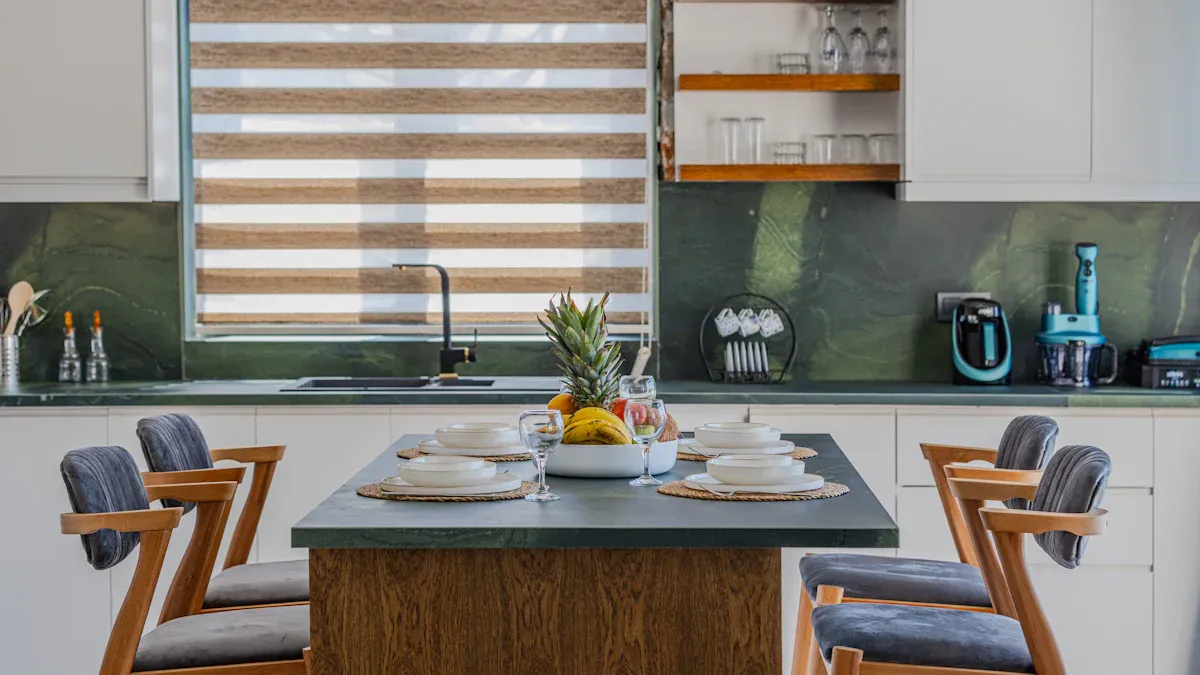
Selecting the appropriate fabric is crucial for maximizing the blind's functionality in a specific room. The demands of a living room differ greatly from those of a bedroom or bathroom. A strategic choice ensures the blinds meet the room's unique needs for light control, privacy, and durability.
For Living Rooms & Offices
Living rooms and offices are dynamic spaces that require versatile light management. The goal is to create a comfortable atmosphere that balances natural light with the need to reduce glare on screens.
Light-filtering fabrics are an excellent choice for these areas. They soften incoming sunlight, creating a warm and inviting ambiance while maintaining daytime privacy. For office environments, reducing screen glare is a top priority to ensure a productive workspace.
- Light-Filtering Zebra Blinds: These are ideal for living areas and offices. They allow occupants to enjoy natural light without harshness.
- UV-Resistant Fabrics: Materials with high UV blockage protect furniture, flooring, and artwork from fading over time.
- Solar Screen Fabrics: These specialized options excel at minimizing glare while preserving the view outside, making them perfect for rooms with scenic windows.
A comparison of fabric functionalities helps clarify the best choice for these multi-use spaces.
| Fabric Type | Key Features | Best For |
|---|---|---|
| Light Filtering | Soft light diffusion, daytime privacy, UV protection. | Creating a warm, ambient feel in living and dining rooms. |
| Solar Screen | Superior glare reduction, preserves outdoor views, high UV blockage. | Offices with many computer screens or sun-facing rooms. |
| Textured Blends | Enhanced aesthetic appeal, soft light diffusion. | Living rooms where style is as important as function. |
Pro Tip: For home offices, prioritize fabrics with a lower openness factor. This minimizes distracting reflections on monitors and enhances focus without completely darkening the room.
For Bedrooms & Media Rooms
Bedrooms and media rooms demand superior light control to create an optimal environment for rest and entertainment. In these spaces, blocking external light is the primary objective.
Room-darkening and blackout fabrics are the definitive solutions. While both offer significant light reduction, they serve slightly different purposes.
- Room-Darkening Zebra Blinds: These block most incoming light, creating a dim environment perfect for nurseries or daytime naps. They provide excellent privacy.
- Blackout Zebra Blinds: For those who need complete darkness, blackout fabrics are essential. They block nearly 100% of light, enhancing sleep quality and creating a theater-like experience in media rooms.
Beyond light blockage, blackout fabrics offer additional benefits. Their dense construction provides a thermal barrier, helping to insulate the room against heat and cold. This feature can lead to improved energy efficiency. They also offer a noticeable degree of noise reduction, further contributing to a peaceful and private sanctuary.
For Kitchens & Bathrooms
Kitchens and bathrooms present a unique challenge due to high humidity and the potential for splashes or stains. Fabric selection in these areas must prioritize moisture resistance and ease of maintenance. A durable zebra blind fabric is essential for longevity in these demanding environments.
Performance materials are the most practical choice. Fabrics with a PVC coating or those made from vinyl are non-porous, which prevents them from absorbing moisture. This quality is critical for preventing the growth of mold and mildew.
Consider these moisture-resistant options for kitchens and bathrooms:
- PVC or Vinyl Fabrics: These materials are inherently waterproof and incredibly easy to clean. A simple wipe-down with a damp cloth is all that is needed to remove splashes and grime.
- Faux Wood Slats: Some zebra blind styles incorporate faux wood-style slats, which offer the same waterproof and mold-resistant benefits as PVC.
- Specialty Coated Polyester: High-quality polyester with a protective coating can also perform well, offering a balance of durability and style.
Choosing one of these performance fabrics ensures the blinds will remain hygienic and functional for years, even in the most humid rooms of the house.
A Guide to Zebra Blind Fabric Styles
Beyond function, the style of a zebra blind fabric plays a crucial role in defining a room's aesthetic. Color and texture work together to create mood, influence perception, and complete an interior design vision. Making a thoughtful choice ensures the blinds are a beautiful and integral part of the decor.
Choosing the Right Color
Color selection directly impacts a room's atmosphere and perceived dimensions. Light-colored blinds, such as shades of white or cream, reflect daylight. This reflection makes a space feel larger and brighter. Darker colors absorb light, creating a cozier, more enclosed feeling. They also absorb more solar heat, which can make a room feel warmer.
Current interior design trends offer a wide palette for any style:
- Subtle Earth Tones: Taupe, olive, and soft browns create a calming, natural atmosphere.
- Bold Jewel Tones: Emerald green and sapphire blue act as dramatic focal points.
- Pastel Shades: Soft lavender and mint contribute to serene environments.
- Minimalist Whites and Grays: These classics provide a sleek, modern, and timeless appeal.
Design Tip: Consider the room's existing color scheme and lighting. A well-chosen color can either blend seamlessly or provide a striking contrast that elevates the entire space.
The Impact of Texture and Weave
Texture adds a layer of sensory richness and visual interest that flat fabrics cannot match. The weave of the material introduces depth and character, transforming the blind from a simple window covering into a sophisticated design element.
Different weaves create distinct effects. For example, intricate patterns like a Jacquard weave can introduce a subtle elegance and a strong sense of dimension. These complex designs catch the light in unique ways, adding a touch of luxury and refinement. A more pronounced, slub-like texture can evoke a rustic or organic feel, perfect for casual and comfortable spaces. The right texture enhances the overall design and contributes to the room's tactile quality.
Maintaining Your Zebra Blind Fabric
Proper maintenance preserves the beauty and functionality of your blinds. A consistent cleaning routine prevents dust buildup and addresses spills promptly, ensuring the fabric remains in excellent condition for years.
Routine Cleaning and Dusting
Regular dusting is the most effective way to keep blinds looking fresh. Homeowners can use several simple tools for this task.
- A microfiber cloth effectively traps and holds dust particles.
- A vacuum cleaner with a soft brush attachment gently removes surface debris.
- A classic feather duster works well for a quick, light cleaning.
The ideal cleaning frequency depends on the room's environment. A structured schedule helps prevent dirt accumulation.
| Location/Condition | Light Dusting Frequency | Deep Cleaning Frequency |
|---|---|---|
| Living Rooms & Bedrooms | Once a week | Every six months |
| Kitchens & Bathrooms | Weekly or more | Every couple of months |
| Homes with Pets/Dust | 1-2 times a week | Monthly or as needed |
Handling Stains and Spills
Accidents happen, but quick action can prevent permanent stains. For common spills on polyester fabrics, simple household solutions are often effective.
Pro Tip: Always test any cleaning solution on a small, inconspicuous area of the zebra blind fabric first to ensure it does not cause discoloration.
- For Coffee Stains: Mix equal parts white vinegar and water. Gently blot the stain with a clean cloth dipped in the solution.
- For Ink Stains: Dab the spot with a cotton ball soaked in rubbing alcohol. Avoid over-saturating the fabric. Blot gently until the ink lifts.
Buyers should first determine the room's necessary function, choosing between light-filtering or blackout options. Next, they select a material that balances aesthetic goals with maintenance needs. A final choice of color and texture enhances the interior design. Exploring samples is a crucial last step; consumers can order free samples from manufacturers like Factory Direct Blinds to find their perfect match.
FAQ
Can zebra blinds provide complete privacy?
Yes, zebra blinds offer complete privacy. Users can align the solid fabric bands to block the view from the outside, securing the room from prying eyes, especially at night.
Are zebra blinds energy-efficient?
Certain zebra blind fabrics improve energy efficiency. Blackout and thermal options provide insulation, helping to regulate room temperature and potentially lower energy bills by reducing heat transfer through windows.
How do I choose between light-filtering and blackout?
Homeowners select light-filtering fabrics for social areas like living rooms to create a bright ambiance. They choose blackout fabrics for bedrooms to ensure darkness and promote restful sleep.
See Also
Expert Guide Bar Tips for Effortless and Smoother Cutting Performance
Authentic User Insights on Top-Rated Wooden Bamboo Storage Solutions
Homeowner's Handbook: Harmonizing Hinge Finishes with Your Door Hardware
Leading Precoating Materials for Advanced Filtration Systems: 2025 Outlook
Twenty-Five Inspiring Construction Website Designs: Best Picks to Emulate