Find the Perfect Vertical Sewage Pump for Your Basement
Choosing the right vertical sewage pump for a basement starts with a critical decision. Homeowners must select between a standard pump for typical waste or a grinder pump for tougher solids. A correct selection prevents disastrous backups and expensive repairs.
A sewage backup can easily cost over $10,000 in cleanup and restoration fees.
Step 1: Standard Sewage Pump or Grinder Pump?
The first decision in selecting a vertical sewage pump involves understanding the type of waste it will handle. This choice determines whether a standard sewage pump or a more powerful grinder pump is necessary for the application.
When to Choose a Standard Sewage Pump
A standard sewage pump is the ideal choice for most typical residential homes. These pumps are engineered to transfer wastewater from a lower to a higher elevation, such as from a basement bathroom to a septic tank or city sewer line. They effectively handle specific types of waste without issue.
A standard pump is suitable for applications involving:
- Human waste and toilet paper
- Wastewater from showers and sinks
- Pumping to a septic tank or a nearby gravity sewer main
These pumps are designed for moving high volumes of raw sewage over short distances. They ensure smooth wastewater movement in a controlled home environment.
When You Need a Grinder Pump
A grinder pump is essential for more demanding situations. Unlike standard pumps, a grinder pump uses powerful steel blades to shred and macerate solids into a fine slurry. This capability is crucial when dealing with materials that would otherwise cause clogs.
Consider a grinder pump in the following scenarios:
- Rental Properties: Landlords often choose grinder pumps to protect their investment. Tenants may flush items like sanitary products, 'flushable' wipes, or paper towels, which a standard pump cannot handle.
- Tough Solids: If a household frequently disposes of challenging materials, a grinder prevents system backups.
- Pressurized Mains: Grinder pumps are necessary for pumping wastewater over long distances or into a pressurized city sewer main.
For these demanding jobs, a robust model like those offered by Liancheng Pumps provides the power needed to pulverize difficult solids and ensure reliable operation.
Step 2: Key Features for a Reliable Basement Pump
After deciding between a standard or grinder model, homeowners should evaluate the key technical features of a vertical sewage pump. These specifications directly impact performance, reliability, and longevity.
Horsepower (HP) and Flow Rate (GPH)
Horsepower indicates the motor's power, while the flow rate, measured in gallons per hour (GPH), shows how much wastewater the pump can move. The required power depends on the total dynamic head—the combined vertical distance the pump must lift the sewage plus the friction from the pipes.
| Pump Type | Typical Horsepower (HP) |
|---|---|
| Residential Standard Pump | 1/2 HP |
| Residential Grinder Pump | 1 HP or more |
A standard residential pump often requires 1/2 HP, while grinder pumps start at 1 HP to handle tougher solids.
Construction Material: The Cast Iron Standard
The pump's housing material is critical for durability. Cast iron is the industry standard for sewage pumps due to its exceptional strength and wear resistance.
In the harsh, corrosive environment of a sewage basin, cast iron provides superior longevity. It also excels at dissipating heat away from the motor, which helps prevent overheating and extends the motor's operational life.
Float Switch Types for Automatic Operation
A float switch automates the pump's operation, turning it on and off as water levels rise and fall. The two most common types are tethered and vertical switches.
- Tethered switches require a wider basin to operate without getting stuck.
- Vertical switches move up and down on a rod, making them suitable for smaller basins.
Reliable switches with few moving parts are less prone to failure from debris in the basin.
Matching Your Pump's Discharge Size
The pump's discharge outlet must match the size of the discharge pipe, which is typically 2 inches for residential sewage applications. Using a pipe that is too small increases friction, forcing the pump to work harder and reducing its efficiency. The pipe diameter must be large enough to maintain a flow velocity of at least 2 feet per second. This speed ensures solids are flushed completely out of the system, preventing clogs.
Understanding Your Vertical Sewage Pump System
A vertical sewage pump operates as the core of a larger system designed to move wastewater safely out of a basement. Understanding how these components work together clarifies the pump's vital role.
How a Vertical Pump Works in a Basin
The pump sits inside a sealed container called a sewage basin, which collects wastewater from basement fixtures. When the wastewater level rises, it lifts a float switch. This switch activates the pump's motor. The motor spins an impeller, which draws wastewater into the pump and forces it up through a discharge pipe. A complete system includes several key parts:
- Sewage Basin: A sealed container that holds the wastewater and pump.
- Impeller: A rotating part that moves wastewater into the pump.
- Motor: The power unit that drives the impeller.
- Float Switch: A sensor that turns the pump on and off based on the water level.
- Check Valve: A one-way valve in the discharge pipe that stops wastewater from flowing back into the basin.
- Housing: The protective outer case that encloses the pump's internal parts.
The Difference Between Sewage and Sump Pumps
Homeowners often confuse sewage pumps with sump pumps, but they serve very different functions. A sump pump removes clean groundwater to prevent flooding. A sewage pump handles wastewater containing solid waste. Using the wrong pump leads to system failure. A sump pump will clog and fail if used for sewage because it cannot process solids. However, a sewage pump can function in a sump pump application for clear water.
The table below highlights their key differences:
| Feature | Sump Pump | Sewage Pump |
|---|---|---|
| Purpose | Pumps out excess clear water to prevent flooding. | Pumps wastewater, including solids, into a sewer. |
| Capability | Handles clear water; cannot handle solid waste. | Handles larger solids and waste. |
| Maintenance | Requires less stringent maintenance. | Needs more maintenance due to managing solids. |
| Cost | Generally less costly for installation. | More costly due to complex mechanisms. |
Our Top Picks for Basement Sewage Pumps in 2025
Selecting the right pump involves balancing performance, reliability, and cost. Our top picks are evaluated on several key criteria. We assess construction material for durability, float switch design for reliability, and safeguards against harsh conditions. Overall value is a priority, focusing on the features and capabilities offered for the price. Higher-priced models often provide longer three-year warranties and enhanced clog resistance, reducing long-term costs. Budget-friendly options may have shorter one-year warranties but still deliver reliable performance for the investment.
Best Overall Standard Sewage Pump: Liberty Pumps LE51A
The Liberty Pumps LE51A stands out as the best overall choice for typical residential basements. It offers an exceptional balance of power, durability, and value. This pump is designed for homeowners who need to move wastewater containing human waste and toilet paper reliably.
Its heavy-duty cast iron construction provides excellent durability and helps dissipate motor heat, extending its operational life. The 1/2 HP motor is powerful enough for most homes, efficiently handling solids up to 2 inches in diameter.
Performance Specifications:
| Specification | Value |
|---|---|
| Horsepower | 0.5 HP |
| Solids Handling Size | 2 inch |
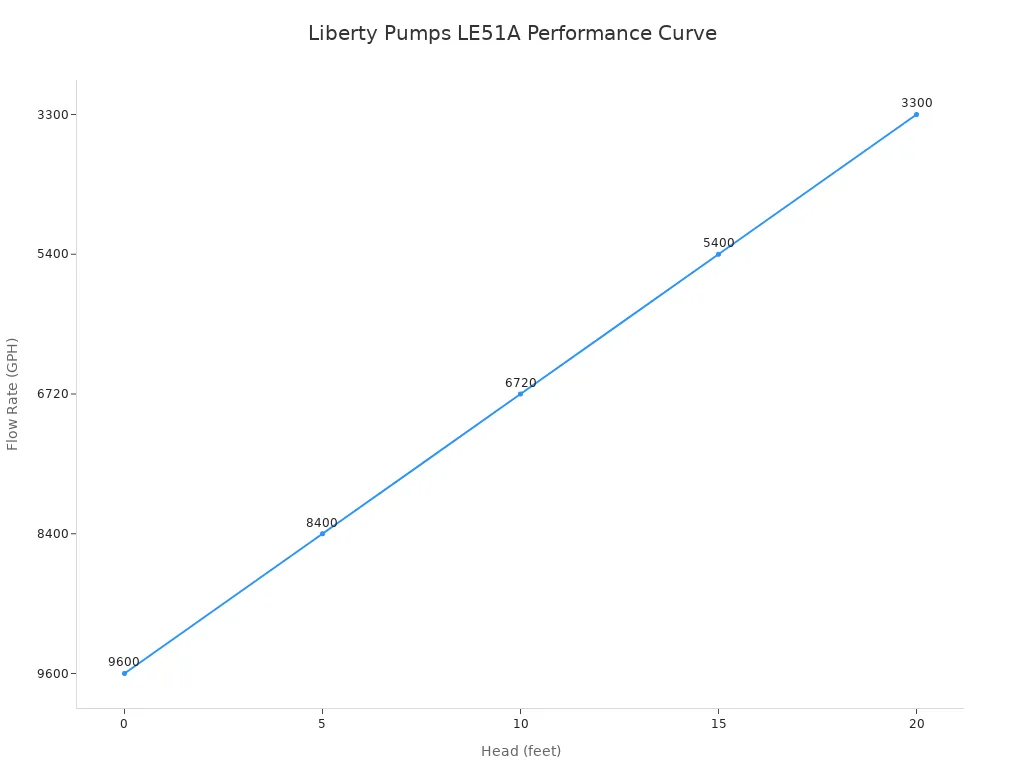
| GPH @ 5 feet | 8400 |
| GPH @ 15 feet | 5400 |
| Max Head | 24 Feet |
The LE51A delivers a strong flow rate across various head heights, ensuring it can push wastewater up and out of the basement effectively.
Users can expect a long service life from the LE51A, typically ranging from 7 to 15 years. It is a fast and powerful pump that competes well in its price range, making it ideal for homes where inappropriate items are not flushed.
Best Grinder Pump for Tough Jobs: Liancheng Pumps WQ-QG Series
For demanding applications like rental properties or homes where tougher solids are a concern, a grinder pump is the only reliable solution. The Liancheng Pumps WQ-QG series with a cutting device represents the pinnacle of grinder pump technology, engineered for maximum power and clog prevention.
These pumps feature powerful motors, often 1 HP or more, that drive a high-hardness alloy cutting system. This mechanism pulverizes difficult materials like sanitary wipes, paper towels, and other foreign objects into a fine slurry. This slurry can then be easily pumped through the discharge pipe without causing blockages.
Key features of a top-tier grinder pump like the WQ-QG series include:
- Powerful Motor: A thermally protected, hermetically sealed motor provides reliable, maintenance-free power.
- Durable Construction: A non-corrosive stainless steel rotor shaft and robust fasteners ensure an extended lifespan in corrosive sewage environments.
- Reliable Activation: An adjustable, mercury-free float switch provides dependable automatic operation and allows for manual override when needed.
A high-quality grinder pump from Liancheng Pumps is the ultimate defense against unexpected and costly backups, providing peace of mind for landlords and homeowners in high-risk situations.
Best Budget-Friendly Option: Wayne RPP50 Cast Iron Pump
Homeowners seeking a reliable yet affordable vertical sewage pump will find the Wayne RPP50 to be an excellent choice. It delivers solid performance without the premium price tag, making it a significant upgrade over cheaper box store models.
The RPP50 features a durable cast iron housing and a 1/2 HP motor capable of handling solids up to 2 inches. While its maximum flow rate is lower than premium models, it provides ample power for many standard basement applications. It is a dependable workhorse for homeowners on a budget.
Performance Comparison:
| Feature | Wayne RPP50 | Zoeller M267 |
|---|---|---|
| Pumping Speed | 5,700 GPH (at 0 ft) | 7,680 GPH |
| Max Head | 18 feet | 21.5 feet |
| Warranty | 1 year | 3 years |
| Sump Basin Min. | 18 inches | 15 inches |
The primary trade-off for its budget-friendly price is a shorter warranty and a lower expected lifespan of 5-10 years compared to premium pumps. However, for its cost, the Wayne RPP50 offers great value and is considered a trustworthy option for managing wastewater and debris.
Essential Installation and Maintenance Tips
Proper installation and routine maintenance are crucial for a sewage pump's longevity and reliable performance. Following best practices prevents premature failure and ensures the system operates efficiently for years.
A Quick Installation Checklist
A successful installation avoids common mistakes that lead to system failure. Installers should follow a structured process for optimal results.
- Position the Pump: Place the pump on a stable, flat surface at the bottom of the basin. Neglecting to fix the pump securely causes excessive vibration, which can damage mechanical seals and motor bearings.
- Connect Piping: Attach the discharge pipe and install a check valve to prevent backflow. Avoid using sharp 90-degree bends or reducing the pipe diameter, as this restricts flow and strains the pump.
- Drill a Weep Hole: Drill a small 3/16" hole in the discharge pipe below the check valve. This hole prevents air lock, a condition where trapped air stops the pump from moving water.
- Set the Float Switch: Install the float switch so it moves freely without touching the basin walls.
- Connect to Power: Plug the pump into a dedicated GFCI-protected outlet. This is a critical safety step.
- Test the System: Fill the basin with water to confirm the float switch activates the pump correctly and check for any leaks or unusual noises.
⚠️ Safety First: Always disconnect the pump from its power source before performing any work. Handling sewage requires proper protective gear. For all electrical work, hiring a licensed electrician is the safest option.
Simple Maintenance to Prevent Failure
Simple, regular checks can significantly extend a pump's service life and prevent catastrophic backups.
- Annual Inspection: Once a year, unplug the pump and remove it from the basin. Clean the pump and impeller, removing any stringy material or debris.
- Check Float Switch: Ensure the float switch can move freely and is not obstructed by debris.
- Listen for Changes: Pay attention to the pump's sound during operation. New or excessive vibrations can indicate a problem with the impeller or mounting.
- Inspect the Basin: Periodically check the basin for grease buildup or accumulated solids that could interfere with the pump's operation.
Choosing the right pump begins with identifying the waste type to select either a standard or grinder model. The Liberty Pumps LE51A is our top recommendation for most residential basements, providing an excellent balance of power and reliability. A quality pump, correctly installed and maintained, offers the best defense for a dry basement.