The Ultimate Review of Spring Loaded Hinges for 2025
For 2025, we name the TDC Hardware Adjustable Spring Hinge our top pick. It provides a reliable self-closing action, a feature that helps property owners comply with critical safety mandates like the fire codes in New York City and Los Angeles. These versatile spring loaded hinges are the best overall choice for most residential doors.
Our Top Pick: TDC Hardware Adjustable Spring Hinge
- Key Features: Adjustable Tension Control, Durable Steel Construction, and Multiple Finishes.
Best Spring Hinges of 2025 by Category
Choosing the right hinge depends on the specific demands of your door. Factors like door weight, traffic frequency, and application environment all play a crucial role. This guide breaks down our top selections for 2025, helping you find the perfect match for any project.
Best Overall: TDC Hardware Adjustable Spring Hinge
The TDC Hardware Adjustable Spring Hinge earns its top spot with an exceptional blend of performance, durability, and versatility. Its design provides a reliable self-closing function essential for safety and convenience in any home. The hinge's robust steel construction ensures long-term performance without fail.
Key performance features make this hinge a standout choice:
- Customizable Tension: It allows for precise adjustment of the closing speed and force. This accommodates different door weights and user preferences with a simple tool.
- Versatile Application: The hinge is suitable for a wide range of door sizes and weights, making it a go-to solution for most residential needs.
- Durable Materials: It is available in multiple materials and finishes, including corrosion-resistant stainless steel and classic brass. This allows for a perfect match with existing door hardware.
- Simple Installation: The product includes clear instructions and an easy-to-use adjustment mechanism, simplifying the installation process for professionals and DIY enthusiasts alike.
Expert Tip: The TDC hinge's adaptability makes it an excellent choice for upgrading multiple doors throughout a property, ensuring consistent performance and aesthetics from the garage entry to interior rooms.
Best Heavy-Duty: Acme Stainless Steel Spring Hinge
For doors that demand superior strength and resilience, the Acme Stainless Steel Spring Hinge is the leading heavy-duty option. It is engineered to handle substantial weight and withstand harsh conditions. Its thicker gauge stainless steel construction provides excellent corrosion resistance, making it ideal for exterior gates, solid-core wood doors, and commercial applications. These spring loaded hinges deliver the power needed to close heavy doors securely every time.
| Feature | Specification |
|---|---|
| Material | Commercial Grade Stainless Steel |
| Ideal Use | Solid Core Doors, Metal Doors, Exterior Gates |
| Capacity | Supports doors up to 150 lbs (with 3 hinges) |
Best for High-Traffic Doors: XYZ Ball Bearing Spring Hinge
High-traffic areas require a hinge that can endure constant use without wearing down. The XYZ Ball Bearing Spring Hinge excels in this category. The internal ball bearings significantly reduce friction between the hinge knuckles. This mechanism ensures an incredibly smooth and quiet operation, even after thousands of cycles. It is the perfect upgrade for busy hallways, office entryways, and public restrooms where durability and silent performance are paramount.
Primary Advantages:
- Extremely smooth and quiet door swing
- Enhanced durability for long service life
- Reduced stress on the door and frame
Best for Cabinets: PTSOC Self-Closing Cabinet Hinges
Spring hinges are not just for full-size doors. The PTSOC Self-Closing Cabinet Hinge brings automated closing action to your cabinetry. These compact hinges ensure that cabinet doors swing shut on their own, keeping kitchens and bathrooms looking tidy. They are an easy and affordable way to add a touch of modern convenience to furniture.
- Typical Applications:
- Kitchen and bathroom cabinets
- Wardrobes and storage units
- General furniture pieces
- Weight Limit: Each hinge is designed to support a standard cabinet door weighing up to 8kg.
Top Retailer Pick: Onward Full Mortise Spring Hinge
The Onward Full Mortise Spring Hinge is a favorite among retailers for its combination of safety, security, and accessibility. It provides a reliable, high-quality option that meets the needs of a broad customer base. Its certified performance gives homeowners confidence in their purchase.
Key features that make it a top seller include:
- UL Listed Grade 1: This certification indicates top-tier quality and safety for standard entry and exterior doors.
- Enhanced Security: A non-removable hinge pin deters tampering and forced entry.
- Impressive Strength: A set of three hinges can support a door load of up to 40 kg (88 lb).
- Complete Package: It includes all necessary mounting hardware for wood and metal doors, making it a convenient, all-in-one solution.
Key Factors for Choosing Spring Loaded Hinges
Selecting the correct hardware is crucial for a successful installation. The right spring loaded hinges ensure your door closes properly and operates smoothly for years. Consider these key factors to make an informed choice for your project.
Understanding Hinge Types
Most residential doors use mortise hinges, which sit flush with the door and frame. This requires cutting a recess for installation. Full mortise hinges are the most common type, offering superior strength and a clean look.
| Feature | Full Mortise Hinges | Half Mortise Hinges |
|---|---|---|
| Installation | Requires a recess in both the door and frame | Requires a recess in only one surface (door or frame) |
| Appearance | Sits completely flush for a seamless look | One leaf is visible, protruding from the surface |
| Best Use | Standard for most interior and exterior doors | Applications where full mortising is difficult |
How to Measure Hinge Size
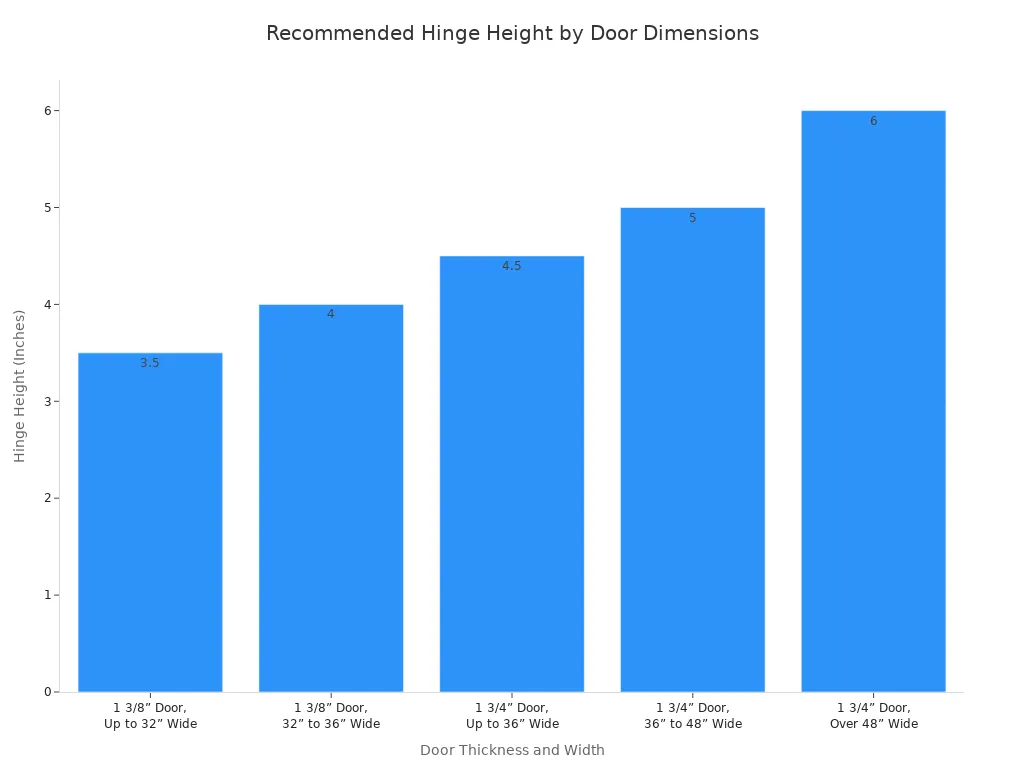
Accurate measurements guarantee a perfect fit. To measure a hinge, lay it flat and open. Measure the height from top to bottom and the width across both leaves. Standard residential interior doors often use 3.5" x 3.5" hinges, while heavier exterior doors may require 4" x 4" hinges.
Matching the Corner Radius
Hinges come with either square or rounded corners. Rounded corners have a specific radius. You must match the new hinge's corner radius to the existing recess in your door and frame.
Quick Tip: The Coin Test 🪙
- A dime fits perfectly into the curve of a 1/4-inch radius corner.
- A quarter fits perfectly into the curve of a 5/8-inch radius corner.
Deciding on the Number of Hinges
The number of hinges needed depends on the door's height and weight. Using the correct number prevents sagging and ensures the self-closing mechanism works effectively. While two hinges work for very short doors, most standard doors require at least three. For heavy, solid-core doors, using three spring loaded hinges provides better support and a more reliable closing action.
| Door Height | Minimum Hinges |
|---|---|
| Up to 60 inches | 2 |
| 60 to 90 inches | 3 |
| 90 to 120 inches | 4 |
Step-by-Step Installation Guide
Installing new hinges is a straightforward project that enhances door functionality. This guide provides clear steps for a successful installation, from preparation to completion. Following these instructions ensures a secure fit and proper operation.
Tools and Materials Needed
Gathering the right equipment beforehand makes the installation process smooth and efficient. Professionals and DIYers will need a basic set of tools for this task.
- Power drill and appropriate drill bits
- Screwdrivers (Phillips and flat-head)
- Tape measure and a level
- Wood shims for door alignment
- Caulk and weatherstripping for exterior doors
- Safety goggles and work gloves
Removing the Old Hinge
Proper removal of the old hardware prevents damage to the door and frame. It is best to replace one hinge at a time to keep the door stable.
- Support the door's weight. Place wood shims or books under the door to hold it steady.
- Unscrew the old hinge. Start with the hinge attached to the door frame, then remove the screws from the door leaf.
- Lift the old hinge out. Carefully remove the hinge from its mortise.
Safety First: Always secure the door before removing any hinges. An unsupported door can fall, causing injury or damage to the floor and frame.
Installing the New Spring Hinge
With the old hinge removed, the new one can be installed. A proper fit is essential for the self-closing mechanism to work correctly.
- Test the fit. Place the new hinge into the existing mortise to confirm it aligns with the screw holes.
- Drill pilot holes if needed. If the new screw holes do not match, fill the old ones with wood putty and drill new pilot holes.
- Secure the new hinge. Screw the hinge leaf first to the door frame, then attach the other leaf to the door.
- Repeat the process. Replace the remaining hinges one by one, ensuring the door remains supported throughout.
How to Adjust Your Spring Hinge
Proper adjustment ensures your door closes at the desired speed and force. Fine-tuning the tension is a simple process that requires only the tools included with the hinge. This allows for a customized closing action tailored to any environment.
Adjusting Tension with the Hex Wrench
The key to adjusting the hinge is the hex wrench, often called an Allen wrench. This tool manipulates the internal spring to increase or decrease closing force.
- Close the door to release all tension from the hinge.
- Insert the hex wrench into the adjustment hole at the top of the hinge barrel.
- Rotate the wrench to adjust the tension. Turn it clockwise to tighten the spring for a slower, more forceful close. Turn it counter-clockwise to loosen the spring if the door slams shut too quickly.
- Adjust the tension one click at a time for precise control.
Setting the Tension Pin
The tension pin locks the spring at your desired setting. It prevents the spring from unwinding and losing its adjustment.
Pro Tip: Always apply slight pressure on the hex wrench while inserting the pin. This keeps the holes aligned and makes insertion easier.
After rotating the wrench, a new hole in the center stud will align with a hole on the hinge knuckle. Insert the small tension pin into this aligned hole to secure the setting. Once the pin is in place, you can safely remove the hex wrench. Test the door and repeat the process if further adjustment is needed.
Troubleshooting Common Issues
Even the best hardware can encounter issues. Here are solutions to common problems.
| Problem | Solution |
|---|---|
| Door closes too fast or slow | Use the hex wrench to adjust the tension. Add tension for a slow door; release tension for a fast one. Ensure all spring hinges on the door have similar tension settings for balanced operation. |
| Hinge makes a squeaking noise | The noise often comes from friction. Apply a dry lubricant to the hinge pin and internal parts. Cleaning away any dirt or rust with steel wool can also solve the problem. |
| Door does not latch properly | This may indicate insufficient tension. Increase the spring tension just enough to ensure the door clicks securely into the latch. Also, check that all hinge screws are tight. |
Upgrading doors with self-closing hardware is a simple and effective home improvement. The versatile TDC Hardware Adjustable Spring Hinge suits most residential needs. For heavier applications, the robust Acme Stainless Steel Hinge delivers reliable strength. These spring loaded hinges make for a valuable weekend project that enhances safety and convenience.
FAQ
Can I use a spring hinge on an exterior door?
Yes. Homeowners should select a hinge made from corrosion-resistant material. Stainless steel models, like those from TDC Hardware, are ideal for exterior doors and gates.
Do all hinges on a door need to be spring loaded?
No, but using multiple spring hinges provides better performance. A common setup places one spring hinge at the top position for optimal closing force and support.
Are spring hinges required for fire-rated doors?
Many building codes require self-closing doors for fire safety. Spring hinges are a cost-effective solution that helps property owners meet these important fire code regulations.