Residential Interior Door Hinges You’ll Love This Year
Homeowners seek reliable solutions for their doors. Market trends show strong demand for residential interior door hinges, especially butt hinges, concealed hinges, and pivot hinges. Many also choose the spherical lift-off hinge for its modern appeal and easy removal. TDC offers quality options that meet these needs.
Types of Residential Interior Door Hinges
Residential interior door hinges come in several main categories, each designed for specific applications and aesthetics. The following table outlines the most common types available in the market:
| Category | Types Available |
|---|---|
| Geared Hinges | Concealed, Wide Throw, Swing Clear, Half Surface, Full Surface, Half Mortise |
| Pin & Barrel Hinges | Concealed, Swing Clear, Half Surface, Half Mortise, Full Surface |
| Toilet Partition | Geared, Pin and Barrel |
| Other Products | Latch Guard |
| Accessories and Preps | Geared Hinge Accessories & Preps, Pin & Barrel Preps, Hospital Tips, Accessible Through-Wire, Continuous Edge Guard, Pivot Hole Covers, HB375 Drill Bit, Shim Stock, Butt Hinge Filler Plates, Self-Centering Hinge Bit, Masonry Bit |
| Common Types | Butt Hinges, Concealed Hinges, Continuous Hinges, Pivot Hinges, Strap Hinges |
Butt Hinges
Butt hinges remain the most popular choice for residential interior door hinges. They provide strength and support for heavy doors, and their versatility suits many design styles. The following table highlights their advantages:
| Advantages of Butt Hinges | Disadvantages of Butt Hinges |
|---|---|
| Strength and support for heavy loads | Visibility can facilitate break-ins |
| Ease of installation | Potential for loosening over time |
| Versatility in design and material options | Limited adjustability once installed |
| Durable and resistant to chemicals | Can necessitate replacing entire furniture if worn out |
| Aesthetically pleasing | Less durable compared to invisible hinges |
Common materials include:
- Steel: Affordable and strong, suitable for most interior applications.
- Stainless Steel: Resists corrosion, ideal for humid environments.
- Brass: Offers a classic look and antimicrobial properties.
Concealed Hinges
Concealed hinges create a high-end, polished appearance for residential interior door hinges. They hide the hardware, allowing the door’s finish and texture to stand out. Homeowners often choose concealed hinges for modern interiors. Installation requires attention to detail:
- Ensure hinges are at the correct height and the cabinet is level.
- Adjust hinge cup depth for proper door closure.
- Tighten screws to prevent loose or wobbly hinges.
Pivot Hinges
Pivot hinges excel in supporting heavy interior doors. These hinges transfer the door’s weight directly to the floor, reducing stress on the frame. The following table summarizes their benefits:
| Advantage | Description |
|---|---|
| Weight Distribution | Transfers weight to the floor, protecting the frame. |
| Smooth Operation | Enables effortless movement, even for heavy doors. |
| Durability | Withstands frequent use and heavy loads. |
| Aesthetic Appeal | Discreet design suits modern spaces. |
Specialty Hinges
Specialty hinges serve unique applications such as bi-fold and double-action doors. Double-action hinges allow doors to swing in both directions, reducing wear. Self-closing hinges automatically pull the door closed, helping maintain privacy and temperature control. These options expand the versatility of residential interior door hinges for custom projects.
Key Features of Residential Interior Door Hinges
Material and Finish Options
Material selection plays a crucial role in the performance and longevity of residential interior door hinges. Homeowners often choose from stainless steel, brass, aluminum, bronze, and coated iron. Each material offers unique benefits for different environments and applications.
| Material | Durability | Corrosion Resistance | Sustainability | Best Applications |
|---|---|---|---|---|
| Stainless Steel | Excellent | Excellent | High | Exterior doors, bathrooms, kitchens |
| Brass | Very Good | Good | High | Interior doors, decorative doors |
| Aluminum | Good | Good | Excellent | Lightweight doors, cabinets |
| Bronze | Excellent | Very Good | High | Coastal doors, luxury applications |
| Coated Iron | Very Good | Good | Moderate | Heavy-duty, industrial, interior doors |
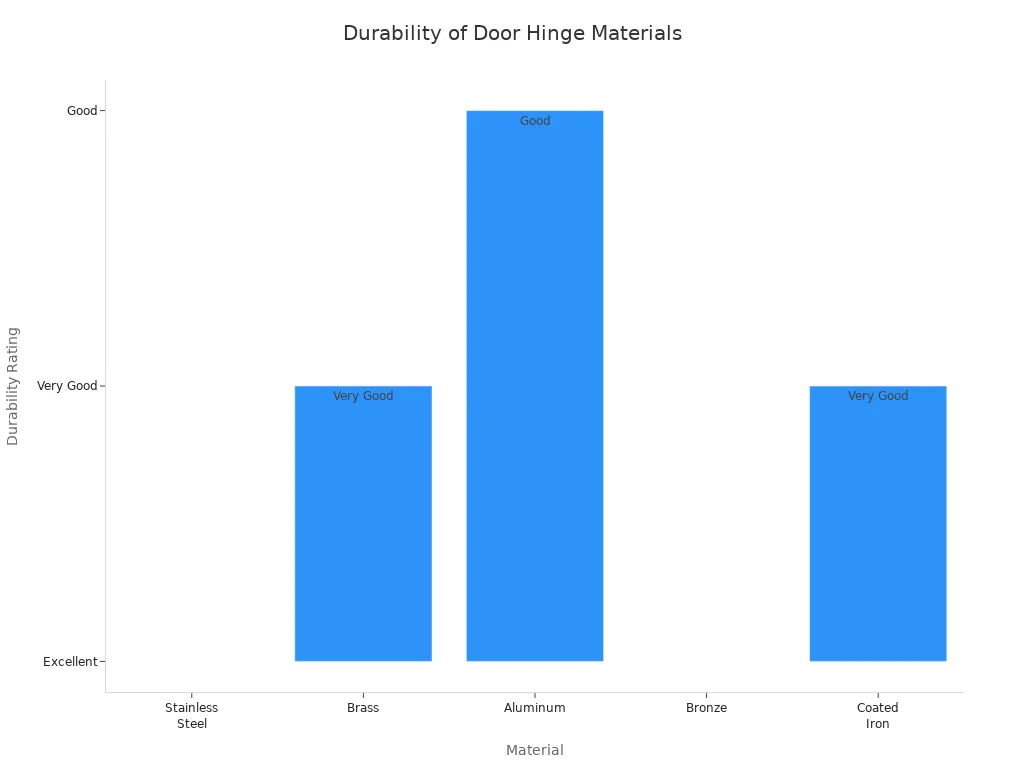
Stainless steel hinges provide outstanding strength and resist corrosion, making them ideal for high-moisture areas. Brass hinges deliver a classic look and natural resistance to corrosion, though they may tarnish over time. Aluminum hinges are lightweight and suitable for less demanding applications. Bronze and coated iron offer durability for specialized needs.
Finishes also impact the hinge’s resistance to wear and corrosion. Galvanized hinges use a zinc coating for rust protection. Powder-coated finishes add a thick, durable layer that prevents moisture exposure. Stainless steel and brass finishes each provide their own level of corrosion resistance, with stainless steel forming a protective oxide layer and brass requiring occasional care to prevent tarnish.
- Galvanized Hinges: Long-lasting protection, especially in high-moisture environments.
- Powder Coated Hinges: Resistant to chipping and scratching.
- Stainless Steel Hinges: Excellent corrosion resistance with low maintenance.
- Brass Hinges: Naturally resistant to corrosion, but may tarnish without proper care.
Size and Weight Capacity
Selecting the correct size and weight capacity ensures that residential interior door hinges function smoothly and last longer. The hinge size should match the door’s width, thickness, and weight. Heavier or wider doors place more stress on hinges, which can lead to increased wear if the wrong size is chosen.
| Hinge Type | Weight Capacity (lbs) | Frequency Category |
|---|---|---|
| Commercial Grade Heavy-Duty | Up to 200 | High-frequency |
| Commercial Grade Heavy-Duty | Up to 400 | Medium-frequency |
| Commercial Grade Heavy-Duty | Up to 600 | Low-frequency |
| Commercial Grade Heavy-Duty (LL) | Up to 1000 | Low-frequency |
| Residential Grade - Standard Duty | Up to 200 | Medium-frequency |
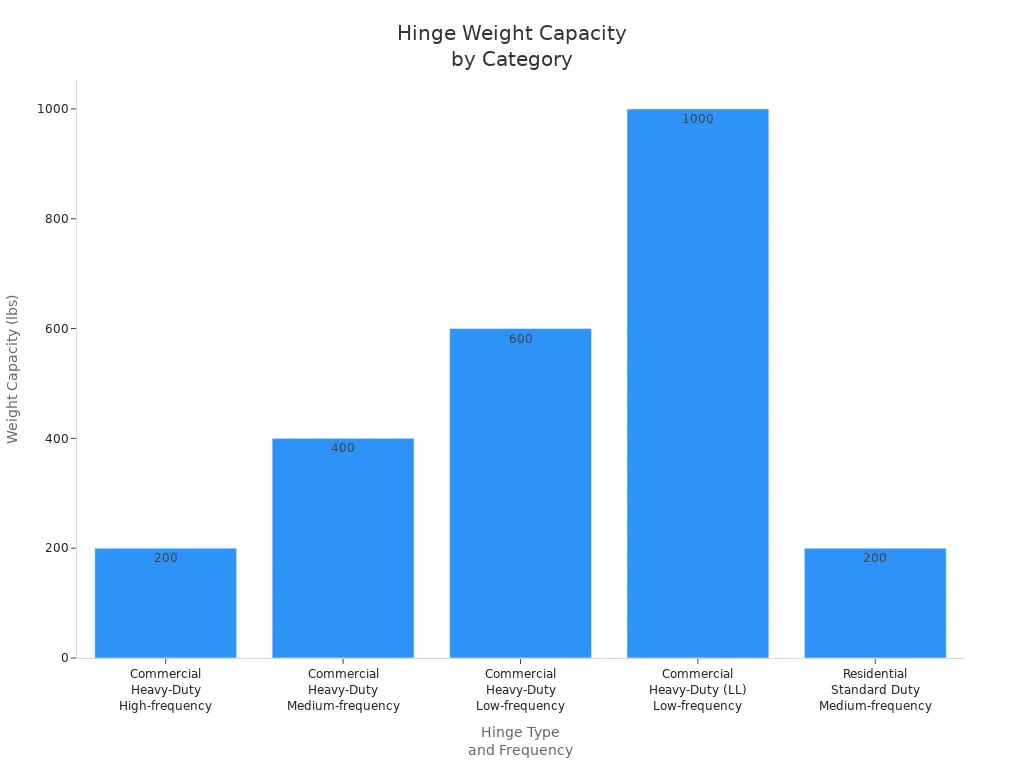
Ball bearing hinges are recommended for heavier doors because they reduce friction and extend hinge life. Always check the manufacturer’s specifications to ensure the hinge supports the intended door weight.
Tip: For optimal performance, match hinge size and type to the door’s dimensions and usage frequency.
Security and Privacy Considerations
Security features in modern residential interior door hinges help protect homes and maintain privacy. Many hinges now include tamper-resistant designs and reinforced materials.
| Security Feature | Description |
|---|---|
| Security Hinges | Prevent tampering with disguised hinges and hinge bolts. |
| Anti-drill and Anti-Pick Features | Use hardened steel plates and engineered pins to resist forced entry. |
| Fire-Resistant Materials | Withstand high temperatures, providing a barrier against fire threats. |
| Weatherproof Seals | Block air and moisture, enhancing protection against natural hazards. |
| Customized Security Features | Include reinforced panels and built-in alarm systems for added safety. |
Homeowners seeking extra privacy can select hinges with built-in security pins or choose models designed for fire resistance. These features add peace of mind and help protect both property and loved ones.
Ease of Installation
Ease of installation remains a top priority for many homeowners and professionals. The most common installation methods for residential interior door hinges include:
- Butterfly Hinges: Surface-mounted and easy to install, suitable for inset or half-overlay doors.
- Butt Hinges: Can be surface-mounted or mortised, offering a straightforward process.
- European Hinges: Versatile, with options for inset, half-overlay, or full-overlay doors.
TDC’s hinges come with clear instructions and precision engineering, making installation simple for both DIY enthusiasts and professionals.
Note: Always use the correct tools and follow the manufacturer’s guidelines to ensure a secure fit.
Maintenance Requirements
Proper maintenance extends the lifespan of residential interior door hinges and keeps doors operating smoothly. Regular cleaning and lubrication prevent squeaking and jamming. Addressing minor issues early helps avoid costly repairs.
- Clean and lubricate hinges every few months, or as needed based on usage and environment.
- Lubricate all interior door hardware at least twice a year for best results.
- Promptly address any squeaking, stiffness, or misalignment to maintain functionality.
Routine care ensures that hinges remain reliable and attractive, supporting the overall performance of your doors.
Matching Residential Interior Door Hinges to Your Style
Modern Interiors
Modern interiors demand hardware that blends advanced function with sleek design. Homeowners often choose pivot hinges, smart hinges, and eco-friendly options for a contemporary look. Many prefer concealed or invisible hinges to create a seamless door appearance. Soft-close and self-closing hinges add convenience and a quiet touch. Heavy-duty and adjustable hinges support larger doors often found in modern homes.
- Pivot Hinges
- Smart Hinges
- Eco-Friendly Hinges
- Decorative Hinges
- Soft-Close Hinges
- Concealed Hinges
- Heavy-Duty Hinges
- Invisible Hinges
- Adjustable Hinges
- Self-Closing Hinges
These choices help create a space that feels both innovative and refined.
Traditional Spaces
Traditional spaces benefit from hinges that offer timeless beauty and classic finishes. Homeowners often select polished brass, antique brass, or oil-rubbed bronze for their warmth and elegance. The following table highlights recommended finishes for traditional interiors:
| Finish | Description |
|---|---|
| Polished Brass | Shiny, reflective surface; adds a luxurious touch; requires maintenance to prevent tarnishing. |
| Antique Brass | Vintage appearance; resists tarnishing; low maintenance; ideal for traditional designs. |
| Oil-Rubbed Bronze | Dark, matte finish; develops a unique patina over time; suitable for classic aesthetics. |
These finishes complement wood doors and classic architectural details.
Rustic Designs
Rustic designs emphasize strength and character. Many homeowners select rustic hinge straps made from wrought iron or cast iron. Weathered finishes and antique patinas add depth and authenticity. Ornate designs and antique finishes suit vintage looks. Wrought iron, antique brass, and oil-rubbed bronze finishes enhance rustic aesthetics. The durability of these materials supports heavier doors often found in rustic homes.
- Rustic hinge straps in wrought or cast iron
- Weathered and antique patinas
- Ornate and vintage-inspired designs
- Durable materials for heavy doors
These elements create a welcoming, lived-in atmosphere.
Minimalist Homes
Minimalist homes require hardware that disappears into the background. Concealed hinges, mounted inside the door and frame, eliminate visible screws and gaps. This approach ensures clean lines and symmetry, allowing the door to blend seamlessly with the wall. Homeowners achieve a polished, uncluttered look by choosing invisible hardware.
- Concealed hinges for a smooth, uninterrupted appearance
- Clean lines and symmetry for a minimalist effect
Minimalist design relies on simplicity and subtlety, making these hinges an ideal choice for streamlined spaces.
Top Residential Interior Door Hinges Picks for 2024
Best Overall (TDC Brand)
TDC’s best overall hinge stands out for its balance of strength, design, and ease of use. The selection process considers several important factors:
| Criteria | Description |
|---|---|
| Hinge Material | Matches the door’s location and weight. |
| Door Weight and Size | Supports the door’s dimensions and mass. |
| Functionality | Operates smoothly for daily use. |
| Style and Design | Complements the room’s look. |
| Durability | Withstands years of opening and closing. |
| Maintenance | Requires minimal upkeep. |
| Number of Hinges Required | Fits doors of different heights. |
TDC’s hinge excels in every category, making it a reliable choice for most homes.
Best for Style (TDC Brand)
TDC offers stylish hinges that transform any space. These hinges feature:
- Decorative designs that enhance the door’s appearance.
- A range of styles, from vintage to modern.
- Intricate patterns and finishes for unique looks.
- Materials like brass, steel, and bronze for both beauty and strength.
- Polished and satin finishes that match many decors.
These options allow homeowners to express their personal taste while maintaining quality.
Best for Durability (TDC Brand)
Durability matters for busy households. TDC tests its hinges using strict methods:
| Grade | Durability (Cycles) |
|---|---|
| 4 | 25,000 |
| 7 | 200,000 |
Testing includes repeated cycles under load and overload tests. TDC’s hinges pass these tests, ensuring long-lasting performance for residential interior door hinges.
Best Budget Option (TDC Brand)
TDC’s budget-friendly hinge delivers solid performance at an affordable price. Homeowners receive dependable function, easy installation, and a clean look. This option suits those who want quality without overspending.
Installation Tips for Residential Interior Door Hinges
Measuring and Placement Guidelines
Proper measurement and placement ensure smooth door operation and long-lasting hinges. Installers should follow these standard guidelines for best results:
- Place the top hinge about 5 inches from the top of the door.
- Position the bottom hinge approximately 10 inches from the bottom edge.
- If using a third hinge, center it between the top and bottom hinges.
Installers should measure and mark hinge locations on both the door and the frame. Cutting hinge mortises with a chisel allows the hinge to sit flush. After securing the hinges with screws, check the door’s fit to confirm it opens and closes smoothly.
Essential Tools for Installation
Using the right tools makes hinge installation efficient and precise. The following items help achieve professional results:
- Tape measure and pencil for accurate marking.
- Chisel and utility knife for cutting mortises.
- Screwdriver or drill for securing hinges.
- Door lifters to align heavy doors.
- Hinge pin poppers for removing stubborn pins.
- Drill bits for clean holes in various materials.
- Knuckle bender and hinge tweaker for fine adjustments.
These tools help maintain alignment and ensure a secure fit.
Common Mistakes to Avoid
Installers often encounter issues that affect door performance. Avoid these common mistakes:
- Failing to maintain a consistent 1/8 inch gap around the door can cause binding or rattling.
- Not checking hinge orientation may result in improper door swing.
- Using incorrect screws can reduce stability.
- Skipping the use of shims may lead to misalignment.
- Forgetting to test the door swing before finalizing installation can leave gaps or sticking points.
- Overtightening screws may damage the hinge or door.
Careful attention to these details ensures a smooth, professional installation every time.
Selecting the right residential interior door hinge involves several key factors:
- Material
- Size
- Weight capacity
- Style
- Installation
- Budget
TDC delivers reliable hinges that combine function and design. Homeowners can trust TDC to provide quality solutions for every interior door project.
FAQ
What is the best hinge material for humid environments?
Stainless steel resists corrosion and moisture. Homeowners often choose it for bathrooms and kitchens. TDC offers several stainless steel options for lasting performance.
How many hinges does a standard interior door need?
Most standard interior doors require two or three hinges. Heavier or taller doors may need three for extra support and stability.
Can homeowners install TDC hinges without professional help?
Yes. TDC designs hinges for easy installation. Clear instructions and included hardware help homeowners complete the process with basic tools.