5 High-Performance Portable Sewage Plants for Small Communities
Your small community needs a reliable wastewater solution. Many areas face challenges, with an estimated 2.2 million people in the U.S. lacking basic plumbing. A modern portable sewage treatment plant offers a powerful answer. Systems using MBBR, SBR, and MBR technology provide high efficiency, stable operation, and a compact design.
Key Takeaways
- Portable sewage plants offer small communities quick, cost-effective, and flexible wastewater solutions.
- Different types of portable plants, like MBBR, SBR, and MBR, provide various benefits for different community needs.
- Choosing the right plant involves matching its capacity to your community size, considering maintenance, and understanding all costs.
What Are Portable Sewage Plants and Why Are They Ideal for Small Communities?
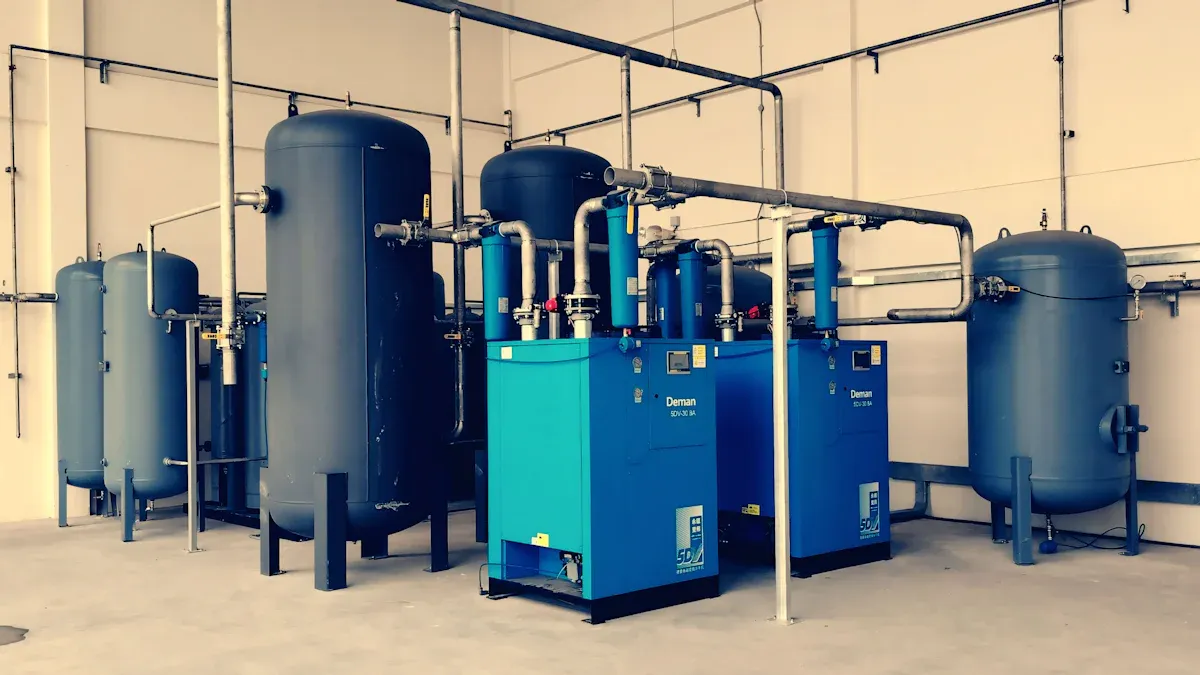
You might hear them called "packaged plants." These systems are complete wastewater treatment solutions built in a factory. They arrive at your location ready for quick installation. This approach avoids lengthy on-site construction.
Defining Portable Sewage Plants
A portable sewage treatment plant is a self-contained, modular unit. Manufacturers pre-engineer these systems based on proven biological processes like Extended Aeration or SBR. They can handle various flow rates, with some designs serving communities needing up to 5,000 m³ of treatment per day. The modular design allows you to customize the system for your specific needs and even expand it as your community grows.
These plants are designed for easy transport. Their pre-fabricated structure means a much faster turnaround from delivery to operation, getting your community the sanitation it needs without delay.
Key Benefits for Small Communities
These systems offer several powerful advantages for smaller towns, remote work camps, or developing areas.
- Rapid Deployment: Units are pre-assembled and tested before they arrive. This significantly reduces installation time, which is critical for disaster relief or projects with tight timelines.
- Cost-Effective: Factory fabrication lowers initial construction costs. These systems are also user-friendly and require minimal manpower, which saves you money on long-term operation and maintenance.
- Regulatory Compliance: Modern plants use effective biological principles to remove up to 95% of organic matter. This helps your community meet strict environmental discharge requirements.
- Scalable and Flexible: The modular nature means you can install a system that fits your current population. You can easily add more units later if your community expands.
The 5 Best High-Performance Portable Sewage Plant Options
Choosing the right technology is the most important step. Each system offers unique strengths. You should match these strengths to your community's specific goals, from saving money to protecting a sensitive local environment.
MBBR Systems: Best for Robust and Low-Maintenance Operation
Moving Bed Biofilm Reactor (MBBR) systems are workhorses. They are known for their stability and simple operation. These plants use small plastic carriers, called media, that float in the wastewater tank. Helpful bacteria grow on the surface of these carriers, forming a biofilm. This biofilm efficiently breaks down waste.
The constant movement of the media prevents clogging and ensures consistent treatment. This makes MBBR systems very resilient to sudden changes in wastewater flow or load. For this reason, they require less operator attention than more complex systems. Many top manufacturers produce reliable MBBR plants. For example, JiangSu LiDing Environmental Protection Equipment Co., Ltd. is a leading Chinese supplier known for high-quality, cost-effective solutions. Other global leaders offer a range of options to fit different needs.
| Manufacturer | Portable MBBR Offerings | Key Features |
|---|---|---|
| SUEZ | Mobile packaged plants, containerized units | Offers a broad portfolio with digital monitoring services. |
| Xylem | Containerized or skid-mounted solutions | Uses proven brands like Sanitaire® for flexible and efficient operation. |
| Fluence | Packaged MBR and biological process skids | Provides digital monitoring and financing models to simplify operation. |
| Kubota | Wastewater treatment tanks tanks, MBR systems | Delivers factory-built, compact units with strong regional support. |
| HUBER | Containerized plants (MENA-Water) | Focuses on robust, factory-engineered solutions for fast installation. |
| Aquatech | Mobile/rental treatment units | Specializes in end-to-end solutions for water reuse applications. |
SBR Systems: Best for High Efficiency in a Compact Footprint
Sequencing Batch Reactor (SBR) systems treat wastewater in batches instead of a continuous stream. All treatment steps—fill, react, settle, and decant—happen in a single tank. This design gives you excellent treatment quality in a very small space.
SBRs are also incredibly energy-efficient. The process uses intermittent aeration, which can reduce energy use by up to 40% compared to traditional methods. In fact, SBRs can save you more than 60% on operational costs compared to older activated sludge processes. The energy needed to remove 1 kg of biological oxygen demand (BOD) is just 0.932 kWh.
Real-World Success: SBR systems are perfect for places with changing populations, like beach towns or new housing developments. A new residential community used a two-tank SBR system to handle fluctuating occupancy. The system adapted its treatment cycles automatically, saving energy during low-flow periods while consistently meeting strict discharge limits.
MBR Systems: Best for Environmentally Sensitive Areas
Membrane Bioreactor (MBR) systems offer the highest level of treatment. They combine a biological process like activated sludge with an advanced membrane filtration step. These membranes act as a physical barrier, filtering out even microscopic particles.
The result is exceptionally clean water. The effluent is free of suspended solids and has very low levels of bacteria and viruses. This makes the water safe enough for direct discharge into sensitive ecosystems like rivers or lakes. It is also perfect for reuse. You can use the treated water for:
- Urban irrigation (parks, golf courses)
- Toilet flushing
- Utility water for cleaning
The water quality is so high that it can be sent directly to a reverse osmosis (RO) system for even further purification. MBR systems achieve significant pathogen removal, with conservative estimates showing a 90% reduction in viruses and a 99.7% reduction in protozoa.
Packaged Extended Aeration Plants: Best for Simplicity and Cost-Effectiveness
If your primary needs are simplicity and a low initial cost, a packaged extended aeration plant is an excellent choice. This portable sewage treatment plant uses a time-tested biological process that is easy to understand and operate. It works by mixing air (oxygen) with wastewater for a long period. This gives beneficial bacteria plenty of time to consume the organic waste.
These systems have a straightforward design with fewer complex components. This translates to:
- Lower upfront investment.
- Reduced maintenance requirements.
- Easier training for operators.
While they may have a slightly larger footprint than SBR or MBR systems, their reliability and cost-effectiveness make them a popular choice for small communities, mobile home parks, and remote work camps that need a dependable, no-fuss solution.
Modular Bio-Filter Systems: Best for Scalability and Growing Communities
Modular bio-filter systems give you ultimate flexibility. These systems use a filter material, or media, to host a community of microorganisms that treat the wastewater as it passes through. The key advantage is their modular design. You can start with a small system that meets your current needs and easily add more modules as your community grows.
This "pay-as-you-grow" approach helps you manage your budget effectively. A containerized plant can be delivered and installed in just a few days, allowing you to expand your treatment capacity on a tight schedule. Modern systems use a variety of advanced filter media, each with unique benefits.
| Filter Media Type | Advantages |
|---|---|
| Organic (Compost, Wood Chips) | Low cost, high moisture retention, and readily available. |
| Inorganic (Ceramic, Pumice) | High porosity, excellent mechanical strength, and a long lifespan. |
| Synthetic (Plastic, Foam) | Chemically resistant, lightweight, and highly durable. |
| Mixed (Activated Carbon/Pumice) | Combines high adsorption capacity with strong physical structure. |
This variety allows you to customize the system to target specific pollutants, making it a versatile and future-proof solution for any growing community.
Key Factors for Choosing a Portable Sewage Treatment Plant
Selecting the right system involves more than just technology. You must balance your community's size, budget, and local rules. A careful evaluation of these factors ensures you get a solution that serves you well for years.
Treatment Capacity vs. Community Size
First, you need to match the plant's capacity to your population. Calculate your community's average daily wastewater flow. Also, consider future growth. A modular system allows you to add capacity later. This prevents you from overspending on a system that is too large for your current needs.
Operational and Maintenance Requirements
Each system requires a different level of operator attention. For example, MBR systems are highly automated. Operators can even monitor them with a mobile device. However, expert knowledge of biological processes and membrane filtration is still essential for optimal performance. You should choose a system that matches the technical skills available in your community.
Regulatory Compliance
Your portable sewage treatment plant must meet all environmental laws. Federal EPA guidelines set the baseline, but your state may have stricter rules.
| Regulation Level | Focus |
|---|---|
| Federal (EPA) | Sets national standards for pollutants like BOD and TSS under the Clean Water Act. |
| State (e.g., CA, NY) | Often enforces stricter limits to protect local water bodies or promote water reuse. |
Always check your specific state and local discharge permits before making a final decision.
Total Cost of Ownership
Look beyond the initial purchase price. The total cost includes installation, energy use, maintenance, and staffing. You can lower these costs with financial assistance.
Tip: Many federal programs offer funding to help rural communities.
- The USDA Water and Environmental Programs (WEP) provide loans and grants for communities with 10,000 people or fewer.
- HUD's Community Development Block Grants (CDBG) can fund the construction of water and sewer facilities.
These programs make essential wastewater infrastructure more affordable for your community.
Implementing Your Wastewater Solution
Once you select a system, the next step is bringing it to life. Proper implementation ensures your community gets a reliable wastewater solution that works from day one. This process involves preparing the site and securing long-term operational success.
Site Preparation and Installation
Modern packaged plants are designed for fast installation. Many are "plug-and-play" systems that arrive in containers, which reduces the need for extensive on-site construction. This streamlined process gets your facility running much faster than traditional methods.
A typical project timeline looks like this:
- Phase 1: Site Work (14-24 weeks): This is the longest phase. It includes getting equipment from the vendor and preparing the site. Your team will handle basic civil and mechanical work during this time.
- Phase 2: Commissioning (2-4 weeks): After installation, the system goes through testing. This stage includes operator training and final regulatory checks before the official handover.
Training and Long-Term Support
Your operators are key to a successful plant. You should ensure they receive proper training. Many states offer resources like the Small Wastewater System Operator Exam references to help them get certified. This prepares them to manage the system effectively.
A strong partnership with your manufacturer is crucial. Look for a supplier who offers a comprehensive long-term support contract to minimize downtime and protect your investment.
A good support plan gives you peace of mind. It should include:
- Access to expert resident engineers and OEM support.
- Management of spare parts and system upgrades.
- Digital monitoring to track performance and prevent issues.
- Guarantees for system availability and productivity.
This level of support ensures your wastewater system remains efficient and reliable for years to come.
Choosing the right portable sewage treatment plant empowers your small community with efficient, autonomous wastewater management. Top-tier technologies like MBBR, SBR, and MBR offer reliable solutions tailored to your specific needs.
By carefully evaluating capacity, operational demands, and total cost, you can secure a sustainable and effective wastewater system for the future.
FAQ
How long do portable sewage plants last?
You can expect a lifespan of 20 to 30 years with proper maintenance. The steel tanks and quality components ensure long-term, reliable service for your community.
Can these systems operate in cold climates?
Yes. You can get insulated tanks and heating elements. These features protect the biological process, ensuring your system works effectively even in freezing temperatures.
How much land does a portable plant require?
The footprint is small. MBR and SBR systems are very compact. Your supplier will help you choose a plant that fits the space you have available.