Who Makes The Best Optical Sorters? Our Top 5 For 2025
The optical sorter market shows robust expansion, with a projected CAGR exceeding 7% from 2025. These manufacturers provide solutions for diverse needs, from high-volume grains to a specialized lasagna sheets optical sorter. The industry leaders for 2025 are:
- TOMRA
- Bühler Group
- Key Technology
- Satake
- Meyer Optoelectronic
Our Evaluation Criteria
Selecting the right optical sorter requires a clear understanding of key performance indicators. Our rankings are based on a comprehensive analysis of four critical pillars that define a manufacturer's excellence in the field.
Sorting Accuracy and Efficiency
Accuracy measures a sorter's ability to correctly identify and eject defects or foreign material. Modern machines achieve remarkable precision. Some systems detect nearly 100% of defects in products like tomatoes. For grains with good color contrast, elimination rates can reach 97% to 100%. Efficiency combines this accuracy with throughput. High-speed automated systems process thousands of items per hour, a massive improvement over manual sorting. Higher throughput directly boosts operational capacity and reduces the energy needed to process large volumes.
Technology and Innovation
Leading manufacturers consistently push the boundaries of sorting technology. This evaluation considers the sophistication of their hardware and software. Key innovations include high-resolution cameras, advanced sensor arrays, and powerful AI algorithms. These technologies enable machines to detect subtle imperfections that were previously invisible. A company's commitment to research and development signals its ability to solve future sorting challenges.
Application Versatility
A top-tier sorter must adapt to diverse products and processing environments. The best manufacturers offer solutions across a wide range of industries. Their equipment effectively handles numerous food items, including:
- Grains, rice, and coffee
- Nuts and spices
- Processed foods like potato products and snacks
- Fresh-cut and frozen vegetables
Note: A manufacturer's ability to customize a machine for a niche product, such as a lasagna sheets optical sorter, demonstrates true engineering depth and flexibility.
Reliability and Support
An optical sorter is a long-term investment that must operate with minimal downtime. We assess the build quality, durability, and ease of maintenance for each brand's machinery. Furthermore, the quality of post-sale support is crucial. This includes the availability of technical assistance, training programs, and a reliable supply of spare parts to ensure continuous, trouble-free operation.
Top 5 Optical Sorter Manufacturers Reviewed
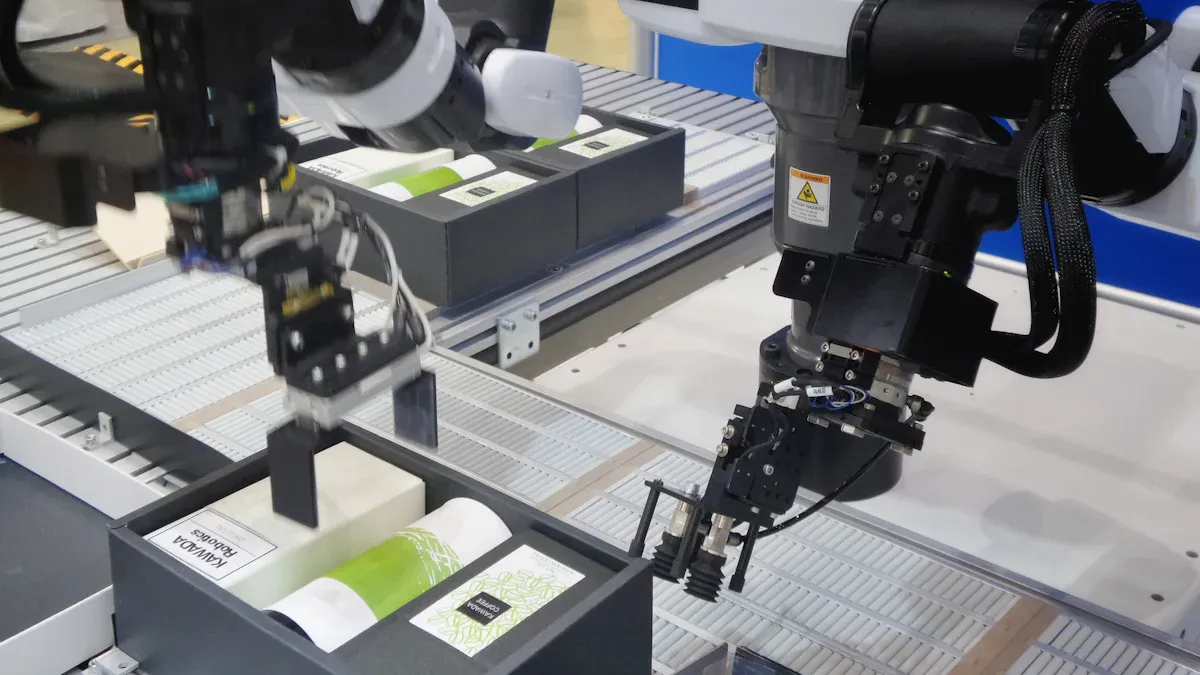
Each leading manufacturer brings unique strengths to the table. Some excel in specific product categories, while others offer unparalleled technological innovation. This review breaks down what makes each company a leader in 2025.
1. TOMRA
TOMRA stands as a titan in the sensor-based sorting industry. The company's reputation is built on cutting-edge technology and exceptional versatility. TOMRA Food designs and manufactures sorters for a vast array of food products, including fruits, vegetables, potatoes, nuts, and proteins.
Their key advantage lies in advanced sensor fusion. TOMRA machines often combine multiple detection technologies like high-resolution cameras, lasers, and Near-Infrared (NIR) spectroscopy. This allows their sorters to analyze products based on color, structure, size, shape, and even biological characteristics. This multi-layered approach delivers outstanding accuracy in removing defects and foreign material.
Best For: Processors who require maximum versatility and the highest level of technological sophistication. TOMRA's ability to engineer solutions for complex applications, such as a specialized lasagna sheets optical sorter, showcases their deep expertise.
2. Bühler Group
The Bühler Group is a Swiss powerhouse with a legacy of excellence in grain and food processing. The company is a benchmark for quality in high-volume applications like rice, wheat, corn, and coffee. Their SORTEX series is globally recognized for its precision and reliability.
Bühler consistently invests in innovation to maintain its market leadership. A pilot program demonstrated their ability to achieve 99% accuracy when sorting wheat from debris. This performance is driven by features found in their flagship models.
- Model: SORTEX S UltraVision™ (Flagship for Rice)
- Detection: Multi-chromatic ‘Ultra’ cameras and Textured LED Lighting™ identify defects nearly invisible to the human eye.
- Ejection: Intelligent Crosshair Targeting™ technology ensures precise and efficient removal of defects, maximizing yield.
- Software: SORTEX ProSort™ software uses intelligent modes tailored to specific rice varieties for superior sorting.
Their dominance is particularly strong in the European market, which prioritizes stringent food safety and quality standards.
| Company | Key Offering/Specialization | Grain Sorting Performance/Capability |
|---|---|---|
| Bühler Group | Advanced sorting with AI-driven capabilities | Achieved 99% accuracy in sorting wheat from debris |
| Satake | Versatile systems for rice and grain | Industry leader in rice and grain processing |
| Key Technology | High-speed produce sorters | Focuses on fresh and processed foods |
3. Key Technology
Key Technology, part of the Duravant family of companies, carves out its expertise in the fresh and processed food sectors. They are a go-to manufacturer for sorting potatoes, vegetables, fruits, and snack foods. Their VERYX® and VERYX® BioPrint® platforms are known for their high-speed capabilities and intelligent automation.
The company excels at creating solutions tailored to the specific challenges of the produce industry. This includes identifying rot, moisture content, and structural defects in delicate products. Their use of hyperspectral imaging and AI-driven software allows processors to meet the most demanding quality specifications. Key Technology is a leader in providing innovative, application-specific solutions that boost both safety and yield.
4. Satake
Satake Corporation is a foundational name in the grain processing industry. The Japanese company invented the first power-driven rice milling machine in 1896 and has been an innovator ever since. Today, Satake and Bühler are recognized as market leaders, collectively holding an estimated 35% to 45% of the global market for automatic paddy separators.
This long history translates into deep application knowledge and highly reliable machinery. Their latest sorters combine this legacy with modern technology. The RGBR and NIR series sorters offer a powerful combination of features:
- Full-Spectrum Detection: They utilize Full-Color RGB cameras for subtle color differences, InGaAs Infrared (NIR) for inorganic materials, and shape recognition for sorting by size and length.
- High Capacity: Extra-wide chutes and flexible configurations handle large volumes of grains, pulses, and seeds efficiently.
- User-Friendly Operation: The Satake 3S software and a large touchscreen provide simple, intuitive setup and adjustment.
- Easy Maintenance: An open frame design allows for quick cleaning and servicing, minimizing downtime.
Satake's robust global distribution network ensures customers receive excellent product delivery and service worldwide.
5. Meyer Optoelectronic
Hefei Meyer Optoelectronic Technology Inc. has rapidly emerged as a major global player by offering a compelling balance of performance and cost-effectiveness. Operating in over 100 countries, Meyer provides reliable sorting solutions across the food, recycling, and healthcare industries.
While they offer sorters for a wide range of products, they are particularly strong in the grain, seed, and nut categories. Meyer machines are known for their durable construction, user-friendly interfaces, and dependable sorting accuracy. They integrate proven technologies like high-definition cameras and intelligent shape algorithms to deliver excellent value.
A Smart Choice: For small to medium-sized operations or budget-conscious enterprises, Meyer provides access to modern sorting technology without the premium price tag of some competitors. Their growth reflects a market need for accessible, high-performing equipment.
Matching a Sorter to Your Product
Choosing the right optical sorter is not a one-size-fits-all decision. The ideal machine depends entirely on your product, throughput requirements, and quality standards. A sorter optimized for grain will differ significantly from one designed for delicate leafy greens. This guide matches leading manufacturers to specific food processing applications.
For High-Volume Grains & Seeds
Processors handling grains, seeds, pulses, and coffee require machines built for speed, precision, and durability. Bühler and Satake dominate this segment. Their equipment is engineered to run continuously while maintaining exceptional sorting accuracy. These manufacturers offer systems designed for various operational scales.
The market for rice color sorters illustrates this segmentation well:
- Below 5 tons per hour (t/h) for smaller mills
- 5-10 t/h for mid-sized operations
- Above 10 t/h for large industrial processors
Satake's machinery, for example, demonstrates this high-throughput capability. Their VTA10AB rice whitener can process 4 to 5 tons of parboiled rice per hour or 5 to 6 tons of non-parboiled rice per hour. This level of efficiency is critical for profitability in the competitive grain market.
For Fresh & Processed Vegetables
The fresh and processed vegetable industry presents unique challenges, including moisture, product fragility, and subtle defects. Key Technology is the undisputed leader in this space. The company develops highly specialized solutions for products ranging from potatoes to leafy greens.
Key Technology's Oculus Whole Potato Optical Sorter uses 360° vision with infrared and digital color cameras. It effectively identifies green spots, rot, and mechanical damage before potatoes are processed into chips or vegetable medleys. For delicate items, the COMPASS® Optical Sorter provides a targeted solution for leafy greens processing.
Tip: Handling wet or sticky products is a common problem. Key Technology's VERYX® digital sorters are specifically engineered for these conditions. Their design places bottom-mounted sensors and light sources away from product splatter, ensuring consistent, full-surface inspection throughout long production runs.
For Fruits, Nuts & Dried Fruit
This category demands sorters that can detect not only color, shape, and foreign material but also invisible threats like mycotoxins. Aflatoxin, a carcinogen produced by mold, is a major concern for nut and dried fruit processors. Advanced technology is essential for its removal.
UV sorting technology is highly effective for this task. It works by illuminating the product with ultraviolet light. Aflatoxin emits a specific fluorescent glow under UV light, which high-resolution sensors can detect. Fast-response air jets then precisely eject the contaminated items. Meyer has pioneered this technology with its CG.UV sorter series. These machines combine specialized UV lighting, advanced cameras, and AI deep learning to master aflatoxin detection. While TOMRA also offers powerful solutions for this sector, Meyer's focus on UV tech provides a compelling advantage for safety-critical applications. This level of specialization contrasts with the engineering needed for something like a lasagna sheets optical sorter, which focuses on physical rather than biological defects.
For Specialized Items like a Lasagna Sheets Optical Sorter
What about products that do not fit standard categories? A lasagna sheets optical sorter is a perfect example of a niche application requiring deep customization. Standard sorters are not designed to handle large, flat, and fragile items. A custom lasagna sheets optical sorter must address unique challenges:
- Detecting cracks and breakage without causing further damage.
- Identifying surface imperfections like bubbles or black spots.
- Ensuring uniform color and texture across the entire sheet.
Manufacturers like TOMRA excel in these custom-engineered projects. They work closely with processors to design a system from the ground up. This involves selecting the right cameras, lighting, and handling mechanisms. Developing a successful lasagna sheets optical sorter showcases a company's true engineering depth and commitment to solving unique customer problems. The investment in a specialized lasagna sheets optical sorter ensures final product quality and brand protection.
For Budget-Conscious Operations
Modern sorting technology is not just for large multinational corporations. Small to medium-sized enterprises (SMEs) can gain a significant competitive edge by investing in optical sorting. Meyer Optoelectronic has built its global reputation by making high-performance sorting accessible.
Meyer offers a strong balance of performance, reliability, and cost-effectiveness. Their machines integrate proven technologies like high-definition cameras and intelligent algorithms, delivering dependable results for common applications like grains, nuts, and seeds. For an operation looking to upgrade from manual sorting or replace older equipment, Meyer provides an excellent return on investment. While they may not be the first choice for a highly complex project like a lasagna sheets optical sorter, their equipment empowers a broader segment of the market to improve product quality and operational efficiency.
Key Technology Trends in 2025

The optical sorting industry is rapidly evolving. Four key trends are shaping the next generation of equipment, pushing the boundaries of accuracy, safety, and efficiency. These advancements empower food processors to meet stricter quality standards and optimize their operations.
AI and Machine Learning
Artificial Intelligence (AI) is transforming sorters from rule-based machines into intelligent systems. AI algorithms learn from production data, continuously improving their ability to identify defects. This approach dramatically reduces false rejections and boosts yield. Unlike traditional systems, AI adapts to new products and subtle variations without extensive reprogramming.
| Feature | Traditional Inspection | AI-based Inspection |
|---|---|---|
| False Positives | High rates, up to 50% | Cuts false positives by up to 90% |
| Adaptability | Rigid; requires reprogramming | Learns from data; adapts to new products |
| Defect Detection | Blind to subtle or new defects | Improved detection of complex defects |
| Classification | Manual and prone to human error | Over 90% of defects classified automatically |
Advanced Sensor Fusion
Sensor fusion combines data from multiple sources to create a more complete analysis of each item. A sorter might use an RGB camera for color, a laser for shape, and Near-Infrared (NIR) spectroscopy to determine chemical composition. This integration overcomes the limitations of any single sensor. For example, NIR can identify different types of plastic that look identical to a camera, achieving material recognition accuracy above 98%.
Hyperspectral Imaging
Hyperspectral imaging (HSI) goes beyond what the human eye or standard cameras can see. It captures information across hundreds of light spectrums, creating a unique "chemical fingerprint" for each object. This technology is a game-changer for food safety. HSI can detect:
- Early-stage bruising in apples with over 92% accuracy.
- Mold or mycotoxins before they are visible.
- Small foreign materials like clear plastic mixed in with food products.
Data Analytics and Connectivity
Modern sorters are no longer isolated machines. They now integrate seamlessly with factory management systems like SCADA and MES. This connectivity provides a constant stream of real-time data on product quality and sorting performance. Plant managers can use this information to trace quality issues back to their source and make data-driven adjustments to upstream processes, improving overall plant efficiency.
The best optical sorter aligns with specific operational needs, including material type, capacity, and quality standards. Your ideal choice depends on your primary application.
- TOMRA is a top contender for versatility and advanced technology.
- Bühler and Satake are industry benchmarks for high-volume grain processing.
- Key Technology stands out for innovative produce solutions.
- Meyer offers a strong balance of performance and cost-effectiveness.
FAQ
What is the most important factor when choosing a sorter?
The product itself is the most critical factor. Processors must match the sorter's technology to their specific product characteristics, throughput requirements, and desired quality standards.
How does a lasagna sheets optical sorter work?
A lasagna sheets optical sorter is a custom-engineered system. It uses specialized cameras and gentle handling mechanisms to detect physical defects like cracks, bubbles, and discoloration.
Are AI-powered sorters significantly better?
Yes, AI-powered sorters offer superior performance. They learn from production data to identify complex defects more accurately. This capability reduces false rejections and improves overall yield.
See Also
Identifying the Foremost Nameplate Manufacturers for Superior Quality in 2025
Essential Capsule Checkweighing Machines for Smart Procurement Decisions in 2025
Innovative Folder Gluer Advancements Shaping Carton Production Lines in 2025
Three Indispensable Industrial Checkweighers for Optimal Food Processing Facilities
Exploring Capsule Sorter Functions and Their Critical Role in Defect Elimination