Top 10 Milk Packing Machines for Small Dairies 2025
The global dairy packaging market continues its strong growth, projected to expand at a 5.2% Compound Annual Growth Rate. For 2025, the DeLaval VMS V300 series stands out for its excellent balance of automation, efficiency, and scalability. Budget-conscious startups often select the Landpack LP-420Y for its low initial cost.
Note: The Landpack LP-420Y provides great versatility for pouch packaging, making it a top milk packing machine for new dairies entering the market. 🐄
How We Selected the Top Machines for 2025
Our team conducted a comprehensive analysis to identify the leading machines for small-scale dairy operations. We evaluated each model against a strict set of criteria focused on performance, financial viability, and operational flexibility. This process ensures our recommendations support both current needs and future growth.
Capacity and Speed (Packs per Hour)
A machine's output is a primary indicator of its suitability. We measured the capacity of each unit in packs per hour to determine how well it aligns with the production volumes of a small dairy. The models on our list offer a range of speeds. Some are ideal for startups processing modest volumes, while others provide the higher throughput needed for dairies looking to expand their market reach.
Cost-Effectiveness and ROI
The initial purchase price is only one piece of the financial puzzle. We emphasized total cost-effectiveness and a strong Return on Investment (ROI). A favorable ROI signifies that the equipment generates more value than it costs over time. Our team calculates this crucial metric with a straightforward method:
- Establish Total Equipment Cost: This figure includes the machine's price, freight, installation, and training expenses.
- Identify the Net Benefit: We calculate the financial gain from the new equipment. This involves adding labor savings from automation and increased gross profit from higher output.
- Calculate the ROI: We use the formula:
ROI = (Net Benefit / Total Equipment Cost) x 100. A higher percentage indicates a more profitable investment in a new milk packing machine.
Packaging Type Versatility
Modern dairy markets demand variety. We prioritized machines that offer flexibility in packaging formats. A dairy's ability to adapt to consumer trends is essential for sustained success.
The top machines can handle multiple container types, such as pouches, cartons, or bottles. This versatility allows a business to enter new markets or launch new product lines without investing in separate equipment.
Ease of Use and Maintenance
Operational simplicity is critical for a small dairy. Complex machinery can lead to extensive training periods and costly downtime. Our analysis prioritized machines that operators can learn quickly and maintain without specialized technicians. A machine that is easy to manage ensures consistent production and protects a dairy's bottom line. We focused on key attributes that reduce operational friction.
Key maintenance and usability features we evaluated include:
- Easy-to-clean parts: Components designed for simple cleaning simplify sanitation and prevent product contamination.
- Straightforward maintenance procedures: Clear, simple upkeep routines minimize equipment downtime.
- Routine checks of moving parts: We looked for easy access to sealing and cutting mechanisms for smooth operation.
- Simple lubrication of mechanical parts: Accessible points for lubrication prevent wear and extend the machine's lifespan.
- Sensor calibration: Systems with user-friendly calibration maintain accuracy and help avoid costly errors.
Tip: A machine with a simple maintenance schedule empowers your team to handle routine upkeep, reducing reliance on external service calls and saving money. 🛠️
Footprint and Space Requirements
Space is often a premium in small dairy facilities. A bulky machine can disrupt workflow and limit future expansion possibilities. We evaluated the physical footprint of each model to ensure it fits efficiently into a typical small-scale production environment. A compact design is not just about saving space; it is about optimizing the entire operational layout.
The table below shows the specifications for a representative compact pouch filler, the Model BZ-1000, which is ideal for facilities with limited floor area.
| Characteristic | Value |
|---|---|
| Model | BZ-1000 |
| Weight | 370 kg |
| Dimension (L*W*H) | 1050*850*1950 mm |
Selecting a machine with a manageable footprint allows for more flexible plant design. It leaves room for other essential equipment, storage, and safe movement for employees. This foresight is crucial for a growing dairy business.
The 10 Best Milk Packing Machines for Small Dairies
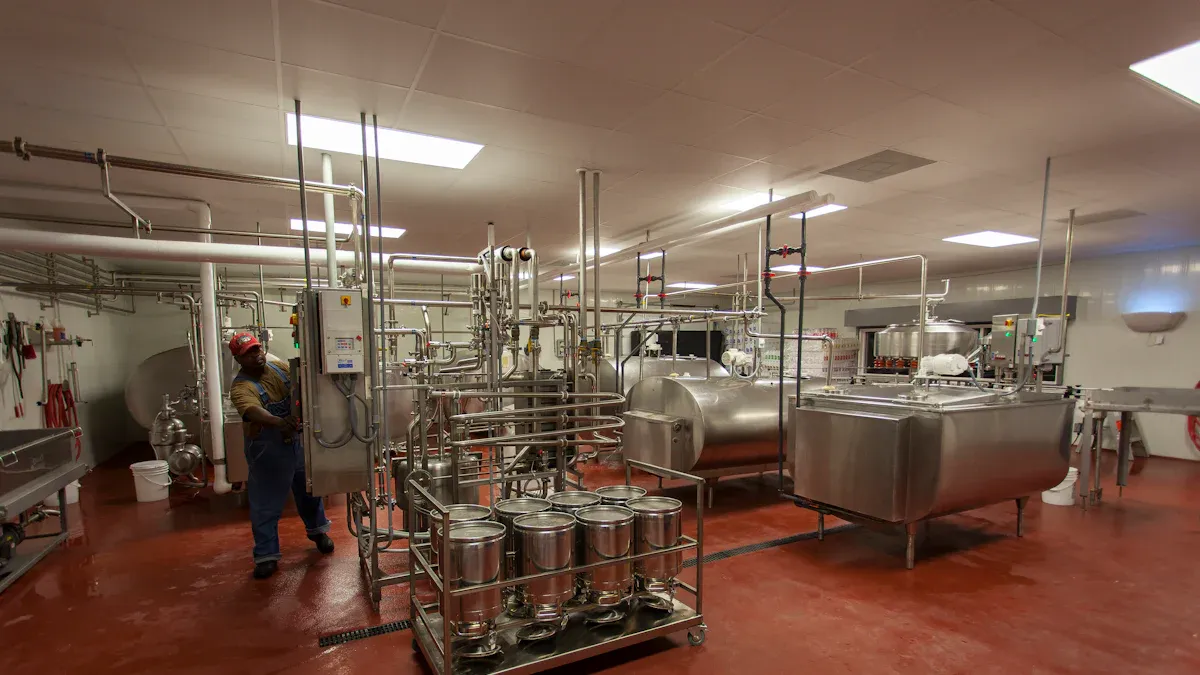
Choosing the right equipment is a pivotal decision for any small dairy. The ideal machine balances production needs, budget constraints, and future growth potential. Our 2025 list features a range of top-tier options designed to meet the diverse demands of modern dairy operations.
1. DeLaval VMS V300 Series (Best Overall)
The DeLaval VMS V300 series earns its top spot by offering an unparalleled combination of automation and scalability. This system is more than just a packaging unit; it is an integrated solution that grows with your business. Its advanced robotics handle tasks with precision, reducing labor costs and minimizing human error.
The VMS V300's modular design allows dairies to start with a single unit and add more as production volume increases. This scalability makes it a smart long-term investment.
Key features that make the VMS V300 series stand out include:
- High-Precision Filling: Ensures accurate milk volumes in every package, reducing product waste.
- Automated Sealing and Capping: Delivers consistent, secure seals for cartons and bottles, extending shelf life.
- Integrated Vision System: The DeLaval InSight™ technology provides superior attachment accuracy for teat preparation and milking, which translates to cleaner, higher-quality milk for packaging.
This system is an excellent choice for dairies aiming for premium quality and operational efficiency.
2. Landpack LP-420Y (Best Budget Pouch Filler)
For startups and small dairies focused on pouch packaging, the Landpack LP-420Y is the undisputed budget champion. This vertical form-fill-seal (VFFS) machine provides a low-cost entry into automated packaging without sacrificing essential functionality. Its straightforward design makes it easy to operate and maintain, a crucial benefit for teams with limited technical expertise.
The LP-420Y is a versatile milk packing machine capable of handling various film types and pouch sizes. This flexibility allows a new dairy to test different product volumes and market strategies affordably.
| Feature | Benefit |
|---|---|
| Low Initial Cost | Reduces the financial barrier for new businesses. |
| Simple Operation | Minimizes training time and speeds up production. |
| Pouch Versatility | Supports pillow bags, gusseted bags, and more. |
| Compact Footprint | Fits easily into small production spaces. |
Note: While it lacks the advanced automation of premium models, the LP-420Y delivers a fantastic return on investment for dairies prioritizing pouch sales and cost control. 💰
3. BouMatic Gemini (Best for Robotic Milking Integration)
The BouMatic Gemini is a revolutionary system that redefines the connection between milking and herd management. It is a complete robotic milking system, not just a packaging add-on. Its design focuses on creating a comfortable and efficient environment that encourages cows to be milked more frequently. The system is available in two primary configurations.
- Gemini UP Single Box: This 2-in-1 self-contained unit is quick to install and has a small footprint. It features unique in-box selection options, making it a versatile solution for any farm type. The integrated selection process also removes the need for extra gates and fencing.
- Gemini UP Double Box: This compact robot uses one arm to milk two cows simultaneously. The side-by-side stall design creates a social environment, as one cow's presence motivates another to enter. This setup increases profitability and provides a faster return on investment.
The Gemini system's open frame allows cows to see the rest of the herd, reducing stress and promoting smooth cow flow. It also offers optimal pre-treatment and monitors individual quarter health for superior milk quality.
A key component is the Gemini OneView management system. This powerful software transforms herd data into simple, actionable decision-making tools. The main dashboard provides real-time monitoring of production and cow health, helping you manage your dairy with precision. 📈
4. Tetra Pak A1 (Best for Carton Packaging)
When it comes to aseptic carton packaging, the Tetra Pak A1 is the industry standard. This machine offers small dairies a cost-effective and highly efficient solution for packaging milk, juices, and other liquid foods. Its core strength lies in its aseptic technology, which ensures high food safety standards and extends product shelf life without refrigeration or preservatives. This makes it an ideal choice for dairies looking to distribute their products over a wider geographic area.
The machine is known for its low operating costs and high operational efficiency. Its compact design and user-friendly interface make it easy to integrate into existing production lines.
The Tetra Pak A1 provides remarkable flexibility. It handles a wide range of package volumes, from small 65 ml single-servings to larger 1,000 ml family-sized cartons. This versatility allows a dairy to adapt its product offerings to meet diverse consumer demands.
The table below outlines the key specifications for the Tetra Pak A1 model designed for Tetra Fino® Aseptic packages.
| Feature | Specification |
|---|---|
| Output Capacity | Up to 10,000 packages/hour |
| Package Volume | 65 ml to 1,000 ml |
| Aseptic Performance | Yes, for high food safety |
| Power Consumption | 45 kW |
| Key Benefit | Low investment and operating costs |
| Optional Systems | CIP, date coders, and cap applicators |
This machine is a reliable and sustainable choice for producers aiming for efficient, safe, and flexible carton packaging.
5. Sidel EvoBLOW SBO Compact (Best for PET Bottles)
For dairies focusing on Polyethylene Terephthalate (PET) bottles, the Sidel EvoBLOW SBO Compact is a top-tier solution. This machine is engineered for small dairies that require high performance within a limited space. It combines blow molding, filling, and capping into a single, integrated system, optimizing production flow and minimizing its footprint. The machine excels at producing high-quality, lightweight bottles, which reduces both material costs and environmental impact.
Sidel's innovations in energy efficiency are a major advantage. The Ecoven uses advanced infrared ceramic lamps to minimize energy consumption during the preform heating process. Furthermore, the Sidel StarLITE mould base works with a SuperVent system to lower the required blowing pressure.
Key performance highlights include:
- Increased Output: The StarLITE HPC base can boost production by up to 15% compared to the market average.
- High-Speed Molding: It achieves impressive speeds of 1,800 to 2,000 bottles per hour per mold (b/h/m).
- Lightweighting: The system can produce bottles like a 600ml container that weighs only 11.5g, saving significant plastic.
With its advanced technology, the EvoBLOW SBO Compact empowers small dairies to compete with larger operations by producing PET bottles efficiently and cost-effectively. 🍼
6. Krones Kosme Canto (Best for Glass Bottle Filling)
Dairies targeting a premium market with glass bottles will find the Krones Kosme Canto to be an exceptional choice. This filler is specifically designed for the gentle and precise handling of glass containers, which is essential for preventing breakage and maintaining a premium look. The Canto uses volumetric filling technology to ensure every bottle receives the exact same amount of milk, protecting profit margins and ensuring product consistency.
The machine's hygienic design is critical for dairy applications. All parts that come into contact with the product are made from stainless steel and are easily accessible for cleaning. This focus on sanitation helps guarantee a safe, high-quality final product. The system is also highly versatile, capable of handling various bottle shapes and sizes with minimal changeover time.
The Krones Kosme Canto is more than a filler; it is an investment in brand image. Its precise, clean filling process ensures that the final product looks as good as it tastes, reinforcing the premium quality that consumers expect from milk in glass bottles. ✨
7. GEA Fillstar CX (Best for Flexibility)
The GEA Fillstar CX stands out as the ultimate choice for dairies that prioritize flexibility. This machine is engineered to adapt to a wide array of products and packaging formats. Its versatility allows a business to pivot quickly to meet changing market demands. A single Fillstar CX unit can manage an impressive range of liquids and container types.
This adaptability makes it a future-proof investment. Dairies can expand their offerings without purchasing entirely new filling lines. The Fillstar CX capably handles:
- Diverse Products: It fills dairy products like milk and yogurt. It also processes other beverages, including juices and even soft drinks with fibers or fruit pieces.
- Varied Packaging: The system works seamlessly with PET bottles and can be configured for other formats like cartons.
- Multiple Cap Sizes: It accommodates different cap standards, including 28mm, 29/25, and 30/25, providing extensive packaging freedom.
For a dairy planning to launch new product lines, such as fruit-infused milk drinks or yogurts, the GEA Fillstar CX provides the operational agility needed for successful innovation. 🚀
8. Syntegon FPA 5000 (Best for Pouch Automation)
The Syntegon FPA 5000 is the leading solution for dairies seeking high-level automation in pouch packaging. This machine is a fill and seal system designed for pre-made pouches, including popular stand-up and spouted varieties. It automates the entire process from pouch feeding and opening to precise filling and secure sealing. This high degree of automation significantly boosts production speed and consistency.
The FPA 5000 offers a robust and hygienic design, which is essential for dairy applications. Its precise dosing systems minimize product giveaway, while its reliable sealing technology protects product integrity and extends shelf life. This machine is ideal for dairies ready to scale up their pouch production efficiently.
| Feature | Benefit for Small Dairies |
|---|---|
| Fully Automated Process | Reduces labor costs and minimizes human error. |
| Hygienic Construction | Ensures high food safety standards and simplifies cleaning. |
| Precise Dosing | Maximizes yield and protects profit margins. |
| High-Speed Operation | Increases throughput to meet growing demand. |
Note: The Syntegon FPA 5000 empowers a small dairy to compete with larger producers by achieving high-volume, high-quality pouch output with remarkable efficiency.
9. KHS Innofill Glass DRS (Best for Premium Bottling)
The KHS Innofill Glass DRS is a top-tier system for dairies committed to premium glass bottling. This efficient glass bottler is engineered to save on energy and other resources, making it a sustainable choice for environmentally conscious brands. Its computer-controlled pressure filling method ensures a gentle, low-oxygen filling process. This careful handling is vital for preserving the delicate flavor profile of fresh milk.
While its maximum output capacity reaches an impressive 80,000 bottles per hour, the system is scalable for smaller operations with high growth potential. The machine's precision guarantees consistent fill levels, preventing overfills and protecting profits. Its hygienic design allows for quick, thorough cleaning, which is critical for maintaining product safety and quality.
The Innofill Glass DRS combines exceptional speed with resource efficiency. It is the perfect machine for dairies aiming to produce a premium glass-bottled product at a competitive scale. ✨
10. MULTIVAC F 100 (Best for Thermoforming Packs)
The MULTIVAC F 100 provides small dairies an entry into the world of thermoform packaging. This machine creates unique packages by heating a plastic film and forming it into a custom-shaped cavity. It then fills the cavity with product and seals it. This process is perfect for creating single-serving creamers, small yogurt cups, or portioned butter packs. The F 100 is specifically designed for businesses with smaller production needs.
This compact machine offers a high degree of flexibility. Dairies can produce a wide variety of pack shapes and sizes on a single unit. Its user-friendly controls and simple die-changing system minimize downtime during product changeovers. This makes it an excellent tool for testing new products or serving niche markets.
The F 100 empowers a small dairy to create a unique brand identity. Custom-shaped packaging helps products stand out on crowded store shelves and offers consumers convenient, portion-controlled options. 📦
The table below highlights the key advantages of the MULTIVAC F 100 for a growing dairy operation.
| Feature | Advantage for Small Dairies |
|---|---|
| Compact Footprint | Its small size fits easily into limited production spaces. |
| Flexible Die System | Allows for quick changes to produce different pack shapes and sizes. |
| Hygienic Design | Stainless steel construction and easy-to-clean surfaces ensure high food safety. |
| Efficient Operation | Automates a complex packaging process, reducing labor needs. |
For dairies looking to innovate beyond traditional bottles and cartons, the MULTIVAC F 100 is a strategic investment. It opens the door to creative packaging solutions that can capture new customers and build a memorable brand.
Key Factors in Choosing Your Milk Packing Machine
Selecting the right equipment is a critical step that impacts a dairy's efficiency and profitability. A careful evaluation of production volume, market trends, and financial resources will guide a business toward the best investment.
Assess Your Daily Milk Volume
A dairy's daily output is the primary factor in choosing a machine. A system must match current production levels while allowing for future growth. Small dairies often have significant daily volumes that require efficient processing. A study of 189 small farms showed an average daily milk production of over 18,000 pounds.
| Category | Number of Farms (N) | Mean Production (lbs) |
|---|---|---|
| Milk (lbs) | 189 | 18,119 |
Understanding this output helps determine the necessary capacity for a new milk packing machine. A dairy must select a model that can handle its peak production without creating bottlenecks.
Match Packaging to Your Market
Consumer preferences directly influence packaging choices. A successful dairy aligns its packaging with market demands to attract customers. Current trends show a strong consumer preference for sustainable and convenient options.
- Glass Bottles: Many consumers appreciate refillable glass bottles for their eco-friendly appeal and premium feel.
- Cartons: Paperboard cartons are popular because they are recyclable and use renewable resources. Aseptic technology in cartons also extends shelf life.
- Pouches: Lightweight and affordable pouches are gaining traction, especially for single-serve and on-the-go products.
Choosing a format that resonates with a target audience is essential for building a strong brand presence.
Calculate Your Total Budget
A comprehensive budget looks beyond the initial purchase price. The total cost of ownership (TCO) provides a more accurate financial picture. It includes the machine's price plus ongoing expenses for maintenance, energy, spare parts, and labor. This complete view is crucial for assessing the long-term financial impact.
Tip: Dairies can explore various funding opportunities to help finance new equipment. Several grant programs exist to support small operations. For example, the Dairy Excellence Grant in Pennsylvania offers matching funds for improvement projects, while the DEP Small Business Advantage Grant helps with energy-efficient equipment. 💰
Consider Future Growth and Scalability
A dairy's initial equipment purchase should be a strategic, long-term decision. The right machine supports not only current production but also future expansion. Selecting a scalable system prevents the need for a costly replacement as the business grows. Owners should look beyond immediate needs and envision their dairy's potential in three to five years. This foresight ensures the investment remains valuable over time.
A scalable machine is an asset that grows with the business. A non-scalable one becomes a liability that hinders it. Choosing wisely from the start protects future profitability. 📈
Dairies can evaluate scalability by asking several key questions about a potential machine:
- Can its speed be upgraded? Some models allow for software or hardware updates to increase packs per hour.
- Is it a modular system? Modular designs, like the DeLaval VMS V300, let a dairy add more units as production volume increases. This phased investment is often more manageable.
- Does it support different package sizes? A machine that can handle various container volumes offers flexibility to launch new product lines without new equipment.
- Can it be integrated with other automation? The ability to connect with conveyors, case packers, or palletizers is crucial for creating a more efficient production line later.
A machine with a slightly higher capacity than currently required provides a comfortable buffer for growth. For example, a dairy processing 800 gallons per day might choose a machine capable of handling 1,200 gallons. This small step up in initial investment can save significant money and operational disruption in the future. It positions the dairy for success by building in the capacity to meet rising demand.
For most small dairies, the DeLaval VMS V300 series offers the best all-around value. It processes over 3,000 kilograms of milk daily per unit, making it a scalable long-term investment. If budget is the primary concern, the Landpack LP-420Y provides an affordable entry into automated pouch packaging. For dairies targeting the strong North American bottle market, the Sidel EvoBLOW SBO Compact is an excellent choice. Ultimately, a dairy must evaluate its production volume, market demands, and budget to select the milk packing machine that best supports its success.
FAQ
How much maintenance do these machines require?
Most modern machines feature user-friendly designs. Dairies can handle daily cleaning and routine checks themselves. A machine's manual provides a specific maintenance schedule. More complex service may require a technician, but simple upkeep keeps downtime low and production steady.
Which is better: bottles, cartons, or pouches?
The best choice depends on a dairy's target market and brand goals.
- Glass Bottles: Appeal to premium, eco-conscious consumers.
- Cartons: Offer a long shelf life and are widely recyclable.
- Pouches: Provide a low-cost, lightweight option for budget-focused products.
Are there financing options for milk packing machines?
Yes, many options exist for dairies. Equipment manufacturers often provide financing plans. Businesses can also seek traditional loans from banks. Government grants, like the Dairy Excellence Grant, may offer matching funds for equipment that improves operational efficiency. 💰
Should a small dairy consider buying a used machine?
A used machine can lower initial costs. A buyer must carefully inspect the equipment for wear and check its service history. The lack of a warranty or technical support can lead to higher long-term expenses if problems arise.
See Also
Essential Industrial Checkweighers: Top 3 for Modern Food Processing Facilities
Leading Capsule Checkweighers: Key Considerations for Buyers in 2025
Innovative Folder Gluer Features Trending for 2025 Carton Production Lines
Ampoule Filling Lines: A Comprehensive Manufacturer Comparison and Showdown
Plate Pack Systems: Benefits and Cost-Effectiveness Analysis for 2025