Top 5 DTF Roll Films for Startup Apparel Brands
Startup apparel brands require a dtf roll film that balances quality, durability, and cost. The top options include STS Inks, Kodak, ColorMax, FilmKing, and ProTransfer films. Selecting the right film is a foundational step for creating products that build a strong brand reputation in a rapidly growing market.
The global Direct-to-Film printing market was valued at approximately USD 2.7 billion in 2024. Projections show it expanding to over USD 4.5 billion by 2033, demonstrating significant industry growth.
Key Takeaways
- Choosing the right DTF film helps your startup make good clothes. It balances quality, cost, and how easy it is to use.
- Top DTF films like STS Inks, Kodak, and ColorMax help your brand. They make sure your designs look good and last long.
- Always test DTF films on your clothes. This helps you find the best film for your brand's products and budget.
Why These 5 DTF Films are Perfect for Startups

These five films stand out because they address the specific challenges startups face. They provide a strategic advantage by delivering on quality, durability, and operational simplicity, allowing new brands to compete effectively from day one.
Balancing Quality and Cost
Startups operate on tight budgets, making cost-effectiveness a top priority. The selected films offer professional-grade results without the premium price tag. A high-quality dtf roll film is defined by key performance indicators that these options meet successfully. They demonstrate excellent ink absorption for crisp lines and a wide color gamut for vibrant designs. This balance allows new brands to produce impressive apparel that attracts customers while managing expenses.
Ensuring Durability for Customer Trust
A brand's reputation hinges on product quality. A design that cracks or fades after a few washes can lead to poor reviews and lost business. These films ensure lasting durability, a critical factor for building customer trust. They are engineered for strong adhesion and high wash fastness, meaning the transfers remain flexible and vibrant through repeated laundering.
Pro Tip: Always test a film's washability against industry standards. A durable print that maintains its integrity directly translates to customer satisfaction and loyalty.
Prioritizing Ease of Use for Small Teams
Small teams and solo entrepreneurs need a workflow that is efficient and forgiving. The chosen films incorporate features designed to simplify the DTF process. Many include:
- Anti-static coatings that prevent adhesive powder from scattering, ensuring a clean application.
- Cold peel properties that give operators more time and reduce the stress of peeling, minimizing errors and wasted materials.
These user-friendly characteristics help startups achieve consistent, professional results with less frustration.
The Top 5 DTF Roll Film Options for Startups
Choosing the right film is a critical decision that directly impacts product quality and brand perception. Each of the following films offers a unique advantage, catering to different startup priorities from budget to performance. This guide breaks down the top five options to help new brands make an informed choice.
STS Inks DTF Film: Best Overall for Premium Quality & Ease of Use
STS Inks DTF Film stands out as the premier choice for startups seeking professional-grade results from day one. It provides an exceptional balance of vibrant color output, sharp detail, and user-friendly application. This film is engineered for consistency, which minimizes errors and material waste for small teams. Its versatility makes it a reliable workhorse for a wide range of apparel, from basic cotton tees to complex polyester blends.
The film's technical specifications underscore its premium nature. It offers operational flexibility that benefits new and growing businesses.
- Thickness: 100 µm
- Peel Type: Instant hot or cold peel
This dual-peel capability allows operators to choose the method that best fits their workflow, enhancing efficiency without compromising the quality of the final transfer.
Kodak DTF Film: Best for Vibrant Colors & Photographic Prints
Kodak DTF Film is the undisputed leader for brands prioritizing photorealistic images and stunning color accuracy. Leveraging its legacy in imaging technology, Kodak has developed a dtf roll film that excels at reproducing complex gradients and a wide color gamut. This makes it the ideal solution for designs with intricate details or photographic elements. The film's specialized coating ensures maximum ink absorption, resulting in prints that are both vivid and sharp.
Kodak's Kodacolor FTF transfer film integrates several key technologies. It uses heat stabilization to prevent shrinkage during printing and an anti-static treatment to ensure clean powder application. Its scratch-resistant, dimensionally stable surface guarantees consistent, high-fidelity results every time.
ColorMax DTF Film: Best Budget-Friendly Option Without Sacrificing Quality
Startups on a tight budget often face a difficult choice between cost and quality. ColorMax DTF Film resolves this dilemma by offering impressive performance at an accessible price point. While more affordable, it delivers excellent color accuracy and a smooth matte finish that is popular in modern apparel. This film allows new brands to produce high-quality products that can compete with established players, all while carefully managing their initial investment.
Side-by-side comparisons show that ColorMax holds its own against more expensive alternatives, making it a smart choice for maximizing value.
| Brand | Max DPI Tested | Color Accuracy |
|---|---|---|
| STS DTF Film | 1440+ | Excellent |
| Kodak DTF Film | 1440 | Outstanding |
| ColorMax Matte Film | 1200 | Very Good |
| FilmKing UltraGloss | 1440+ | Excellent |
| ProTransfer Film | 1200 | Good |
FilmKing DTF: Best for High-Durability & Activewear
For brands focused on activewear, workwear, or children's clothing, durability is non-negotiable. FilmKing DTF is engineered specifically for high-stress applications. Its transfers exhibit superior stretchability and adhesion, preventing cracking or peeling even on flexible fabrics. This resilience ensures that the printed designs can withstand rigorous activity and frequent washing.
FilmKing's commitment to longevity is proven through extensive testing. The transfers maintain their integrity and color for 55+ wash cycles, giving customers confidence in the product's quality and building long-term brand loyalty. This level of durability is a powerful selling point for any apparel line promising performance.
ProTransfer Film: Best for Unique Finishes like Matte
Creating a distinct brand identity often comes down to the details. ProTransfer Film gives startups an edge by specializing in unique finishes, particularly its popular matte option. A matte finish provides a soft, non-reflective, and premium feel that can elevate a simple design into a sophisticated statement piece. This aesthetic is highly sought after in contemporary fashion and streetwear markets.
Choosing a film like ProTransfer allows a brand to develop a signature look. The tactile and visual difference of a matte print can make a product stand out in a crowded marketplace. It is an excellent choice for startups aiming to build a brand around a specific, modern aesthetic.
Quick Comparison Guide for Startups
Selecting the right dtf roll film requires a clear understanding of how each option performs across key metrics. This guide simplifies the decision-making process for new apparel brands. It provides a direct comparison of the top five films, helping startups align a film’s features with their specific business goals. Key factors include peel type, wash durability, and overall cost.
Note: While most films are compatible with a wide range of DTF inks, some achieve optimal results with proprietary systems. For example, Kodak DTF film shows strong adhesion with its own inks but also performs well with other brands.
At-a-Glance Film Comparison Table
This table offers a snapshot of each film's primary attributes. Startups can use it to quickly identify which product best fits their needs for print clarity, ease of use, and budget. Each film presents a unique combination of performance and value.
| Film Brand | Peel Type | Wash Durability | Price Tier | Best For |
|---|---|---|---|---|
| STS Inks | Hot or Cold | 50+ Washes | Premium | Overall Quality & Versatility |
| Kodak | Hot or Cold | 50+ Washes | Mid-High | Vibrant, Photographic Prints |
| ColorMax | Cold | 40+ Washes | Budget | Value-Driven Startups |
| FilmKing | Hot or Cold | 55+ Washes | Mid-High | High-Durability & Activewear |
| ProTransfer | Cold | 40+ Washes | Mid | Unique Matte Finishes |
This comparison highlights the trade-offs between cost, durability, and special features. For instance, FilmKing offers the highest wash durability, making it ideal for performance apparel. In contrast, ColorMax provides a cost-effective entry point without a major compromise on quality.
How to Choose the Right Film for Your Brand
Selecting the ideal dtf roll film requires careful consideration of a brand's specific products, budget, and production workflow. A strategic choice aligns the film’s characteristics with the brand's identity and operational capacity, ensuring both quality and efficiency.
Match the Film to Your Product Line
A brand's apparel dictates the best film choice. Different fabrics require specific film properties for optimal results. For instance, a cold peel film with a matte finish works exceptionally well on cotton, providing a soft feel that resists cracking. Synthetics like polyester benefit from films with specialized coatings that enhance ink adhesion on stretchy materials.
Consider the following fabric types for your products:
- 100% Cotton: This fabric holds transfers beautifully. It produces vibrant prints with a soft hand feel.
- Cotton/Poly Blends: These materials offer a great balance of softness and durability. DTF adheres well and lasts longer.
- 100% Polyester: DTF is an excellent choice for performance wear. It requires a lower press temperature to prevent scorching.
The film's finish also impacts the final garment's feel. Thinner, more flexible films create a softer print, which is crucial for customer comfort.
The Importance of Testing on a Small Budget
Testing is a critical step that should not be skipped, even with limited funds. It validates a film's performance before a large investment. Many suppliers offer free sample packs, allowing startups to evaluate quality without financial risk.
A standard evaluation process ensures consistent results. Follow these steps to test each sample:
- Visual Check: Inspect the film for any surface defects like scratches or uneven coatings.
- Print & Press: Print a test design to assess image clarity and transfer success on different fabrics.
- Wash Durability: Wash the test garment multiple times to check for fading or cracking.
This simple procedure helps identify the perfect film for your brand's quality standards.
Factor in Your Production Speed Needs
Production efficiency is key for any startup. The film's properties, such as peel type and curing requirements, directly affect workflow speed. Hot peel films allow for faster production cycles, while cold peel films offer a more forgiving process for small teams. Curing times and temperatures also vary significantly based on ink coverage and film type.
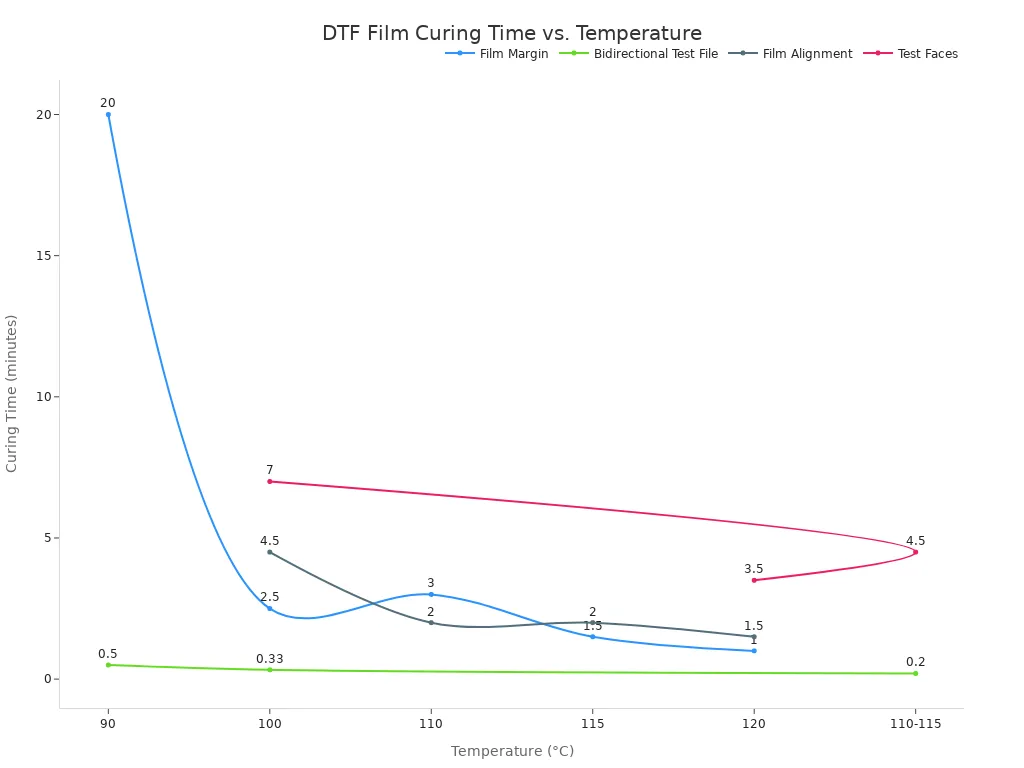
Optimizing these settings is essential. For example, a conveyor dryer offers the most efficient curing, but a simple heat press can work well when its time and temperature are properly calibrated for the specific film.
Choosing the right film is a critical decision for any startup. Brands should select a film that aligns with their specific goals for quality, cost, and design aesthetic.
- STS Inks DTF Film offers premium quality and reliability.
- ColorMax DTF Film provides the best value for tight budgets.
- Kodak DTF Film delivers the most vibrant, eye-catching designs.
Testing options on actual garments ensures the perfect match for a brand's vision.
FAQ
What is the difference between hot peel and cold peel films?
Hot peel films allow operators to remove the film immediately after heat pressing. Cold peel films require the transfer to cool completely before removal, offering a more forgiving process.
Can any DTF ink be used with any film?
Most inks are cross-compatible. However, brands often achieve optimal vibrancy and adhesion by pairing a dtf roll film with the manufacturer's recommended ink system for guaranteed performance.
Tip: Always conduct a small test print. This step confirms compatibility between your specific ink and film, preventing costly production errors and ensuring consistent quality for your brand.
See Also
Essential Folder Gluer Innovations for 2025 Carton Production Lines
Leading Precoating Solutions for Advanced Filtration Systems in 2025
Six Must-Have Industrial Vacuum Cleaners for Every Modern Business
Identifying the Foremost Nameplate Supplier for Excellence in 2025
Key Capsule Checkweighers for Informed Buyer Decisions in 2025