Best Chip Sorting Machines for Laboratory Use in 2026
Laboratories in 2026 rely on advanced solutions like the MoFlow XDP Sorter, Bigfoot Spectral Cell Sorter, Sony SH800, and On-chip Sort. Each chip sorting machine excels in accuracy and speed. Laboratories benefit from AI-driven sorting, adaptive automation, and robotics, all enhancing precision and efficiency.
Chip Sorting Machine Quick Comparison Table
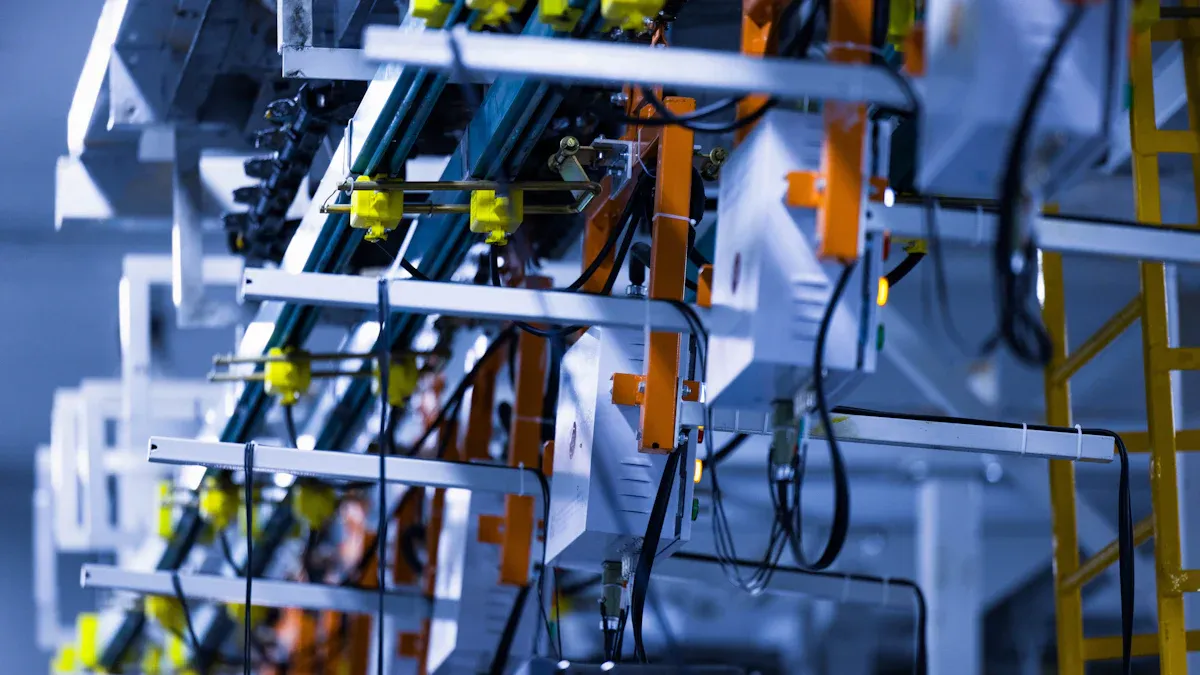
Key Specifications
Selecting the right chip sorting machine for laboratory use in 2026 requires a clear understanding of each model’s core specifications. The following table summarizes the main technical details for the MoFlow XDP Sorter, Bigfoot Spectral Cell Sorter, Sony SH800, and On-chip Sort.
| Model | Max Throughput (events/sec) | Sorting Modes | Automation Level | Footprint (cm) |
|---|---|---|---|---|
| MoFlow XDP Sorter | 70,000 | 2-way, 4-way | High | 120 x 80 x 90 |
| Bigfoot Spectral Cell Sorter | 100,000 | 6-way | Advanced | 140 x 90 x 100 |
| Sony SH800 | 30,000 | 2-way, 4-way | Moderate | 60 x 60 x 80 |
| On-chip Sort | 10,000 | 2-way | High | 45 x 40 x 60 |
Note: Throughput and automation levels may vary depending on sample type and laboratory workflow.
Unique Features
Each chip sorting machine offers distinct advantages that set it apart from competitors. The table below highlights the unique features of each model:
| Model | Unique Features |
|---|---|
| MoFlow XDP Sorter | Rated 5 stars for reliability with sticky samples and large cells. |
| Sony SH800 | Praised for ease of use and great results with simple panels. |
| On-chip Sort | Handles fragile cells, cell clusters, bacteria, and emulsion droplets with minimal sample loss. |
| Bigfoot Spectral Cell Sorter | Analyzes up to 60 parameters, ideal for deep immunophenotyping, genomics, and CGT research. |
Laboratories can use these tables to quickly compare models and identify the best fit for their workflow. Each machine addresses specific needs, from high-throughput sorting to gentle handling of delicate samples.
Chip Sorting Machine Criteria for Selection
Accuracy and Precision
Laboratories demand high accuracy and precision from any chip sorting machine. Researchers rely on these machines to separate cells or particles with minimal error. Consistent performance ensures reliable experimental results. Machines like the MoFlow XDP Sorter and Sony SH800 receive positive feedback for their ability to deliver accurate sorting, even with challenging samples.
Sorting Speed
Sorting speed plays a critical role in laboratory productivity. Faster machines process more samples in less time, which benefits high-throughput labs.
- A microfluidic cell sorter typically sorts about 450 cells per minute, with a switching time near 133 milliseconds.
- Flow cytometry sorters can reach throughputs of 50 million cells per hour.
- The nominal maximum throughput for top models ranges from 20,000 to 25,000 events per second, translating to 50–63 million events per hour after yield corrections.
Compatibility with Lab Equipment
Compatibility with existing laboratory equipment ensures smooth integration and workflow. The following table highlights essential compatibility features:
| Feature | Description |
|---|---|
| Damage-free | Prevents cell damage during sorting |
| Sterile and contamination-free | Keeps samples uncontaminated |
| Size | Fits inside a biosafety cabinet |
| Cell Size Compatibility | Handles cells up to 140μm |
| Media Variety | Works with various media types |
The MoFlow XDP Sorter stands out for its reliability with sticky samples and large cells. The Sony SH800 is known for its user-friendly design and effectiveness in basic experiments.
Ease of Use
User-friendly interfaces and intuitive controls reduce training time. The Sony SH800 receives praise for its straightforward operation, making it suitable for both new and experienced users. Automated features in modern chip sorting machines further simplify workflows.
Price and Value
Laboratories must balance performance with budget constraints. A chip sorting machine that offers advanced features, high throughput, and reliable results provides greater value over time. Decision-makers should consider long-term maintenance costs and support when evaluating options.
Chip Sorting Machine In-Depth Reviews
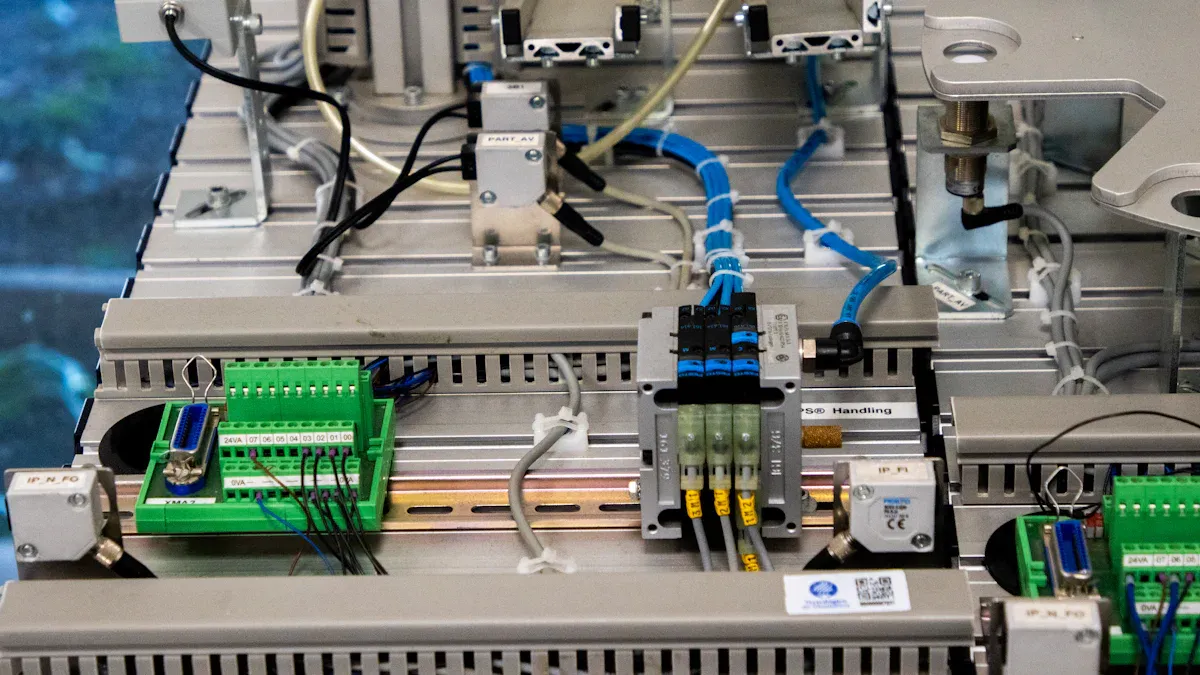
MoFlow XDP Sorter Overview
The MoFlow XDP Sorter stands as a high-performance chip sorting machine designed for laboratories that demand speed and reliability. This model uses jet-in-air technology, which enables rapid sorting and high yields. Many laboratories choose the MoFlow XDP Sorter for its robust construction and adaptability to a wide range of sample types.
MoFlow XDP Sorter Standout Features
The single best feature of the XDP is zero coincidence aborts. [...] What this really means, however, is that you have absolute control over your yield.
The MoFlow XDP Sorter offers several advantages:
- Zero coincidence aborts, ensuring precise control over yield.
- Fluidics described as uncannily stable, which supports consistent operation.
- Upgrade costs remain low, at about one-fourth the price of a new sorter.
- High throughput with minimal hard aborts, even when handling sticky or large cells.
MoFlow XDP Sorter Pros and Cons
| Pros | Cons |
|---|---|
| High speed and yield | Larger footprint than some competitors |
| Stable fluidics system | Requires regular calibration |
| Low upgrade cost | May need advanced training for operators |
| Handles challenging samples |
MoFlow XDP Sorter Ideal Use Cases
Laboratories use the MoFlow XDP Sorter for applications requiring high purity and yield. This chip sorting machine excels in cell sorting for cancer diagnostics, environmental analysis, and research involving rare cell populations. Its ability to process sticky and large cells makes it suitable for complex biological samples.
MoFlow XDP Sorter User Feedback
[...] we’d be able to operate with no/low hard aborts similar to the Aria, which, when paired with the higher number of droplets a jet-in-air can achieve, should allow us to sort faster and maintain high yields and purity.
Users frequently praise the MoFlow XDP Sorter for its reliability and control over sorting outcomes. Many highlight the stable fluidics and cost-effective upgrades as significant benefits.
Bigfoot Spectral Cell Sorter Overview
The Bigfoot Spectral Cell Sorter represents a new generation of chip sorting machines. It integrates advanced spectral analysis, allowing researchers to analyze up to 60 parameters simultaneously. This model supports high-throughput workflows and adapts to complex experimental designs.
Bigfoot Spectral Cell Sorter Standout Features
- Six-way sorting capability for maximum flexibility.
- Advanced automation reduces manual intervention.
- Deep immunophenotyping and genomics compatibility.
- Large touchscreen interface for intuitive operation.
Bigfoot Spectral Cell Sorter Pros and Cons
| Pros | Cons |
|---|---|
| Exceptional parameter analysis | Larger size may limit placement options |
| High throughput for demanding labs | Higher initial investment |
| User-friendly automation | May require specialized maintenance |
| Supports a wide range of applications |
Bigfoot Spectral Cell Sorter Ideal Use Cases
Researchers select the Bigfoot Spectral Cell Sorter for deep immunophenotyping, genomics, and cell and gene therapy (CGT) research. Its ability to handle large sample volumes and complex panels makes it ideal for core facilities and high-throughput laboratories.
Bigfoot Spectral Cell Sorter User Feedback
Laboratories report that the Bigfoot Spectral Cell Sorter streamlines complex workflows. Users appreciate the high parameter count and automation, which reduce hands-on time and improve reproducibility.
Sony SH800 Overview
The Sony SH800 offers a compact and user-friendly chip sorting machine solution. Its design focuses on accessibility, making it suitable for both entry-level and experienced users. The SH800 fits easily into biosafety cabinets, supporting sterile and contamination-free workflows.
Sony SH800 Standout Features
- Automated setup and alignment for quick startup.
- Intuitive touchscreen interface.
- Compatibility with a wide range of sample types.
- Small footprint for flexible placement.
Sony SH800 Pros and Cons
| Pros | Cons |
|---|---|
| Easy to operate | Lower throughput than larger models |
| Minimal training required | Limited to 2-way and 4-way sorting |
| Compact design | May not suit high-throughput applications |
| Reliable for basic experiments |
Sony SH800 Ideal Use Cases
The Sony SH800 serves laboratories focused on routine cell sorting, educational settings, and basic research. Its ease of use and compact size make it a preferred choice for smaller labs or those with limited space.
Sony SH800 User Feedback
Users consistently praise the Sony SH800 for its straightforward operation and reliable results. Many highlight the minimal training required and the machine’s effectiveness with simple panels.
On-chip Sort Overview
On-chip Sort introduces a microfluidic-based chip sorting machine that prioritizes gentle handling of delicate samples. This model supports a variety of applications, including sorting fragile cells, bacteria, and emulsion droplets.
On-chip Sort Standout Features
- Microchip device reduces equipment size and simplifies protocols.
- Gentle sorting minimizes sample loss and damage.
- Compatible with a wide range of biological materials.
- Sterile operation supports sensitive workflows.
On-chip Sort Pros and Cons
| Pros | Cons |
|---|---|
| Gentle on fragile and rare cells | Lower throughput compared to other models |
| Small footprint | Limited sorting modes |
| Simplified protocols | May not suit high-volume labs |
| Sterile and contamination-free operation |
On-chip Sort Ideal Use Cases
Researchers use On-chip Sort for applications involving rare or fragile cells, such as isolating circulating tumor cells (CTCs) for early cancer detection. The chip sorting machine also supports environmental analysis and studies requiring energy efficiency and operational ease.
- Active systems utilize external fields (acoustic, electric, magnetic, optical) for sorting.
- Passive systems rely on inertial forces, filters, and adhesion mechanisms.
- Microchip devices offer advantages like reduced equipment size and simplified protocols.
On-chip Sort User Feedback
Laboratories value On-chip Sort for its gentle handling and versatility. Users note the minimal sample loss and the ability to process diverse biological materials as key strengths.
Chip Sorting Machine Head-to-Head Comparison
Performance in Real-World Lab Scenarios
Laboratories often test chip sorting machines under demanding conditions. The MoFlow XDP Sorter demonstrates high yield and purity when sorting sticky or large cells. The Bigfoot Spectral Cell Sorter handles complex panels and large sample volumes with ease. The Sony SH800 fits well in smaller labs, offering reliable results for routine tasks. On-chip Sort excels in gentle processing of fragile cells, such as bacteria or emulsion droplets. Each model adapts to different workflows, supporting both high-throughput and specialized research.
Reliability and Maintenance
Reliability remains a top priority for laboratory equipment. Manufacturers provide strong after-sales support and warranty coverage. The following table summarizes typical warranty and support services:
| Feature | Details |
|---|---|
| After Sales Service | Assemble and debug before delivery; Respond within 24 hours; 1 year free repair service (non-human damage); Overall warehousing solution provided. |
| Warranty Period | One year warranty except for consuming spare parts. |
| After Sales Services | Strong commitment to customer support; Local trained employees; Fast services; Central technical team support. |
| Warranty Period | 2 years full warranty; Lifelong warranty on machine structure. |
Most chip sorting machines require regular calibration and occasional part replacement. Local support teams and central technical assistance help minimize downtime.
Cost Efficiency
Cost efficiency influences purchasing decisions in many laboratories. The MoFlow XDP Sorter offers low upgrade costs, making it attractive for long-term use. The Sony SH800 provides value for smaller labs with limited budgets. The Bigfoot Spectral Cell Sorter requires a higher initial investment but supports advanced applications. On-chip Sort reduces operational costs through energy efficiency and simplified protocols. Laboratories should consider both upfront costs and ongoing maintenance when selecting a chip sorting machine.
Chip Sorting Machine Recommendations by Use Case
High-Throughput Laboratories
High-throughput laboratories require equipment that can process large sample volumes quickly and efficiently. The following features support optimal performance in these settings:
- Microfluidic techniques enable label-free cell sorting, which reduces the need for complex sample preparation.
- These systems decrease processing times and energy consumption compared to traditional methods.
- Miniaturized devices lower equipment fabrication costs, making them attractive for large-scale operations.
- Passive separation techniques typically deliver higher throughput than active methods, supporting demanding workflows.
Laboratories focused on speed and volume often select models like the Bigfoot Spectral Cell Sorter for its advanced automation and high event rates.
Budget-Conscious Labs
Laboratories with limited budgets prioritize value and operational efficiency. Compact models such as the Sony SH800 and On-chip Sort offer reliable performance without high upfront costs. These machines fit easily into smaller spaces and require minimal maintenance. Their user-friendly interfaces reduce training time, which further lowers operational expenses. Miniaturized chip sorting solutions also help control long-term costs by reducing energy use and consumable requirements.
Specialized Applications
Specialized research often involves rare or fragile cell populations. Dielectrophoresis (DEP) provides label-free separation based on biophysical properties, making it suitable for isolating rare cells like circulating melanoma cells. Hybrid microfluidic methods combine size-based pre-enrichment with acoustic sorting for precise single-cell isolation. This approach proves effective for capturing rare circulating tumor cells from blood, which supports liquid biopsy applications in cancer diagnostics. Researchers benefit from chip sorting machine designs that integrate these advanced techniques for specialized workflows.
Laboratories in 2026 can choose from advanced chip sorting machines like the MoFlow XDP Sorter, Bigfoot Spectral Cell Sorter, Sony SH800, and On-chip Sort. Experts advise:
- Evaluate compliance with regulatory standards and GMP.
- Consider automation, contamination risks, and operational complexity.
- Prioritize microfluidic solutions for cost efficiency and simplified protocols.
FAQ
What maintenance do chip sorting machines require?
Routine cleaning and calibration keep machines running smoothly. Most manufacturers recommend annual servicing. Users should follow the maintenance schedule in the user manual.
Can chip sorting machines handle different sample types?
Yes. Most models support a wide range of biological samples, including cells, bacteria, and droplets. Users should check compatibility before processing new sample types.
How long does operator training take?
Most users become proficient within a few days. Machines like the Sony SH800 offer intuitive interfaces, which reduce training time for new operators.
See Also
A Comprehensive Guide To Choosing Tablet Sampling Machines
Key Capsule Checkweighers To Consider For 2025 Purchases
Evaluating The Benefits Of Automated Virus Sampling Lines
Essential Folder Gluer Features For 2025 Carton Production
Three Must-Have Industrial Checkweighers For Food Facilities