Effortless Hydration The Ultimate Automatic Water Dispenser List
The water dispenser market is projected to reach USD 2.74 billion in 2025. Our top pick is the Avalon A4 Bottom-Loading Water Dispenser. This auto water dispenser is the best overall choice for most homes. You get excellent performance and high-quality design. It delivers reliable hydration with impressive efficiency.
Key Specifications at a Glance
| Feature | Specification |
|---|---|
| Hot Water Temp | 199 ℉ (92.8℃) |
| Cold Water Temp | 50‒54 ℉ (10‒12℃) |
| Flow Rate | 1.15 fl. oz. (34 ml) / sec |
| Hourly Production | 183 fl.oz. (5.4 L) Cold |
Key Takeaways
- Choose a water dispenser that fits your needs. Consider if you want bottled or bottleless, and what kind of water filtration you need.
- Think about features like hot and cold water options, size, and safety locks. These help you pick the best dispenser for your home.
- Clean your water dispenser often and change filters regularly. This keeps your water fresh and safe to drink.
The Best Automatic Water Dispensers of 2025
Choosing the right dispenser can feel overwhelming. We reviewed the top models to help you find the perfect fit for your lifestyle. Here are our picks for the best automatic water dispensers of 2025.
Best for Families: Brio CLBL520SC Self-Cleaning Bottom Load Dispenser
If you need a reliable dispenser for a busy household, the Brio CLBL520SC is an excellent choice. This model balances performance, safety, and convenience, making it ideal for families. It dispenses cold, room temperature, and hot water to meet everyone's needs.
One of its standout features is the ozone self-cleaning function. You can sanitize the water lines with the press of a button, ensuring your water is always fresh and clean. For families with young children, safety is a top priority. This unit includes a child safety lock on the hot water spout. Dispensing hot water requires a two-step action, which prevents accidental burns.
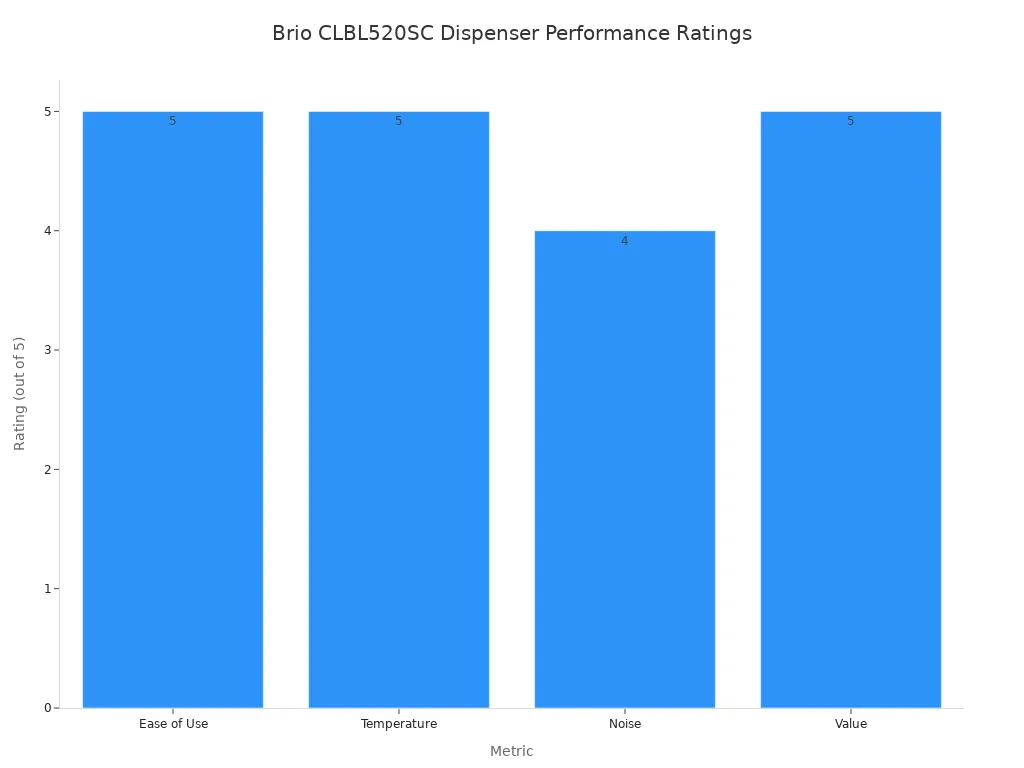
This auto water dispenser is also Energy Star certified. You can use the individual switches for hot water, cold water, and the night-light to conserve power. Users consistently give it high marks for its performance and value.
| Metric | Rating |
|---|---|
| Ease of Use | 5/5 |
| Temperature | 5/5 |
| Noise | 4/5 |
| Value | 5/5 |
“I think this water dispenser is amazing. Hot water comes out steaming, perfect for steeping tea, and the cold water is incredibly refreshing—which I really appreciate down here in Florida.” —Paul Rankin, Product Reviews writer & tester
Best Budget-Friendly: Primo hTrio Bottom Loading Dispenser
You don't have to spend a lot to get a great water dispenser. The Primo hTrio offers fantastic functionality at an affordable price. This bottom-loading model provides hot, cold, and room-temperature water. It even includes a built-in brewer that works with K-Cup® pods. This feature lets you make coffee, tea, or hot cocoa directly from the unit.
The Primo hTrio is simple to set up and use. Its push-button controls are intuitive, and a child-safety feature on the hot water button gives you peace of mind. The stainless steel design looks sleek in any kitchen. If you want a versatile auto water dispenser without a high price tag, the hTrio is a smart pick.
Best Countertop Model: Waterdrop A1 Hot & Cold RO Water Dispenser
The Waterdrop A1 is the perfect solution when you want powerful filtration without a large floor unit. This compact countertop model provides instant hot and cold water. Its main advantage is its advanced Reverse Osmosis (RO) filtration system.
The RO system effectively reduces impurities in your tap water. According to its certifications, the Waterdrop A1 is IAPMO certified to NSF 58 for reducing Total Dissolved Solids (TDS). This means you get pure, great-tasting water every time. The smart touch screen makes it easy to select your desired temperature and volume. Its tankless design ensures you get freshly filtered water on demand.
Best Bottleless Option: Waterdrop Y1CH Bottleless Water Cooler
Say goodbye to heavy water jugs with the Waterdrop Y1CH Bottleless Water Cooler. This model connects directly to your home's water line, giving you an endless supply of filtered water. It is a fantastic choice for anyone who wants ultimate convenience.
The Y1CH uses a multi-stage filtration system to remove contaminants and improve taste. It delivers both hot and cold water instantly. The unit features a smart display panel, a child lock for safety, and a UV-LED light that sterilizes the cold water tank. This bottleless dispenser saves you time, effort, and the recurring cost of buying water bottles.
Best Portable Pump: Myvision Automatic Water Bottle Pump
Sometimes you just need a simple way to get water from a large bottle. The Myvision Automatic Water Bottle Pump is a small, portable, and highly effective device. You can place it directly on top of a standard 3- or 5-gallon water jug. With the press of a button, it dispenses water into your glass.
This pump is perfect for camping, small apartments, or office desks. It features a rechargeable 1200mAh battery. A single charge can last for up to 40 days, and it recharges easily via USB. It is an incredibly simple and affordable way to make hydration effortless anywhere you go.
How to Choose the Perfect Auto Water Dispenser
Selecting the right auto water dispenser involves matching its features to your needs. You should consider the dispenser type, filtration, size, and safety features before you buy.
Dispenser Type: Bottleless vs. Bottled
You have two main choices: bottleless or bottled dispensers.
- Bottled dispensers use large 3- or 5-gallon plastic jugs. You must replace these jugs when they are empty.
- Bottleless dispensers connect directly to your water line. They provide an endless supply of water. This option eliminates plastic waste and reduces your carbon footprint from manufacturing and delivery trucks.
Filtration System Explained
Filtration ensures your water is clean and tastes great. Different systems remove different things.
- Carbon Filters: These improve taste and odor by removing chlorine.
- Reverse Osmosis (RO): This system removes heavy metals, chemicals, and dissolved solids for highly purified water.
- UV Filtration: This method uses ultraviolet light to inactivate bacteria and viruses.
Tip: Many dispensers combine filter types for comprehensive purification. Check what contaminants each model targets.
Temperature Options and Flow Rate
Most dispensers offer multiple temperature settings. Hot water settings often reach near-boiling temperatures around 200°F, perfect for tea or coffee. Cold water is typically chilled to a refreshing 42-50°F. The flow rate determines how quickly your glass fills, so check this specification if speed is important to you.
Capacity and Size
Consider how much space you have. A standard bottom-loading dispenser fits a 3- or 5-gallon bottle and can be around 41 inches tall. Countertop models are smaller but offer less capacity. Always measure your intended space to ensure a good fit.
Safety and Convenience Features
Modern dispensers include important safety features. A child safety lock is essential for homes with young children. This feature often requires a dual-step action to dispense hot water, preventing accidental burns. Some advanced models also have leak detectors that shut off the water supply automatically if a problem occurs.
Understanding Installation and Maintenance
Proper care ensures your water dispenser works well for years. You should understand the setup process and ongoing upkeep before you buy.
DIY vs. Professional Installation
Your installation method depends on the dispenser type. Bottled dispensers are simple. You just plug them in. Bottleless dispensers require more work because they connect to your water line. You can hire a professional for a worry-free setup. If you prefer a DIY project, you can install it yourself with the right tools.
DIY Installation Steps A typical installation involves a few key actions. You will need to connect the unit to a water supply, install and flush the filters, and test for any leaks. Basic tools like a wrench, tubing cutters, and screwdrivers are usually necessary.
Routine Cleaning and Filter Replacement
Regular cleaning keeps your water fresh and safe. Many modern dispensers have self-cleaning features. These systems use UV light or ozone to sanitize the internal water tank automatically. However, these features do not clean every part of the unit. You still need to manually clean the spouts, drip tray, and bottle probe. You should also scrub the internal reservoir every three to four months to remove any mineral buildup. Following the manufacturer's filter replacement schedule is also crucial for pure water.
Long-Term Costs to Consider
You should budget for ongoing expenses after your initial purchase. The two main costs are electricity and filter replacements. A dispenser with heating and cooling functions can use about 2.8 kWh of energy daily. This may add around $118 to your annual electricity bill.
Filter costs vary by system type.
- RO Filters: These typically cost between $40 and $90 per year. You will need to replace them every 6 to 12 months.
- RO Membrane: This part lasts longer. You can expect to replace it every 2 to 5 years.
Considering these costs helps you choose a dispenser that fits your budget over time.
Alternatives to Traditional Water Dispensers
An automatic water dispenser is a great tool for hydration. You might find that other solutions fit your space or budget better. Exploring these alternatives can help you make the best choice for your home.
Undersink Water Filtration Systems
You can get high-quality filtered water without a bulky unit on your counter or floor. Undersink systems connect directly to your water line and stay hidden in the cabinet below your sink. They often use powerful filtration methods like Reverse Osmosis (RO). This gives you purified water from a separate, dedicated faucet right at your sink. These systems are perfect if you want excellent filtration while saving space.
Faucet-Mounted Filters
A faucet-mounted filter is a simple and affordable option. You can attach it directly to your existing kitchen faucet in minutes. It provides filtered water for drinking and cooking with the flip of a switch. While convenient, their performance differs from larger systems. This table shows how they compare.
| Feature | Faucet Filters | Whole House Systems |
|---|---|---|
| Contaminant Removal | Basic chlorine, some sediment | Comprehensive (chlorine, chemicals, etc.) |
| Water Pressure | Reduces flow by 30-50% | Maintains strong pressure |
| Maintenance Frequency | Filter changes every 4-6 months | Filter replacement every 2-3 years |
Filtered Water Pitchers
Filtered water pitchers are the most portable and budget-friendly choice. You simply fill the pitcher with tap water, and it filters as it passes into the main reservoir. You can keep it in the refrigerator for chilled water anytime. Pitchers are ideal for individuals or small households. Their main drawbacks are limited capacity and the need for frequent refills. You also need to replace the small filters regularly.
Choosing the right auto water dispenser helps you meet your wellness goals. You can easily boost your energy, a key reason 49.3% of people choose hydration drinks. Consider your needs for filtration, temperature, and maintenance. Our 2025 recommendations provide a reliable starting point for finding your perfect unit.
FAQ
How often should I clean my water dispenser?
You should clean your dispenser every three to six months. This simple habit prevents bacteria buildup. It also keeps your water tasting fresh and pure.
Can I use any brand of water bottle with my dispenser?
Most dispensers accept standard 3- and 5-gallon jugs. You can check your user manual to confirm compatibility with different bottle brands and types.
Do water dispensers use a lot of electricity?
Energy Star models use power efficiently. The heating and cooling features consume the most energy. You can use power-saving switches to reduce your electricity costs. 💡