A Beginner's Guide to AI in the Food and Beverage Industry
Artificial intelligence (AI) presents a significant shift for the food and beverage sector. It offers businesses powerful tools to enhance operations and unlock new avenues for growth. Understanding AI's role is now crucial for maintaining a competitive edge. The market for AI in food production is expanding rapidly, signaling a fundamental change in industry practices.
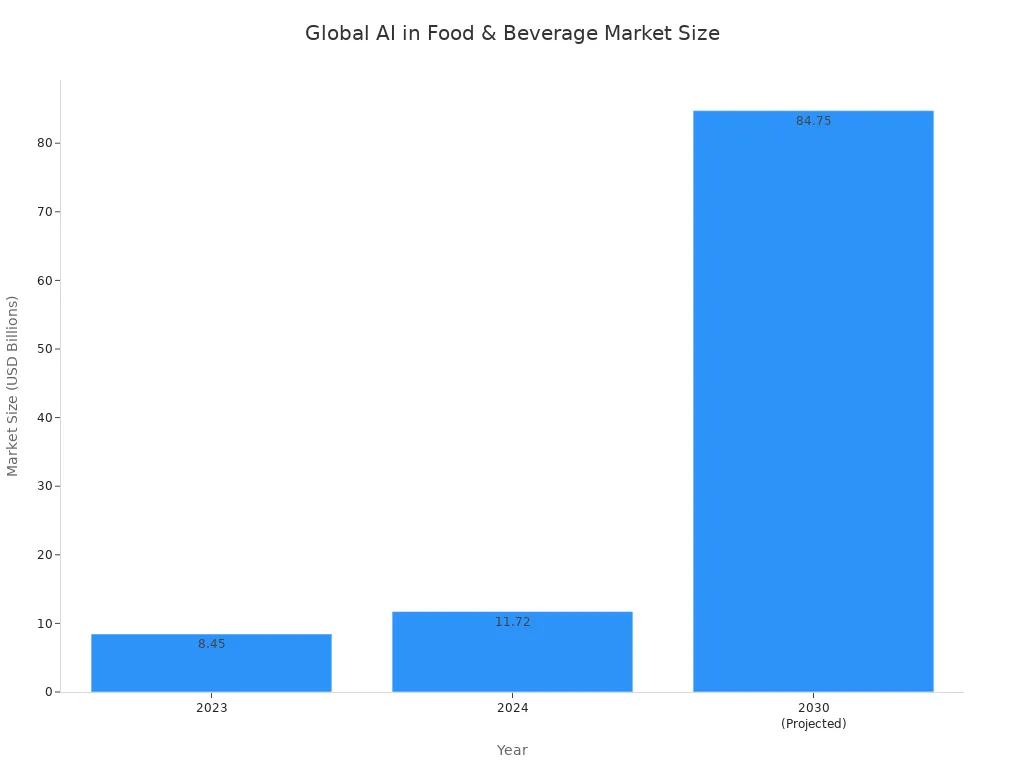
Note: The market's compound annual growth rate is projected at 39.1% from 2024 to 2030, highlighting the urgency for businesses to adapt.
Key AI Technologies Shaping the Industry
Several core artificial intelligence technologies are driving this transformation. Each offers unique capabilities that businesses can apply to solve specific challenges, from the farm to the consumer's table. Understanding these foundational pillars is the first step toward harnessing their power.
Machine Learning
Machine learning (ML) algorithms enable systems to learn from data and improve their performance over time without explicit programming. In the food industry, this technology is a powerful tool for innovation and efficiency. For example, companies use ML for:
- New Product Development: AI can analyze market trends and consumer preferences to help generate initial frameworks for new food and beverage formulations, which human experts then refine.
- Demand Forecasting: Major food chains analyze sales data, weather patterns, and local events to optimize inventory, reduce waste, and ensure popular items remain in stock.
Computer Vision
Computer vision gives machines the ability to "see" and interpret visual information from images and videos. This technology acts as a tireless set of eyes on the production line, enhancing quality and safety. Systems use high-speed cameras and AI models to automatically sort fruits and vegetables, identifying and removing items with defects like cracks or bruises. Beyond quality control, computer vision also improves hygiene compliance by monitoring production facilities to confirm that employees are wearing required gear, such as hairnets and masks.
Predictive Analytics
This technology uses historical and real-time data to forecast future outcomes. Predictive analytics helps businesses move from reactive to proactive decision-making. It analyzes social media sentiment and online reviews to anticipate emerging consumer food trends. In manufacturing, it powers predictive maintenance.
By placing sensors on equipment, AI models can analyze performance data like vibration patterns to predict a potential failure. One leading dairy producer used this approach to prevent a costly breakdown, saving an estimated $120,000 and avoiding production halts.
Revolutionizing AI in Food Production
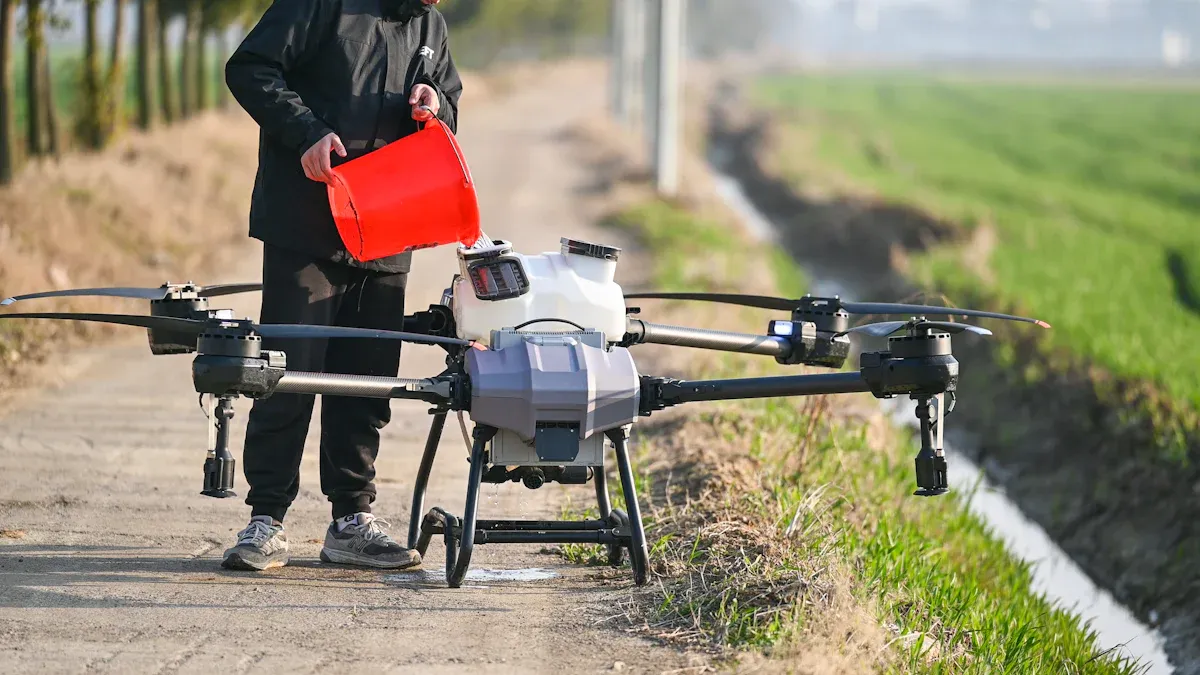
From the field to the silo, artificial intelligence is reshaping the very foundation of agriculture. The use of ai in food production allows farmers to make data-driven decisions that boost yields, improve sustainability, and enhance operational efficiency. These technologies provide unprecedented insights into every stage of the cultivation process.
Precision Farming
Precision farming uses technology to manage crops with pinpoint accuracy. AI systems analyze data from various sources to optimize the use of resources like water and fertilizer. This approach employs Variable Rate Technology (VRT), allowing equipment to apply inputs only where needed. For example, DunsField Farms used AI-powered drone analysis to generate a precise plant density map, identifying an under-population of over 20,000 maize plants per hectare and enabling timely intervention. This targeted strategy minimizes waste and reduces environmental impact.
Crop and Soil Health Monitoring
AI systems act as a constant watchtower over crop and soil conditions. Drones equipped with optical and multispectral sensors collect high-resolution imagery of fields.
AI algorithms then process these images to detect early signs of stress, disease, or nutrient deficiencies. The process involves:
- Image Collection: Drones or satellites capture field data.
- Feature Extraction: AI identifies features like plant color and texture.
- Classification: The system classifies areas as healthy or diseased, guiding targeted treatments. This proactive monitoring is a critical function of ai in food production.
Automated Harvesting
Robotics and AI are addressing one of agriculture's biggest challenges: labor shortages. Automated systems are now capable of harvesting delicate produce. The Agrobot, for instance, is a multi-armed harvester that uses color sensors to identify and gently pick ripe strawberries. Such innovations in ai in food production have a significant economic impact. A single autonomous machine can often do the work of multiple human laborers, operating 24/7 without breaks and reducing labor costs by up to 40%.
AI in Processing and Manufacturing
After the harvest, AI continues to add value in processing and manufacturing facilities. It introduces a new level of precision and intelligence to ensure products are safe, consistent, and delivered efficiently. This technology helps companies protect their brand reputation and bottom line.
Enhancing Food Safety and Compliance
AI is a powerful ally in the fight against foodborne illness and fraud. When combined with technologies like blockchain, AI creates a transparent and secure digital ledger for food traceability. This integration allows businesses to:
- Quickly identify contamination points for targeted recalls, minimizing waste.
- Provide authenticated product information to prevent fraud.
- Help organizations comply with food safety regulations.
- Build consumer trust by offering verifiable data on a product's journey.
AI systems process vast datasets from various sensors to detect anomalies, enhancing food authenticity and safety across the entire supply chain.
Automating Quality Control
Manual inspection is slow and prone to error. AI-powered visual inspection systems work tirelessly to ensure every product meets strict standards. These systems use high-resolution cameras and machine learning to spot defects with incredible precision. They can identify foreign materials like metal or plastic fragments that traditional methods might miss. AI also maintains product consistency, sorting items like potatoes by size, shape, and quality for different markets.
AI-powered visual inspection systems can achieve over 99% accuracy in defect detection, far surpassing human capabilities and ensuring a higher quality final product.
Optimizing Supply Chain Logistics
Getting products from the factory to the store shelf is a complex logistical puzzle that AI helps solve. AI algorithms optimize delivery routes by analyzing real-time traffic, weather, and delivery windows, reducing fuel costs and manual planning efforts by over 70%. In cold chain logistics, a critical part of ai in food production and distribution, smart sensors and AI monitor temperatures continuously. This system sends instant alerts if conditions deviate, preventing spoilage and ensuring perishable goods arrive safely.
AI in Retail and Consumer Experience
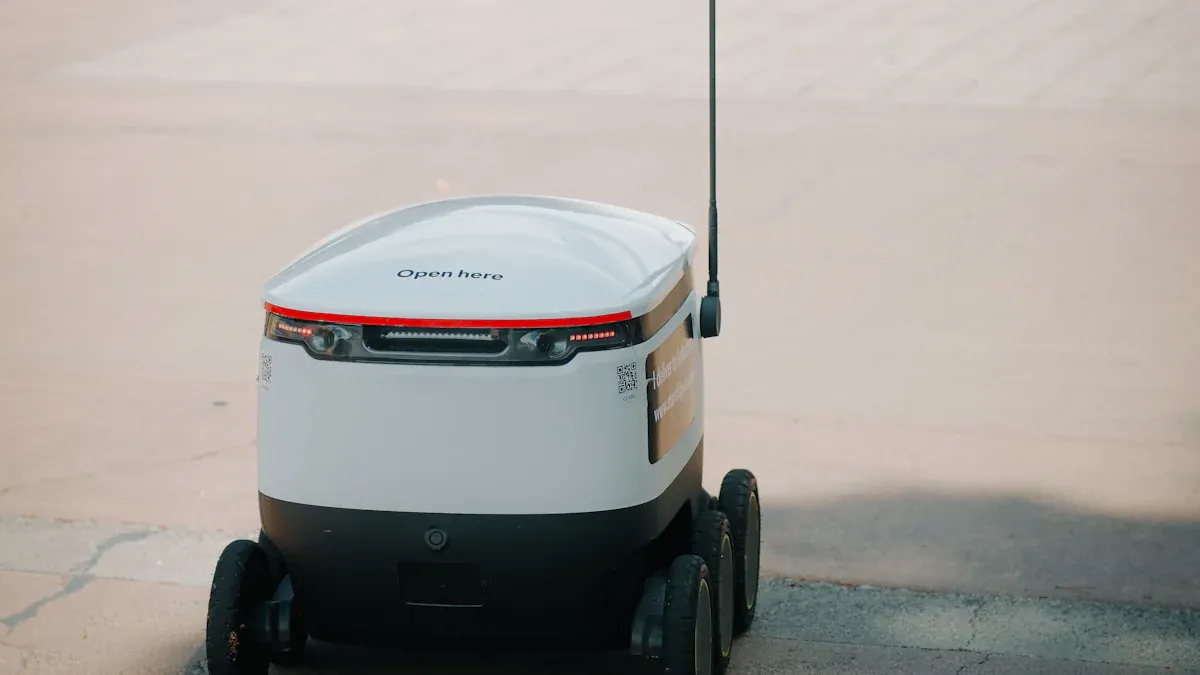
Artificial intelligence is transforming the final frontier of the food and beverage industry: the retail and consumer experience. From online grocery apps to in-store shopping, AI helps businesses understand their customers on a deeper level. This technology creates highly personalized interactions that build loyalty and drive sales.
Personalized Marketing and Recommendations
AI enables brands to move beyond generic advertising and deliver messages that resonate with individual consumers. It analyzes vast amounts of data, including purchase history and browsing behavior, to tailor marketing campaigns and product suggestions. This level of personalization makes customers feel understood and valued.
Several major brands already leverage AI to connect with their audience:
- Coca-Cola used AI to analyze consumer preferences and co-create its Y3000 flavor, specifically targeting Generation Z.
- Heinz identified promising global flavor profiles with AI-driven insights, leading to its successful 'Flavor Tour' sauce line.
- Burger King embraced its "Have It Your Way" slogan by allowing customers to design their own Whoppers using an AI tool, with top designs considered for the menu.
Grocery apps also use sophisticated AI recommendation engines to enhance the shopping experience. These systems analyze a user's behavior to predict intent and suggest relevant products. For example, if a shopper adds Greek yogurt and bananas to their cart, the AI might suggest complementary items like chia seeds or almond butter. This works by using a combination of technologies:
- Collaborative Filtering: Finds patterns like "shoppers who bought this also bought..."
- Natural Language Processing (NLP): Understands search terms and product reviews.
- Reinforcement Learning: Continuously refines suggestions based on what a user clicks on or buys.
This technology creates a "zero-query journey," where the AI anticipates a customer's needs and displays relevant products on the homepage before they even type in a search.
Demand Forecasting and Inventory Management
Accurate forecasting is critical for profitability in the food and beverage retail sector. AI-powered demand forecasting analyzes historical sales, weather patterns, local events, and social media trends to predict what customers will buy and when. This shift from guesswork to data-driven prediction has a massive impact.
Retailers implementing AI have seen forecast accuracy improve by as much as 10 to 20 percentage points. This precision leads to significant operational benefits, including a reported 14% reduction in stockouts and a 26% decrease in leftover inventory. Better forecasting directly translates to more efficient inventory management and less waste. AI systems help retailers:
- Optimize Pricing: AI identifies products nearing their sell-by dates and suggests dynamic markdowns to maximize revenue and prevent items from being thrown away.
- Track Inventory in Real-Time: Computer vision can monitor shelf stock, ensuring timely restocking of perishable goods and minimizing spoilage.
- Identify Waste Patterns: AI analytics can pinpoint the root causes of waste, helping managers make targeted improvements to ordering and handling procedures.
Ultimately, AI helps ensure that the right products are on the shelf at the right time, reducing waste and improving the bottom line.
Improving the Customer Journey
AI streamlines the entire customer journey, from initial inquiry to post-purchase support. It provides instant, personalized assistance that modern consumers expect. One of the most visible applications is the AI-powered chatbot. 🤖
Chatbots offer 24/7 support and can resolve common issues in seconds. For example, a customer experiencing a food delivery delay can interact with a chatbot to track the driver, modify the order, or receive a compensation voucher instantly. Similarly, a diner with dietary restrictions can ask a chatbot to identify all gluten-free options on a menu, receiving a filtered list based on their preferences.
Beyond customer service, AI enhances the shopping experience in other powerful ways:
- Smart Shopping Assistants: In-store kiosks or mobile apps can help customers locate products, compare prices, and receive personalized offers.
- In-Aisle Messaging: AI can use loyalty data to deliver relevant discounts to a shopper's phone as they walk down a specific aisle.
- Seamless Reservations: Chatbots can manage table reservations and waitlists for restaurants, providing real-time updates to customers.
By automating routine tasks and offering personalized guidance, AI frees up human employees to handle more complex issues, creating a smoother and more satisfying experience for everyone.
How to Get Started with AI
Adopting artificial intelligence does not require a complete operational overhaul. Businesses can begin their AI journey with a strategic, step-by-step approach. This practical framework helps companies integrate AI effectively, ensuring a smooth transition and measurable results.
Step 1: Identify Key Business Challenges
The first step is to pinpoint specific problems that AI can solve. Businesses should evaluate their operations to find areas for improvement. Common challenges include inefficient inventory management, food safety risks, and the need for better customer personalization. For example, companies like Chipotle use AI to enhance kitchen efficiency and reduce food waste. Identifying a clear pain point focuses the AI implementation on delivering tangible value from the start.
Step 2: Start Small with Your Data
Businesses should begin with a manageable, well-defined project. Starting small allows teams to learn and adapt without significant risk. Companies can use existing data, such as sales history or customer feedback, to train an initial AI model. This focused approach builds internal expertise and demonstrates early wins, creating momentum for more ambitious projects. A successful pilot project provides a strong foundation for future AI integration.
Step 3: Explore AI Tools and Partners
Companies do not need to build AI systems from scratch. A growing ecosystem of user-friendly AI platforms is available for the food and beverage industry. These tools offer specialized solutions for various business needs.
For instance, Restoke automates back-of-house procurement, while Bloom Intelligence helps manage guest sentiment and marketing. Even menu creation is simpler with tools like Canva’s Free Menu Maker. Exploring these options helps businesses find the right partner to accelerate their AI adoption. ⚙️
Step 4: Measure Impact and Scale Up
Measuring the success of an AI initiative is crucial. Businesses must define key performance indicators (KPIs) before implementation. These metrics help quantify the return on investment (ROI) and guide future decisions.
- Operational Efficiency: Track reductions in error rates or process cycle times.
- Customer Experience: Monitor changes in customer satisfaction scores (CSAT) and retention rates.
- Financial Impact: Measure revenue growth and overall cost savings.
Once a project demonstrates positive results, the business can confidently scale the solution to other departments or challenges.
Artificial intelligence reshapes the food and beverage landscape. It boosts efficiency, safety, and personalization. Accessible tools now empower businesses of all sizes. This shift points toward a smarter, more sustainable future for the industry, making now the perfect time for companies to engage with AI. 🚀
FAQ
Is AI only for large corporations?
No. Many scalable AI platforms offer affordable solutions. Small and medium-sized businesses use these tools to improve operations, enhance efficiency, and compete effectively.
What skills are needed to implement AI?
Businesses do not need in-house AI experts to start. They can partner with specialized vendors or use user-friendly platforms. Basic data analysis skills are beneficial for implementation.
How does AI reduce food waste? 💡
AI optimizes inventory by accurately forecasting demand. It monitors product freshness and suggests dynamic pricing for items nearing expiration, significantly cutting down on spoilage and financial loss.
See Also
Essential Industrial Checkweighing Machines for Optimal Food Plant Operations
Understanding Tablet Sampling Machines: A Comprehensive Guide for Lab Selection
Six Industrial Vacuum Cleaners Every Smart Business Must Seriously Consider
Key Industry Leaders Convene at 3-A SSI Summit for Hygienic Design
Exploring Diverse Nozzle Solutions for Gardeners, Bioprinters, and Lubrication Professionals