Bean color sorter myths do pricier machines win
Many believe price determines the best bean color sorter results. In reality, features and technology drive performance. Industry studies show advanced sorting technology can reduce waste by up to 15%.
- Deep learning algorithms improve accuracy.
- Optical sensors enhance quality control.
| Feature/Technology | Impact on Performance |
|---|---|
| Deep Learning Algorithms | Recognizes complex patterns for higher sorting precision. |
| Optical Sensors | Detects subtle color variations, reducing waste and boosting consistency. |
Common Myths About Bean Color Sorter Machines
Higher Price Means Better Sorting
Many believe that a higher price tag guarantees better performance in a bean color sorter. This assumption often overlooks the real factors that drive sorting quality. Premium machines do offer advanced features that enhance sorting accuracy and efficiency. These models use cutting-edge technology to deliver superior accuracy and versatility. Over time, they can provide a strong return on investment by reducing waste and improving product quality.
- Advanced technologies improve sorting precision.
- Enhanced systems reduce false rejects and optimize yield.
- Premium pricing often reflects these technological upgrades.
However, price alone does not always determine the best fit for every operation. Some facilities may not require the highest-end features to achieve their goals.
Affordable Bean Color Sorters Always Compromise Quality
A common misconception suggests that affordable bean color sorter machines always sacrifice quality. In reality, many budget-friendly options now incorporate reliable sensors and user-friendly interfaces. Manufacturers have improved the quality of lower-cost models, making them suitable for small and medium-sized businesses. Operators can achieve consistent results without investing in the most expensive equipment. The key lies in matching machine capabilities with operational needs.
Only Big Brands Offer Reliable Bean Color Sorters
Some buyers assume that only well-known brands produce dependable bean color sorters. This belief can limit choices and overlook innovative solutions from emerging manufacturers. Smaller brands often introduce new features and competitive pricing. Many lesser-known companies provide robust after-sales support and durable machines. Buyers should evaluate each option based on performance, support, and technology rather than brand recognition alone.
Top Bean Color Sorter Machines in 2026
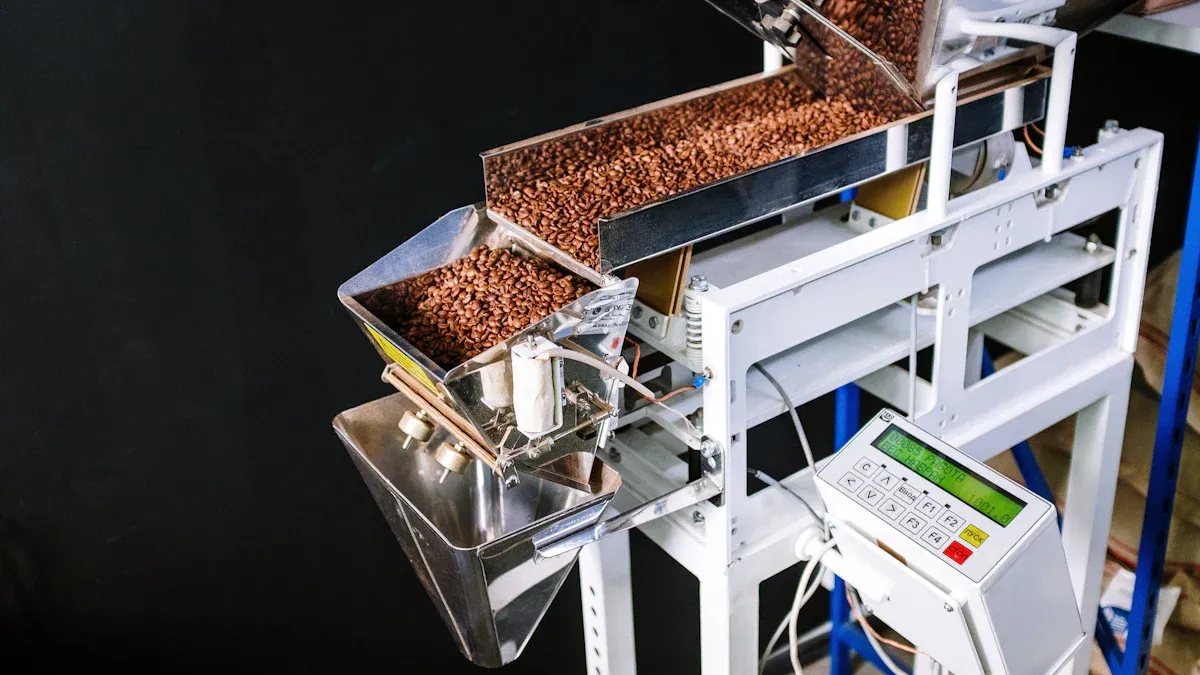
Leading High-End Bean Color Sorters
Industry leaders continue to innovate in the high-end segment. These machines set the standard for precision and efficiency. In 2026, several models stand out for their advanced features and robust construction.
-
OptiSort Pro X9
This model uses multi-spectral imaging and AI-driven pattern recognition. Operators report exceptional accuracy in sorting even the most challenging bean varieties. -
ColorMax Ultra 5000
Manufacturers equip this machine with dual-lane sorting and real-time defect mapping. Facilities benefit from increased throughput and minimal downtime. -
VisionTech Elite S
This sorter integrates self-cleaning optics and remote diagnostics. Maintenance teams appreciate the reduced service intervals and quick troubleshooting.
Tip: High-end machines often include remote monitoring and predictive maintenance, which can reduce unexpected stoppages.
Best Affordable Bean Color Sorter Options
Affordable options now offer impressive reliability and user-friendly controls. Many small and medium-sized businesses choose these models for their balance of cost and performance.
| Model | Key Feature | Ideal For |
|---|---|---|
| BeanScan Lite 200 | Simple touch interface | Small roasters |
| SortEase Compact | Modular design | Start-up operations |
| EcoColor Mini | Energy-efficient sensors | Budget-conscious users |
These affordable machines help businesses access quality sorting without a large investment. Each model provides essential features that meet the needs of different production scales.
Bean Color Sorter Head-to-Head Comparison

Sorting Accuracy
Sorting accuracy remains the most critical factor for any bean processing operation. High-end machines often utilize advanced optical sensors and deep learning algorithms to identify even the slightest color deviations. These technologies help reduce false rejects and ensure only defective beans are removed. Affordable models have improved significantly, now offering reliable accuracy for most standard applications. Operators should assess the types of defects most common in their beans and select a machine that matches those needs.
Speed and Throughput
Processing speed directly impacts productivity. Premium bean color sorters typically deliver higher throughput due to multi-lane sorting and faster image processing. These machines can handle large volumes without sacrificing accuracy. Entry-level models may operate at slower speeds, but they still meet the requirements of small and medium-sized facilities. When evaluating speed, users should consider both the maximum capacity and the consistency of performance during extended operation.
Durability and Build Quality
Durability ensures long-term value. High-end machines often feature robust construction, corrosion-resistant materials, and reinforced components. These features help withstand continuous use in demanding environments. Affordable machines have also improved in build quality, with many now offering sturdy frames and reliable parts. Regular maintenance and proper handling further extend the lifespan of any bean color sorter.
Ease of Use
User experience plays a significant role in daily operations. Manufacturers have focused on intuitive interfaces and minimal training requirements. The following table highlights the most commonly cited user interface features:
| Feature | Description |
|---|---|
| User-friendly controls | The sorter incorporates user-friendly controls that enhance ease of operation. |
| Advanced optical sorting | Equipped with high-resolution cameras and advanced image processing algorithms for accuracy. |
| Minimal training requirements | Designed to be intuitive, requiring minimal training for users to operate effectively. |
Operators benefit from touch-screen displays, clear menus, and guided setup processes. These features reduce errors and speed up onboarding for new staff.
Maintenance Needs
Maintenance requirements vary between models. High-end machines often include self-cleaning optics and predictive maintenance alerts. These features minimize downtime and reduce the need for frequent manual intervention. Affordable models may require more hands-on care, but many now offer easy-access panels and straightforward cleaning routines. Regular maintenance schedules help prevent unexpected breakdowns and maintain consistent performance.
After-Sales Support
Reliable after-sales support ensures smooth operation and quick resolution of issues. Leading manufacturers provide a range of services, as shown below:
| Service Type | Description |
|---|---|
| Maintenance and After Sale Services | Specialized technology and after-sales service departments provide reliable pre-sales and timely after-sales service, including regular checks and operational guidelines. |
| Spare Parts Supply | Free supply of spare parts for one year. |
| Installation and Training | On-site installation and training services provided by technicians to ensure proper operation and reduce downtime. |
Comprehensive support packages help operators maximize uptime and protect their investment.
Cost-Effectiveness
Cost-effectiveness involves more than just the purchase price. Energy consumption, operational costs, and maintenance all contribute to the total cost of ownership. The table below compares the power requirements of several popular models:
| Model | Power |
|---|---|
| MINI-32 | 0.5KW |
| R1-64 | 0.8KW |
| R2-128 | 1.3KW |
Lower energy consumption reduces operating expenses over time. Buyers should also consider the availability of spare parts and the quality of after-sales support when evaluating overall value. A bean color sorter that balances upfront cost, efficiency, and long-term reliability delivers the best return on investment.
What Really Drives Value in Bean Color Sorters
Features That Matter Most
Operators and business owners often focus on features that deliver measurable improvements in quality and efficiency. Advanced technologies such as artificial intelligence and multi-spectral imaging have transformed the sorting process. These features allow machines to detect subtle defects and make real-time adjustments for different bean types. As a result, facilities experience higher accuracy in defect removal and a noticeable reduction in waste.
Modern machines with AI capabilities can analyze thousands of beans per second. They adapt to variations in color, size, and shape, which ensures consistent quality. Multi-spectral imaging provides a deeper look into each bean, identifying imperfections that traditional cameras might miss. This technology supports continuous operation and reduces the need for manual intervention. Production lines benefit from fewer stoppages and smoother workflows.
Note: Machines equipped with high-resolution imaging and AI not only meet strict quality standards but also help producers respond to changing consumer demands. These advancements increase profit margins by optimizing processing efficiency.
When evaluating a bean color sorter, decision-makers should prioritize features that align with their production goals. The most valuable features often include:
- High-resolution optical sensors
- Adaptive AI algorithms
- Real-time defect mapping
- User-friendly interfaces
- Automated cleaning systems
Each feature contributes to better quality control, lower labor costs, and improved overall productivity.
Specs vs. Real-World Performance
Manufacturers often highlight impressive specifications in their marketing materials. However, real-world performance can differ due to environmental factors and operational practices. Operators sometimes encounter issues such as blurry camera images or inconsistent sorting results. These problems may arise from dust on lenses, lighting fluctuations, or sensor misalignment.
The following table outlines common discrepancies between specifications and actual performance, along with their causes and solutions:
| Discrepancy | Primary Causes | Solutions |
|---|---|---|
| Blurry Camera Images | Dust, condensation, or scratches on optical lenses | Clean lenses, check for moisture, replace damaged lenses, verify camera focus settings |
| Inconsistent Sorting | Lighting fluctuations or sensor misalignment | Measure light intensity, re-align sensors, check for stability, test with different batches |
| Software/System Errors | Corrupted settings or firmware bugs | Reset settings, update firmware, rebuild color profiles |
| False Ejections | Incorrect sensitivity or air pressure | Adjust settings in increments, check air pressure |
| Missed Defects | Low contrast settings or inadequate LED brightness | Increase contrast settings, check LED brightness |
| Machine Drift | Lack of regular recalibration | Implement scheduled recalibration every 4-8 hours of operation |
Operators who understand these potential gaps can take proactive steps to maintain optimal performance. Regular cleaning, calibration, and software updates help bridge the gap between advertised specs and daily results.
Tip: Consistent maintenance and staff training ensure that machines deliver on their promised capabilities, regardless of brand or price.
Real-World Experiences With Bean Color Sorters
Feedback on Expensive Bean Color Sorters
Users who invest in premium machines often share both positive and negative experiences. Many praise these models for their ability to deliver significant improvements in final product quality. Operators find that integration into existing production lines proceeds smoothly. Fast return on investment stands out, especially when waste reduction becomes evident. Responsive technical support, particularly from European brands, earns frequent compliments.
- Significant improvement in final product quality
- Easy integration into existing lines
- Fast return on investment due to reduced waste
- Responsive technical support from certain European brands
However, some users report unexpected downtime caused by sensor misalignment. Difficulty sourcing replacement parts for budget models frustrates operators. Manuals written in poor English or inadequate training from some Asian suppliers create challenges. Specifications sometimes fail to match real-world results, leading to disappointment.
Feedback on Affordable Bean Color Sorters
Affordable machines receive a mix of praise and constructive feedback. The following table summarizes common user experiences:
| Praise/Complaint | Description |
|---|---|
| Performance | Users reported excellent performance of the TS-32 color sorter machine, enhancing work efficiency and quality. |
| Customer Service | Customers expressed high satisfaction with pre-sale and after-sale services provided by TOPSORT. |
| Performance | Topsort mini color sorters received unanimous praise for their effectiveness in the coffee bean industry. |
| Customer Service | The professional after-sales team provided prompt assistance, contributing to positive user experiences. |
| Performance | The color sorter machine significantly improved sorting accuracy and quality for users like John. |
| Customer Service | Users appreciated the remote guidance and support provided during setup and operation. |
Lessons From Users Who Switched
Operators who transition between expensive and affordable bean color sorter models share valuable insights. Many discover that matching machine capabilities to operational needs yields better results than focusing solely on price. Some users report that affordable machines meet their requirements without sacrificing quality. Others find that premium models justify their cost through advanced features and reliable support. The most successful operators evaluate technology, support, and real-world performance before making a decision.
Tip: Users recommend prioritizing technical support and ease of maintenance when selecting a bean color sorter, regardless of price.
- Features, support, and proven results drive value in bean color sorters.
- Premium and budget machines both offer strong options for different priorities.
Experts recommend selecting a bean color sorter that matches operational needs, not just the price tag. Smart buyers focus on long-term performance.
FAQ
What is the main advantage of high-end bean color sorters?
High-end machines use advanced sensors and AI. They deliver higher accuracy and faster sorting. Many operators see reduced waste and improved product quality.
Can affordable bean color sorters handle specialty beans?
Affordable machines can sort specialty beans. They offer reliable performance for small batches. Operators should match machine features to their specific bean types.
How often should operators perform maintenance on a bean color sorter?
Regular cleaning and calibration every 4–8 hours of operation keeps machines running smoothly. Scheduled maintenance prevents breakdowns and ensures consistent sorting results.
See Also
The Importance Of Capsule Sorters In Defect Elimination
Is It Worth Investing In Automated Virus Sampling Lines?
Key Considerations For Capsule Checkweighers Buyers In 2025
Top Locations To Purchase X-Ray Inspection Machines In China