Automatic box packing machine powers local chemical industries
Automatic box packing machines play a vital role in local chemical industries. These machines streamline packaging tasks and help companies minimize manual handling of hazardous materials. Workers experience safer operations, while businesses achieve higher output and consistent product quality. Reliable automation also supports compliance with industry standards, giving chemical companies a strong competitive advantage.
Key Packaging Challenges in Local Chemical Industries
Handling Hazardous Materials Safely
Local chemical industries face significant risks when packaging hazardous materials. Workers must handle substances such as acids, alkalis, solvents, petrochemicals, polymers, specialty chemicals, agrochemicals, and pharmaceuticals. Each material requires careful attention to prevent exposure and contamination. Companies must comply with strict safety standards, including chemical compatibility and resistance to degradation. Testing and certification processes demand time and resources. Packaging solutions must also withstand extreme conditions and maintain integrity during transport.
- Common hazardous materials handled include:
- Basic chemicals: acids, alkalis, solvents
- Petrochemicals: ethylene, propylene
- Polymers: plastics, synthetic fibers
- Specialty chemicals: adhesives, coatings
- Agrochemicals: fertilizers, pesticides
- Pharmaceuticals: active ingredients for medicines
Safety and compliance constraints drive the need for robust packaging systems that protect both workers and the environment.
Maintaining Product Integrity During Packaging
Chemical products require packaging that preserves their quality throughout storage and transportation. Improper packaging can lead to container leaks, ruptures, inadequate sealing, and structural failures under pressure. Mishandling during loading or unloading increases the risk of contamination or chemical reactions. Incorrect or missing hazard labels compromise regulatory compliance and safety. Custom packaging solutions ensure compatibility and stability, adapting to unique storage and transportation conditions.
- Key risks include:
- Container leaks
- Ruptures caused by material incompatibility
- Inadequate sealing
- Structural failures
- Mishandling
- Incorrect hazard labeling
Custom packaging safeguards product integrity and supports regulatory requirements.
Managing High Volume and Product Variety
Chemical companies must package a wide range of products, each with distinct sizes, weights, and handling requirements. Automation enhances efficiency, allowing quick adjustments for production changes and SKU proliferation. Advanced robotics and flexible product handling techniques support rapid changeovers. Packaging materials, such as bliss boxes, provide stability for heavier products. Retail-ready packaging ensures proper presentation for consumers. Equipment durability is essential in caustic environments.
- Companies address these challenges by:
- Utilizing automation for diverse product types and sizes
- Implementing flexible packaging processes
- Selecting materials based on product weight
- Designing retail-ready solutions
- Supporting rapid changeovers
- Ensuring equipment withstands harsh conditions
Efficient management of high volume and product variety enables chemical businesses to maintain productivity and adapt to market demands.
Meeting Stringent Regulatory Requirements
Chemical companies operate under strict regulatory oversight. Agencies such as OSHA, EPA, and REACH set standards to protect human health and the environment. Packaging solutions must address these requirements to ensure safety and compliance. Manufacturers select materials and designs that prevent chemical reactions and maintain product integrity. They also use proper labeling methods to communicate hazards and handling instructions.
Regulatory compliance safeguards workers, communities, and the environment. It also preserves a company’s reputation and prevents costly penalties.
Key regulations impact every stage of chemical packaging. Companies must follow U.S. Title 49 CFR for hazardous materials, DOT rules for transportation, and UN specifications for international shipments. PHMSA enforces standards for packaging design, classification, and testing. Packaging must pass rigorous tests, including drop tests, vibration tests, pressure checks, and chemical compatibility assessments. UN-rated packaging ensures global compliance and safe transport.
- Regulatory requirements for chemical packaging include:
- Compliance with OSHA, EPA, REACH, DOT, and UN standards
- Certified packaging to prevent leaks, ruptures, and structural failures
- Rigorous testing for durability and compatibility
- Proper labeling and classification for hazardous materials
- Tailored packaging for unique storage and transportation conditions
Local chemical companies face frequent compliance challenges. In 2022, over 25,000 non-pipeline incidents occurred in the U.S. during loading, unloading, storage, or handling. Non-compliance can result in penalties, shipment delays, and reputational harm. Robust packaging solutions help companies avoid these risks and maintain operational continuity.
Sustainable packaging practices are gaining importance. Regulations encourage the use of recyclable or biodegradable materials and reduction of packaging waste. Companies must balance safety, compliance, and environmental responsibility.
Automatic box packing machines support regulatory compliance by delivering consistent, certified packaging. These machines streamline labeling, sealing, and testing processes, reducing human error and ensuring every package meets industry standards.
How Automatic Box Packing Machine Addresses Chemical Industry Challenges
Automation Features for Chemical Packaging
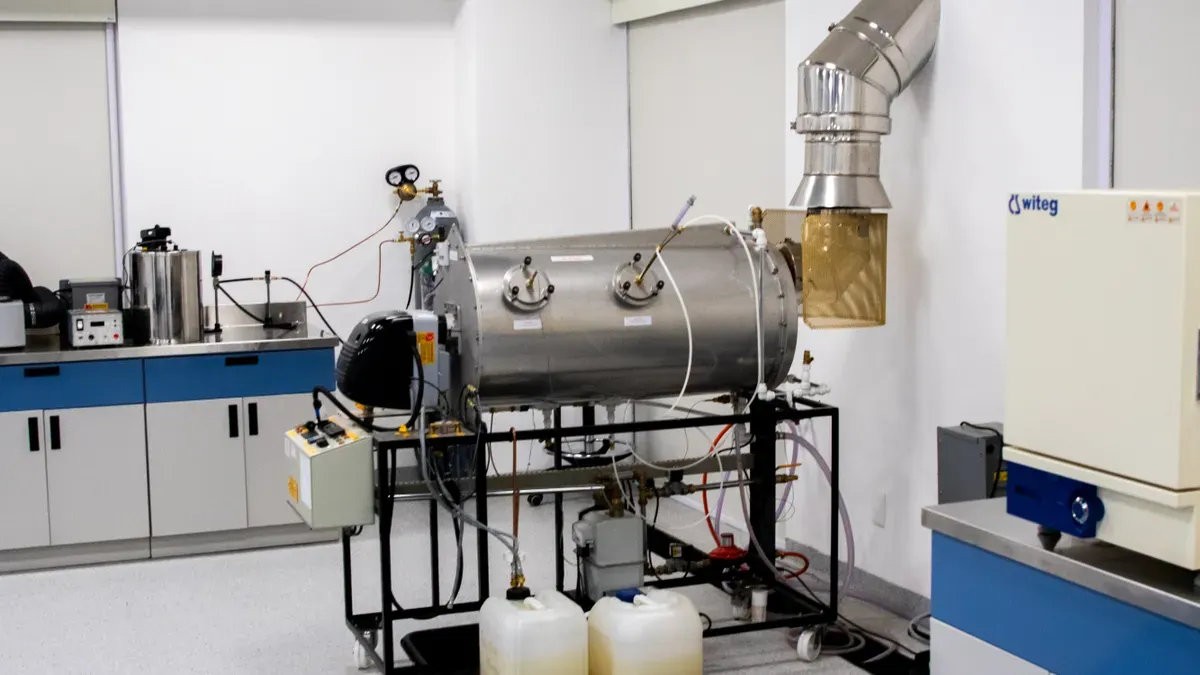
Automatic box packing machines deliver advanced automation features that address the unique demands of chemical packaging. These machines use robotics and intelligent systems to handle hazardous materials with precision and safety. Automated labeling systems ensure every package receives accurate and consistent labels, which supports regulatory compliance and traceability. Labels remain readable and secure, even in harsh chemical environments.
- Key automation features include:
- Automated labeling systems that improve accuracy and maintain label integrity under challenging conditions.
- High-speed operation that increases throughput and reduces downtime.
- Hazmat robots that perform dangerous tasks, keeping workers safe from exposure.
- Advanced sensors and artificial intelligence that adapt to dynamic and hazardous environments.
Automated systems enhance operational efficiency and protect workers by minimizing direct contact with hazardous chemicals.
Integration with Chemical Production Workflows
Seamless integration with existing production lines is essential for chemical companies. Automatic box packing machines connect with auxiliary equipment such as conveyors, coding and labeling machines, and inspection systems. Conveying equipment maintains a steady flow of products, while coding and labeling machines apply critical information like batch numbers and production dates. Inspection equipment, including weight checkers and vision systems, ensures each package meets quality and regulatory standards.
- Best practices for integration:
- Use data from packaging systems to analyze key performance indicators, identify bottlenecks, and drive continuous improvement.
- Invest in flexible and scalable machinery that adapts to changing product types and production volumes.
- Select equipment that supports sustainability goals, such as energy efficiency and compatibility with eco-friendly materials.
- Partner with suppliers who offer technical support, training, and after-sales service to maximize uptime.
- Regularly audit processes and explore upgrades to maintain a competitive edge.
Integration with production workflows boosts efficiency, traceability, and quality assurance across the packaging line.
Customization for Diverse Chemical Products
Chemical products vary widely in form, size, and handling requirements. Automatic box packing machines offer customization options to accommodate powders, granules, liquids, and solids. Specialized filling systems ensure accurate and consistent packaging for each product type.
| Machine Type | Application Description |
|---|---|
| Auger Fillers | Ideal for powder chemicals, providing precise and consistent fills. |
| Vibratory Fillers | Suited for granular chemicals, offering gentle handling and reliable performance. |
| Volumetric Cup Fillers | Best for larger pieces like pellets or tablets, ensuring fast and consistent dosing. |
| Piston Fillers | Designed for liquids and viscous products, delivering accurate fills and maintaining clean operations. |
Automatic box packing machines adapt to different packaging materials and box sizes, supporting rapid changeovers and high product variety. This flexibility allows chemical companies to meet customer demands and regulatory requirements for a wide range of products.
Customization ensures that every chemical product receives the right packaging solution, preserving quality and safety from production to delivery.
Core Benefits of Automatic Box Packing Machine for Chemical Companies
Increased Efficiency and Throughput
Chemical companies rely on speed and reliability to meet production targets. An automatic box packing machine transforms packaging operations by streamlining every step, from carton forming to sealing and labeling. This automation eliminates manual bottlenecks and keeps production lines moving smoothly.
- Machines operate continuously at high speeds, minimizing production slowdowns.
- Automated systems handle carton forming, loading, sealing, and labeling, reducing the need for manual labor.
- Fewer errors and higher reliability alleviate common bottlenecks in packaging operations.
By maintaining a steady workflow, companies can increase output and respond quickly to market demands. Consistent performance also supports just-in-time manufacturing and reduces inventory costs.
Tip: Companies that automate packaging processes often see a significant boost in daily throughput and overall productivity.
Enhanced Worker Safety and Reduced Risk
Safety remains a top priority in chemical packaging. Repetitive manual tasks and direct contact with hazardous substances increase the risk of workplace injuries. Automatic box packing machines address these concerns by automating the most dangerous and repetitive steps.
- Automated sealing machines have reduced repetitive strain injuries in packaging facilities by up to 25%.
- Automation minimizes the need for workers to handle repetitive tasks, reducing exposure to hazardous chemicals.
- By automating filling and sealing, these machines limit direct contact with potentially harmful substances.
- Enhanced packaging options further protect workers by minimizing human exposure to hazardous materials.
Companies that invest in automation create safer work environments and reduce the likelihood of accidents. Lower injury rates also lead to fewer lost workdays and lower insurance costs.
Note: Improved safety measures not only protect employees but also support regulatory compliance and company reputation.
Improved Packaging Consistency and Quality
Consistent, high-quality packaging is essential for chemical products. Automatic box packing machines deliver uniform results by using precise mechanical structures and intelligent control systems. This technology ensures every package meets strict industry standards and customer expectations.
| Improvement Area | Description |
|---|---|
| Reduce Packaging Errors | Automation minimizes issues like wrong packaging and loose seals, enhancing product consistency. |
| Improve Packaging Quality | Ensures tight seals and neat appearance, reducing breakage and enhancing brand image. |
| Enhance Customer Satisfaction | Accurate labeling and packaging reduce rework and complaints, leading to higher customer satisfaction. |
| Reduce Defect Rates | Automated solutions can reduce defect rates by 70–90%, ensuring uniformity in packaging. |
| Increase First Pass Yield | First Pass Yield improves from 85% to over 98%, minimizing rework and enhancing efficiency. |
| Decrease Customer Complaints | Customer complaints drop by 62%, indicating improved product integrity and satisfaction. |
| Consistency in Quality | Automatic packing machines ensure each package is filled and sealed uniformly, maintaining high standards. |
| Precise Mechanical Structure | Ensures flat corners and tight seals, enhancing packaging integrity. |
| Intelligent Control System | Reduces errors in packaging, maintaining consistent quality. |
| Compliance with Standards | Meets strict requirements for sectors like medicine and food, ensuring safety and quality. |
| Professional Presentation | Enhances brand image and consumer trust, increasing market competitiveness. |
Automatic box packing machines help chemical companies maintain a professional appearance and meet regulatory requirements. High-quality packaging reduces breakage during transportation and ensures clear product information, which builds trust with customers and partners.
Callout: Consistent packaging quality not only protects products but also strengthens a company’s brand and market position.
Cost Savings and Lower Labor Dependency
Automatic box packing machines deliver significant financial advantages for chemical companies. These machines streamline operations, reduce manual labor, and optimize resource usage. Companies that invest in automation often see a rapid return on investment through multiple cost-saving channels.
| Cost Saving Aspect | Description |
|---|---|
| Labor Cost Savings | Automation replaces multiple manual workers, leading to significant reductions in labor costs. |
| Reduced Packaging Waste | Optimized material usage reduces waste by up to 30%, resulting in ongoing savings on materials. |
| Improved Operational Efficiency | Continuous operation with minimal downtime increases productivity and order fulfillment capacity. |
| Enhanced Product Protection | Consistent packaging quality minimizes damage during shipping, reducing replacement costs. |
| Energy Cost Reduction | Energy-efficient motors lower utility costs, contributing to overall savings. |
| Premium Pricing Potential | Professional packaging appearance allows for higher product pricing, positively impacting margins. |
Chemical companies experience dramatic reductions in labor costs after adopting automated packing solutions. Machines handle repetitive and physically demanding tasks, which allows companies to reallocate workers to higher-value roles. For example, a food packaging plant achieved a 30% reduction in labor costs by implementing AI-driven robotic arms for sorting and packaging. In another case, a pharmaceutical company cut manual batch reporting by 90% through automated data logging, freeing employees to focus on quality control and process improvement.
Companies that automate packaging processes not only save on wages but also reduce costs related to recruitment, training, and workplace injuries.
Automation also leads to a shift in workforce allocation. Workers transition from manual labor to skilled positions, such as robot programming, system monitoring, and equipment maintenance. An automotive manufacturer, for instance, moved 30% of its assembly-line workers into roles focused on managing and optimizing automated systems. This approach minimizes layoffs and supports employee development.
- Key impacts of automation on labor and cost structure:
- Labor costs decrease as machines replace repetitive manual tasks.
- Consistent packaging quality eliminates costly human errors.
- Increased speed and efficiency boost overall productivity.
- Flexible programming options enable quick adjustments for different products, reducing downtime.
- Workers gain opportunities to upskill and take on more technical responsibilities.
Experts note that while automation may initially reduce the number of manual jobs, it creates new opportunities for employees to develop advanced skills. Companies that invest in reskilling programs help their workforce adapt to changing technology, ensuring long-term stability and growth.
Tip: By leveraging automation, chemical companies can achieve sustainable cost savings, improve operational resilience, and empower their workforce for the future.
Real-World Applications of Automatic Box Packing Machine in Chemical Industries
Case Study: Local Chemical Manufacturer Implementation
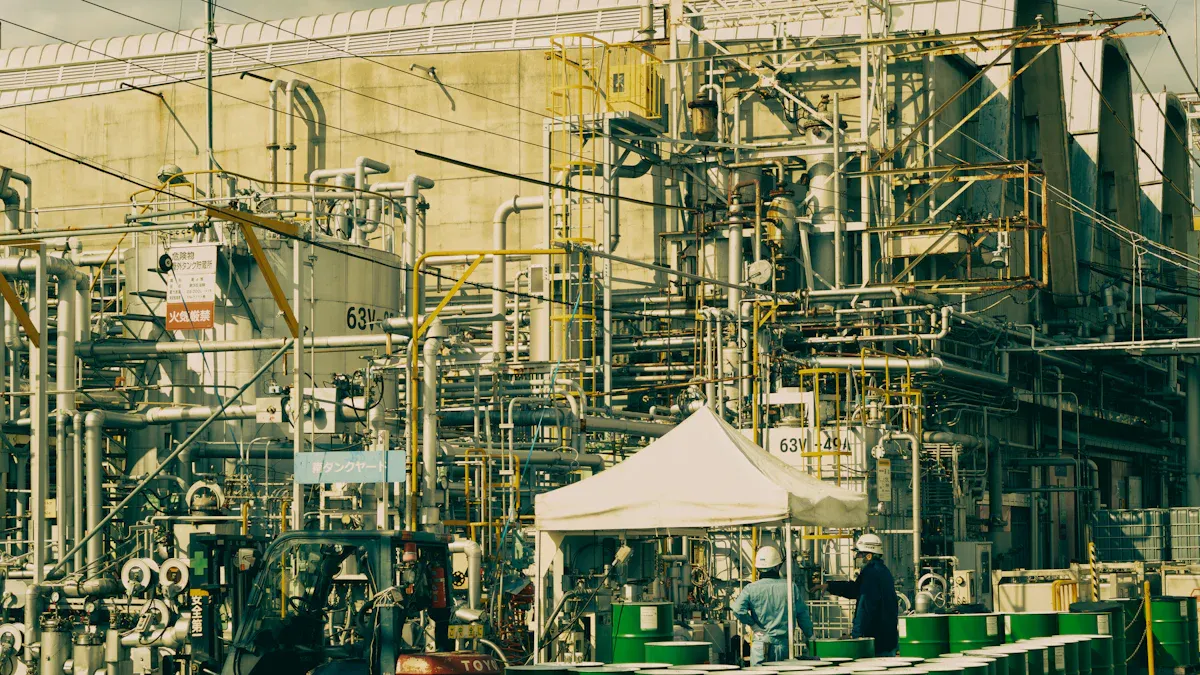
A local chemical manufacturer recently upgraded its packaging line with an automatic box packing machine. The company handled a wide range of hazardous and specialty chemicals. Before automation, workers performed manual boxing, sealing, and labeling. This process slowed production and increased the risk of exposure. After integrating the new equipment, the manufacturer saw immediate improvements. The machine completed automatic feeding, box opening, boxing, glue spraying, and sealing. The finished product rate increased, and packaging quality improved. Workers moved to supervisory roles, focusing on quality control and system monitoring. The company reported fewer workplace incidents and higher employee satisfaction.
Example: Distribution Center Packaging Automation
Distribution centers in the chemical industry have adopted packaging automation to streamline operations. These centers benefit from several key improvements:
- Efficiency improvements: Smart controls, sensor networks, and robotic handling reduce cycle times and minimize human error.
- Labor cost reduction: Robotic systems replace repetitive manual tasks, addressing labor shortages and reducing the need for skilled operators.
- Quality consistency: Vision systems and automated inspection verify label placement and package integrity at high speeds.
- Adaptability: Robotic platforms with quick-change tools enable rapid product changeovers, supporting changing production demands.
- Data-driven optimization: IoT monitoring and data connectivity provide real-time performance tracking, predictive maintenance alerts, and production analytics.
Distribution centers that use automation achieve faster order fulfillment and maintain high standards for safety and quality.
Measurable Outcomes and Return on Investment
Chemical companies measure the impact of automation through clear performance metrics. The following table highlights typical outcomes after adopting an automatic box packing machine:
| Outcome Description | Measurable Impact |
|---|---|
| Reduction in defect rate | $50,000 less lost product from a 3% to 1% defect rate on 500,000 parts valued at $10 each |
| Energy cost savings | $50,000 saved by reducing annual energy bill by 5% |
| Improved machine utilization | 21% gain in productive output, translating to an additional $2 million in annual capacity from 70% to 85% utilization |
| Predictive maintenance impact | 70% reduction in breakdowns and 25% cut in maintenance costs, leading to a 20-30% increase in uptime |
These results show that automation delivers strong financial returns, higher productivity, and improved reliability. Companies that invest in advanced packaging solutions position themselves for long-term growth and competitiveness.
Choosing the Right Automatic Box Packing Machine for Chemical Businesses
Compatibility with Chemical Products and Packaging Materials
Chemical businesses must select machines that match their product types and packaging materials. Each chemical product requires specific handling, whether it is a liquid, powder, or solid. Machines must support materials such as plastic, glass, or paper. Compatibility ensures that packaging remains secure and prevents leaks or contamination. Companies often evaluate the machine’s ability to handle different box sizes and shapes. Customization options allow businesses to adjust settings for unique products. The following table highlights key factors to consider:
| Factor | Description |
|---|---|
| Packaging Material | Ensure the machine is compatible with your preferred materials, such as plastic, glass, or paper. |
| Speed Requirements | Assess if you need low, medium, or high-speed machines based on your production volume. |
| Customization | Look for machines that allow adjustments for different package sizes or custom designs. |
| Initial Investment | Consider the upfront cost versus potential savings in labor and increased production speed. |
| Long-Term Savings | Evaluate how automation can reduce costs and improve efficiency over time, leading to a positive ROI. |
Essential Safety Features for Hazardous Materials
Safety features play a crucial role in chemical packaging. Machines must include protective barriers, emergency stop functions, and advanced sensors. These features help prevent accidents and protect workers from exposure. Automated systems monitor for leaks and ensure proper sealing. Companies choose machines with reliable safety certifications and compliance with industry standards. Safety mechanisms reduce risks and support regulatory requirements.
Tip: Businesses should prioritize machines with robust safety features to protect employees and maintain compliance.
Scalability and Future-Proofing
Scalability allows chemical companies to grow and adapt to changing demands. Machines with modular designs support expansion and upgrades. Future-proofing involves selecting equipment that integrates with new technologies and production lines. Companies benefit from machines that handle increased volumes and diverse products. Investing in scalable solutions ensures long-term value and operational flexibility.
Callout: Choosing scalable and adaptable machines positions chemical businesses for sustainable growth and evolving industry needs.
Maintenance, Support, and Reliability
Automatic box packing machines play a critical role in chemical industry operations. Reliable performance depends on regular maintenance and strong technical support. Companies that prioritize these factors experience fewer disruptions and maximize equipment lifespan.
Key Maintenance Practices:
- Schedule routine inspections to identify wear and tear early.
- Clean machine components regularly to prevent buildup of chemical residues.
- Replace consumable parts, such as belts and seals, according to manufacturer guidelines.
- Calibrate sensors and control systems to maintain accuracy and safety.
Support Services to Consider:
- 24/7 technical assistance ensures rapid response to unexpected issues.
- Remote diagnostics help technicians troubleshoot problems without delay.
- On-site training empowers staff to handle basic repairs and adjustments.
- Access to genuine spare parts reduces downtime and maintains machine integrity.
Tip: Companies that invest in preventive maintenance programs often see a 40% reduction in unplanned downtime.
Reliability Factors:
| Factor | Impact on Operations |
|---|---|
| Robust Construction | Withstands harsh chemical environments |
| Quality Components | Reduces risk of breakdowns and extends service life |
| Automated Monitoring | Detects faults early and prevents major failures |
| Vendor Reputation | Ensures consistent support and reliable performance |
A dependable automatic box packing machine supports continuous production and regulatory compliance. Reliable equipment also protects product quality and worker safety. Chemical businesses that choose machines with strong maintenance and support options position themselves for long-term success.
Automatic box packing machines drive progress in local chemical industries. These machines increase efficiency, improve worker safety, and deliver consistent product quality. Companies gain a competitive advantage by meeting regulatory standards and reducing operational risks.
Chemical businesses should evaluate their packaging processes and consider adopting automatic box packing machines for sustainable growth.
FAQ
What types of chemical products can automatic box packing machines handle?
Automatic box packing machines can package powders, granules, liquids, and solids. They support a wide range of chemical products, including hazardous materials, specialty chemicals, and pharmaceuticals. Customization options allow the equipment to adapt to different product forms and packaging requirements.
How do automatic box packing machines improve worker safety?
These machines reduce manual handling of hazardous materials. Automated feeding, boxing, and sealing limit direct contact with chemicals. Safety features, such as emergency stops and protective barriers, further protect workers from exposure and accidents.
Are automatic box packing machines compatible with existing production lines?
Most modern machines integrate seamlessly with conveyors, labeling systems, and inspection equipment. Chemical companies can connect these machines to their current workflows, which helps maintain efficiency and traceability throughout the packaging process.
What maintenance is required for reliable operation?
Routine inspections, cleaning, and timely replacement of consumable parts keep machines running smoothly. Companies should schedule regular calibration of sensors and control systems. Access to technical support and genuine spare parts ensures long-term reliability.
What are the main benefits for chemical businesses?
Automatic box packing machines deliver higher efficiency, improved safety, consistent packaging quality, and significant cost savings. Companies gain a competitive edge by meeting regulatory standards and reducing operational risks.
See Also
Comparing Leading Manufacturers of Ampoule Filling Lines
Essential Checkweighers for Every Food Processing Facility
Innovative Features of Folder Gluers for 2025 Cartons
Enhancing Pharmaceutical Efficiency with Capsule Decapsulation Technology