Hazelnut Sorting Machine Trends for Smarter Processing
A Hazelnut sorting machine streamlines production and elevates product quality. Operators enhance efficiency and cut waste by automating critical sorting steps.
Smart processing boosts yield and ensures consistent standards, allowing producers to respond quickly to market demands.
Assessing Your Current Hazelnut Processing Line
Identifying Manual Processes
Processors often begin by mapping each step in their hazelnut sorting workflow. They observe where operators manually inspect, classify, or handle nuts. Labor-intensive tasks, such as visual grading and removal of defective kernels, typically require significant time and attention. These manual steps can introduce inconsistencies and slow down throughput. Studies show that human classification remains time-consuming and prone to error, especially when sorting for quality or size. Deep learning models, including InceptionV3 and EfficientNet, now offer reliable alternatives by automating the detection of unwanted objects and damaged kernels. This shift reduces reliance on manual labor and enhances overall productivity.
| Evidence Description | Implication for Automation |
|---|---|
| Human classification is labor-intensive and time-consuming. | Automation improves efficiency and reduces errors. |
| Deep learning models sort hazelnuts from unwanted objects. | Specific models can automate sorting and reduce manual labor. |
| Automated systems detect damaged kernels and undersized nuts. | Automation addresses quality issues managed manually. |
Pinpointing Automation Opportunities
After identifying manual bottlenecks, processors evaluate which tasks can benefit most from automation. They consider the processing scale to select suitable machine types. For example, compact models fit small-scale operations, while industrial-grade machines serve high-volume facilities.
| Processing Scale | Recommended Machine Type |
|---|---|
| Pilot or Small-Scale Operations | Compact or tabletop models for < 500 kg/day |
| Medium-Scale Processing | Semi-industrial machines for 500–1,000 kg/day |
| Large-Scale Industrial Use | Industrial-grade machines for > 200 kg/hour |
| Handheld or Manual Units | Not recommended for commercial applications |
Processors also explore advanced technologies to automate specific sorting functions. Camera-based sorters identify color deviations and defects, while NIR systems detect internal flaws. AI-enhanced optical sorting predicts defects, improving accuracy. Energy-efficient motors and IoT-based monitoring further streamline operations and support traceability.
| Automation Technology | Function Description |
|---|---|
| Camera-based sorters | Identify color deviations, mould, stains, and dark kernels. |
| NIR sorters | Detect internal defects and foreign matter. |
| X-ray systems | Used in high-specification applications for extra safety. |
| IoT-based monitoring | Monitors roasting and sorting equipment. |
| Automated data collection | Ensures traceability and supports QA audits. |
| Energy-efficient motors | Enhances energy efficiency in processing. |
| AI-enhanced optical sorting | Predicts defects to improve sorting accuracy. |
Tip: Processors who systematically assess manual steps and match automation technologies to their needs achieve greater consistency and efficiency in hazelnut sorting.
Hazelnut Sorting Machine Technologies
Optical Sorting Machines
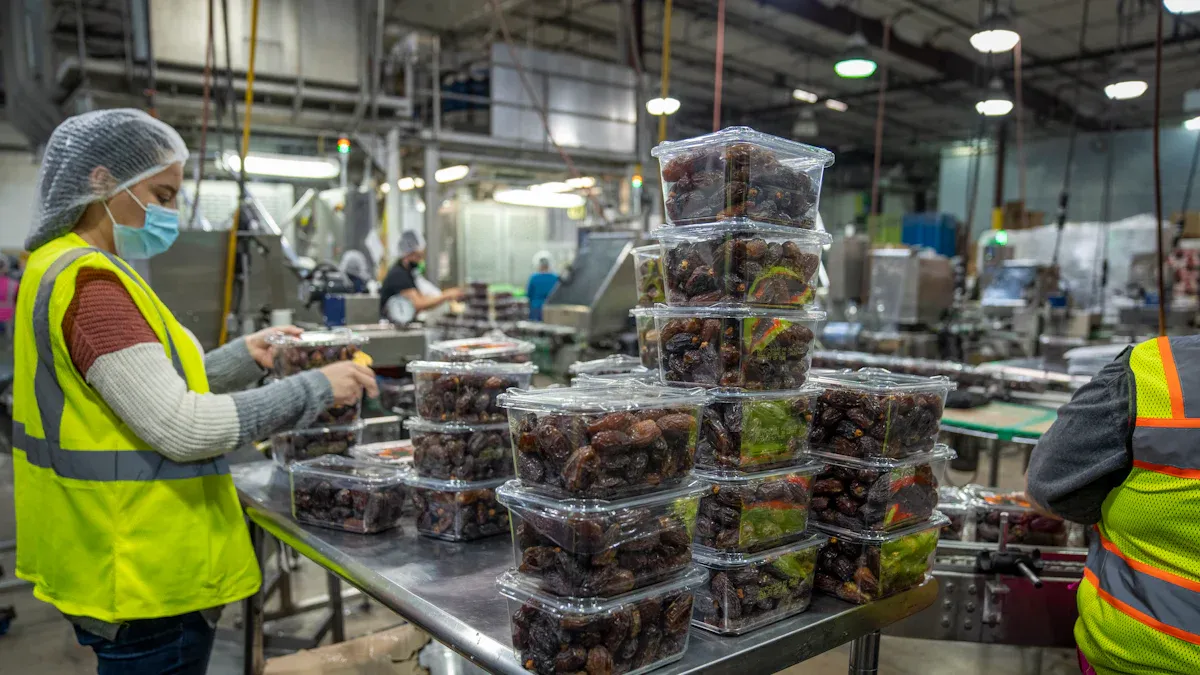
Optical sorting machines have transformed hazelnut processing by using high-resolution cameras and precision air jets. These machines inspect each hazelnut for color, size, shape, and defects. Operators rely on machine vision technology to scan and analyze nuts, identifying issues such as discoloration, damage, or foreign materials.
- High-resolution cameras detect subtle differences in hazelnut appearance.
- AI algorithms remove defective or foreign objects with speed and accuracy.
- Precision air jets separate premium-quality nuts for further processing.
AI color sorters also improve productivity by accurately separating defective products, including wormhole hazelnuts.
AI-Powered Sorting Solutions
AI-powered sorting solutions offer significant improvements over traditional machines. Deep learning algorithms adapt to variations in hazelnut batches, increasing both accuracy and speed. These systems continuously optimize their models, efficiently sorting large quantities and reducing labor costs. Operators benefit from high automation and recognition accuracy, which minimizes human error and ensures consistent results.
Multi-Sensor and Hybrid Systems
Processors often choose multi-sensor and hybrid systems for enhanced flexibility. These systems combine optical and AI technologies, allowing for improved defect detection and adaptability.
| Sorting Machine Type | Pros | Cons |
|---|---|---|
| Optical Sorting Machines | High accuracy; identifies subtle defects; export-grade. | Higher cost; needs regular calibration. |
| AI-Powered Sorting Machines | Enhanced detection; adaptable sorting criteria. | Higher complexity; needs more data. |
| Hybrid Sorting Machines | Combines optical and AI; improved accuracy, flexibility. | Higher maintenance; complex setup. |
Application in Hazelnut Processing
Hazelnut sorting machine technologies support various stages of processing.
| Application/Benefit | Description |
|---|---|
| Enhanced Quality Control | Detects subtle defects, ensuring consistent product appearance. |
| Boosted Efficiency | Processes thousands of nuts per minute, reducing labor costs and waste. |
| Food Safety Compliance | Eliminates contaminants, meeting global food safety standards. |
| Cost Savings | Minimizes recalls, extends shelf life by removing defective nuts. |
| Raw Nut Processing | Removes shells, dirt, and immature kernels from harvested hazelnuts. |
| Roasting Lines | Ensures evenly roasted nuts by eliminating burnt or undercooked pieces. |
| Value-Added Products | Prepares hazelnuts for coatings and confectionery with flawless raw material. |
Tip: Processors who invest in advanced hazelnut sorting machine technologies achieve higher product quality and operational efficiency.
Step-by-Step Automation with Hazelnut Sorting Machine

Evaluating and Selecting the Right Sorting Machine
Processors begin automation by evaluating their facility’s requirements and matching them to the capabilities of available machines. They consider production goals, desired quality standards, and operational constraints. A hazelnut sorting machine must deliver reliable performance and meet food safety regulations. The following table outlines essential criteria for selecting the most suitable equipment:
| Criteria | Description |
|---|---|
| Size and Quality Sorting | Machines should sort nuts based on size and quality to meet production goals. |
| Automation | Emphasizes the importance of automated processes for efficiency. |
| Maintenance | Ease of maintenance is crucial for operational efficiency. |
| Food Safety Compliance | Machines must comply with food safety standards to ensure product safety. |
| Durability | Durable construction is necessary for long-term use in processing facilities. |
| Cleaning | Stainless steel construction allows for thorough cleaning, reducing microbial growth risks. |
Processors review these criteria to ensure the selected hazelnut sorting machine aligns with their operational needs. They prioritize models that offer robust automation, easy cleaning, and compliance with safety standards.
Planning Integration with Existing Equipment
Successful automation requires careful planning for integration. Processors assess the compatibility of the new sorting machine with existing conveyors, feeders, and packaging systems. They map out the workflow to minimize disruptions and optimize throughput. Facility managers coordinate with equipment suppliers to design layouts that support smooth material flow. They also schedule installation during periods of low production to avoid bottlenecks. This approach ensures the hazelnut sorting machine fits seamlessly into the processing line.
Tip: Early collaboration with technology providers helps processors address technical challenges and streamline integration.
Installation and Calibration
Installation marks a critical phase in automation. Technicians position the hazelnut sorting machine according to the facility layout and connect it to power and data systems. They calibrate sensors and cameras to recognize hazelnut size, color, and defects accurately. Calibration involves running test batches and adjusting settings for optimal performance. Operators monitor initial runs to verify sorting accuracy and throughput. Regular calibration maintains consistent product quality and prevents sorting errors.
Staff Training and Change Management
Automation introduces new workflows and technologies. Staff training and change management play a vital role in successful adoption. Processors invest in comprehensive training programs to familiarize employees with machine operation, maintenance, and troubleshooting. They address common challenges by:
- Providing hands-on training sessions for operators and maintenance staff
- Offering clear documentation and support resources
- Encouraging feedback and continuous improvement
- Communicating the benefits of automation to build team buy-in
Change management strategies help employees adapt to new roles and responsibilities. Managers foster a culture of learning and collaboration, which leads to smoother transitions and higher productivity.
Note: Well-trained staff and effective change management accelerate the benefits of hazelnut sorting machine automation.
Maximizing Efficiency and Quality with Hazelnut Sorting Machine Automation
Improving Yield and Throughput
Processors increase yield and throughput by automating sorting tasks. A hazelnut sorting machine inspects each nut rapidly, removing defective pieces before they reach packaging. High-speed sensors and air jets handle thousands of nuts per minute. This technology reduces bottlenecks and keeps production lines moving. Operators monitor output rates to ensure machines match daily production targets. Consistent throughput helps facilities meet customer demand and maintain delivery schedules.
Reducing Waste and Operational Costs
Automation minimizes waste by accurately separating good nuts from defective ones. Machines detect and remove foreign materials, undersized kernels, and damaged hazelnuts. This process reduces the volume of rejected product and lowers disposal costs. Energy-efficient motors and smart monitoring systems also cut utility expenses. Facilities see a direct impact on operational costs as labor requirements decrease and machine uptime improves. Many processors reinvest these savings into further upgrades or staff development.
Ensuring Consistent Product Quality
Quality control remains a top priority in automated processing lines. Operators use several metrics to measure performance and maintain high standards. The following table outlines key quality control metrics:
| Metric | Description |
|---|---|
| Sorting Accuracy Rate | Aim for ≥98% for color and size classification. |
| Throughput Capacity | Match machine output (kg/h) to your production volume. |
| Defect Detection Rate | Verify capability to identify discolored, cracked, or foreign particles. |
These metrics help processors verify that each batch meets customer and regulatory requirements. Automated systems deliver consistent results, reducing the risk of recalls and enhancing brand reputation.
Tip: Regular calibration and maintenance keep sorting accuracy high and ensure long-term reliability.
Staying Ahead with Hazelnut Sorting Machine Trends
Monitoring Industry Innovations
Industry leaders track new developments to maintain a competitive edge. They observe significant investments in research and development for smarter sorting systems. Both established manufacturers and emerging startups drive a dynamic market. The latest machines, such as PRAIRIE SCP-2100 and Qcify AIR, showcase advanced features:
| Innovation | Description |
|---|---|
| PRAIRIE SCP-2100 | AI-assisted robotic nut sorting machine that processes 5,000 pounds per hour and sorts defects into three streams, improving efficiency and reducing re-processing costs. |
| Qcify AIR | AI-powered sorting system that adapts to different nut types and defect profiles, allowing for remote updates and minimizing downtime. |
"Our sorting technology is constantly evolving... If we encounter a new defect, we update the model. There’s no need to reprogram the machine on-site because we can update the sorting models remotely." – Dries Hendrikx, Director of Applications at Qcify
Upgrading and Scaling Your Processing Line
Processors plan upgrades to keep pace with automation and AI quality control, which will soon become standard. They focus on sustainability, aiming to meet future requirements for major brands. Many facilities adopt IoT-enabled systems and real-time data analytics to ensure product integrity. These upgrades help processors respond to consumer demands for transparency, traceability, and authenticity.
- Automation and AI quality control will become standard in processing.
- Sustainability will be essential for major brands by 2035.
Building Partnerships with Technology Providers
Strong partnerships with technology providers support successful adoption of advanced solutions. Companies like Bühler and TOMRA offer machines that sort various grades and types of hazelnuts, removing defects and foreign materials. Processors consider sorting performance, capacity, and defect detection when selecting partners. Strategic alliances facilitate integration of innovative technologies, enhance operational efficiency, and improve product quality. These collaborations also help meet consumer expectations for high-quality, contaminant-free nuts.
Hazelnut processors automate production by following these steps:
- Pre-cleaning and foreign material removal
- Shelling and cracking
- Grading and sorting
- Packaging and bulk storage
Advanced sorting technologies improve efficiency and product quality. Staying updated with machine trends helps processors reduce labor costs, maintain high standards, and remain competitive.
FAQ
What maintenance does a hazelnut sorting machine require?
Operators clean sensors, inspect moving parts, and calibrate cameras regularly.
Routine maintenance ensures optimal performance and extends machine lifespan.
Can sorting machines handle different hazelnut varieties?
Processors select machines with adjustable settings for size, color, and defect profiles.
| Variety | Machine Adjustment |
|---|---|
| Turkish | Color, size |
| Italian | Defect profile |
How does automation impact food safety?
Automated sorting removes contaminants and defective nuts efficiently.
Facilities meet strict food safety standards and reduce the risk of recalls.
See Also
Innovative Folder Gluer Features for Carton Lines in 2025
Essential Industrial Checkweighers for Every Food Manufacturing Facility
Key Capsule Checkweighers to Evaluate for 2025 Purchases
The Importance of Capsule Sorters in Eliminating Defects
Enhancing Pharmaceutical Efficiency with Advanced Capsule Decapsulation Machines