The Ultimate At Home Water Dispenser Guide for 2026
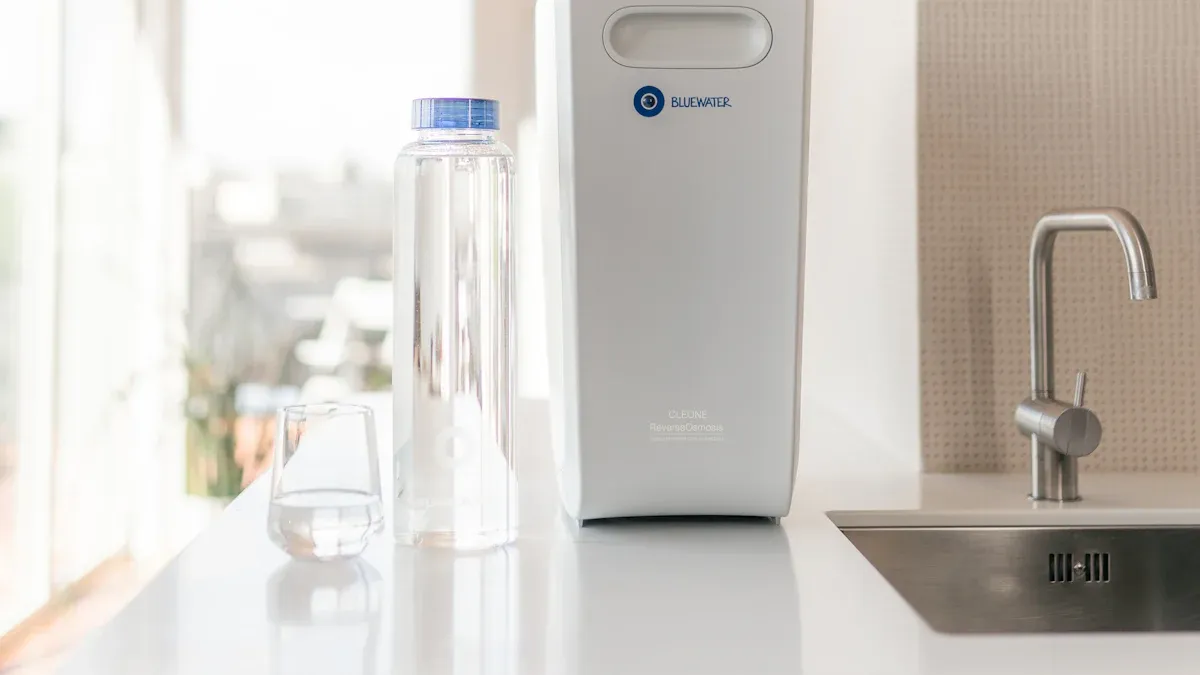
Choosing the right at home water dispenser is a straightforward process. You should base your decision on your household's size and the space you have available.
A countertop model best suits small families (1-3 people) with limited kitchen space. A freestanding unit better serves larger families (4+ people) who have more room.
Key Takeaways
- Choose a countertop water dispenser for small families or limited kitchen space. These units are compact and easy to move.
- Select a freestanding water dispenser for large families or if you have more floor space. These units offer higher capacity and more advanced features.
- Consider your budget and installation needs. Countertop models are cheaper and easier to set up, while freestanding units may cost more and need professional installation.
How Much Space Do You Have?
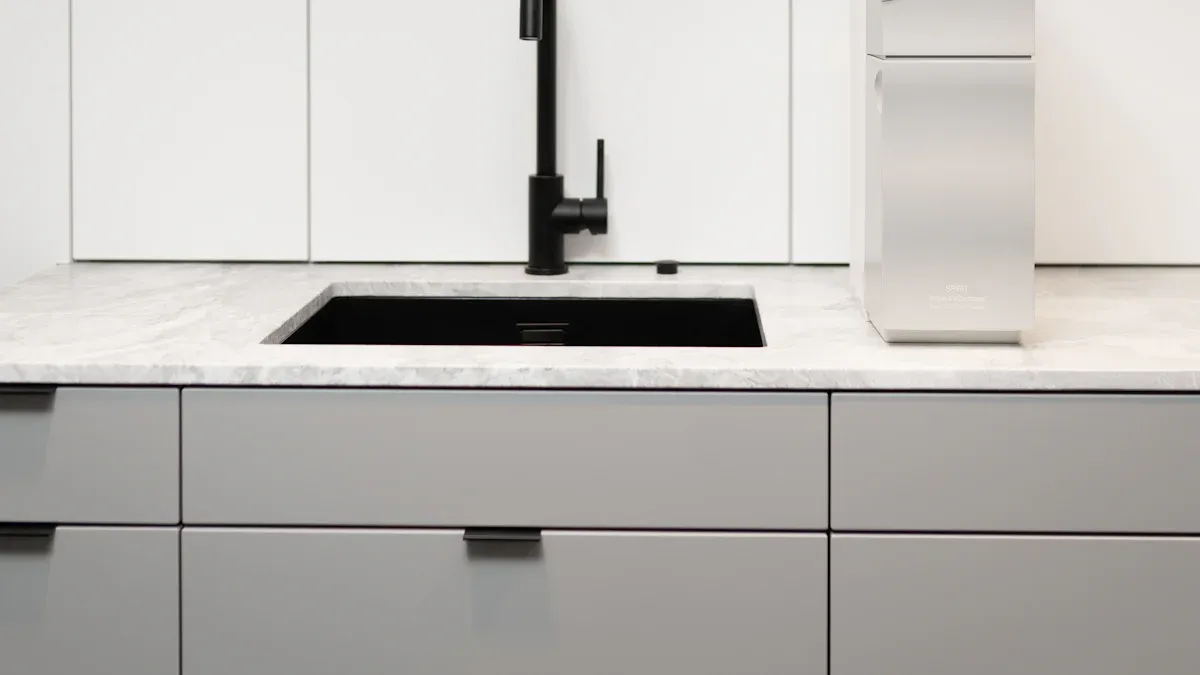
Your available space is the first factor to consider when choosing an at home water dispenser. You must decide between a unit that sits on your counter or one that stands on your floor. Each option fits a different home layout.
Countertop: The Space-Saving Solution
You should choose a countertop model if you have limited room. These compact units fit neatly in smaller kitchens or apartments. They provide easy access to water without taking up valuable floor space.
Pro Tip 📝: Measure the vertical space between your countertop and your upper cabinets. This ensures your new dispenser will fit perfectly.
Popular models in 2026 have average dimensions that you can use as a guide.
- Height: 17.59" (44.7 cm)
- Width: 14.62" (37.1 cm)
- Depth: 22.12" (56.2 cm)
Freestanding: The Dedicated Hydration Station
A freestanding at home water dispenser is a great choice if you have an open spot on your floor. These units act as a central hydration point for the whole family. You can place them in a kitchen corner, dining area, or even a home office. They require a dedicated footprint, but they often provide more features. A typical model, like the Brio Essential Series, needs a floor area with a diameter of just 12.6 inches. This small circle is all the space you need for a constant supply of fresh water.
What's Your Household's Water Demand?

Next, you need to think about how much water your family drinks each day. Your household's daily water consumption is a key factor in choosing the right dispenser. Some families drink a lot of water, while others drink less.
Countertop: For Moderate Consumption
You should consider a countertop model for smaller households of one to three people. These units are perfect for moderate water use. An average person uses several gallons of water indoors each day for all activities. A countertop dispenser easily meets the drinking water needs for a small family. They typically hold 3- or 5-gallon water jugs, providing plenty of fresh water without constant refills.
A countertop at home water dispenser is an efficient choice for couples, small families, or individuals living in apartments.
Freestanding: For High-Volume Use
You will find a freestanding model is the better option for larger families of four or more. These units are built for high-volume use. A large, active family can consume a significant amount of water. Freestanding dispensers can support this high demand. They hold larger water bottles and often have advanced features like faster cooling or heating. This ensures everyone in your busy household always has access to cold or hot water.
- Supports larger water jugs (up to 5 gallons).
- Reduces the frequency of bottle changes.
- Provides a constant supply for big families.
Choosing the right capacity ensures your family stays hydrated without inconvenience.
What Features Do You Need?
After considering space and water demand, you should look at the features each dispenser type offers. Modern water dispensers do more than just pour water. They come with a range of functions to make your life easier.
Standard Features on Both Models
You will find that both countertop and freestanding dispensers share some essential features. These core functions provide the basic convenience you expect from a water cooler. Most models in 2026, regardless of size, will give you these options.
- Temperature Control: Get instant hot water for tea or cold water for a refreshing drink.
- Filtration Options: Many dispensers include filters that improve your water's taste and safety.
- Child Safety Lock: A common feature on the hot water tap prevents accidental burns.
Advanced Features on Freestanding Units
You can find more advanced technology on freestanding models. These units often act as smart home devices. In fact, over 65% of new high-tech dispensers now include connectivity features. They offer a level of control and convenience that goes beyond basic dispensing.
Smart Hydration 🤖: Some units use AI to learn your preferences. They can adjust water temperature or even add nutrients based on your personal settings.
These advanced features can include:
- IoT Connectivity: You can monitor water usage and filter life from an app on your phone.
- App and QR Code Control: Dispense water using your smartphone. This touchless option is great for a clean kitchen.
- Predictive Maintenance: The dispenser can alert you to potential leaks or tell you when it needs service, helping prevent problems.
What Is Your Budget and Installation Plan?
Your budget and how you plan to install the unit are final important considerations. The cost and setup process differ greatly between countertop and freestanding models. You should choose the option that aligns with your financial plan and technical comfort level.
Countertop: Lower Cost and Easy Setup
You will find that countertop dispensers are the more budget-friendly choice. They have a lower upfront cost and a simple installation process you can often do yourself. This saves you money on professional help. Most point-of-use models come with a kit for easy connection to your water line.
Setting up your countertop unit is a straightforward weekend project. You can connect it to your cold water line in just a few steps.
The installation process is typically simple:
- Find a level spot on your counter near a power outlet and your sink's cold water line.
- Turn off the water supply to your sink.
- Connect the provided T-shaped adapter to your cold water line.
- Attach the dispenser's tubing to the adapter.
- Turn the water back on, plug in the unit, and let it fill.
Freestanding: Higher Investment, More Options
A freestanding dispenser represents a higher investment. The initial price is often greater, and the installation can be more complex. You may need a professional to connect the unit to your home's water supply, especially if the dispenser is far from a sink.
Technicians can run the water line invisibly through walls or above ceilings. This gives you more flexibility in where you place your hydration station. Professional installation also ensures everything meets local building codes.
- Requires a grounded 110-volt power outlet.
- Needs a connection to a potable water source, which can be up to 200 feet away.
- May involve a technician testing your water pressure and quality.
This higher initial investment provides a permanent, high-capacity water solution for your home.
Choosing Your At Home Water Dispenser
You should also think about portability and water quality when selecting your dispenser. These factors influence how you use and maintain your unit. Your choice will depend on whether you value flexibility or advanced filtration.
Portability and Flexibility
You need to consider how easily you can move your dispenser. Countertop models offer great portability. You can shift them with minimal effort, which makes cleaning your kitchen counters simple. Freestanding units, however, are designed to stay in one place. Once a technician connects them to a water line, they become difficult to relocate.
If you rearrange your kitchen often or plan to move soon, a portable countertop unit offers more flexibility. A freestanding model is a more permanent fixture in your home.
Filtration and Water Source
The type of filtration is a major difference between models. Your at home water dispenser can use various systems to ensure your water is clean and tastes great.
Countertop units often use multi-stage filtration. Common systems include:
- 2-stage filtration: This reduces sediment, chlorine, and bad tastes.
- Reverse osmosis (RO): More advanced systems use RO to remove heavy metals, bacteria, and other dissolved solids.
- Carbon filters: These focus on removing impurities through carbon-based purification.
Freestanding dispensers that connect to your water line, known as point-of-use (POU) models, have advanced built-in filtration. They purify water on-site, so you get fresh, filtered water with every glass. These systems often combine sediment filters, carbon filters, and sometimes UV or reverse osmosis technology to eliminate a wide range of contaminants.
Quick Comparison: Countertop vs. Freestanding
You can use this quick comparison to help you make a final decision. This summary breaks down the key differences between countertop and freestanding at home water dispensers.
Best For
You should choose a dispenser that fits your lifestyle and household needs. Each type serves a different user profile.
Countertop Dispensers are ideal for smaller living situations. You will find them very useful in places with limited space.
- Dorm Rooms: A model like the NewAir WCD-110SS is perfect for students. You can make instant oatmeal, coffee, or ramen noodles right in your room.
- Studio Apartments: These units provide filtered water without taking up floor space.
- Home Offices: A compact dispenser like the Brio 630 fits on a counter and offers both still and sparkling water.
Freestanding Dispensers are built for shared spaces and high demand. You should select this type for larger groups.
| Feature | Freestanding Dispenser |
|---|---|
| Best For | Offices, large families, shared spaces |
| Placement | Stands on its own on the floor |
| Key Benefit | Serves many people with high capacity |
Space Requirement
You must measure your available space before you buy a dispenser. The physical footprint is a major deciding factor.
A countertop model is the champion of small spaces. You can place it on most kitchen counters without any issue. For example, the Brio 630 has dimensions of 14.4” W × 16.73” H × 19.29” D. This compact size allows it to fit under most standard cabinets. These units are also lightweight and easy to move for cleaning.
A freestanding unit requires a dedicated spot on your floor. While it frees up your counter, you must sacrifice a small area of your room. You will need a clear circle of floor space about 13 inches across for a stable base.
Water Capacity
You need to think about how often you are willing to change a water bottle or refill a tank. The capacity of your dispenser affects its convenience.
Countertop models offer varied capacity options.
- Refillable Tanks: Some units, like the Brio Q20, have a 6-liter tank. You can fill this tank from your tap and place the dispenser anywhere with a power outlet.
- Bottleless (POU): Other advanced models connect directly to your water line. The Bevi Countertop, for instance, can serve up to 100 people without needing refills.
- Small Jugs: Many countertop units are designed for 3-gallon water jugs.
Freestanding dispensers are the best choice for high-volume water consumption. They almost always use large 5-gallon water jugs. This large capacity means you will change the bottle less often, which is a huge benefit for busy families and offices.
Typical Cost
You should align your choice with your budget. The price for water dispensers ranges from affordable to a significant investment.
Countertop dispensers generally have a lower entry cost. You can find simple models for a very reasonable price. However, high-end countertop units with advanced features can be more expensive.
For example, a premium system like the Kül Spark can have an upfront cost of $1,500. You might see this as a worthwhile investment if your family drinks a lot of sparkling water or if your tap water quality is poor.
Freestanding dispensers often represent a higher initial investment. The units themselves can be more expensive, and you may have additional costs for professional installation if you choose a point-of-use model. This higher price gets you a permanent, high-capacity hydration station for your home.
You can find the right at home water dispenser for 2026 by balancing your space with your family's water needs.
A countertop model is your best choice for a small household with limited room. You should select a freestanding unit for a large family that requires high capacity and has available floor space.
FAQ
How often should you clean your water dispenser?
You should clean your water dispenser every three to six months. Regular cleaning prevents bacteria buildup and ensures your water tastes fresh. This simple task keeps your unit running well.
Can you use tap water in a dispenser?
Yes, you can use tap water in many dispensers. Some models have refillable tanks. Others connect to your water line and use built-in filters to purify your tap water.
Do water dispensers use a lot of electricity?
Modern water dispensers are energy-efficient. They use about the same amount of electricity as a mini-fridge. Look for an ENERGY STAR® certified model to save even more power.