The Evolution of Duplex Steel A Look at 2507 Elbows in 2025
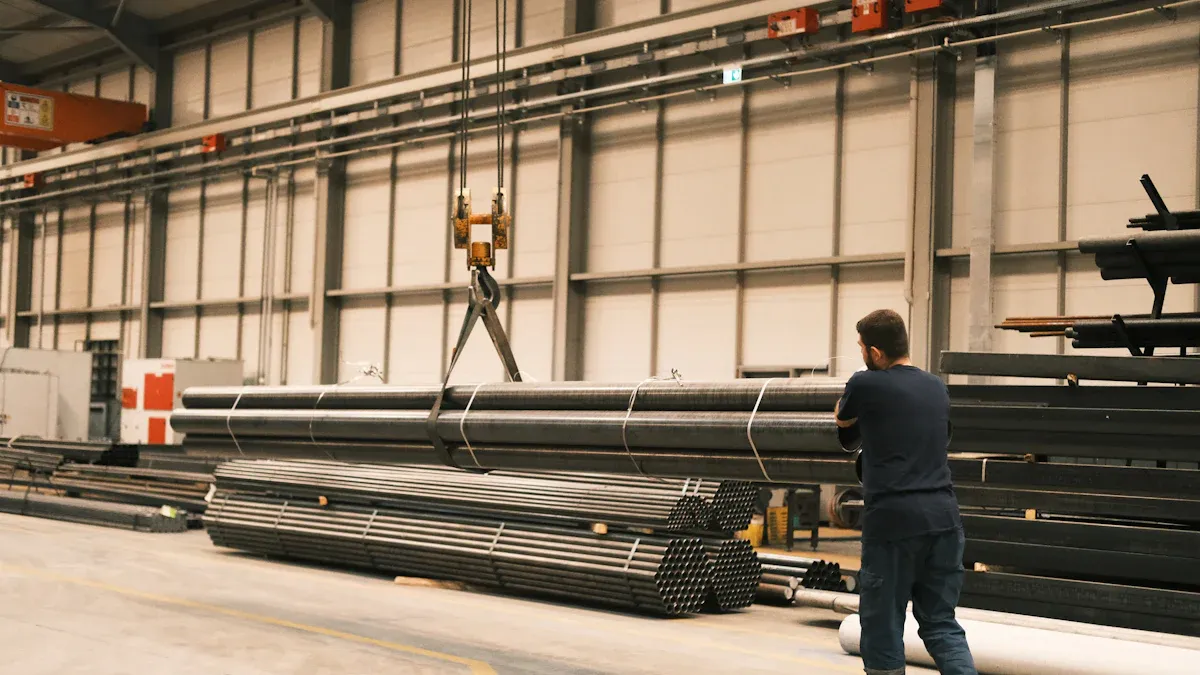
The year 2025 marks a significant milestone for industrial components. The ASTM A815 2507 Duplex Steel Elbow now delivers performance far exceeding a standard Stainless Steel 316 Elbow. Its superior corrosion resistance excels in harsh chloride and sour environments. This evolution supports a rapidly growing market, projected to reach $3.414 Billion in 2025. Modern manufacturing, including additive processes and advanced forging, achieves remarkable material consistency. Furthermore, the 2507 Duplex Steel Elbow integrates sensing technologies. This innovation enables real-time system monitoring and predictive maintenance for critical applications.
Key Takeaways
- The 2507 Duplex Steel Elbow is much better than older steel elbows. It resists rust and lasts longer in harsh places.
- New ways of making things, like 3D printing and special forging, make these elbows very strong and reliable.
- These elbows can have smart sensors. They help check the system and fix problems before they get big.
- Even though they cost more at first, 2507 elbows save money over time. They need fewer repairs and last much longer.
- The 2507 elbow is a top choice for tough jobs. It works well where other materials might fail.
Performance Benchmarking: 2025 vs. Previous Decade
The 2507 duplex steel elbow of 2025 sets a new standard in performance, far surpassing the capabilities of components from the previous decade. Engineers now have access to a fitting that provides measurable gains in durability, strength, and operational lifespan. These advancements are not incremental; they represent a significant leap forward in material engineering for critical systems. A direct comparison reveals just how far this technology has evolved.
Enhanced Corrosion Resistance
Corrosion remains the primary adversary of industrial piping systems. The 2507 duplex steel elbow directly confronts this challenge with a vastly improved defense mechanism. Its high chromium, molybdenum, and nitrogen content creates a formidable barrier against aggressive media. When benchmarked against traditional 316L stainless steel in chloride environments, the performance differences become clear.
- In ferric chloride (FeCl3) tests, SAF 2507 demonstrated superior resistance to pitting initiation.
- While its general corrosion rate can be similar to 316L once stable pitting begins, its ability to prevent the start of pitting is a key advantage.
The performance gap widens significantly in real-world conditions like natural seawater. A ranking of crevice corrosion rates places 2507 at the top.
- 316L SS (Highest Corrosion Rate)
- 2205 DSS
- 2507 SDSS (Lowest Corrosion Rate)
This demonstrates that 2507 Super Duplex Stainless Steel (SDSS) provides a much higher level of protection in marine and chloride-rich applications. The material's thermal resilience against corrosion is equally impressive. It maintains excellent performance at elevated temperatures where other alloys would fail.
🔬 Did You Know? The Pitting Resistance Equivalent Number (PREN) is a key metric for predicting an alloy's resistance to pitting corrosion. The 2507 elbow boasts a PREN greater than 41, placing it in the elite super duplex category.
This high PREN value allows the material to resist pitting and crevice corrosion effectively. For instance, 2507 duplex steel maintains a Critical Pitting Temperature (CPT) above 122°F (50°C). Its Critical Crevice Temperature (CCT) further confirms its suitability for warm seawater environments.
| Alloy | CCT (°C) |
|---|---|
| SAF 2507 | 64 |
Superior Strength at Temperature Extremes
The mechanical strength of the 2507 elbow is a direct result of its balanced dual-phase microstructure, which contains approximately 50% austenite and 50% ferrite. This structure gives the material a yield strength more than double that of common austenitic stainless steels like 316L.
This superior strength delivers tangible engineering benefits. Designers can specify 2507 elbows with thinner walls compared to their austenitic counterparts. This design choice reduces overall system weight and lowers material costs without compromising pressure ratings or structural integrity. The elbow maintains its robust mechanical properties across a wide operational temperature range, ensuring reliable performance in both sub-zero and moderately elevated temperature applications.
Improved Fatigue and Wear Resistance
Industrial systems often experience pressure fluctuations, vibrations, and fluid turbulence. These conditions create cyclic stresses that can lead to material fatigue and eventual failure. The 2507 elbow of 2025 offers enhanced resistance to these dynamic forces. Its inherent high strength and hardness make it less susceptible to the microscopic crack initiation and propagation that define fatigue failure.
Furthermore, advanced manufacturing processes like digitally controlled forging create a highly uniform and refined grain structure. This consistency throughout the elbow's body eliminates internal weak points, significantly extending its service life under cyclic loading. For applications involving abrasive slurries or high-velocity flows, the material's excellent wear resistance minimizes surface degradation. This results in a component that not only lasts longer but also maintains its dimensional stability and operational safety over its entire lifecycle.
Material Science and Alloying Innovations
The remarkable performance of the 2025-era 2507 elbow is not accidental. It is the direct result of decades of material science research, focusing on perfecting the steel's fundamental chemistry and microstructure. These innovations provide engineers with a component that is stronger and more resilient than ever before.
Optimizing the Austenite-Ferrite Balance
The core of super duplex steel's performance lies in its dual-phase microstructure. Metallurgists precisely control the material to achieve an optimal 50/50 balance between austenite and ferrite phases. This balanced structure is critical for performance.
- It combines the inherent strength and hardness of the ferrite phase.
- It leverages the superior toughness and corrosion resistance of the austenite phase.
Achieving this delicate equilibrium requires sophisticated alloying. Nitrogen serves as a key micro-alloying addition that stabilizes the austenite phase. It effectively promotes austenite formation during manufacturing, ensuring a fine, well-distributed microstructure. Maintaining this balance is non-negotiable for peak performance.
🔬 The Risk of Imbalance An improper phase ratio severely compromises the material. A ferrite content above 60% reduces pitting resistance and can lead to embrittlement. Conversely, an austenite-rich structure shows decreased resistance to stress corrosion cracking (SCC), especially in sour environments.
Advanced Heat Treatment Protocols
Alloying alone is not enough to guarantee the optimal microstructure. Advanced heat treatment protocols are essential to lock in the desired 50/50 phase balance after the elbow is forged or formed. Computer-controlled heating and rapid quenching cycles prevent the formation of undesirable intermetallic phases. These precise thermal processes ensure that every 2507 elbow exhibits uniform properties, consistent strength, and maximum corrosion resistance throughout its structure, eliminating potential weak points.
Pushing Beyond PREN > 40
The Pitting Resistance Equivalent Number (PREN) quantifies a material's ability to resist localized pitting corrosion. A value greater than 40 designates an alloy as a "super" duplex steel. Reaching this elite benchmark requires meticulous control over specific alloying elements. High concentrations of chromium, molybdenum, and nitrogen are essential.
| Steel Type | Chromium % | Molybdenum % | Nitrogen % |
|---|---|---|---|
| SAF 2507 | 24.0-26.0 | 3.0-4.0 | 0.24-0.35 |
| Zeron 100 | 24.0-26.0 | 3.0-4.0 | 0.20-0.30 |
| Ferrinox 255 | 24.0-26.0 | 3.0-4.0 | 0.20-0.30 |
This specific chemical composition is what gives the 2507 elbow its exceptional defense against pitting and crevice corrosion in the most aggressive industrial environments.
Manufacturing Advancements for the ASTM A815 2507 Duplex Steel Elbow
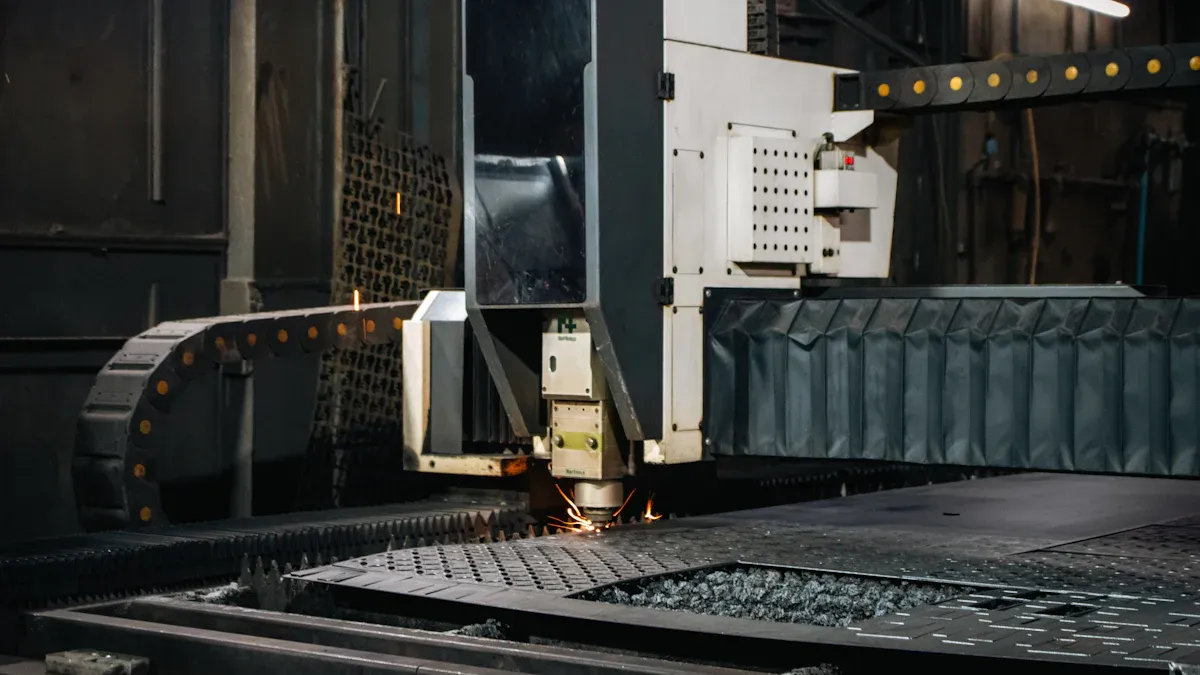
The superior properties of modern 2507 duplex steel are fully realized through groundbreaking manufacturing techniques. These advancements move beyond traditional methods, employing digital precision and innovative processes to create components with unparalleled consistency and performance. The result is an ASTM A815 2507 Duplex Steel Elbow engineered for the most demanding industrial environments of 2025.
The Rise of Additive Manufacturing
Additive manufacturing (AM), or 3D printing, has revolutionized the production of complex metal components. Processes like Wire Arc Additive Manufacturing (WAAM) and Selective Laser Melting (SLM) build elbows layer by layer directly from digital models. This approach offers several distinct advantages:
- Complex Geometries: AM enables the creation of custom elbow designs with optimized internal flow paths that are difficult or impossible to produce with conventional methods.
- Material Efficiency: The process uses only the necessary material, drastically reducing waste compared to subtractive manufacturing techniques.
- Rapid Prototyping: Engineers can quickly produce and test new elbow designs, accelerating innovation and shortening development cycles for specialized applications.
This technology allows for the creation of near-net-shape parts that require minimal post-processing. It ensures a highly controlled microstructure, preserving the critical austenite-ferrite balance essential for super duplex steel's performance.
Precision in Advanced Forging
While additive manufacturing is on the rise, advanced forging remains a cornerstone of high-performance component production. Modern forging techniques for the ASTM A815 2507 Duplex Steel Elbow are a world away from the hammer-and-anvil methods of the past. Today, the process is governed by digital precision and automation.
Digitally Controlled Forging: This process uses computer-controlled hydraulic presses to apply precise amounts of force and heat. This meticulous control refines the steel's grain structure, enhancing its mechanical strength and fatigue resistance. It eliminates internal defects and ensures uniform material properties from one end of the elbow to the other.
This level of precision guarantees that every elbow meets exact dimensional specifications and delivers consistent, reliable performance under extreme pressure and cyclic stress. The resulting fine-grained microstructure significantly improves the component's toughness and resistance to wear.
Seamless Forming and CFD Modeling
Seamless forming creates elbows from a single piece of pipe, eliminating the welds that can sometimes act as initiation points for corrosion or mechanical failure. This method produces a component with superior structural integrity and a smooth internal surface. The design of these seamless elbows is now perfected using powerful digital tools.
Engineers use Computational Fluid Dynamics (CFD) modeling during the design phase. This technology simulates fluid flow through the elbow before any metal is formed. The process integrates 3D modeling software like Catia with numerical simulation software like CFX to create a virtual testing environment. These simulations identify problematic flow conditions, such as high-shear zones where protective surface films could be stripped away. By pinpointing areas prone to turbulence and erosion-corrosion, designers can adjust the elbow's internal geometry to optimize hydraulic performance and ensure long-term durability in abrasive or high-velocity systems.
Application and Future Outlook
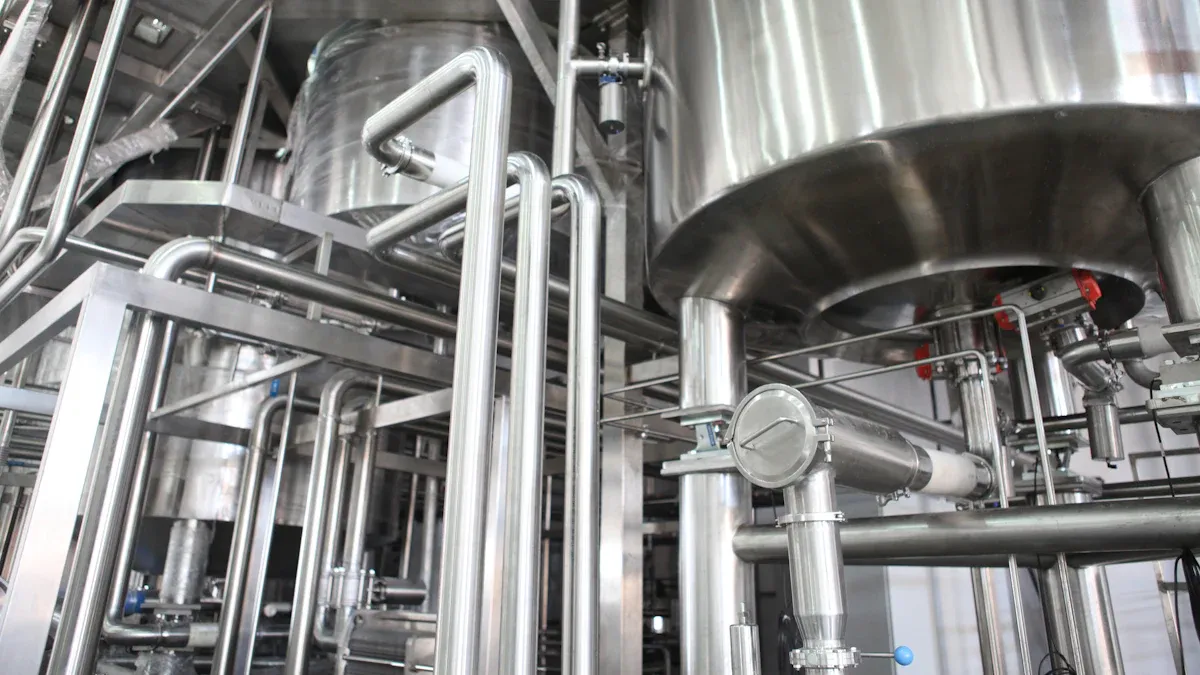
The evolution of the 2507 elbow extends beyond its material properties, shaping its role in future industrial systems. Innovations in smart technology, lifecycle economics, and next-generation alloys define the path forward for this critical component.
Integrating Smart Materials and IIoT
The 2025-era 2507 elbow is no longer a passive component. It is an active participant in the Industrial Internet of Things (IIoT). Engineers now integrate advanced sensors directly into the elbow's structure, transforming it into a smart monitoring point. This technology provides real-time data on system health and integrity.
- An electrical resistance (ER) sensor, developed using 2507 duplex steel, actively monitors corrosion.
- This sensor functions effectively in harsh environments, including sulfuric acid and high-chloride solutions at temperatures up to 90°C.
- It provides early warnings of material degradation, enabling predictive maintenance and preventing catastrophic failures.
Sustainability and Lifecycle Cost Analysis
While the initial procurement cost of a 2507 elbow is higher than that of a 316L component, a comprehensive Total Cost of Ownership (TCO) analysis reveals a stronger long-term financial case. The superior durability of super duplex steel translates directly into significant operational savings.
A Smarter Investment: Over a 10-year cycle in offshore engineering, the TCO for high-strength duplex components is over 40% lower than for 316L stainless steel. This is achieved through a 3 to 5 times longer repair cycle, the elimination of anticorrosion coatings, and a 90% reduction in leakage risk.
This enhanced reliability minimizes costly downtime and maintenance, making the 2507 elbow a more sustainable and economically sound choice for the entire lifecycle of a project.
The Next Frontier: Hyper Duplex Steels
Engineers are already looking beyond super duplex to the next class of materials: hyper duplex steels. These alloys feature a Pitting Resistance Equivalent Number (PREN) greater than 45, designed for the most severe service conditions. Their enhanced chemistry provides an even greater defense against corrosion.
| Common Name | UNS Number | Cr (%) | Mo (%) | N (%) | PREN |
|---|---|---|---|---|---|
| 2707 | S32707 | 26.0-29.0 | 4.0-5.0 | 0.30-0.50 | 49-50 |
These materials show immense promise for future applications in deep-sea oil exploration and aggressive chemical processing. However, significant manufacturing challenges remain, particularly in controlling the complex microstructure during additive manufacturing and welding. Overcoming these hurdles is the key to unlocking the full potential of hyper duplex steels.
The evolution of the ASTM A815 2507 Duplex Steel Elbow by 2025 is marked by measurable gains in corrosion resistance, mechanical strength, and fatigue life. These improvements are directly driven by innovations in material science, additive manufacturing, and precision forging techniques. For engineers managing critical industrial systems, the benefits are clear.
The enhanced durability and integrated intelligence of 2025-era 2507 elbows offer unmatched reliability. This performance translates to a significantly lower total cost of ownership, justifying its selection for aggressive and high-stakes environments.
This makes the ASTM A815 2507 Duplex Steel Elbow the definitive choice for systems where failure is not an option.
FAQ
What makes 2507 a "super" duplex steel?
A steel earns the "super duplex" classification when its Pitting Resistance Equivalent Number (PREN) exceeds 40. The 2507 alloy achieves this with high levels of chromium, molybdenum, and nitrogen. This chemistry provides exceptional resistance to pitting and crevice corrosion in aggressive environments.
Can 2507 elbows be used in any high-temperature application?
Engineers typically limit 2507 duplex steel to applications below 570°F (300°C). Prolonged exposure to higher temperatures can reduce its toughness and corrosion resistance. The material maintains excellent strength and performance within its recommended operational range, from sub-zero conditions up to this limit.
Is additive manufacturing better than forging for 2507 elbows?
Each method offers unique benefits. Additive manufacturing excels at creating complex, custom geometries with high material efficiency. Advanced forging produces components with a refined grain structure, delivering maximum mechanical strength and fatigue resistance. The best method depends entirely on the specific application's requirements.
Why choose a 2507 elbow over a standard 316L elbow?
A 2507 elbow provides superior performance where standard stainless steel fails. It offers:
- Significantly higher strength, allowing for thinner walls.
- Vastly improved resistance to chloride corrosion.
- A lower total cost of ownership due to its extended service life and reliability.
See Also
Mastering Pass Partition Plate Welding: Expert Strategies for 2025 Success
Assessing Molybdenum Plugs: Enhancing Seamless Steel Pipe Manufacturing by 2025
Industrial Applications: A 2025 Guide to Semi-welded Plate Heat Exchangers
Optimizing Heat Exchange: Steel Processing Techniques for Consistent Performance
Shell Versus Plate: A 2025 Performance Comparison of Heat Exchangers