Application of Hexagonal Boron Nitride Powder in Lubricants You Should Try This Year
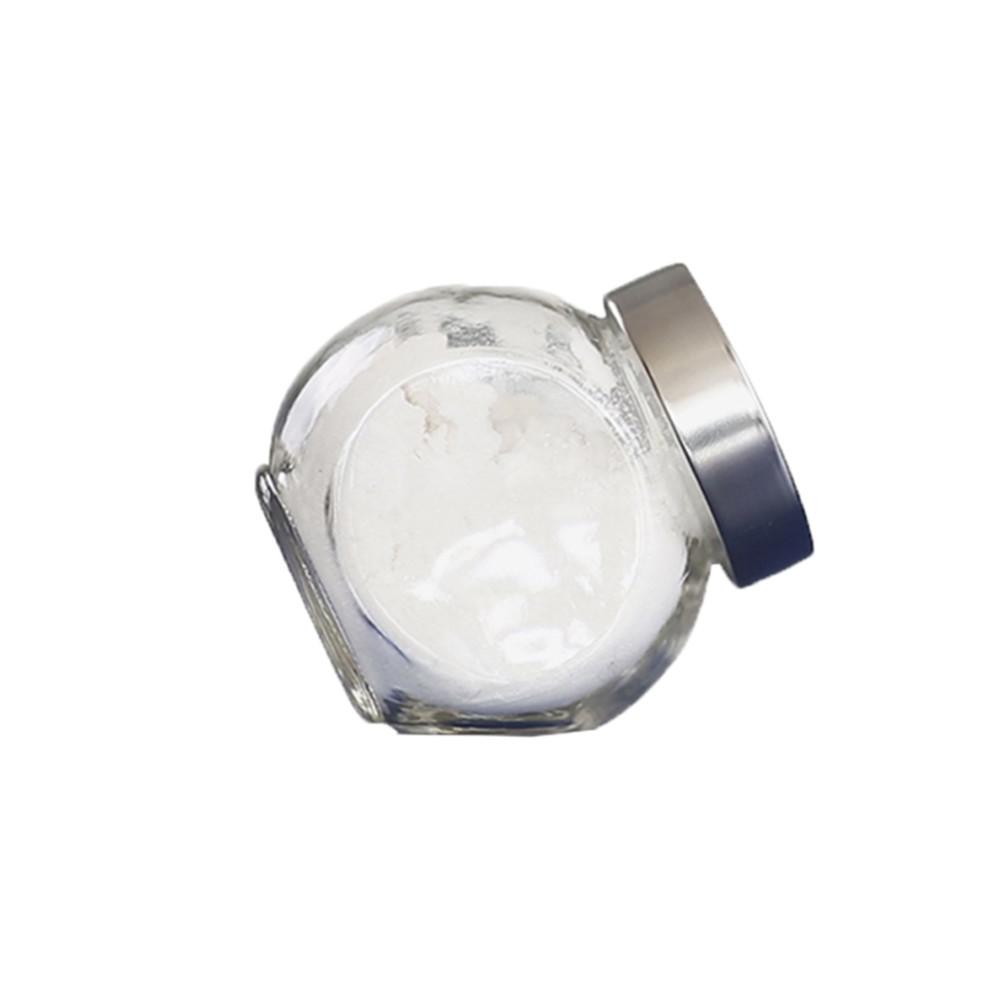
You can boost your lubricant’s performance by blending hexagonal boron nitride powder directly into it. This Application of Hexagonal Boron Nitride Powder in Lubricants reduces friction, improves wear resistance, and keeps working even at high temperatures.
- Used as an additive in industrial lubricants
- Enhances thermal stability
- Reduces friction in automotive lubricants
Key Takeaways
- Hexagonal boron nitride powder enhances lubricant performance by reducing friction and improving wear resistance, making it ideal for high-temperature applications.
- Choosing the right grade and particle size of BN powder is crucial for optimal lubrication; ultra-fine powders work best for precision tasks, while larger particles suit high-temperature uses.
- Using 1% BN powder in lubricants provides the best balance of performance and stability, leading to longer service intervals and reduced maintenance costs.
Application of Hexagonal Boron Nitride Powder in Lubricants: Benefits and Key Properties
What Is Hexagonal Boron Nitride Powder?
You may know hexagonal boron nitride powder as ‘white graphite’. This material consists of boron and nitrogen atoms arranged in layers. The structure allows the powder to slide easily, making it ideal for lubrication. You can find it in many industries because it resists heat and chemicals. The Application of Hexagonal Boron Nitride Powder in Lubricants uses these properties to improve performance in demanding environments.
Key Properties for Lubrication
Hexagonal boron nitride powder stands out because of its unique physical and chemical traits. You can see how these properties support lubrication in the table below:
| Property | Description |
|---|---|
| Layered crystal structure | Weak forces between layers allow easy sliding and reduce friction. |
| Coefficient of friction (μ) | Ranges from 0.15 to 0.50, showing effective lubrication. |
| Thermal stability | Stays stable above 2800°C in nitrogen; resists oxidation up to 1000°C. |
| Chemical inertness | Resists acids, alkalis, and solvents; does not react with water. |
| Temperature range | Works from cryogenic levels up to 1200°C in inert atmospheres. |
| Mohs hardness | Measures 2-3, suitable for boundary lubrication. |
| Electrical resistivity | Provides insulation in conductive environments. |
Main Benefits in Lubricant Applications
You gain several advantages when you use hexagonal boron nitride powder in lubricants. The Application of Hexagonal Boron Nitride Powder in Lubricants delivers:
- High resistance to oxidation and thermal degradation, perfect for high-temperature uses.
- Chemical compatibility with many substances, unlike graphite which can oxidize.
- Effective friction reduction in both dry and wet conditions.
- Long-lasting lubrication that penetrates steel pores.
- Cleaner surfaces with less residue and metal buildup.
You can rely on hexagonal boron nitride powder to maintain stability at temperatures up to 1000°C in air and 1800°C in inert gas. Heat treatment improves sealing and chemical resistance, making it a smart choice for tough jobs.
How to Use BN Powder in Lubricants: Methods, Dosage, and Practical Tips
Choosing the Right BN Powder (Grade and Particle Size)
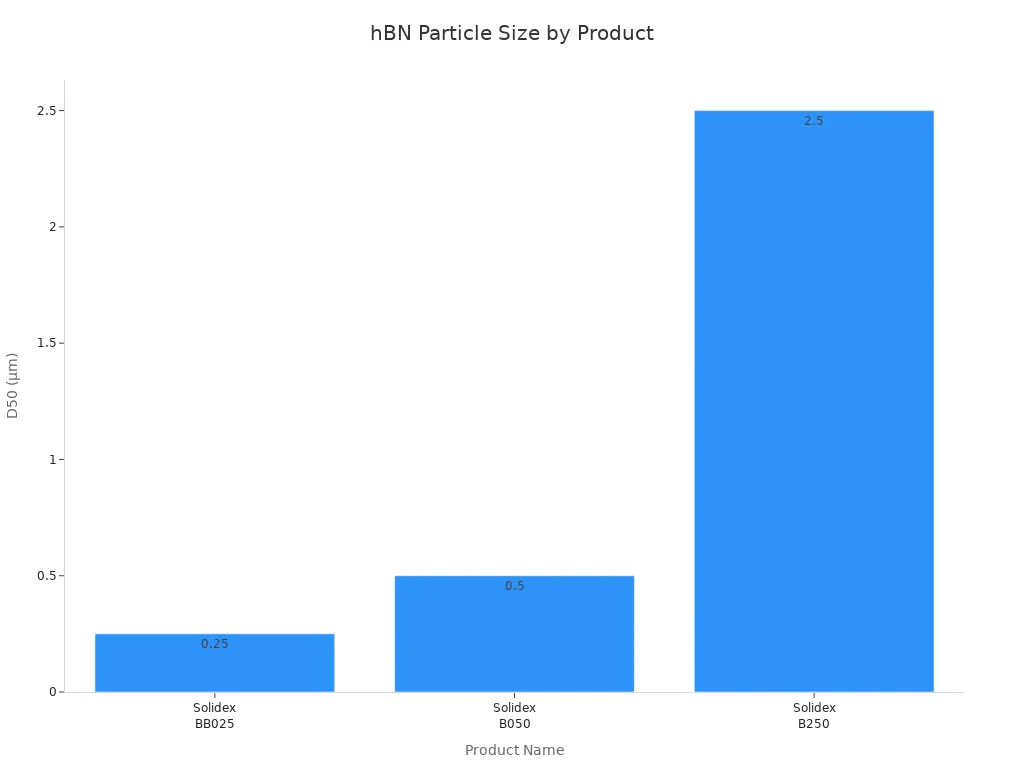
You need to select the right grade and particle size of hexagonal boron nitride powder for your lubricant. The Application of Hexagonal Boron Nitride Powder in Lubricants depends on matching the powder to your specific needs. Ultra-fine powders work best for precision jobs, while larger particles suit high-temperature applications. The table below shows common grades and their uses:
| Product Name | D50 (μm) | Application Description |
|---|---|---|
| Solidex BB025 | 0.25 | Ultra-fine hBN for precision tribological applications requiring the smallest particle size. |
| Solidex B050 | 0.5 | Mid-range particle size hBN for general-purpose grease formulation and metalworking compounds. |
| Solidex B250 | 2.5 | Larger-particle hBN for high-temperature forging compounds and release agents where coarser size is beneficial. |
Micro powders, sized between 1 µm and 25 µm, form strong films and keep lubricity even under tough conditions. Nano powders, less than 100 nm, disperse well in polymers and boost thermal conductivity. You can use these for advanced electronics or high-performance lubricants.
Determining the Correct Dosage
You must measure the right amount of BN powder for your lubricant. The Application of Hexagonal Boron Nitride Powder in Lubricants works best when you use the optimal dosage. Research shows that 0.5%, 1.0%, and 2.0% are common ranges. A 1% concentration gives you the best lubrication performance. If you use more than 1%, you may see changes in mechanical properties because BN powder is hydrophobic. Start with 1% and adjust based on your application.
Tip: Always test your lubricant with a small batch before scaling up. This helps you find the best balance between performance and stability.
Mixing Methods for Homogeneous Dispersion
You want your BN powder to spread evenly in the lubricant. Surface modification and functionalization, like chemical grafting or plasma treatment, help the powder mix well. These methods improve bonding between the powder and the lubricant. You can also use surfactant coatings.
- Chemical additives keep the powder suspended.
- Sonication or shaking helps mix the powder thoroughly.
For industrial blending, use ultra-fine BN powder for thin-film contacts and polymer composites. Sub-micron powders (D50 ≤ 0.5 μm) give you strong lubrication and stable dispersion in oils and greases. Products like Solidex BB025, Solidex B004, and Solidex B050 are good choices for formulation.
Application Scenarios: Automotive, Industrial, and Specialty Lubricants
You can use BN powder in many lubricant applications. In automotive lubricants, it boosts load-carrying capacity, lowers friction, and extends service life. The table below shows how different concentrations affect friction reduction:
| Concentration of h-BN | Coefficient of Friction Reduction (%) |
|---|---|
| 0.1% | 76.9% |
| 0.5% | 53.8% |
| 1% | 27.7% |
Tests show that adding 1% BN powder to mineral oil reduces wear and keeps friction low. In industrial lubricants, BN powder increases equipment lifespan and cuts maintenance costs. It works well in high-temperature environments where other lubricants fail. Specialty lubricants, like those used in forging or electronics, benefit from BN’s thermal stability and conductivity.
- BN powder enhances thermal stability and conductivity.
- It reduces friction and wear in mechanical systems.
- You get longer service intervals and lower maintenance costs.
Storage, Handling, and Compatibility Tips
You need to store BN powder and lubricants properly. Keep them between -20°C and 60°C to prevent clumping and maintain performance. When you blend BN powder with different base oils, you may see changes in properties like penetration and rheology. The Application of Hexagonal Boron Nitride Powder in Lubricants can affect mechanical stability, especially in greases.
| Compatibility Issue | Description |
|---|---|
| Alterations to Functional Properties | The addition of h-BN affects penetration, dropping point, and rheological characteristics of grease. |
| Dependence on Concentration and Granulation | Changes in properties are contingent upon the concentration and granulation of h-BN. |
| Influence of Base Grease Type | The performance impact of h-BN may vary based on the type of thickener used in the grease. |
| Mechanical Stability | The introduction of h-BN can affect the mechanical and structural stability of grease under operating conditions. |
Temperature mismatches between BN powder and matrix materials may cause internal stresses. These stresses can lead to microcracking and delamination. Always check compatibility with your base oil and thickener.
Note: Mismatches between carrier polarity and matrix can cause instability. Test your formulation before full-scale production.
Safety and Environmental Considerations
You must follow safety guidelines when handling BN powder. Wear NIOSH-approved N95 respirators for routine tasks and P100 filters in high-concentration areas. Use eye protection that meets ANSI Z87.1 standards and chemical-resistant gloves. Keep workplace ventilation at 100 feet per minute at capture points to avoid dust buildup. Follow OSHA exposure limits of 15 mg/m³ for total dust and 5 mg/m³ for respirable particles. Store BN lubricants in the recommended temperature range.
BN powder supports green production. It replaces harmful materials like glass-based antioxidants and graphite. This reduces environmental pollution and improves working conditions in industries such as forging.
Safety Reminder: Have emergency procedures ready for spills. Proper storage and handling keep your workplace safe and your lubricants effective.
You can easily improve your lubricants with hexagonal boron nitride powder.
- Granulate the powder with organic binders.
- Add pressing aids.
- Create granules for good flow.
- Press and sinter for best results.
- You get better lubrication and higher performance.
- Industries now use this for engines and advanced machinery.
- New nanotechnology will make these lubricants even stronger.
Try hexagonal boron nitride powder in your lubricants this year!
FAQ
How do you add hexagonal boron nitride powder to lubricants?
You can slowly sprinkle the powder into the lubricant while stirring. Use a mixer or shake the container to help the powder blend evenly.
Is hexagonal boron nitride powder safe for you to handle?
Yes, you can handle it safely with gloves and a mask. The powder is non-toxic, but you should avoid breathing in dust.
What makes Theorem Chem’s High Purity Hexagonal Boron Nitride Powder special?
| Feature | Benefit |
|---|---|
| High purity | Gives you better performance |
| Excellent heat resistance | Works in extreme conditions |
| Non-toxic | Safe for you to use |
See Also
Innovative Approaches to Aminoguanidine Bicarbonate Production and Uses
Assessing Molybdenum Plugs in Steel Pipe Manufacturing by 2025
Understanding Nozzle Options for Gardeners and Bioprinting Professionals
Aminoguanidine Bicarbonate Production Techniques and Their Applications
Essential Insights on Aminoguanidine Bicarbonate Supplier Costs This Year