Comparing HTPB ATPB and CTPB for Real-World Applications
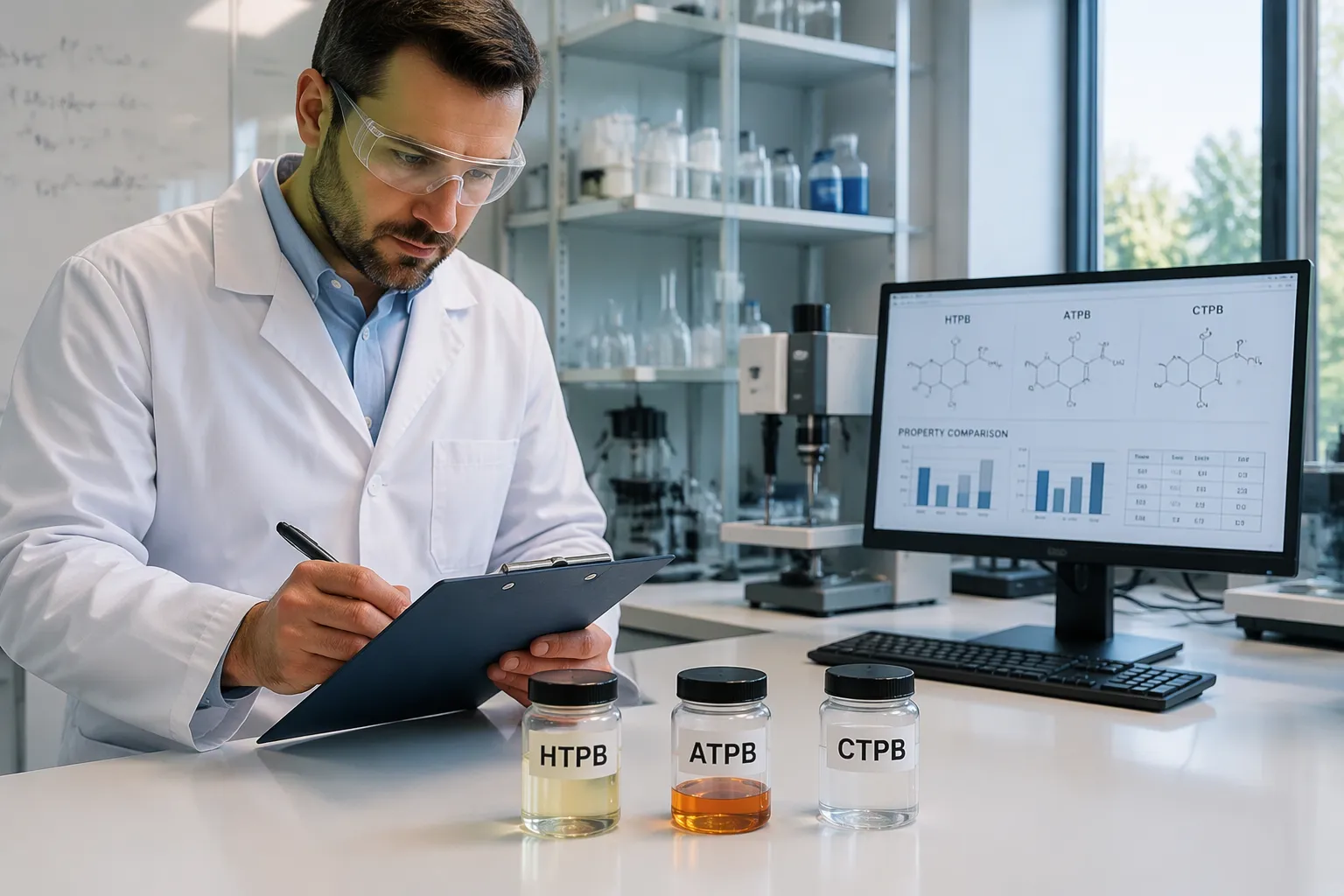
HTPB, ATPB, and CTPB share a polybutadiene backbone. Their reactive end groups—hydroxyl, allyl, and carboxyl—drive nearly every difference in cure chemistry, performance, and processing. Four criteria guide selection: cure-system compatibility, mechanical strength and toughness, viscosity limits, and cost. HTPB suits versatile propellant binders, ATPB delivers low-temperature flexibility with peroxide cure, and CTPB provides high-strength bonding with acid–epoxy cure. These traits shape the application differences of polybutadiene-based liquid rubbers: HTPB, ATPB, and CTPB.
Key Takeaways
- Match the cure system first: HTPB works with isocyanates, ATPB with peroxides, and CTPB with acid-epoxy curatives.
- Choose HTPB for balanced strength and wide compatibility, ATPB for cold flexibility, and CTPB for high-strength bonding.
- Blend these rubbers to combine their strengths when a single type falls short.
Chemical Structure and Composition
Shared Polybutadiene Backbone
All three liquid rubbers start from the same foundation. A polybutadiene chain forms the backbone of HTPB, ATPB, and CTPB. This backbone consists of repeating butadiene units with unsaturated carbon-carbon double bonds. The double bonds give the polymer chain its flexibility and its reactive character. They also allow later crosslinking and vulcanization. The backbone length and molecular weight distribution vary by grade, yet the core chemistry stays consistent across all three products. This shared structure explains why the three materials behave similarly in many bulk properties.
End-Group Chemistry Compared
The end groups define each polymer's identity. HTPB carries hydroxyl (-OH) groups at the chain ends. These hydroxyl groups react readily with isocyanates. ATPB carries allyl groups, which contain a terminal double bond. Peroxides and sulfur systems cure ATPB through that unsaturation. CTPB carries carboxyl (-COOH) groups. These carboxyl groups react with epoxides and aziridines in acid–epoxy cure systems. Each end group opens a different curing route and a different set of formulation options.
Functionality and Equivalent Weight
Functionality describes the average number of reactive end groups per molecule. Equivalent weight describes the mass of polymer per reactive group. These two values control crosslink density and final network properties.
| Grade | End Group | Typical Functionality | Cure Partner |
|---|---|---|---|
| HTPB | Hydroxyl | 2.0–2.5 | Isocyanate |
| ATPB | Allyl | 2.0–3.0 | Peroxide |
| CTPB | Carboxyl | 2.0–2.2 | Epoxide |
Higher functionality raises crosslink density and stiffness. Lower equivalent weight achieves the same effect with less material. Formulators balance these numbers against viscosity and pot life targets.
Physical and Chemical Properties
Viscosity and Processing Behavior
Viscosity governs how each liquid rubber flows, mixes, and fills a mold. HTPB typically shows the lowest viscosity of the three. It pours easily and accepts high filler loadings. ATPB sits at a moderate viscosity and processes well in peroxide-cured systems. CTPB usually runs thicker, so formulators often warm it or dilute it before use.
| Grade | Relative Viscosity | Processing Note |
|---|---|---|
| HTPB | Low | Easy pouring, high filler loading |
| ATPB | Moderate | Good flow in peroxide systems |
| CTPB | High | Warming or dilution often needed |
Cure Reactivity and Crosslink Density
Each end group sets its own cure speed and network density. Hydroxyl groups in HTPB react with isocyanates at a controllable rate. Allyl groups in ATPB cure through peroxide-initiated radicals. Carboxyl groups in CTPB react with epoxides in a slower acid–epoxy cure. Higher functionality raises crosslink density. Tighter networks boost hardness and strength. Looser networks improve elongation.
Mechanical and Thermal Performance
HTPB networks offer a balanced mix of tensile strength and elongation. ATPB shines at low temperatures. Its flexible backbone and peroxide cure keep it pliable in cold service. CTPB builds strong, rigid networks with excellent adhesion to polar substrates. Thermal stability stays good across all three grades. Each polymer tolerates moderate heat exposure without major degradation.
Application Differences of Polybutadiene-based Liquid Rubbers: HTPB, ATPB, and CTPB
The end-group chemistry of each polymer translates directly into where it performs best. This section examines the application differences of polybutadiene-based liquid rubbers: HTPB, ATPB, and CTPB across three major use categories. Each category places different demands on cure speed, mechanical properties, and processing conditions. The application differences of polybutadiene-based liquid rubbers: HTPB, ATPB, and CTPB become clearest when formulators match end-group reactivity to the service environment.
Solid Rocket Propellants and Energetic Materials
Solid rocket propellants represent the largest and most demanding application for these liquid rubbers. The binder holds the oxidizer particles and metal fuel in a continuous matrix. It also contributes fuel value to the combustion process. HTPB dominates this field for good reason. Its hydroxyl groups react with isocyanates at room temperature, which allows cast-cure processing of large grains. The cured HTPB network provides excellent elongation and tear resistance. These properties help the propellant grain survive thermal cycling and ignition shock. HTPB also accepts very high solids loading, often above 85 percent by weight. This high loading boosts specific impulse and density.
ATPB offers a different set of advantages in energetic formulations. Its allyl end groups cure through peroxide initiation. This cure route avoids the moisture sensitivity of isocyanate systems. ATPB-based binders maintain flexibility at very low temperatures. Propellants for cold-climate storage or high-altitude operation benefit from this trait. The peroxide cure also tolerates certain energetic plasticizers that interfere with isocyanate reactions.
CTPB finds limited use in propellants compared with HTPB. Its carboxyl groups require epoxide or aziridine curatives. These curatives add cost and complexity to the formulation. CTPB does offer strong adhesion to oxidizer particles. This adhesion improves mechanical integrity in some specialized grains. The application differences of polybutadiene-based liquid rubbers: HTPB, ATPB, and CTPB in propellants therefore favor HTPB for general use, ATPB for cold-service flexibility, and CTPB for niche adhesion-critical designs.
Adhesives, Sealants, and Binders
Adhesive and sealant formulators value these liquid rubbers for their flexibility, water resistance, and electrical insulation. HTPB serves as a base for two-part polyurethane adhesives. The hydroxyl groups react with diisocyanates to form strong bonds to wood, metal, and concrete. HTPB-based sealants stay flexible across a wide temperature range. They resist hydrolysis and weathering well. These traits suit construction sealants and expansion joints.
ATPB brings value to adhesive systems that need peroxide cure. Peroxide-cured ATPB adhesives bond well to low-surface-energy substrates such as polyethylene and polypropylene. The allyl groups also participate in co-cure with other unsaturated polymers. This co-cure creates hybrid adhesive systems with tailored properties. ATPB-based binders serve in composite molding and friction materials.
CTPB excels in high-strength structural bonding. Its carboxyl groups react with epoxy resins to form a tough, crosslinked interphase. This acid–epoxy cure creates excellent adhesion to polar surfaces such as steel and glass. CTPB-based binders also reinforce composite structures. The carboxyl groups can react with epoxidized fillers and fibers. This reactivity improves interfacial bonding in advanced composites. The application differences of polybutadiene-based liquid rubbers: HTPB, ATPB, and CTPB in adhesives therefore reflect cure chemistry: HTPB for versatile polyurethane systems, ATPB for peroxide-cured specialty bonds, and CTPB for high-strength structural joints.
Coatings, Potting, and Specialty Uses
Coatings and potting compounds protect electronic components, metal structures, and concrete surfaces. HTPB-based polyurethane coatings offer excellent abrasion resistance and flexibility. These coatings protect pipelines, marine structures, and industrial floors. HTPB also serves as a potting compound for electronic assemblies. Its low viscosity allows complete encapsulation of delicate components. The cured compound absorbs vibration and thermal shock.
ATPB coatings cure through peroxide initiation. This cure works well in thick sections where isocyanate cure would generate excessive exotherm. ATPB-based potting compounds protect components in cold environments. Their low-temperature flexibility prevents cracking during thermal cycling. Specialty uses for ATPB include rocket motor liners and insulation layers. The peroxide cure bonds these layers to the propellant grain without interfering with the grain's own cure.
CTPB finds specialty use in corrosion-resistant coatings. Its carboxyl groups react with epoxy resins to form dense, chemically resistant films. These coatings protect tanks and pipes from aggressive chemicals. CTPB also serves as a binder in friction materials and abrasive products. The acid–epoxy cure provides the hardness and heat resistance these applications demand. The application differences of polybutadiene-based liquid rubbers: HTPB, ATPB, and CTPB in coatings and specialty uses therefore follow the same pattern: HTPB for versatile protective coatings, ATPB for thick-section and cold-service potting, and CTPB for chemically resistant and high-hardness specialty films.
Advantages, Disadvantages, and Best-Fit Use Cases
Each polymer brings a distinct profile of strengths and trade-offs. A clear-eyed look at these profiles helps formulators match the material to the job. The application differences of polybutadiene-based liquid rubbers: HTPB, ATPB, and CTPB come down to end-group chemistry, and that chemistry drives every advantage and every limitation below.
HTPB Strengths and Limitations
HTPB offers the broadest compatibility of the three. Its hydroxyl groups react with a wide range of isocyanates at room temperature. This room-temperature cure simplifies processing and reduces energy costs. HTPB also accepts very high filler loadings without losing flow. Formulators can load it above 85 percent solids by weight, which suits propellant and heavy-duty coating work. The cured network delivers a strong balance of tensile strength and elongation. HTPB resists hydrolysis and weathering well. These traits make it a dependable choice for outdoor sealants and protective coatings. Low viscosity is another major plus. HTPB pours easily and fills complex molds without warming.
HTPB does carry limitations. Isocyanate cure demands careful moisture control. Water reacts with isocyanates and creates carbon dioxide bubbles. Formulators must dry fillers and control humidity during processing. Isocyanate curatives also raise health and safety concerns, so handling requires proper ventilation and protective equipment. HTPB networks offer only moderate thermal resistance. Continuous service above roughly 100 °C can soften the polymer and reduce strength. HTPB also lacks the low-temperature flexibility of ATPB. It stiffens in deep cold, which limits its use in arctic service.
Best-fit use cases for HTPB include solid rocket propellant binders, two-part polyurethane adhesives, construction sealants, abrasion-resistant coatings, and electronic potting. Any application that needs broad cure compatibility, high filler loading, and balanced mechanical properties points to HTPB first.
ATPB Strengths and Limitations
ATPB delivers outstanding low-temperature flexibility. Its allyl end groups cure through peroxide initiation, and the resulting network stays pliable well below freezing. This trait suits cold-climate storage, high-altitude operation, and cryogenic service. Peroxide cure avoids the moisture sensitivity of isocyanate systems. Formulators gain tolerance for fillers and plasticizers that would interfere with HTPB cure. ATPB also co-cures with other unsaturated polymers. This co-cure enables hybrid systems with tailored properties. The moderate viscosity of ATPB supports good flow in peroxide-cured formulations. Thick-section parts benefit from peroxide cure because it generates less exotherm than isocyanate cure.
ATPB has its own drawbacks. Peroxide cure requires heat or activators to start the reaction. This adds processing steps and energy input compared with room-temperature isocyanate cure. Peroxide curatives also shorten pot life once mixed. Formulators must work quickly or use inhibitors. ATPB networks generally show lower tensile strength than CTPB systems. The allyl groups offer fewer hydrogen-bonding sites for adhesion to polar substrates. ATPB therefore bonds less strongly to steel and glass than CTPB. Peroxide residues can also affect long-term aging in some formulations.
Best-fit use cases for ATPB include cold-service propellant binders, rocket motor liners and insulation, thick-section potting compounds, adhesives for low-surface-energy plastics, and friction materials. Any application that demands low-temperature flexibility with peroxide cure fits ATPB well.
CTPB Strengths and Limitations
CTPB builds the strongest, most rigid networks of the three. Its carboxyl groups react with epoxides and aziridines in acid–epoxy cure. This chemistry creates excellent adhesion to polar surfaces such as steel, glass, and concrete. CTPB also bonds strongly to oxidizer particles and reinforcing fibers. These bonds improve mechanical integrity in composites and specialized propellant grains. The cured network offers high hardness and good heat resistance. CTPB-based coatings resist aggressive chemicals and protect tanks and pipes. Acid–epoxy cure also provides good control over crosslink density through curative selection.
CTPB carries notable limitations. Its higher viscosity complicates processing. Formulators often must warm or dilute CTPB before use, which adds cost and handling steps. Acid–epoxy cure runs slower than isocyanate cure, so cycle times stretch longer. Epoxide and aziridine curatives add cost and complexity to formulations. Aziridine curatives in particular require careful handling because of their reactivity. CTPB networks tend to be less flexible than HTPB and ATPB systems. This rigidity limits use in applications that need high elongation or cold-service performance.
Best-fit use cases for CTPB include high-strength structural adhesives, corrosion-resistant coatings, composite binders, friction materials, and adhesion-critical propellant grains. Any application that prioritizes bond strength, hardness, and chemical resistance with acid–epoxy cure points to CTPB.
Cost, Availability, and Handling
Relative Cost and Supply Considerations
HTPB holds the widest commercial availability of the three polymers. Multiple producers offer many grades, so buyers enjoy competitive pricing and short lead times. ATPB serves a smaller market. Fewer suppliers make it less available, and prices run higher than HTPB. CTPB sits in a similar position. Its specialized carboxyl chemistry and smaller production volume push costs above HTPB levels.
| Grade | Relative Cost | Supply Picture |
|---|---|---|
| HTPB | Lowest | Broad supplier base, many grades |
| ATPB | Moderate to high | Limited suppliers, longer lead times |
| CTPB | Moderate to high | Niche production, fewer sources |
Curative costs also shape the total picture. Isocyanates for HTPB remain widely available. Peroxides for ATPB and epoxides or aziridines for CTPB add cost and sourcing steps.
Storage, Safety, and Processing Requirements
All three polymers need cool, dry storage away from direct sunlight. Sealed containers prevent moisture pickup and extend shelf life. HTPB demands strict moisture control during processing. Water reacts with isocyanates and forms bubbles in the cured product. Isocyanate curatives require ventilation and protective equipment.
ATPB requires careful peroxide handling. Peroxides need cool storage and protection from contamination. Mixed ATPB batches have short pot life, so processors plan work in small lots. CTPB needs warming before use to lower its viscosity. Aziridine curatives demand careful handling because of their reactivity. Good ventilation and personal protective equipment apply to all three systems.
End-group chemistry is the primary selection lever among HTPB, ATPB, and CTPB. Match the cure system first, then the performance target. A short decision guide simplifies the choice:
- Propellant binder and broad compatibility point to HTPB.
- Low-temperature flexibility with peroxide cure points to ATPB.
- High-strength bonding with acid–epoxy cure points to CTPB.
Blending or modifying these rubbers can extend the performance envelope when a single grade falls short.
FAQ
Which polymer should a formulator choose first?
Start with the cure system. HTPB pairs with isocyanates, ATPB with peroxides, and CTPB with acid–epoxy curatives. Cure compatibility narrows the field fastest.
Can formulators blend HTPB, ATPB, and CTPB?
Yes. Blending extends the performance envelope. A blend can combine HTPB's balanced strength with ATPB's cold flexibility. Formulators test each blend for cure compatibility and shelf life.
Which grade suits the coldest service conditions?
ATPB wins here. Its peroxide-cured network stays pliable well below freezing. HTPB stiffens in deep cold, and CTPB networks run more rigid still.
See Also
Three Methods PHE Plates Enhance System Performance During 2025
Shell Versus Plate Heat Exchanger Performance Comparison for 2025
Novel Uses of N,N-Dimethyl-N,N-Diphenylurea Across Multiple Industrial Sectors
Benefits of Plate Packs and Cost Analysis for 2025
Key WT20 Thoriated Tungsten Electrode Facts Improving TIG Welding Quality