TAIC Liquid vs Powder Understanding the Key Differences for Your Process
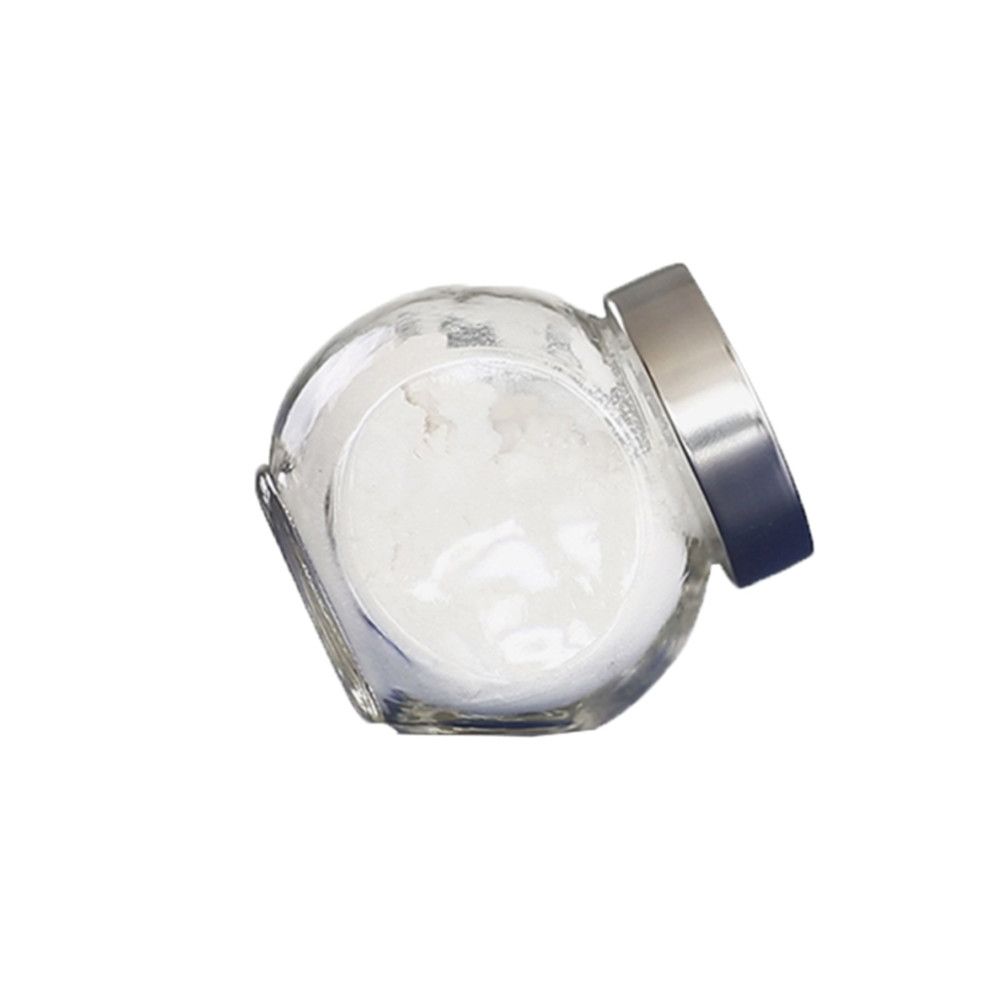
Liquid TAIC flows as a viscous fluid. Powder TAIC moves as a free-flowing solid. This basic difference drives every other choice you make. Choose liquid for precise metering into resin systems. Choose powder for dry blending or extended storage. Your polymer matrix, mixing equipment, and production environment determine the right form. Application Differences Between Liquid and Powder TAIC CAS No. 1025-15-6 Triallyl Isocyanurate matter more than any inherent superiority.
Key Takeaways
- Liquid TAIC suits precise metering into liquid resin systems. Powder TAIC suits dry blending with solid elastomers and thermoplastics.
- Powder TAIC offers simpler storage and handling. Liquid TAIC requires temperature control and spill containment.
- Both forms deliver effective crosslinking. Your choice depends on your equipment, process, and polymer matrix.
Physical State and Handling Characteristics

Liquid TAIC: Viscosity and Flow Behavior
Liquid TAIC arrives as a clear, viscous fluid. At room temperature, it pours slowly and clings to container walls. You will notice its honey-like consistency when transferring it between vessels. This viscosity changes with temperature. Warmer conditions thin the liquid, making it flow more freely. Cooler conditions thicken it, slowing your transfer rates. You must account for this behavior when designing your feed lines and pump systems. Liquid TAIC also wets surfaces readily, so you need careful handling to avoid residue loss in tanks and hoses.
Powder TAIC: Particle Size and Flowability
Powder TAIC appears as a fine, free-flowing solid. Manufacturers blend pure TAIC with inert carriers to create 70% or 50% powder grades. These carriers prevent caking and improve handling characteristics. The particles remain dry and mobile under normal storage conditions. You can scoop, pour, and weigh this powder with minimal effort. It does not stick to metal surfaces or plastic liners. However, you should avoid generating dust clouds during transfer. Fine particles can become airborne and create housekeeping challenges in your facility.
Impact on Dosing Accuracy and Process Control
Your dosing method determines which form delivers better accuracy. Liquid TAIC suits gravimetric or volumetric metering pumps. You can achieve precise, repeatable injection rates into continuous processes. The liquid form eliminates weighing steps entirely. Powder TAIC requires batch weighing before each cycle. You gain accuracy through careful scale calibration and consistent operator technique. Both forms allow tight control when you match the handling method to your equipment.
Key consideration: Your choice affects more than chemistry. It determines your daily workflow, operator training requirements, and material transfer procedures.
Mixing and Dispersion in Polymer Systems
Mixing defines how well your TAIC performs. You must match the form to your equipment and your polymer matrix. This choice determines your dispersion quality. Uniform dispersion leads to consistent crosslinking and reliable final properties.
Liquid TAIC in Resin and Solution Processing
You inject liquid TAIC directly into your resin stream. Mechanical stirring or high-shear mixing creates a homogeneous solution quickly. The liquid wets fillers and pigments without forming solid agglomerates. This method suits casting, potting, and continuous impregnation processes. You need pumps and metering systems that handle the honey-like viscosity. Heated feed lines improve flow and mixing efficiency. The liquid form eliminates dust concerns and reduces weighing steps in your batch preparation.
Powder TAIC in Dry Compounding and Milling
You add powder TAIC to your internal mixer or two-roll mill. The powder disperses into the rubber or thermoplastic during the mixing cycle. Proper shear and temperature settings melt the carrier and distribute the active agent uniformly. Powder TAIC simplifies your process flow. You eliminate liquid handling systems and reduce spill risks. Dust collection systems maintain a clean workspace. This form works well for EPDM, NBR, and fluororubber compounds. You measure each batch carefully before adding it to the mixer.
Achieving Uniform Distribution in Different Matrices
You must match the TAIC form to your specific matrix. Use liquid TAIC for liquid resins. Use powder TAIC for solid elastomers and thermoplastics. You can also pre-disperse powder TAIC in plasticizer or oil to create a paste. This paste blends more easily into certain formulations. Always verify your dispersion quality through crosslinking density tests. Consistent distribution ensures consistent properties throughout your final product.
Storage Stability and Shelf Life Considerations
Your storage conditions directly affect TAIC performance. Each form presents unique requirements. Understanding these differences prevents material degradation and safety incidents.
Liquid TAIC: Container Integrity and Temperature Sensitivity
Liquid TAIC demands careful temperature management. You should store it between 20°C and 30°C (68°F - 86°F). This range prevents premature polymerization. Temperatures above this range accelerate unwanted reactions. Temperatures below this range increase viscosity, complicating transfer and metering operations.
Container integrity matters equally. Liquid TAIC can leak from damaged drums or loose fittings. A leak creates serious hazards. Vapor release can irritate your respiratory system, eyes, and skin. Contact with incompatible substances may trigger dangerous reactions. Strong oxidizing agents, acids, and bases pose particular risks. These combinations can release toxic gases or cause explosions. You must inspect containers regularly and maintain secondary containment systems.
| Storage Parameter | Requirement |
|---|---|
| Recommended temperature range | 20°C – 30°C (68°F – 86°F) |
| Leak consequence | Vapor causes respiratory, eye, and skin irritation |
| Incompatible materials | Strong oxidizing agents, acids, bases |
| Worst-case scenario | Toxic gas release or explosion |
Powder TAIC: Moisture Resistance and Anti-Caking Properties
Powder TAIC offers simpler storage requirements. The inert carrier protects the active ingredient from moisture. You can store powder grades in standard warehouse conditions without temperature controls. The free-flowing nature persists when you keep containers sealed. Humidity poses minimal risk to product quality. Anti-caking additives maintain particle separation during extended storage. You avoid the viscosity concerns that affect liquid handling.
Packaging Options and Warehouse Requirements
Your packaging choice aligns with your consumption rate. Liquid TAIC arrives in 25 kg or 200 kg drums. You need dedicated storage areas with spill containment. Powder TAIC comes in 25 kg cartons or bags. You can stack these on pallets with twenty bags per pallet. Standard warehouse racking accommodates this configuration easily. You should store both forms away from strong acids and reducing agents. Normal room temperature suffices for powder storage. This flexibility simplifies your warehouse planning and reduces specialized infrastructure costs.
Crosslinking Performance and Final Product Properties
The crosslinking performance of TAIC directly determines your final product quality. Both liquid and powder forms share the same triazine ring structure with three reactive allyl groups. This chemistry drives the crosslinking reaction. However, dispersion quality and processing conditions create measurable differences in final properties. You must understand these differences to match the form to your application requirements.
Reactivity Profiles and Peroxide Compatibility
Liquid TAIC mixes at the molecular level with liquid resin systems. This intimate contact creates uniform crosslinking sites throughout your material. You achieve consistent cure from surface to center. The high active concentration of 95-99% provides predictable reactivity. You can calculate your loading rates with confidence.
Powder TAIC requires proper dispersion before it can react. The inert carrier must melt or dissolve into the polymer matrix. Once dispersed, the TAIC molecules become available for crosslinking. The lower active concentration of 50-70% means you need to adjust your loading rates accordingly. You must account for the carrier weight in your formulation.
Both forms work with common peroxides like dicumyl peroxide, di-tert-butyl peroxide, and benzoyl peroxide. Your processing temperature must exceed the peroxide decomposition temperature. The TAIC form does not change your peroxide selection. You can keep your existing cure system.
| Reactivity Factor | Liquid TAIC | Powder TAIC |
|---|---|---|
| Active concentration | 95-99% | 50-70% |
| Dispersion mechanism | Molecular mixing in liquid | Mechanical shear in solid |
| Cure initiation | Immediate on peroxide addition | Requires carrier melting first |
| Compatibility | Liquid resins, solutions | Solid elastomers, thermoplastics |
Effect on Mechanical Strength and Thermal Resistance
TAIC crosslinking creates a three-dimensional network in your polymer. This network increases tensile strength, modulus, and hardness. You also improve heat distortion temperature and creep resistance. The form you choose affects how uniformly this network forms.
Liquid TAIC in resin systems produces consistent crosslink density throughout the material. You get uniform mechanical properties from surface to center. This uniformity matters for thin films, cast parts, and continuous impregnation processes. You can achieve higher crosslink density because of the higher active concentration.
Powder TAIC in rubber and thermoplastic compounds improves mechanical properties when dispersion is adequate. You need proper mixing time and shear to distribute the particles evenly. Under-dispersion creates weak spots in your final product. Over-mixing causes premature crosslinking. Your mixing cycle determines the final property consistency.
Both forms improve thermal resistance significantly. The crosslinked network prevents polymer chains from sliding past each other at high temperatures. You can increase the continuous service temperature of your material by 20°C to 40°C. This improvement applies to cables, seals, and insulation products. The specific temperature gain depends on your polymer type and TAIC loading level.
Key standard: You must verify dispersion quality through crosslinking density tests. Consistent distribution ensures consistent mechanical and thermal properties throughout your production run.
Influence on Electrical Insulation and Weathering Performance
TAIC crosslinking enhances electrical insulation properties. The crosslinked network reduces ion mobility through the polymer. You get lower dielectric loss and higher breakdown voltage. These properties matter for wire and cable insulation, transformer components, and electrical housings.
Liquid TAIC provides uniform crosslinking throughout the insulation thickness. You achieve consistent dielectric properties across the entire cross-section. This uniformity prevents weak points that could lead to electrical failure. The higher purity of liquid TAIC contributes to better insulation performance.
Powder TAIC in thermoplastic compounds improves electrical properties when dispersion is uniform. Any undispersed particle creates a potential failure point. Your mixing quality directly affects the reliability of your electrical insulation. You should verify dispersion through dielectric testing.
Weathering performance improves with both forms. The crosslinked network resists UV degradation and oxidation. You extend the service life of outdoor products significantly. Solar panel encapsulant films, automotive seals, and outdoor cable insulation all benefit. Photovoltaic-grade TAIC provides additional anti-aging properties for EVA films used in solar panels.
The crosslinked structure also resists chemical attack. You improve solvent resistance and oil resistance. This benefit applies to rubber seals and gaskets in aggressive environments. Your choice of liquid or powder TAIC does not change the final chemical resistance as long as dispersion is uniform. Complete and uniform crosslinking throughout your product remains the critical factor.
Application Differences Between Liquid and Powder TAIC CAS No. 1025-15-6 Triallyl Isocyanurate
Your choice between liquid and powder TAIC depends heavily on your specific polymer application. Understanding the Application Differences Between Liquid and Powder TAIC CAS No. 1025-15-6 Triallyl Isocyanurate helps you optimize your formulation for each material system. Each polymer type presents unique mixing challenges and performance requirements. You must match the TAIC form to your processing conditions.
Rubber Curing: EPDM, NBR, and Fluororubber Systems
Rubber compounding requires uniform dispersion of all ingredients. You add powder TAIC to your internal mixer alongside your rubber bales, fillers, and oils. The powder form blends easily into the elastomer matrix. You avoid the mess of liquid handling in your rubber plant. This makes powder TAIC the standard choice for most rubber applications.
EPDM compounds benefit from powder TAIC at 1.5 to 3.0 phr (parts per hundred rubber). You achieve consistent crosslinking density throughout the batch. Your rubber parts maintain their shape at high temperatures. O-rings, seals, and hoses resist compression set better with TAIC. The powder form eliminates the need for heated feed lines in your mixing room.
NBR rubber systems also work well with powder TAIC. You improve oil resistance and heat resistance simultaneously. The powder disperses during the mixing cycle without requiring special equipment. You maintain your standard mixing procedures. Your NBR products last longer in automotive and industrial applications.
Fluororubber presents higher processing temperatures. You need a crosslinking agent that survives the mixing cycle. Powder TAIC with its inert carrier provides stability during high-temperature mixing. You add it at the same stage as your peroxide. This simplifies your process and reduces errors.
Liquid TAIC finds use in rubber solution processes. You dissolve rubber in solvent and add liquid TAIC directly. This method suits adhesive formulations and dip-coating applications. You get rapid mixing without mechanical shear. The Application Differences Between Liquid and Powder TAIC CAS No. 1025-15-6 Triallyl Isocyanurate become clear here. You choose liquid for solution processing and powder for dry compounding.
Thermoplastic Crosslinking: PE, EVA, and PVC Applications
Thermoplastic crosslinking transforms your material properties. You create a three-dimensional network that improves heat resistance and mechanical strength. The TAIC form you choose affects your production efficiency.
Polyethylene (PE) crosslinking uses powder TAIC in most extrusion processes. You blend the powder with your PE pellets before feeding the extruder. The inert carrier melts and distributes the TAIC evenly. You achieve consistent crosslinking along the entire cable length. Wire and cable manufacturers prefer powder TAIC for this reason. It simplifies their handling and reduces equipment costs.
EVA (ethylene-vinyl acetate) applications vary by product type. You use powder TAIC for foam sheet production. The powder blends with your EVA resin and blowing agent. You achieve uniform cell structure and consistent density. For EVA film applications, liquid TAIC offers advantages. You meter it directly into the extruder or the melt stream. The liquid form provides precise dosing for thin film production.
PVC crosslinking presents unique challenges. You need to control the crosslinking reaction carefully. Powder TAIC gives you a stable formulation that reacts only at the right temperature. You blend it with your PVC compound and stabilizers. The powder form prevents premature reaction during processing. Your final products show improved heat distortion temperature and reduced plasticizer migration.
The Application Differences Between Liquid and Powder TAIC CAS No. 1025-15-6 Triallyl Isocyanurate matter for your production line design. You choose powder for dry blending with pellets. You choose liquid for direct injection into melt streams. Your equipment determines the practical choice.
Photovoltaic Grade TAIC for EVA Encapsulant Films
Solar panel manufacturing demands high purity and consistent performance. Photovoltaic-grade TAIC serves as a dedicated crosslinking co-agent for EVA encapsulant films. You use the liquid form in most PV applications. The liquid allows precise metering into the EVA compounding process.
You inject liquid TAIC into the EVA melt during film extrusion. The high active concentration of 95-99% provides consistent crosslinking density. Your EVA film achieves the right balance of adhesion and cohesion. Solar cells remain protected from moisture and mechanical stress.
The crosslinked EVA film must withstand decades of outdoor exposure. TAIC improves the anti-aging properties significantly. Your solar panels maintain their efficiency over 25 years or more. The liquid form ensures uniform distribution across the entire film width. This consistency prevents hot spots and delamination.
Powder TAIC finds limited use in photovoltaic applications. You might use it in laboratory trials or small-scale production. The powder form requires additional mixing steps to achieve the same dispersion quality. Most PV manufacturers standardize on liquid TAIC for their production lines.
The Application Differences Between Liquid and Powder TAIC CAS No. 1025-15-6 Triallyl Isocyanurate become critical in this industry. Your choice affects film quality, production speed, and final panel reliability. You must match the form to your specific EVA formulation and extrusion equipment.
Decision Framework for Formulators and Engineers
Process Equipment Compatibility Assessment
You must evaluate your existing equipment before choosing a TAIC form. Liquid TAIC requires pumps, metering systems, and heated feed lines. Your facility needs these components already installed or budgeted for installation. Powder TAIC requires dust collection systems and precise weighing scales. You also need proper storage racks for bagged materials. Examine your mixing equipment carefully. Internal mixers and two-roll mills handle powder forms naturally. High-shear liquid mixers and injection ports suit liquid TAIC. Your equipment investment determines which form integrates smoothly into your production line.
Cost-Benefit Analysis of Each Form
Compare the total costs of each option. Liquid TAIC grades with 95-99% active content deliver more crosslinking agent per kilogram. You use less material to achieve the same effect. Powder grades contain only 50-70% active TAIC. You need more powder to match the liquid's performance. However, powder eliminates pump maintenance, heated storage, and spill containment costs. Liquid requires specialized handling equipment and trained operators. Calculate your annual consumption and factor in equipment depreciation. The lower-cost option depends on your production volume and existing infrastructure.
| Cost Factor | Liquid TAIC | Powder TAIC |
|---|---|---|
| Active content | 95-99% | 50-70% |
| Handling equipment | Pumps, meters, heated lines | Scales, dust collection |
| Storage requirements | Temperature-controlled | Standard warehouse |
| Spill containment | Required | Minimal risk |
Hybrid Approaches and Alternative Strategies
You can combine both forms in one facility. Use liquid TAIC for solution-based processes and powder for dry compounding. This approach maximizes flexibility across different product lines. You might also pre-disperse powder TAIC in plasticizer or oil to create a paste. This paste handles like a liquid but stores like a powder. Some manufacturers switch forms seasonally based on production schedules. Always conduct trial runs with both forms before committing to a full-scale change. Verify compatibility with your fillers, curing agents, and processing temperatures first.
Liquid TAIC (95-99% grades) delivers precise dosing and fast dispersion in liquid systems. Choose it for resin transfer molding, casting, or continuous injection. Powder TAIC (50-70% grades) offers stable storage, simple dry handling, and minimal spill risk. Select it for rubber compounding or thermoplastic extrusion. Neither form outperforms the other universally. Your polymer chemistry, equipment, and quality needs determine the right choice. Run trials with both forms before committing to full-scale production.
FAQ
Can I switch between liquid and powder TAIC without changing my formulation?
You cannot swap forms directly. Powder grades contain only 50-70% active TAIC. You must recalculate your loading rates to deliver the same effective crosslinking agent.
How long can I store opened containers of either form?
You should use opened liquid TAIC within six months. Keep the container sealed tightly. Powder TAIC lasts up to one year after opening when you store it in a dry environment.
Do I need different peroxides for liquid versus powder TAIC?
No. Both forms work with the same peroxide systems. Your processing temperature must exceed the peroxide decomposition temperature. Your choice of TAIC form does not change your cure chemistry.
See Also
Key Facts About WT20 Thoriated Tungsten Electrodes Enhance TIG Welding
Understanding Tablet Sampling Machines: The Definitive Lab Buying Guide
Leading Precoating Materials For Filtration Systems In The Year 2025
Essential Safety Measures For Storing Nitric Acid Properly
Industrial Applications And Solubility Of 2,5-Furandicarboxylic Acid