Smarter Food Inspection How AI is Upgrading X-Ray Systems
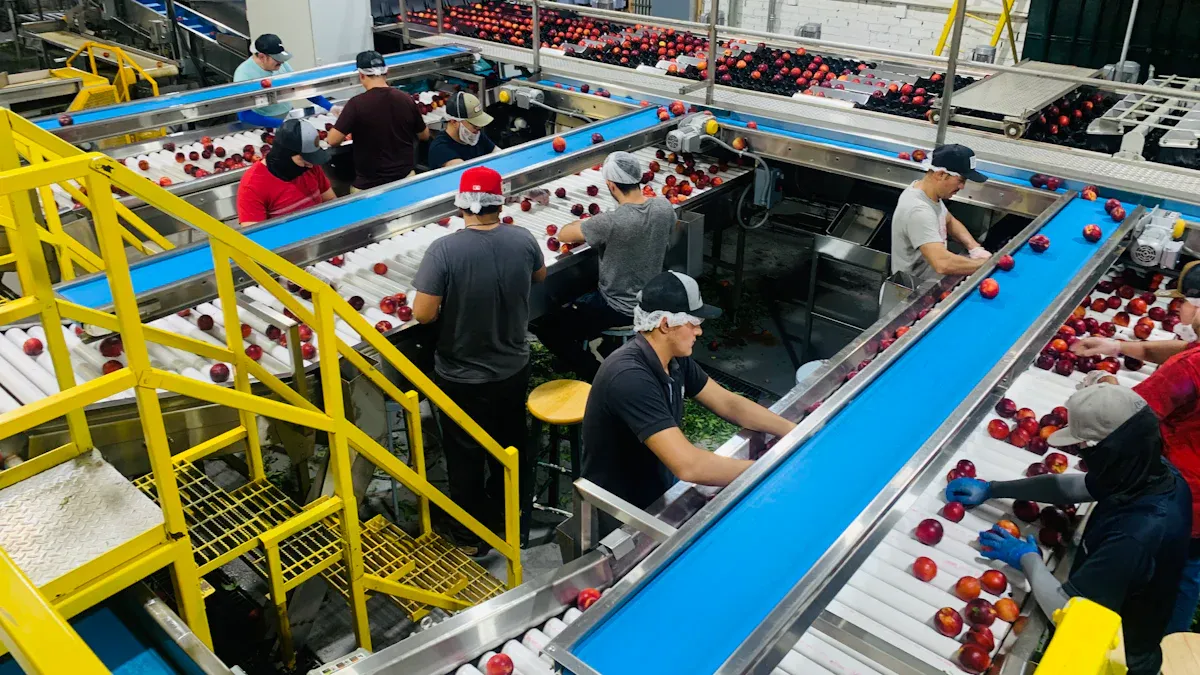
AI upgrades the x ray for food industry, enabling systems to find low-density contaminants like plastic. This advancement addresses major physical recall causes seen globally.
| Country | Percentage of Total Recalls (2024) | Main Cause of Physical Recalls |
|---|---|---|
| Germany | 4-28% | Metal (52%) |
| UK | 4-28% | Metal (45%) |
| USA | 4-28% | Metal (36%) |
| Australia | 4-28% | Plastic (25%) |
The technology also reduces false rejections, saving costs. It integrates production data to pinpoint contamination sources for swift corrective action.
Trend 1: Hyper-Accurate Detection with Deep Learning
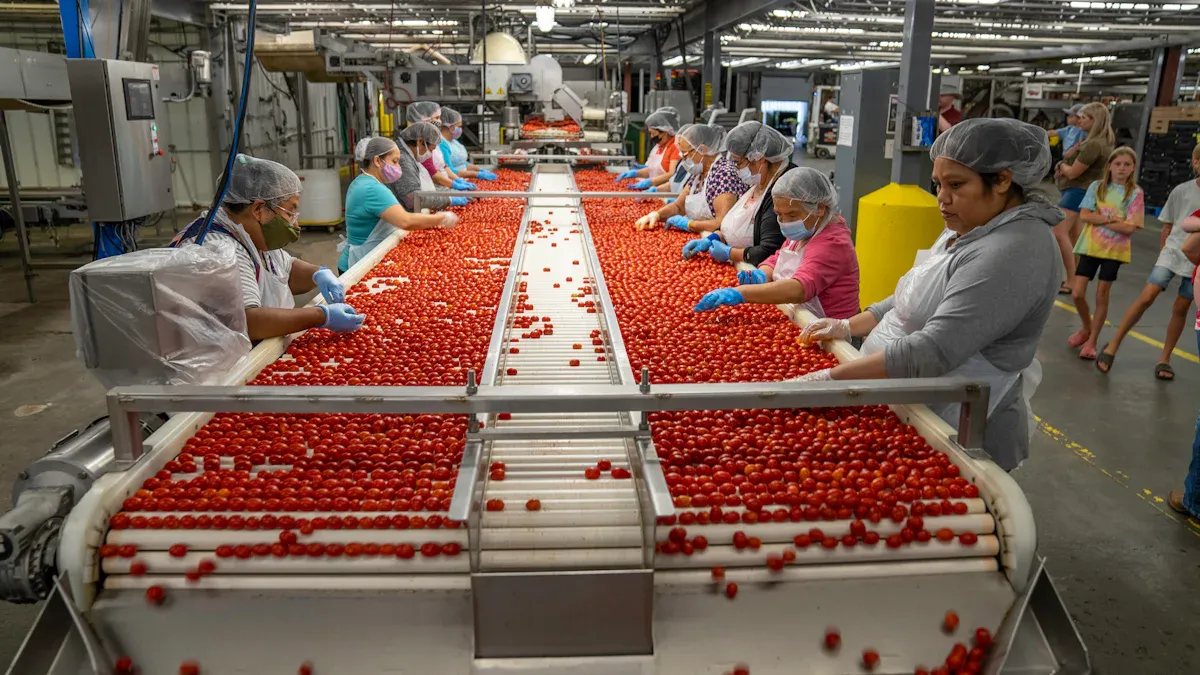
Deep learning algorithms are transforming food inspection. These advanced AI models learn from vast image datasets. They can identify subtle patterns that traditional systems cannot. This capability allows AI-powered X-ray systems to achieve unprecedented levels of accuracy and reliability in detecting foreign objects.
Finding More Than Metal and Glass
Traditional X-ray systems excel at finding dense contaminants like metal, glass, and stone. However, they often struggle with low-density materials. AI changes this dynamic completely. Deep learning models can identify challenging contaminants such as soft plastics, wood, rubber, and even bone fragments within complex product textures. This enhanced detection is critical for improving the overall safety of the x ray for food industry. The AI analyzes the X-ray image, recognizing the unique signatures of these materials, even when they are small or partially obscured.
Note: AI's ability to detect low-density items directly addresses a major source of physical recalls, particularly for contaminants like plastic, which are a leading issue in regions like Australia.
Reducing False Rejection Rates
A significant challenge in food production is the false rejection of perfectly good products. Complex product shapes, overlapping items, or dense ingredients can trick conventional systems. AI-powered inspection dramatically minimizes these errors. The system learns the difference between a true contaminant and a normal product variation. This intelligence prevents unnecessary food waste and saves significant costs.
Real-world applications already show remarkable results:
- Syntegon Technology implemented an AI system that cut false reject rates by 60% at one inspection station.
- Merck utilized generative AI to train its models, achieving a reduction in false rejects of over 50%.
These examples highlight how an intelligent x ray for food industry not only enhances safety but also boosts operational efficiency.
Trend 2: The New Standard for X Ray for Food Industry

Artificial intelligence is redefining operational standards, moving beyond simple detection to enhance system reliability and performance. This evolution transforms the x ray for food industry from a standalone inspection tool into an intelligent, self-monitoring asset. AI ensures that the equipment not only finds contaminants but also operates at peak efficiency with minimal downtime.
From Reactive Fixes to Proactive Maintenance
Traditionally, maintenance on X-ray systems has been reactive, performed only after a component fails. This approach leads to unexpected production halts and costly emergency repairs. AI flips this model on its head by enabling predictive maintenance. By continuously analyzing performance data, AI algorithms can forecast potential hardware issues before they occur. This allows maintenance teams to schedule repairs proactively, maximizing uptime and operational stability.
The following table highlights the fundamental shift from a reactive to a proactive maintenance strategy.
| Feature | Traditional X-ray System Maintenance | AI-driven X-ray System Maintenance |
|---|---|---|
| Approach | Reactive | Proactive |
| Data Reliance | Historical data | Real-time data analysis |
| Failure Timing | Imprecise timing, post-occurrence | Predicts and prevents issues |
| Cost Implications | Higher costs due to untimely interventions | Optimized, reduced operational expenses |
| Record-keeping | Manual, time-consuming, error-prone | Automated, precise, systematic organization |
Automated Performance and Calibration
Consistent performance is non-negotiable in food safety. Automated calibration processes in an advanced x ray for food industry minimize operator error, a critical factor for meeting strict global food safety standards like HACCP and BRC. AI-driven systems can perform self-checks and auto-calibrate to maintain optimal detection sensitivity.
This automation provides documented proof of compliance and system effectiveness. Key benefits include:
- Ensuring ongoing adherence to detection sensitivity requirements through regular, automated checks.
- Integrating seamlessly into HACCP plans as a reliable critical control point for physical hazards.
- Supporting BRC Global Standards certification with documented foreign object detection capabilities.
Trend 3: Advanced Data for Smarter Operations
AI transforms the x ray for food industry from a simple detection device into a powerful data collection hub. These systems gather vast amounts of information with every scan, creating a detailed digital record of the production line. By analyzing this data, AI uncovers trends and patterns that were previously invisible, enabling manufacturers to make smarter, data-driven operational decisions.
Identifying Contamination Hotspots
AI-powered systems excel at tracing contaminants back to their source. The system logs data for every rejected item, including the contaminant type, time, and product batch. Over time, AI algorithms analyze this information to pinpoint recurring issues. This allows quality managers to identify if a specific supplier, raw material batch, or piece of equipment is a contamination hotspot. For example, Walmart's collaboration with IBM Food Trust uses AI analytics to trace product origins in seconds, a process that once took days. This rapid traceability allows companies to isolate problems at the source, preventing widespread recalls.
Gaining Real-Time Quality Insights
Modern AI inspection goes far beyond just finding foreign objects. These systems also monitor a wide range of quality control metrics in real time. This provides a comprehensive view of product integrity. Key insights include:
- Verifying correct product placement and orientation within packaging.
- Measuring fill levels, mass, and component counts.
- Checking for damaged or incomplete products.
- Assessing seal integrity on packaged goods.
Pro Tip: Real-time alerts notify quality teams the moment an issue arises. This immediate feedback enables swift corrective action, with some companies reducing inspection times by up to 60%. Faster responses prevent minor deviations from escalating into major production losses.
Trend 4: Greater Accessibility and Seamless Integration
Advanced AI inspection is no longer a luxury reserved for the largest corporations. Technology providers are making these powerful tools more accessible and easier to integrate. This trend empowers a broader range of food producers to enhance their safety and quality control systems.
AI Features in Mid-Range Systems
Previously, AI-driven capabilities were exclusive to top-tier, expensive X-ray machines. That is changing rapidly. Manufacturers now offer AI features in their mid-range systems, bringing sophisticated detection to small and medium-sized enterprises. This democratization of technology allows more companies to benefit from:
- Enhanced detection of low-density contaminants.
- Significantly lower false rejection rates.
- Improved operational efficiency without a prohibitive initial investment.
This shift makes advanced food safety achievable for a much larger segment of the industry.
Connecting with Factory Management Software
Modern AI X-ray systems are designed to be team players on the factory floor. They integrate smoothly into factory-level Manufacturing Execution Systems (MES) and Enterprise Resource Planning (ERP) platforms. This connectivity ensures full traceability and boosts production efficiency.
Key Protocol: AI X-ray systems often utilize OPC UA as a standard communication protocol. This protocol enables seamless data exchange between the inspection equipment and other factory management software in a smart production environment.
This integration allows real-time inspection data to be linked with specific batches, shifts, and packaging lines. Centralized data supports compliance, creates process transparency, and enables managers to make rapid decisions. 🏭
Trend 5: New Business Models and Service Delivery
The way food manufacturers acquire and maintain inspection technology is evolving. AI is driving a shift from one-time hardware sales to ongoing service-based relationships, making advanced capabilities more accessible and support more efficient.
Subscription-Based AI and Cloud Analytics
Companies are moving away from large capital investments toward flexible subscription models. This operational expenditure (OpEx) approach replaces a high upfront cost with predictable monthly or annual fees. This model often includes software updates, maintenance, and support, lowering the barrier to entry for advanced AI.
| Cost Model | Initial Cost | Ongoing Costs | Key Benefit |
|---|---|---|---|
| Traditional (CapEx) | High | Maintenance & Upgrades | Full Ownership |
| Subscription (OpEx) | Low / None | Predictable Fee | Flexibility & Included Support |
These subscriptions frequently connect to cloud analytics platforms. Cloud-based systems centralize quality data from multiple production sites, ensuring consistent standards across the entire organization. This allows managers to compare facility performance and share best practices instantly. To protect sensitive information, vendors use robust security measures like end-to-end encryption and compliance with standards like ISO 27001. 🛡️
Remote Diagnostics and Support
AI is revolutionizing equipment maintenance by enabling remote diagnostics and support. Service providers can now monitor system health in real time, often using a "digital twin" of the machine to predict component failures before they cause downtime. This proactive approach minimizes unexpected production halts.
Remote support empowers technicians with instant access to an organization's entire service history, acting like a "senior engineer on call" for every issue.
This technology dramatically reduces the need for on-site technician visits. Remote experts can use augmented reality (AR) to guide local staff through complex repairs, increasing first-time fix rates and resolving issues faster. Some companies have cut technician travel by over 20% after implementing remote support. This swift, intelligent service keeps production lines running smoothly and efficiently.
By 2026, AI will transform X-ray inspection into an intelligent, data-driven cornerstone of quality control. The convergence of hyper-accurate detection, predictive maintenance, and advanced data analytics delivers unprecedented food safety and operational efficiency.
To stay competitive and ensure future compliance, food manufacturers must begin evaluating these AI advancements for their quality assurance strategies.
FAQ
How does AI improve food safety?
AI enhances detection of low-density contaminants like plastic and wood. It finds foreign objects that traditional X-ray systems often miss, significantly boosting product safety and quality.
Is AI inspection difficult to implement?
Modern systems offer seamless integration. They connect easily with existing factory management software. Vendors provide support to ensure a smooth transition for production lines.
What is the main cost benefit of AI X-ray systems?
AI reduces costly false rejections, saving good products from being wasted. Predictive maintenance also minimizes expensive downtime, improving overall operational efficiency and profitability.
See Also
Leading Chinese Suppliers for High-Quality X-Ray Inspection Equipment Purchases
Essential Industrial Checkweighers: Three Must-Have Models for Food Production
Key Capsule Checkweighing Systems for Smart Buyers to Evaluate in 2025
Evaluating Investment in Automated Virus Sampling Tube Assembly Line Technology
Boosting Pharmaceutical Efficiency with Advanced Capsule Decapsulation Machine Technology