How AI Is Changing the Game in Food Foreign Material Detection
AI is changing how we approach food foreign material detection in the food industry. It makes the process quicker and more trustworthy. Food safety is very important, as even small foreign materials can lead to recalls and potentially harm consumers. In recent years, food recalls due to foreign materials have increased significantly. Artificial intelligence plays a crucial role in addressing these issues by identifying tiny contaminants that may go unnoticed by the human eye. Companies like RaymanTech are at the forefront with innovative detection systems that enhance food safety and protect consumers.
Key Takeaways
AI helps keep food safe by finding foreign materials fast. Human inspectors can miss these things.
AI-powered systems lower the chance of recalls. This saves companies money. It also keeps their brand reputation safe.
Real-time monitoring lets people act right away if there is contamination. This makes food safer for everyone.
AI systems make things work better. They need fewer workers and check food faster.
Buying AI technology gives better quality control. It also helps people trust food products more.
The Importance of Food Foreign Material Detection
Risks to Food Safety and Quality
Finding foreign materials in food is very important. It keeps people safe and helps keep food good. If things like glass, wood, or plastic get into food, they can hurt people. These things can cause cuts, choking, or infections. Each type comes from different places. The table below shows how each material can be dangerous:
Material | Injury Potential | Sources |
|---|---|---|
Glass | Cuts, bleeding; may need surgery to remove | Bottles, jars, light fixtures, utensils, gauge covers |
Wood | Cuts, infection, choking; may need surgery to remove | Fields, pallets, boxes, buildings |
Plastic | Choking, cuts, infection; may need surgery to remove | Fields, plant packaging materials, pallets, employees |
People want their food to be safe. If they find foreign materials, they might stop trusting the brand. Companies can lose money if they have to recall food. They might also get in trouble with the law. Bad news spreads fast on social media. This makes it hard for companies to fix their image. Having good safety rules helps stop these problems and makes people trust the company.
When food gets contaminated, people get upset and lose trust.
Injuries from foreign materials can lead to recalls and lawsuits.
Throwing away bad food costs money and hurts the brand.
Limitations of Traditional Visual Food Inspection
Most food factories use visual checks to find foreign materials. Workers look at or touch food to find problems. But this way has some problems:
Some things are too small or hard to see, so workers must feel for them.
People often check fish filets by touch to find bones, which takes time.
Tactile image sensors only check one side of shrimp, so workers flip them.
It is hard to remove foreign materials and keep the line moving fast.
Visual checks do not always find tiny or hidden things. People now expect safer food. Brands need better ways to check food. New tools like AI-powered detection help companies keep food safe and high quality.
AI and Machine Learning Integration in Detection
AI-Powered Visual Food Inspection Systems
AI and machine learning have changed how companies check food for foreign materials. Now, visual food inspection uses smart AI systems that can spot things people miss. These systems use artificial intelligence to look at pictures of food. They search for tiny defects, color changes, and texture differences. This makes finding problems more accurate and dependable.
RaymanTech’s AI Inspection and Sorting Solutions are leaders in smart food contamination detection. Their systems use special sensors and cameras to check every product. The technology can find low-density and organic contaminants like plastic or paper. These are hard for humans to see. AI-powered food contamination detection uses hyperspectral imaging. This helps the system see things regular cameras cannot. It also gives a 3D view of each sample. This makes it easier to spot hidden issues.
Here is a table showing how AI-powered visual food inspection compares to human inspectors:
Feature | AI-Powered Systems | Human Inspectors |
|---|---|---|
Detection Rate | 99.5%+ | Degrades over time |
Contaminant Types | Detects multiple types simultaneously | Limited to one type at a time |
Technology Used | Hyperspectral imaging for organic contaminants | Standard cameras |
Speed of Inspection | Rapid and continuous | Slower, subject to fatigue |
Accuracy | High accuracy with 3D imaging | Variable accuracy |
AI-powered inspection can check every product, no matter how fast the line moves. They lower the chance of contaminated food reaching people. These systems learn from new data and get better over time. This is called continuous learning. Machine learning algorithms like Neural Networks, R-CNN, and YoloV5 help these systems find and classify foreign objects with high accuracy.
X-Ray and Optical Sorting Technologies
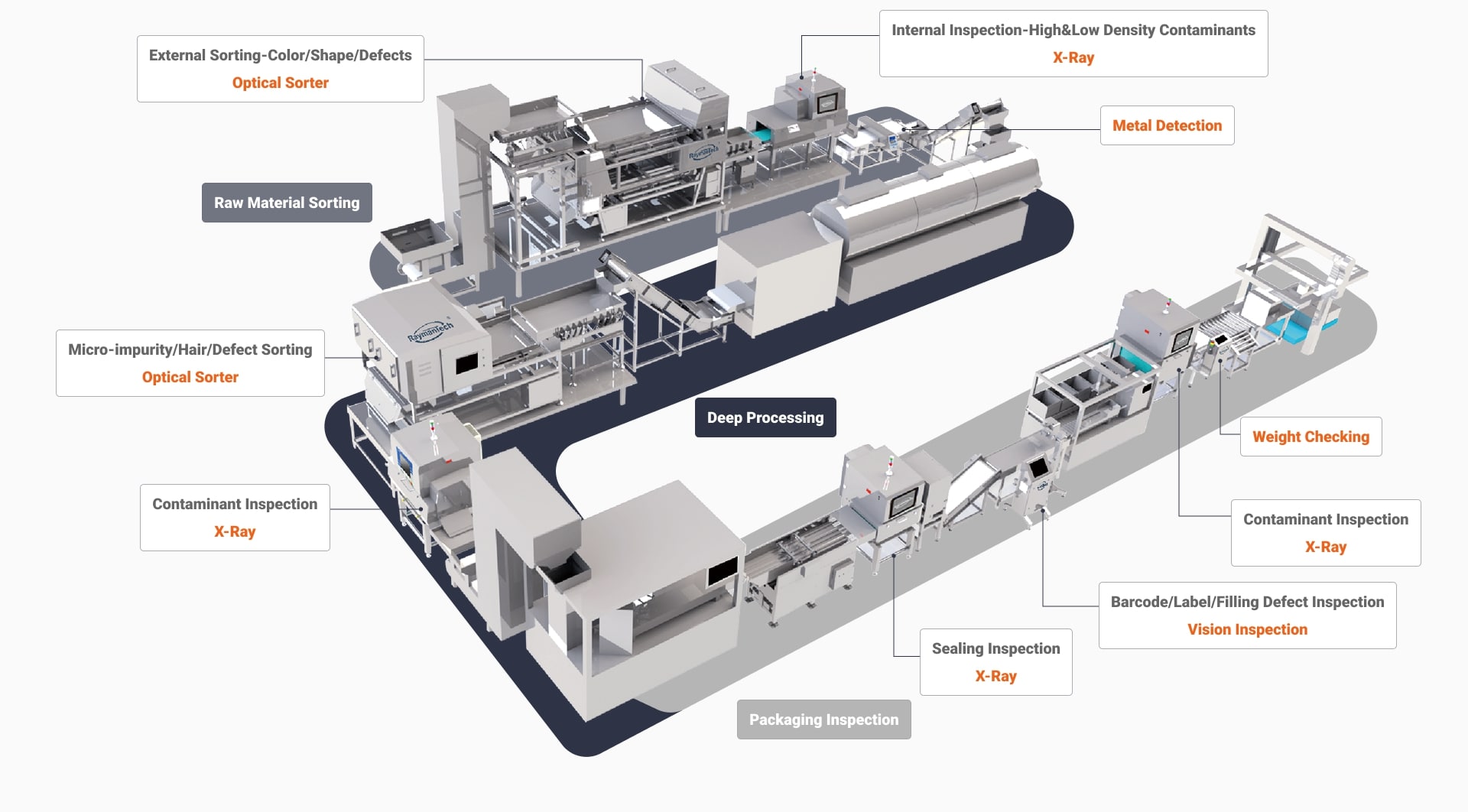
X-ray inspection and optical sorting are important tools in automated food safety systems. RaymanTech’s x-ray inspection uses advanced AI to find both high-density and low-density contaminants. These systems can see inside food and spot things like glass, metal, plastic, and small bones in meat.
X-ray and optical sorting technologies help find and remove foreign materials from food. X-ray machines detect contaminants by density differences. They can find metals, stones, and plastics. Optical sorting uses lasers and cameras to tell products apart by color, size, and shape. Using both methods makes food processing more efficient. It allows early detection and removal of unwanted materials.
RaymanTech’s x-ray inspection systems include the RXI BHD Series for bulk products, the Dual Energy Series for meat, and the Multi Beam Series for drinks. These systems use multi-beam imaging and visible light to improve detection. They can find inside and outside defects, sealing problems, and even tiny impurities in dried vegetables. This level of detail helps smart inspection automation and keeps standards high.
Here is a table comparing traditional inspection and AI-powered systems:
Feature | Traditional Inspection | AI-Powered Systems |
|---|---|---|
Detection of Subtle Defects | Often misses subtle defects and variations | Analyzes texture, color variations, and more |
Learning Capability | Limited by predefined rules | Continuously learns and improves accuracy |
Adaptability | Rigid and inflexible | Highly adaptable to variations |
Real-Time Monitoring | Typically not real-time | Enables continuous oversight and adjustments |
Early Detection | Reactive and late | Proactive and can detect issues early |
Real-Time Analysis and Predictive Capabilities
AI-powered food contamination detection works in real-time. They use smart imaging and spectral analysis to check food as it moves. This means problems are found right away, not later. Real-time visual quality monitoring helps teams make quick choices and keep food safe.
RaymanTech’s solutions use real-time monitoring to give instant feedback. This lowers the risk of recalls and keeps production smooth. AI-powered systems can also predict future problems. They look at data from past inspections, environmental checks, and cleaning logs. This helps companies find trouble spots before they cause contamination.
AI vision finds individual defects and Automated Statistical Process Control (SPC) spots process drift, which can lead to contamination.
Real-time drift detection cuts the time for at-risk production from hours to under one minute, making contamination prevention much better.
AI systems study old data, like environmental monitoring and sanitation logs, to predict possible contamination hotspots.
Automated visual inspection and real-time analysis let companies stop problems before they grow. This proactive way protects both the brand and the consumer. RaymanTech’s advanced ai-powered detection lets companies trace every product digitally, helping with better management and food safety.
Practical Benefits for Food Safety and Efficiency
Enhanced Detection Accuracy and Consistency
AI-powered food contamination detection helps make food safer. Old ways of checking food can miss small or hidden things. AI systems, like RaymanTech’s, use special cameras and sensors to check each item. These systems can find tiny pieces of plastic, glass, or bone. This means there are fewer mistakes and food is safer for everyone.
AI does not get tired or lose focus. It works the same way every time, so results stay the same. AI-powered visual food inspection can run all day and not slow down. This helps companies keep their quality high. Teams can fix problems right away with real-time checks. Automated food safety inspection makes sure every item is safe.
Note: Finding problems quickly and often keeps bad food away from customers.
Cost Reduction and Operational Efficiency
AI-powered systems help companies spend less money. They need fewer workers because machines check food faster and better than people. This means fewer people are needed on the line. RaymanTech’s solutions also help stop product recalls. When detection is good, fewer bad items leave the factory. This saves money on recalls, legal trouble, and lost sales.
AI systems also help food factories work better. They sort and check food fast, so the line keeps moving. Real-time data helps managers make smart choices. If a problem comes up, the system tells staff right away. This quick action cuts waste and keeps things running well.
Here is a table showing some key benefits:
Benefit | Impact on Business |
|---|---|
Labor savings | Fewer workers needed |
Reduced recalls | Lower costs and less waste |
Improved management | Faster decisions with real-time data |
Higher product quality | Stronger brand reputation |
Compliance and Brand Protection
Food companies must follow strict rules to keep food safe. AI-powered detection systems help them follow these rules. X-ray inspection systems, like RaymanTech’s, help meet HACCP, FDA, USDA, and other food safety standards. These systems keep good records and track products, which helps with audits and quality checks.
AI systems help companies stop problems before they happen.
Real-time checks let teams act fast, cut waste, and keep food safe.
Good records and tracking help with audits and following rules.
When companies use new detection technology, they protect their brand. Customers trust brands that give them safe, good food. Using AI and automated food safety inspection shows companies care about safety and quality. This trust helps companies get loyal customers and a good name.
Tip: Using AI-powered detection is not just about rules. It also helps build trust with customers and keeps your brand safe from big mistakes.
Industry Applications and Future Trends
Use Cases Across Food Categories
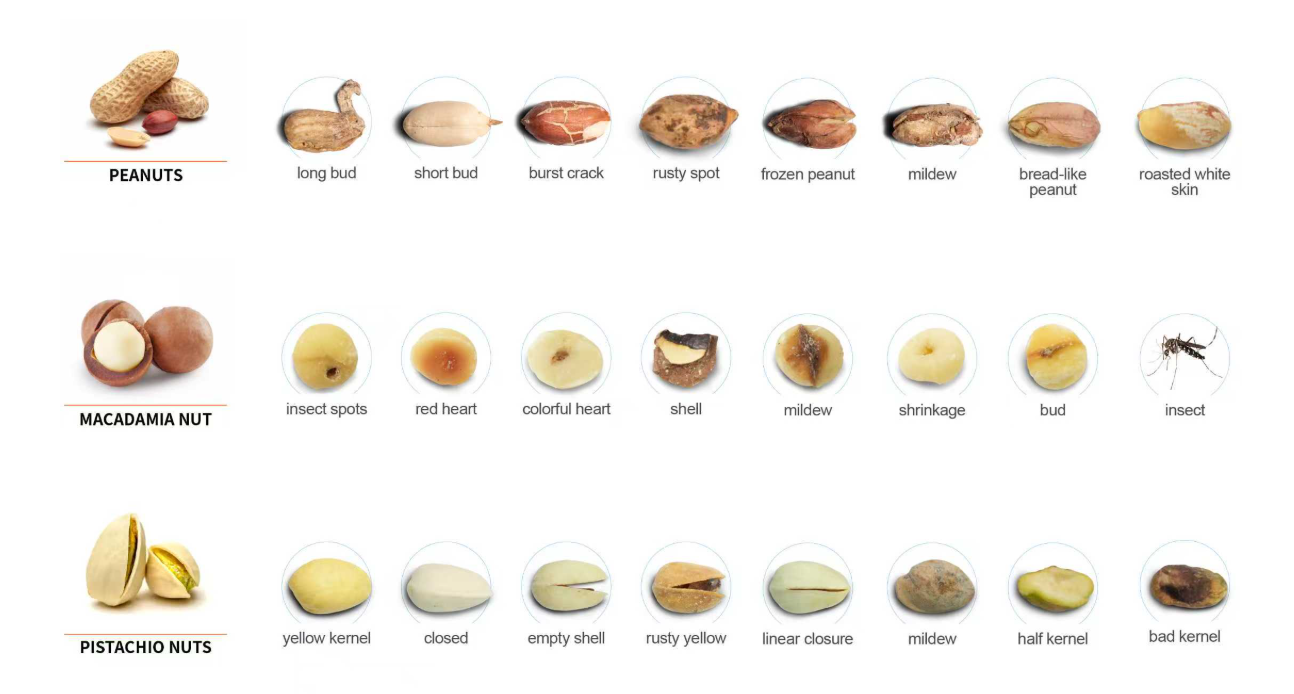
AI is changing how companies check food quality in many areas. RaymanTech’s solutions show how artificial intelligence helps with meat, seafood, drinks, and bulk foods. In meat factories, AI-powered systems scan each piece for bones or fat. This makes sure only safe meat goes to customers. Seafood factories use special cameras to find shells or bones that workers might miss. Beverage companies use multi-beam X-ray systems to check for glass or metal in bottles and cans. Bulk food processors use AI to spot plastic, paper, or other unwanted things in nuts, beans, and dried vegetables.
AI-driven food manufacturing brings many benefits:
Real-time checks look at every product for defects or foreign materials.
Better sorting helps companies trim products and make good choices.
AI helps workers by quickly finding problem items.
Improved traceability means every step gets recorded.
Predictive maintenance fixes machines before they break.
Line-level optimization finds and solves process problems.
Training and standardization get better with clear, objective data.
AI systems can find small defects that people often miss. This cuts waste and makes food safer, especially in dairy and meat. Different detection tools work best for different foods. Metal detectors are common in protein processing. X-ray systems are better for hard materials.
Ongoing Innovation in AI Food Safety
Innovation in AI keeps changing food safety. New vision inspection systems now look at optical signatures to find foreign materials. AI algorithms help machines spot metals, glass, or tiny bits of plastic. Hyperspectral technology gives detailed images without chemicals. Predictive analytics uses old data to warn about risks before they happen.
Real-time monitoring lets companies catch problems right away. Automated compliance checks make sure rules are always followed. Predictive analytics platforms use machine learning to predict where contamination might happen, using data like cleaning logs and past inspections.
Evidence Description | Source |
|---|---|
Predictive analytics platforms use machine learning algorithms to predict potential food safety issues in food processing and supply plants. | Food Safety Article |
AI systems analyze historical data, such as environmental monitoring results, sanitation logs, and process data, to predict where microbial contamination is most likely to occur in a facility. | AI Transforming Food Safety |
The future will have smarter AI that learns from every batch. Investment in AI for food safety is growing fast. Digital tools will help companies track products and manage risks better. As more companies use AI, food makers will see better quality control, fewer recalls, and safer food for everyone.
AI is changing how we find foreign materials in food. It helps inspections go faster and makes them more correct. The results are always the same. Companies save a lot of money and make better products. For instance, bakeries that use AI vision inspection can save $370,000 each year. They get their money back in about 18 months.
Aspect | Value |
|---|---|
Total Annual Savings | $370,000 |
ROI | ~18 months |
Both companies and customers get good things from this. There are fewer recalls and food is safer. People trust the food more. To keep up with the future, companies should:
Pick AI tools that give real-time updates and spot dangers.
Use both X-ray and metal detection for better safety.
Learn about new AI and IoT tools for food safety.
FAQ
What is foreign material detection in food?
Foreign material detection means finding things in food that should not be there. These can be pieces of glass, plastic, metal, or bone. Food factories use special machines to keep food safe for people.
How does AI improve food safety?
AI uses smart computers to check food quickly and carefully. It finds small or hidden objects that people might miss. This helps stop recalls and keeps food safe for everyone.
What types of contaminants can RaymanTech’s AI systems detect?
RaymanTech’s AI systems can find metals, glass, plastic, paper, bones, and shells. They work with many foods, like meat, seafood, drinks, nuts, and vegetables.
Why do companies choose AI-powered inspection over manual checks?
AI-powered inspection works faster and does not get tired. It checks every item with the same care. This means fewer mistakes and safer food for customers.
Is AI inspection hard to use in a food factory?
Most AI systems, like RaymanTech’s, are user-friendly. Staff can learn to use them quickly. The machines give clear results and help teams make smart choices.