How AI optical sorter learned to spot a bad bean
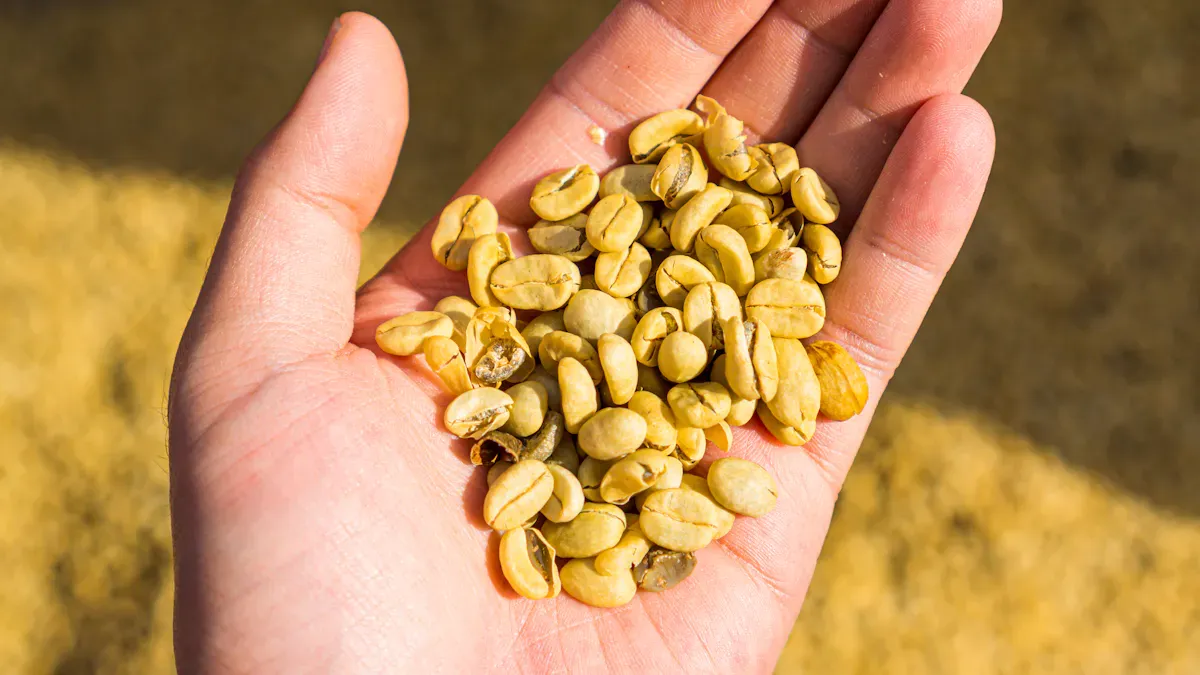
Manual bean sorting often leaves many defects undetected, leading to consumer complaints and safety concerns. The AI optical sorter uses high-speed vision and advanced algorithms to identify and remove shriveled beans, color defects, and foreign contaminants. RaymanTech offers this technology, helping food processors achieve higher accuracy and reliability. The difference is clear when comparing defect rates:
Sorting Method | Defect Rate (%) |
|---|---|
Manual Sorting | Up to 15 |
AI Optical Sorting | As low as 2 |
Accurate identification protects both product quality and consumer safety.
Key Takeaways
AI optical sorters significantly reduce defect rates in bean sorting, achieving accuracy as low as 2%, compared to manual sorting which can reach up to 15%.
Advanced technologies like multi-beam imaging and real-time analysis allow AI sorters to detect subtle defects and contaminants, ensuring higher product quality and safety.
The use of deep learning algorithms enables AI sorters to continuously improve their detection capabilities, adapting to new types of beans and production needs without reprogramming.
RaymanTech's optical sorter combines various technologies, including X-ray and ultra-HD color sorting, to provide comprehensive quality assurance and reduce waste in food processing.
Implementing AI sorting technology not only enhances efficiency but also boosts customer satisfaction by delivering consistently high-quality beans.
Industry Challenges in Bean Sorting
Manual Sorting Limitations
Sorting beans by hand has been the standard for many years. Workers look for visible defects and try to remove bad beans from the batch. However, this process is slow and often inconsistent. Manual sorting cannot keep up with the speed required for large-scale production. Workers may miss small defects or foreign materials, especially when sorting for long hours. In some regions, low labor costs make manual sorting seem practical, but the results often fall short of quality standards. Inconsistent sorting leads to more defective beans in the final product, which can cause problems for both producers and consumers.
Manual sorting is less accurate and much slower than automated methods. This can result in more defects making it through to the final product, which is a major concern for food safety and customer satisfaction.
Common Bean Defects
Beans can develop many types of defects during their journey from farm to table. These defects can appear at different stages, such as during farming, processing, or storage. Some common defects include shriveled beans, broken pieces, and color defects. Foreign contaminants like stones, metal fragments, or glass can also mix in with the beans. These issues not only lower the quality of the product but also create safety risks.
Challenge | Impact on Production Quality |
|---|---|
Agricultural practices | Defects from pests like the coffee berry borer affect quality. |
Processing methods | Inadequate processing leads to irreversible quality deterioration. |
Post-harvest stages | Critical points like fermentation and drying can cause defects. |
Defective beans, such as quakers, reduce yield and increase waste.
The presence of defects lowers the quality of the final product and can lead to unhappy customers.
Advanced sorting technology helps reduce defects and improve consistency.
Persistent quality issues in bean sorting can disrupt the supply chain and lead to more consumer complaints. Companies like RaymanTech focus on removing these defects to ensure a safer and higher-quality product.
RaymanTech AI Optical Sorter Technology
High-Speed Vision and Detection
RaymanTech’s ai optical sorter uses advanced optical detection system technology to scan beans at incredible speed. Multi-beam imaging allows the equipment to capture detailed pictures of each bean, making it possible to spot even the smallest defects. Real-time analysis ensures that defective beans are removed instantly. The optical sorting equipment achieves recognition accuracy rates up to 99.9% when properly configured. This level of precision is possible because the ai intelligent analysis system evaluates multiple attributes at once.
Feature | Description | Benefit |
|---|---|---|
Uses multiple beams of light for enhanced imaging. | Increases detection of subtle defects. | |
Real-time Analysis | Analyzes various attributes instantly. | Ensures immediate removal of defective items. |
RaymanTech’s high quality optical sorters combine AI vision, X-ray, TDI imaging, and ultra-HD color sorting. Each technology serves a unique purpose. AI vision uses ultra-high definition cameras and operates reliably in wet or dusty environments. TDI imaging adapts resolution for the smallest contaminant detection. X-ray technology finds internal defects and foreign objects. Ultra-HD color sorting checks product integrity and supports remote data transfer.
Technology | Features | Applications |
|---|---|---|
AI Vision | AI-powered sorter system, ultra-high definition camera, IP65 protection | Used for rice, beans, nuts, seeds, plastics. Detects impurities with different colors. |
TDI Imaging | 0.1mm TDI-detector, adaptable resolution, IP67 inspection tunnel | Smallest contaminant detection, adaptable resolution. |
X-ray | TDI-detector, high resolution, IP66 body, virtual weighing | Finds smallest contaminants in packaged products. |
Ultra-HD Color Sorting | AI-powered TDI-detector, high resolution, IP69K body, remote support | Checks product integrity, detects smallest contaminants. |
Deep Learning for Accurate Identification
The ai optical sorter uses deep learning algorithms to improve detection. The automated sorting system learns from thousands of images and data points. It can distinguish between good and defective beans by evaluating color, shape, size, and texture.
Attribute | Description |
|---|---|
Color | Evaluates the color of the beans to identify defects. |
Shape | Assesses the shape to detect irregularities. |
Size | Measures size to ensure uniformity. |
Texture | Analyzes texture for surface-level defects. |
The optical sorting equipment detects subtle defects such as hair, mold, cracks, black spots, insect damage, and broken or chipped pieces.
AI and multispectral imaging identify surface-level defects, while bulk X-ray inspection ensures thorough quality assurance by detecting internal defects.
Cloud-based data modeling allows the ai optical sorter to get smarter over time. The algorithm updates itself with every batch, increasing recognition accuracy and reducing errors. This process ensures that the optical sorting equipment delivers consistent results and maintains high standards for bean quality.
RaymanTech’s ai optical sorter combines speed, precision, and intelligent analysis to deliver reliable sorting performance for food processors.
Bean Color Sorter Workflow
Feeding and Distribution
The bean color sorter begins its process with careful feeding and distribution. Beans are poured into a hopper, which acts as the starting point for the entire workflow. The system uses a conveyor to move the beans forward. This conveyor ensures that the beans spread out evenly, which prevents congestion and overlap. When beans move in a single layer, the machine can see each one clearly. This step is important because it increases the accuracy of defect detection later in the process.
A smooth and consistent flow of beans helps the sorter identify individual beans and reduces the chance of missing defects.
RaymanTech’s equipment uses advanced feeding mechanisms to maintain a steady pace. This design supports high sorting efficiency and keeps the process running without interruption. The hygienic construction of the feeding system also helps maintain food safety standards.
Optical Feature Detection
Once the beans are distributed, the next step is optical feature detection. The bean color sorter uses powerful LED lights to illuminate the beans as they pass through the inspection area. High-resolution cameras, such as CCD sensors, capture detailed images of each bean. These images reveal subtle differences in color, shape, and surface texture.
The system analyzes these images to find defects that are hard to spot with the human eye. For example, it can detect shriveled beans, color defects, and even tiny spots or cracks. The technology can also identify foreign materials that do not match the expected color profile of beans.
The accuracy of this detection method is impressive. Different models of image analysis systems have been tested for their ability to spot defects in beans. The table below shows the accuracy rates for several popular models:
Model | Accuracy Rate |
|---|---|
VGG16 | 90% |
AlexNet | 78.49% |
CNN | 74.55% |
ResNet-18 | 93.9% |
YOLOv9 | 74.55% - 96.3% |
RaymanTech’s bean color sorter uses advanced models to achieve high accuracy. This ensures that even the smallest color differences and defects are detected before the beans move to the next stage.
AI Classification and Rejection
After capturing and analyzing the images, the AI system takes over for classification and rejection. The bean color sorter compares each bean’s features to a database of acceptable standards. The AI evaluates color, shape, size, and texture to decide if a bean meets quality requirements.
If the AI finds a defect, it triggers a high-speed air jet. This air jet quickly removes the defective bean from the main flow. The multi-channel rejection system can handle many beans at once, which boosts sorting performance and reduces the risk of good beans being lost.
The step-by-step process can be summarized as follows:
Feeding and smoothing: Beans enter the hopper and move evenly along the conveyor.
Optical capture: LED lights and cameras highlight and record each bean’s color and shape.
Intelligent analysis: The AI system checks each bean for defects using a detailed model.
Precise rejection: Air jets remove only the defective beans, leaving the good ones for packaging.
RaymanTech’s hygienic design ensures that all parts of the bean color sorter are easy to clean and maintain. This reduces contamination risks and supports food safety.
The combination of high-speed analysis, precise sorting, and multi-channel rejection allows RaymanTech’s bean color sorter to deliver reliable results. Food processors benefit from fewer defects, better product quality, and improved customer satisfaction.
Ensuring Accurate Identification and Quality
Reducing Errors and False Positives
RaymanTech’s AI optical sorter uses advanced technology to improve the accuracy of bean sorting. The system combines AI and machine learning to reduce errors and false positives. This means fewer good beans are thrown away by mistake, and more defective beans are removed. The sorter adapts to new types of beans and changing production needs without needing to be reprogrammed.
The table below shows how RaymanTech’s system compares to traditional inspection methods:
Feature | Traditional Inspection | AI-based Inspection |
|---|---|---|
False Positives | High rates, up to 50% | Cuts false positives by up to 90% |
Adaptability | Rigid; needs reprogramming | Learns from data; adapts quickly |
Defect Detection | Misses subtle or new defects | Finds complex defects |
RaymanTech’s sorter uses sensor fusion and hyperspectral imaging. These features help the machine spot defects and contaminants that are hard to see. The system checks each bean for color, shape, and size differences. This leads to more accurate identification and better quality control.
Real-World Impact on Bean Quality
RaymanTech’s solution has changed the way food processors handle beans. The sorter detects and removes discolored pieces and other defects with high accuracy. This reduces waste and improves the overall quality of the product.
The system uses AI and multispectral imaging to find surface-level defects like color and skin blemishes.
Bulk X-ray inspection works alongside the sorter for complete quality assurance.
The hygienic design makes cleaning easy and keeps the production line safe.
The table below highlights the advantages of RaymanTech’s AI optical sorter over traditional systems:
Feature | RaymanTech AI Optical Sorter | Traditional Optical Sorter |
|---|---|---|
Micro-impurities detection | Yes | Limited |
Subtle surface defects sorting | Yes | No |
Flexibility for irregular products | Yes | No |
Spotting color/shape/size differences | Yes | Limited |
AI support with large database | Yes | No |
RaymanTech’s technology ensures accurate identification of defects and delivers consistent quality. Food processors see less material loss and higher yields. Customers receive beans that meet strict quality standards every time.
AI optical sorters and color sorters now deliver up to 99.9% accuracy, ensuring every bean meets strict quality standards. RaymanTech’s advanced technology and commitment to product quality set new benchmarks in intelligent inspection.
Future Trends in Intelligent Inspection | Description |
|---|---|
Advanced Sensors | High-resolution cameras and lasers improve defect detection. |
Data Analytics | Sorting data reveals patterns and optimizes processes. |
The future promises even smarter, more efficient inspection systems for food processing.
FAQ
What types of defects can the optical sorter detect in coffee beans?
The optical sorter identifies defects like color changes, cracks, shriveling, and foreign objects. The system uses advanced cameras and sensors to spot even small imperfections. This helps remove defective coffee beans before they reach the next stage of coffee processing.
How does the rejection execution system work in the optical sorter?
The rejection execution system uses high-speed air jets. When the system finds a defect, the jets push the bad bean out of the main flow. This ensures only qualified beans continue through the coffee production line.
Why is accurate rejection important for coffee quality?
Accurate rejection keeps defective coffee beans out of the final product. The system ensures only qualified beans are packaged. This protects coffee flavor and safety. The sorter reduces waste and improves customer satisfaction.
Can the optical sorter adapt to different coffee varieties?
Yes. The system uses AI and deep learning. It learns from each batch and adjusts settings for different coffee types. This flexibility helps the sorter maintain high accuracy for all coffee varieties.
How does the system handle high-speed coffee processing?
The optical sorter scans beans quickly. The system uses real-time analysis and a fast rejection execution system. This allows the sorter to keep up with large-scale coffee processing without missing defects or slowing down production.