Everything You Need to Know About 904L Stainless Steel Flanges
Engineers design 904L Stainless Steel Flanges as high-alloy components for superior performance in highly corrosive environments. These parts are essential for connecting pipes, valves, and pumps within critical industrial piping systems. Their unique composition, rich in nickel, chromium, and molybdenum, provides exceptional resistance to a wide range of acids and chloride-induced corrosion.
Their robust performance significantly surpasses that of standard grades like Stainless Steel 304 Flanges, especially in aggressive chemical settings.
Key Takeaways:
- Engineered for highly corrosive environments.
- Connects critical industrial piping components.
- Unique composition offers superior acid resistance.
Key Takeaways
- 904L stainless steel flanges work well in very harsh places. They resist strong acids and salt damage better than regular steel.
- These flanges keep pipes, valves, and pumps connected. They are important for safety and long-lasting use in factories.
- 904L steel saves money over time. It needs less repair and lasts longer, even if it costs more at first.
- You can use 904L flanges in many industries. These include chemical plants, oil and gas, food processing, and places with seawater.
- 904L flanges are easy to weld and shape. This helps make different types of flanges for many uses.
Key Benefits of Using 904L Stainless Steel Flanges
Operators choose 904L stainless steel for its unique combination of properties. This material delivers reliability where standard steels fall short. Its advanced composition provides a significant return on investment through enhanced safety, reduced downtime, and extended service life in demanding industrial environments.
Exceptional Corrosion Resistance
The primary advantage of 904L steel is its outstanding ability to resist corrosion. Its high alloy content, including significant amounts of nickel, chromium, molybdenum, and copper, creates a robust defense against aggressive chemicals. This makes it an ideal choice for systems handling strong reducing acids.
The material shows excellent performance against a variety of corrosive agents:
- Sulfuric Acid: It offers full resistance across the entire concentration range (0-100%) at temperatures up to 95°F (35°C).
- Phosphoric Acid: It provides very good corrosion resistance in pure phosphoric acid.
- Organic Acids: It demonstrates good resistance to most organic acids, like formic acid.
- Hydrochloric Acid: It shows better resistance than traditional stainless steels in low concentrations of 1-2%.
Note: The addition of copper to 904L's composition specifically enhances its performance against sulfuric acid, a common challenge in chemical processing.
This grade's resistance to localized corrosion, such as pitting and crevice corrosion, is also superior. This is measured by the Pitting Resistance Equivalent Number (PREN). A higher PREN indicates better resistance. With a PREN of approximately 43, 904L's performance is comparable to many super duplex stainless steels.
| Feature | 904L | 316Ti | Notes |
|---|---|---|---|
| PREN | 43-47 | 23-28 | 904L's higher PREN indicates superior pitting resistance. |
| Molybdenum (Mo) | 4.00-5.00% | 2.00-3.00% | Higher Mo in 904L significantly boosts its PREN. |
| Copper (Cu) | 1.00-2.00% | - | Copper in 904L enhances its resistance to sulfuric acid. |
Key Points:
- 904L offers premier resistance to strong acids like sulfuric and phosphoric acid.
- Its high PREN value signifies exceptional protection against pitting and crevice corrosion.
High Strength and Durability
904L stainless steel combines its corrosion resistance with impressive mechanical strength. This ensures that flanges made from this material can withstand high-pressure conditions and mechanical stress without failure. The material's robust nature contributes directly to the safety and integrity of a piping system.
Engineers specify 904L for its reliable mechanical properties. It possesses a minimum tensile strength of 490 MPa (71,000 psi) and a minimum yield strength of 220 MPa (32,000 psi). This strength ensures that 904L Stainless Steel Flanges maintain their structural form under significant operational loads, preventing leaks and ensuring system stability. The inherent toughness of this austenitic steel also provides excellent durability against physical impacts and vibrations.
Key Points:
- The material has a high tensile and yield strength for high-pressure applications.
- Its durability ensures long-term structural integrity and operational safety.
Superior Heat Resistance
Industrial processes often involve a wide range of operating temperatures. 904L stainless steel performs reliably across a broad thermal spectrum. It maintains its strength and corrosion-resistant properties at both elevated and cryogenic temperatures. The material exhibits strong oxidation resistance up to 1550°F (approximately 843°C). However, experts do not recommend its use above 1600°F (870°C) to avoid potential strength degradation.
Furthermore, 904L demonstrates excellent performance in cyclic thermal environments. Its stable austenitic structure and high alloy content give it great fatigue resistance. This allows the material to maintain its mechanical integrity even when subjected to repeated temperature fluctuations. This quality is crucial in applications like power generation and chemical plants, where thermal cycling can induce stress and fatigue in lesser materials.
Key Points:
- 904L maintains its properties across a wide temperature range.
- It shows excellent fatigue resistance in environments with fluctuating temperatures.
Excellent Weldability and Formability
Despite its high alloy content, 904L stainless steel offers excellent fabrication characteristics. Its low carbon content is a significant advantage. This composition minimizes the risk of carbide precipitation during welding, which preserves the material's corrosion resistance in the heat-affected zone (HAZ). This makes post-weld heat treatment unnecessary in most situations, simplifying the fabrication process.
Fabricators can use several standard welding methods to join 904L components. The choice of technique often depends on the application's specific requirements, such as material thickness and desired weld quality. Common and effective methods include:
- TIG (Tungsten Inert Gas) welding: This method offers precise control and is ideal for creating clean, high-quality welds.
- MIG (Metal Inert Gas) welding: This technique uses a consumable wire electrode, allowing for faster welding speeds suitable for a range of thicknesses.
- SMAW (Shielded Metal Arc Welding): A versatile and traditional method, stick welding is widely used for repairs and general fabrication.
- SAW (Submerged Arc Welding): This high-productivity process is excellent for welding thick-walled pipes and vessels, providing deep penetration and high deposition rates.
Beyond its weldability, the material's austenitic structure gives it great formability. Manufacturers can cold-form 904L stainless steel into various complex shapes without it becoming brittle. This property is essential for producing different types of 904L Stainless Steel Flanges, ensuring they meet precise dimensional specifications while retaining their mechanical integrity.
Key Points:
- The material is easily welded using standard techniques without losing corrosion resistance.
- Its excellent formability allows for the creation of complex component shapes.
Low Maintenance and Long-Term Value
The superior properties of 904L stainless steel directly translate into minimal maintenance requirements and outstanding long-term value. Its exceptional resistance to corrosion and stress cracking means that piping systems built with it are less prone to leaks, failures, and degradation. This inherent durability reduces the need for frequent inspections, repairs, and component replacements.
Choosing 904L is a strategic financial decision that prioritizes long-term performance over initial expenditure. While the upfront material cost is higher than for standard grades like 316L, the total cost of ownership is significantly lower.
The investment pays for itself over the asset's lifecycle. Reduced downtime, lower labor costs for maintenance, and the avoidance of production losses from system failures contribute to a superior return on investment. This makes 904L the most economical choice for critical applications where reliability is paramount.
Ultimately, specifying this grade enhances operational safety and ensures system integrity for decades. It provides plant operators with peace of mind, knowing their critical infrastructure is protected against the most aggressive industrial conditions.
Key Points:
- Its robust nature drastically reduces the need for maintenance and repairs.
- It offers a lower total cost of ownership, providing excellent long-term economic value.
Top Industrial Applications for 904L Stainless Steel Flanges
The unique properties of 904L stainless steel make it an indispensable material in industries where corrosion can lead to catastrophic failures. Its reliability ensures operational safety and efficiency in the most challenging environments. Operators across various sectors specify this super-austenitic grade for critical systems that handle aggressive substances.
Chemical and Petrochemical Processing
Chemical and petrochemical plants present some of the most aggressive corrosive environments in any industry. The presence of strong acids, chlorides, and high temperatures can quickly degrade standard materials. 904L stainless steel excels in these conditions, providing long-term stability for critical infrastructure. Its high alloy content offers robust protection against a wide array of aggressive media.
Plant operators frequently use 904L for equipment handling chemicals such as:
- Sulfuric acids
- Phosphoric acid
- Hydrochloric acids
- Organic acids
- Alkaline solutions
Phosphoric acid production facilities, for example, routinely specify 904L for handling wet-process phosphoric acid. This is especially true where fluoride contamination creates extremely aggressive conditions. The material is essential for components like evaporators, heat exchangers, and piping systems.
In sulfuric acid plants, 904L is the material of choice for absorption towers, acid coolers, and storage tanks. It performs reliably where concentrations and temperatures exceed the capabilities of 316L steel. The use of 904L Stainless Steel Flanges and associated pipework ensures leak-free connections and system integrity, preventing hazardous spills and costly downtime.
Key Points:
- 904L provides superior resistance to a broad spectrum of acids and chemicals.
- It is a standard material in sulfuric and phosphoric acid production.
- Its use ensures the safety and longevity of critical processing equipment.
Oil and Gas Industry
The oil and gas industry faces significant corrosion challenges, from downhole environments to topside processing facilities. Sour gas (containing hydrogen sulfide, H₂S) and high-chloride environments, such as offshore platforms, create conditions ripe for stress corrosion cracking (SCC) and pitting. 904L stainless steel offers a reliable solution for these demanding applications.
Its high nickel content provides excellent resistance to chloride-induced SCC, a common failure mode for lower-grade stainless steels in marine or brine-rich environments. Furthermore, its robust resistance to general and localized corrosion makes it ideal for handling crude oil and natural gas streams that contain corrosive compounds.
In offshore oil and gas production, 904L is used for piping systems, heat exchangers cooled by seawater, and various process vessels. Its durability minimizes maintenance on remote platforms, where repairs are difficult and expensive.
The material's strength and toughness also make it suitable for high-pressure pipelines and components. It ensures that the infrastructure can withstand the mechanical stresses of extraction and processing while resisting the chemical attack from the processed fluids.
Key Points:
- The material offers excellent resistance to chloride stress corrosion cracking.
- It is ideal for offshore platforms and sour gas processing.
- Its durability reduces maintenance needs in remote and harsh locations.
Pharmaceuticals and Food Processing
Purity and hygiene are paramount in the pharmaceutical and food processing industries. Materials used in these sectors must not react with the products or contaminate them in any way. At the same time, they must withstand aggressive cleaning agents used during sterilization cycles. 904L stainless steel meets these stringent requirements perfectly.
While 316L is common in this sector, 904L provides a necessary upgrade for more demanding processes. This includes manufacturing products with high salt or chloride content, such as certain sauces, brines, and pharmaceutical saline solutions. The superior pitting and crevice corrosion resistance of 904L ensures a smooth, cleanable surface that does not harbor bacteria or contaminants.
Its resistance to a wide range of organic and inorganic acids also makes it suitable for processing various food products and active pharmaceutical ingredients (APIs). The material's durability ensures that tanks, piping, and flanges maintain their integrity over countless production and cleaning cycles, safeguarding product quality and consumer safety.
Key Points:
- 904L prevents product contamination and withstands aggressive cleaning agents.
- It offers superior performance in processes involving high salt or chloride content.
- Its corrosion resistance ensures a hygienic surface that is easy to sterilize.
Pulp and Paper Manufacturing
The pulp and paper industry relies on aggressive chemical processes to break down wood fibers and bleach pulp. These processes, particularly in bleach plants, create an environment that is extremely corrosive to most metals. The use of strong oxidizing agents like chlorine dioxide demands materials with exceptional resilience. 904L stainless steel provides a robust solution for this sector.
The material's high alloy composition gives it a distinct advantage in resisting chemical attack. Its performance stems from several key characteristics:
- It contains high levels of nickel and molybdenum, which fortify it against general corrosion.
- It shows excellent resistance to chloride-induced pitting and stress corrosion cracking.
- Its austenitic structure provides toughness and durability under operational stress.
In pulp bleaching stages, equipment is constantly exposed to wet chlorine and chlorine dioxide. 904L's superior resistance ensures that critical components like drums, vats, and piping systems maintain their structural integrity, preventing costly failures and production halts.
While other alloys may be used, operators specify 904L for the most critical areas where reliability cannot be compromised. Its use guarantees a longer service life and reduces maintenance schedules in the mill's most aggressive zones.
Key Points:
- 904L withstands highly corrosive bleaching agents like chlorine dioxide.
- Its high alloy content prevents pitting and stress corrosion cracking.
- It ensures the longevity of critical equipment in bleach plants.
Seawater and Marine Applications
Seawater is notoriously corrosive due to its high chloride content, which relentlessly attacks conventional stainless steels. This makes material selection critical for marine applications and coastal facilities like desalination plants. 904L stainless steel is a premier choice for these environments, offering outstanding performance where 316L would quickly fail.
Its high PREN value gives it exceptional resistance to pitting and crevice corrosion in saltwater. This makes it ideal for systems that continuously handle seawater, whether for cooling, processing, or desalination. The use of 904L Stainless Steel Flanges ensures secure, leak-proof connections that withstand the harsh marine atmosphere and direct saltwater exposure.
Engineers specify this grade for a wide range of marine and coastal equipment, including:
- Seawater Reverse Osmosis (SWRO) systems in desalination plants.
- Heat exchangers, pumps, and valves that use seawater for cooling.
- Piping and fittings on offshore oil and gas platforms.
- Subsea infrastructure and shipbuilding components.
In desalination plants, 904L is used for high-pressure piping and components that handle concentrated brine. Its ability to resist corrosion ensures the purity of the produced fresh water and the long-term reliability of the entire system.
The durability of 904L minimizes the need for maintenance and replacement in these often remote and difficult-to-access locations, providing significant long-term value and operational security.
Key Points:
- The material offers excellent resistance to chloride corrosion from seawater.
- It is a top choice for desalination plants and offshore platforms.
- Its durability reduces maintenance costs in harsh marine environments.
Why Choose 904L Flanges Over Other Grades?
Selecting the correct flange material is critical for ensuring the safety, longevity, and efficiency of a piping system. While many stainless steel grades exist, 904L offers a unique set of advantages for specific, highly demanding applications. Understanding its performance against other common alloys helps engineers make informed decisions.
Comparison with 316L Stainless Steel
Grade 316L is a widely used stainless steel known for its good corrosion resistance. However, 904L provides a significant performance upgrade in more aggressive environments. The primary difference lies in their ability to handle chlorides and strong acids. Standard austenitic grades like 316L are susceptible to chloride-induced stress corrosion cracking (SCC). In contrast, 904L offers excellent resistance to SCC due to its much higher nickel content.
| Element | 316L (%wt) | 904L (%wt) |
|---|---|---|
| Nickel (Ni) | 10.0 – 14.0 | 23.0 – 28.0 |
This superior resistance is a crucial safety factor in applications like heat exchangers and pressure vessels. While 904L has a higher initial price due to its rich alloy composition, its extended service life in harsh conditions often leads to a lower total cost of ownership. For moderately corrosive settings, 316L remains an economical choice.
Comparison with Duplex Stainless Steels
Duplex stainless steels, like grade 2205, are known for their high strength and good resistance to SCC. They possess a mixed microstructure of austenite and ferrite. However, 904L, a fully austenitic grade, is often the superior choice in applications demanding exceptional resistance to specific chemicals.
Engineers specify 904L over duplex steel in environments with strong reducing acids. Its composition, including added copper, provides enhanced performance against sulfuric and phosphoric acids where duplex grades may struggle. For severe chemical processing where predictable corrosion resistance is paramount, 904L offers more reliable and consistent performance.
Comparison with Super Duplex Steels
Super duplex steels represent the pinnacle of strength and corrosion resistance among stainless steels. They contain even higher levels of chromium, molybdenum, and nitrogen than standard duplex grades. The choice between 904L and super duplex depends on the primary operational challenge.
- 904L Stainless Steel: A super-austenitic grade with high nickel and added copper, offering excellent formability and superior performance in many acidic environments.
- Super Duplex Steel: A grade with a balanced microstructure, providing exceptional strength (often double that of 904L) and premier resistance to chloride pitting.
While super duplex excels in high-stress, high-chloride environments, 904L provides better flexibility in fabrication and is specifically formulated for broad resistance to acids. The selection depends on whether the application prioritizes extreme mechanical strength or specialized acid resistance and formability.
Key Points:
- 904L offers superior resistance to stress corrosion cracking compared to 316L.
- It provides better performance in strong reducing acids than duplex steels.
- It offers excellent formability and specialized acid resistance compared to the higher strength of super duplex steels.
Common Types of 904L Stainless Steel Flanges
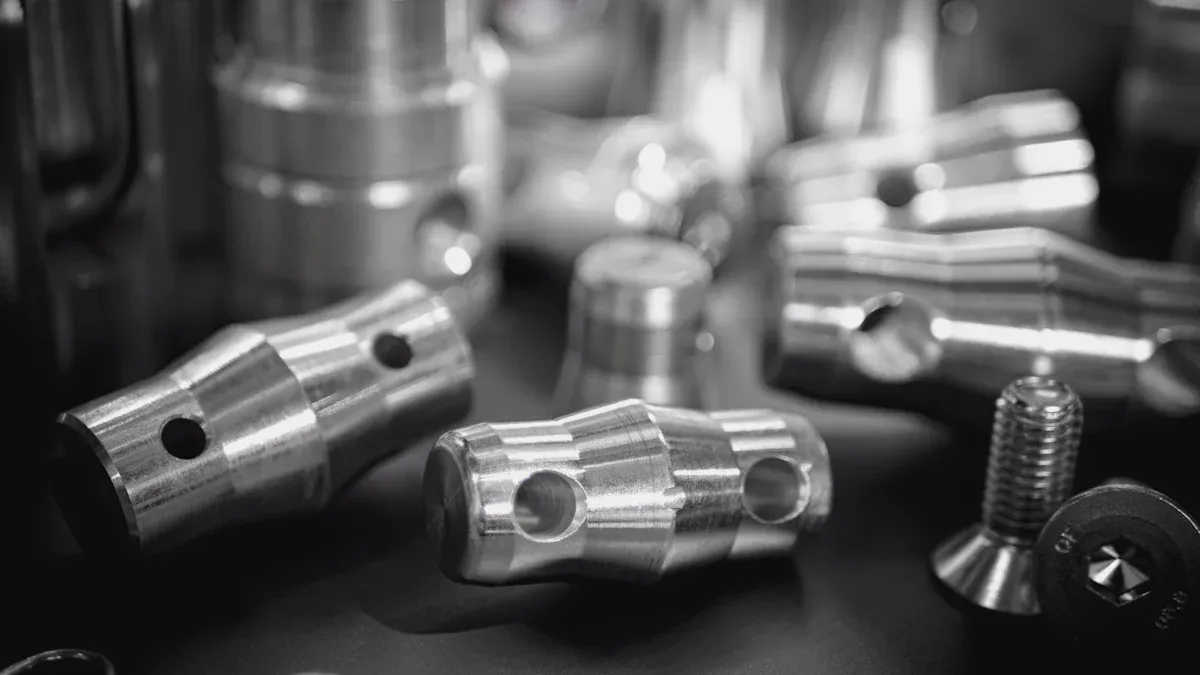
Manufacturers produce 904L stainless steel flanges in various designs to meet specific connection requirements in industrial piping systems. Each type offers distinct advantages for assembly, pressure handling, and flow dynamics. Selecting the appropriate flange type is essential for ensuring system integrity and performance.
Weld Neck Flanges
Weld neck flanges feature a long, tapered hub that provides crucial reinforcement in high-pressure and high-temperature applications. Technicians weld these flanges directly to the pipe with a full penetration butt weld. This design transfers stress from the flange to the pipe, reducing high stress concentration at the base of the hub. The smooth transition between the pipe and flange bore also minimizes turbulence and erosion.
This design is the preferred choice for critical services. The circumferential weld is easily inspected with radiography to ensure a high-quality, leak-proof joint.
Operators use them across numerous demanding sectors:
- Oil and Gas: For high-pressure pipelines and offshore platforms.
- Chemical Processing: In reactors and equipment handling corrosive substances.
- Power Generation: Within boilers and heat exchangers subject to thermal stress.
- Pulp and Paper: To resist corrosive bleaching agents.
Key Points:
- Ideal for high-pressure, high-temperature, and critical applications.
- Tapered hub provides excellent stress distribution.
- Butt weld design allows for easy radiographic inspection.
Slip-On Flanges
Slip-on flanges have a slightly larger inner diameter than the pipe's outer diameter. This design allows the pipe to slide into the flange before welding. Installers then apply two fillet welds, one on the inside and one on the outside, to secure the connection. This type is generally easier to align than a weld neck flange and has a lower initial cost.
However, their strength under internal pressure is typically lower than that of weld neck flanges. This makes them better suited for low-pressure, less critical applications where high stress is not a concern.
Key Points:
- Cost-effective and easy to install.
- Secured with two fillet welds.
- Best suited for low-pressure and non-critical systems.
Blind Flanges
A blind flange is a solid plate with bolt holes but no central opening. Its primary function is to seal the end of a piping system or a vessel nozzle. Maintenance crews use blind flanges to isolate sections of a pipeline for repairs, inspection, or pressure testing. They also provide an easy access point for future system expansion.
Because a blind flange must withstand the full system pressure and bolt loading, its design is robust. It effectively acts as a solid cap, ensuring a secure and reliable closure for the pipeline.
Key Points:
- Used to seal or terminate a pipeline.
- Essential for maintenance, pressure testing, and system isolation.
- Must withstand the full operating pressure of the system.
Socket Weld Flanges
Socket weld flanges provide a strong connection for small-bore, high-pressure piping systems. Installers insert the pipe end into a recessed socket on the flange. They then apply a single fillet weld around the outside of the hub to secure the joint. This design creates a smooth bore with good flow characteristics, minimizing turbulence within the pipe.
The primary advantage of a socket weld flange is its high structural strength. The socket provides excellent support for the pipe, making the connection robust and durable under pressure and vibration.
However, a small gap remains between the pipe end and the bottom of the socket. This crevice can trap corrosive fluids, potentially leading to crevice corrosion over time. For this reason, engineers often prefer butt weld connections for the most critical and highly corrosive services.
Key Points:
- Designed for small-diameter, high-pressure lines.
- The pipe sits in a socket and is secured with an external fillet weld.
- Offers high structural strength and good flow.
Lap Joint and Threaded Flanges
Lap joint and threaded flanges offer unique solutions for specific assembly needs, particularly where welding is difficult or frequent disassembly is required.
Lap Joint Flanges A lap joint connection consists of two components: a stub end and a backing flange. Welders attach the 904L stub end to the pipe. The 904L backing flange then slides freely over the stub end. This design allows the flange to rotate for easy bolt hole alignment.
A key benefit is cost savings. Only the stub end, which contacts the corrosive fluid, needs to be made of 904L. The backing flange can be a lower-cost material like carbon steel.
Threaded Flanges Threaded flanges feature internal (female) threads that screw onto a pipe with matching external (male) threads. This design allows for assembly without any welding.
- Ideal for explosive environments: They are used in areas where welding sparks pose a significant safety hazard.
- Application limits: Their use is generally restricted to low-pressure, small-diameter piping systems.
Key Points:
- Lap joint flanges simplify alignment and can reduce costs in certain applications.
- Threaded flanges enable weld-free assembly, perfect for hazardous areas.
904L stainless steel flanges stand out as the premier choice for critical industrial applications where standard materials fail. Their unparalleled corrosion resistance, high strength, and long-term reliability make them a crucial investment for operational safety and efficiency. Choosing this advanced grade ensures the integrity and longevity of piping systems in the most demanding and aggressive environments.
Key Points:
- 904L is the top material choice for critical applications.
- It provides an excellent return on investment through safety and reliability.
- It guarantees the long-term performance of piping systems in harsh conditions.
FAQ
What makes 904L superior to 316L steel?
Grade 904L contains much higher nickel and copper content. This composition provides exceptional resistance to chloride stress corrosion cracking and strong acids. It is a necessary upgrade for aggressive environments where 316L steel is unsuitable, ensuring greater system reliability and safety.
Is 904L stainless steel magnetic?
No, 904L stainless steel is non-magnetic. Its fully austenitic microstructure is responsible for this property. This characteristic remains stable even after significant cold working, making it ideal for applications where magnetic interference must be avoided.
Do 904L flanges require special welding procedures?
Fabricators can weld 904L flanges using standard methods like TIG and MIG. The material's low carbon content prevents loss of corrosion resistance after welding. This feature typically eliminates the need for post-weld heat treatment, simplifying the fabrication and installation process.
What industry standards apply to 904L flanges?
Manufacturers produce 904L flanges to meet key international standards, ensuring quality and interchangeability. The most common specifications include:
- ASTM A182: For forged or rolled alloy and stainless steel pipe flanges.
- ANSI B16.5: For pipe flanges and flanged fittings.
Key Points:
- 904L offers superior corrosion resistance over 316L due to higher alloy content.
- It is a non-magnetic austenitic steel.
- The material is easily welded using standard techniques without special treatment.
- It conforms to major industry standards like ASTM A182 and ANSI B16.5.
See Also
Simplifying AHRI 400/401 Heat Exchanger Assistance for Effortless Project Completion
Mastering Pass Partition Plate Welding: Essential Expert Guidance for 2025 Success
Unveiling ISO 15547-1: Crucial Insights Every Professional Must Understand
Achieving Optimal Outcomes: Steel Processing Excellence in Heat Exchange Applications
Assessing Molybdenum Plugs: Key Considerations for Seamless Steel Pipe Production in 2025