Unlocking Potential 5 Key Industrial Uses of D-(-)-Tartaric Acid

Food Additives CAS 147-71-7 D-(-)-Tartaric Acid offers significant value beyond the kitchen. This compound is a cornerstone of advanced manufacturing processes.
The market is projected to grow at a compound annual rate of 8.3% from 2026 to 2033, driven by its industrial importance.
It enables the creation of pure pharmaceuticals, serves as a chelating agent for metals, and helps produce specialized polymers.
Key Takeaways
- D-(-)-Tartaric Acid helps make pure medicines. It separates mirror-image molecules to create safe and effective drugs.
- This acid cleans metal surfaces and helps make strong coatings. It also helps create precise parts for electronics.
- D-(-)-Tartaric Acid improves plastics and other materials. It makes them stronger and more useful for many products.
Chiral Resolution in Pharmaceutical Synthesis
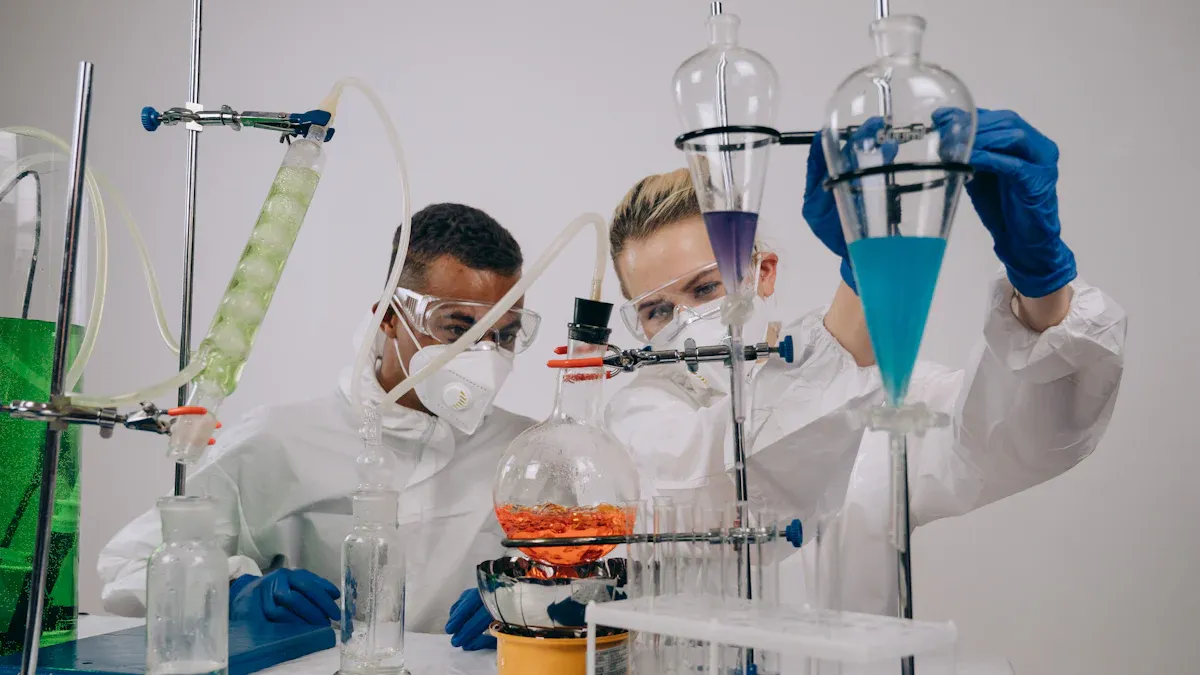
One of the most vital industrial roles for D-(-)-Tartaric Acid is in pharmaceutical manufacturing. It allows scientists to isolate specific molecules needed for effective medicines.
The Role of a Resolving Agent
Many drug molecules exist in two forms that are mirror images of each other, known as enantiomers. A resolving agent helps separate these enantiomers. D-(-)-Tartaric Acid is an excellent chiral resolving agent. It reacts with a racemic mixture (a 50/50 mix of both enantiomers) to create a pair of new substances called diastereomeric salts.
The key to this process is that these newly formed diastereomeric salts have different physical properties. Most importantly, they have different solubilities in solvents. This difference allows for their separation.
Manufacturing Enantiomerically Pure Drugs
Creating a drug with only one specific enantiomer is crucial for safety and effectiveness. The process using D-(-)-Tartaric Acid is a cornerstone of this effort. The separation is achieved through a straightforward yet precise method:
- Formation: The racemic base is mixed with D-(-)-Tartaric Acid to form the diastereomeric salts.
- Crystallization: The mixture is placed in a solvent. The less-soluble salt crystallizes and separates out as a solid.
- Purification: This crystallization step may be repeated to achieve the desired purity.
- Recovery: The pure enantiomer is then chemically recovered from the separated salt.
Applications in API Production
This resolution technique is essential for producing many Active Pharmaceutical Ingredients (APIs). For example, it can be used to separate compounds like 1-phenyl-2-propanamine. By isolating the desired enantiomer, manufacturers ensure the final drug provides its intended therapeutic benefit without potential side effects from the other mirror-image molecule. This makes Zoran's high-purity D-(-)-Tartaric Acid an indispensable tool in the quest for safer, more effective pharmaceuticals.
Precursor in Asymmetric Synthesis
Beyond separating molecules, D-(-)-Tartaric Acid is a foundational building block in advanced chemistry. Scientists use it as a starting material to create powerful tools for chemical reactions. This process is known as asymmetric synthesis.
Creating Chiral Catalysts like TADDOLs
D-(-)-Tartaric Acid is a valuable and inexpensive source of chirality. Chemists can easily transform it into important chiral compounds. One famous example is a class of molecules called TADDOLs. The synthesis of TADDOLs from tartaric acid has been studied extensively. It provides a reliable pathway to create these specialized tools.
Once created, TADDOLs are used to make catalysts. These catalysts guide chemical reactions to produce a specific enantiomer. This gives chemists precise control over the molecules they create. TADDOL-derived catalysts are used in many important reactions, including:
- Diels-Alder reactions
- Organozinc additions to aldehydes
- Asymmetric epoxidation of olefins
- Heck reactions and Suzuki reactions
Impact on Fine Chemical Manufacturing
The use of D-(-)-Tartaric Acid as a precursor has a major positive impact on fine chemical manufacturing. It helps create high-value compounds for many industries. For example, in agrochemical development, it helps produce pesticides with specific stereochemistry. This improves their effectiveness and reduces environmental impact.
Using precursors like Zoran's D-(-)-Tartaric Acid leads to better results across the board. Manufacturers see improved yields, higher purity levels, and reduced production costs. This makes processes more efficient and sustainable for large-scale production.
This capability makes D-(-)-Tartaric Acid essential for producing advanced materials and specialty chemicals that meet strict performance and regulatory standards.
Metal Surface Treatment and Chelation

The unique molecular structure of D-(-)-Tartaric Acid makes it highly effective in industrial processes involving metals. It acts as a powerful chelating agent, which means it can "grab" and bind to metal ions. This property is essential for cleaning, preparing, and protecting metal surfaces.
How It Functions as a Chelating Agent
D-(-)-Tartaric Acid's ability to chelate metal ions comes from its specific 3D shape. Its structure allows it to form strong, stable bonds with metals in a multi-step process:
- The molecule has two special carbon atoms that give it a unique orientation.
- It first grabs a metal ion by forming a stable six-membered ring between two of its chemical groups.
- Its unique shape then allows it to bind a second metal ion, creating a bridge. This bridge-forming ability is specific to optically active forms like D-(-)-Tartaric acid.
This action effectively traps the metal ion, preventing it from reacting with other substances.
Use in Industrial Cleaning Solutions
This chelating power makes D-(-)-Tartaric Acid a key ingredient in many industrial cleaning products. It excels at removing unwanted metal oxides, rust, and mineral scale from surfaces.
By forming complexes with metal ions, solutions containing Zoran's D-(-)-Tartaric Acid can dissolve tough deposits without using harsh, corrosive acids. This makes cleaning processes for industrial equipment and pipelines safer and more efficient.
Preparing Metal Surfaces for Plating
Proper surface preparation is crucial for applying high-quality metal coatings. D-(-)-Tartaric Acid plays a vital role in this pretreatment step, ensuring coatings adhere properly and last longer.
- It enhances adhesion by forming strong bonds with the metal surface before plating begins.
- Its unique structure helps create harder, more durable final coatings.
- It improves corrosion resistance by forming a stable layer that inhibits rust, with some modern formulas showing up to a 40% improvement over older systems.
Using it in pretreatment leads to a smoother, more uniform, and more resilient plated finish.
Applications in Electronics Manufacturing
The high-tech world of electronics relies on microscopic precision. D-(-)-Tartaric Acid is a key player in achieving this, ensuring components are clean and functional. Its unique chemical properties make it ideal for the delicate processes involved in creating modern devices.
Precision Cleaning and Etching
The electronics industry demands spotless surfaces for reliable performance. Even tiny particles or films can cause a circuit to fail. D-(-)-Tartaric Acid is used in specialized solutions for cleaning and etching electronic components like circuit boards.
- It gently removes contaminants without damaging sensitive materials.
- It helps prepare surfaces for the application of photoresists.
- It ensures uniform etching for creating precise circuit patterns.
This level of precision is essential for manufacturing high-density and multi-layered boards.
Complexing with Metal Oxides
Metal oxides can ruin electronic components. They form on copper traces and prevent solder from creating a strong electrical connection. This compound is excellent at forming complexes with these unwanted metal oxides, effectively dissolving them.
Solutions containing high-purity Zoran D-(-)-Tartaric Acid can clean metal contacts and pads, ensuring superior solderability and long-term reliability. The resulting complexes are water-soluble, making them easy to rinse away completely.
Role in Piezoelectric Components
D-(-)-Tartaric Acid and its derivatives possess a fascinating property known as the piezoelectric effect. This means they can generate an electric charge when pressure is applied. The polycrystalline solid form of D-(-)-Tartaric acid itself has been reported to show this effect.
Historically, a derivative called Rochelle salt was the very first compound used as a piezoelectric crystal. Today, more advanced materials like Rubidium hydrogen tartrate (RHT) are created from tartaric acid. These RHT crystals have powerful ferroelectric and piezoelectric abilities, making them valuable in optical systems for the precise control of laser light. 💡
Stabilizer in Specialized Polymer Production
D-(-)-Tartaric Acid is a valuable ingredient in the world of advanced polymers. It helps chemists build stronger, smarter, and more effective materials. Its role extends from controlling the initial reaction to improving the final product's characteristics.
Controlling Polymerization Reactions
This compound gives manufacturers precise control over how polymers are formed. It can act as a building block or a structural guide. For example, it is used to create Poly(tartaric acid) (PTA), a polyester with many uses.
The synthesis of PTA is a green process. It involves heating tartaric acid to form the polymer, which avoids the need for harsh solvents or catalysts.
D-(-)-Tartaric Acid also functions as a crosslinking agent, especially in hydrogels. It helps form stable, three-dimensional networks by creating strong bonds between polymer chains. This control allows for the creation of materials with specific structures and predictable degradation rates, which is vital for medical applications.
Enhancing Final Material Properties
Adding D-(-)-Tartaric Acid to a polymer mixture significantly improves the final material's performance. The benefits vary depending on the polymer but often include enhanced strength and stability. For instance, it can improve:
- The thermal stability of poly(vinyl chloride) (PVC).
- The tensile strength and puncture force of starch-based films.
- The flexibility and elongation of certain plastics.
This capability is crucial for creating high-performance hydrogels used in medicine. Tartaric acid helps customize these materials for specific tasks, like tissue repair.
| Innovator | Technical Solution | Enhanced Performance |
|---|---|---|
| Hy2Care BV | Injectable hydrogels using tartaric acid for crosslinking. | Improved biocompatibility, controlled degradation, and better tissue integration for cartilage repair. |
| Univ. of California | Hydrogels using tartaric acid as a crosslinker and pH-responsive element. | Tunable mechanical properties and selective interactions with biological molecules. |
These examples show how D-(-)-Tartaric Acid is essential for engineering next-generation materials. 🧪
Beyond Food Additives CAS 147-71-7 D-(-)-Tartaric Acid
The versatility of Food Additives CAS 147-71-7 D-(-)-Tartaric Acid extends into classic industrial arts. Its unique chemical properties have secured its place in both textile dyeing and the historical development of photography. These applications showcase its value far beyond modern manufacturing.
Use as a Mordant for Dyes
In the world of textiles, Food Additives CAS 147-71-7 D-(-)-Tartaric Acid acts as an important helper in the dyeing process. It functions as a mordant, a substance that helps dye stick to fabric fibers. This ensures colors are vibrant and long-lasting. It is particularly effective with natural dyes. For example, it can shift the colors produced by dyes like brazilwood and logwood, creating new shades. When added to an alum mordant, it also helps soften protein fibers like wool and brightens the final color. This makes the fabric feel better and look more brilliant.
Role in Photographic Development
The history of photography also features Food Additives CAS 147-71-7 D-(-)-Tartaric Acid. In early photographic methods, it played a key role in creating images on paper. It was considered an "active" organic substance that improved the chemical reactions needed for development.
Experience has shown that certain organic substances have a very favorable effect on image formation in printing-out papers, and these may be designated "active" organic substances. The most important are albumen, gelatin, and organic acids, such as citric, tartaric, and oxalic acid. These "active" organic materials facilitate the more complete reduction of silver chloride and also themselves form light-sensitive substances when in contact with silver nitrate...
This ability to help reduce silver chloride and form light-sensitive compounds was essential for producing clear and stable photographic prints. 📸
Food Additives CAS 147-71-7 D-(-)-Tartaric Acid is much more than a food ingredient. Its unique molecular shape is vital for creating safer medicines. It also acts as a chelating agent and stabilizer in high-tech industries like electronics and polymers, proving its incredible versatility in modern manufacturing. 🔬
FAQ
What makes D-(-)-Tartaric Acid a good resolving agent?
Its unique 3D molecular shape allows it to separate mirror-image molecules. This process is essential for creating pure and effective medicines.
Is D-(-)-Tartaric Acid safe for industrial cleaning?
Yes. It effectively dissolves rust and mineral scale. It is a safer alternative to many harsh, corrosive acids used in industrial settings.
Why is high purity important for this acid?
High purity ensures reliable results in sensitive applications. Zoran's 99% pure product guarantees consistent performance in pharmaceuticals, electronics, and chemical synthesis. 🔬
See Also
Enhancing 2 5-Furandicarboxylic Acid Sustainability Through Data-Driven Strategies
Industrial Applications and Dissolution Methods of 2 5-Furandicarboxylic Acid
Contemporary Synthesis Techniques and Industrial Uses for Aminoguanidine Bicarbonate
Novel Industrial Applications of N,N-Dimethyl-N,N-Diphenylurea Across Diverse Sectors
Understanding the Chemical Structure of 2 5-Furandicarboxylic Acid