309S Stainless Steel Pipe Fittings Explained Types Grades and Uses
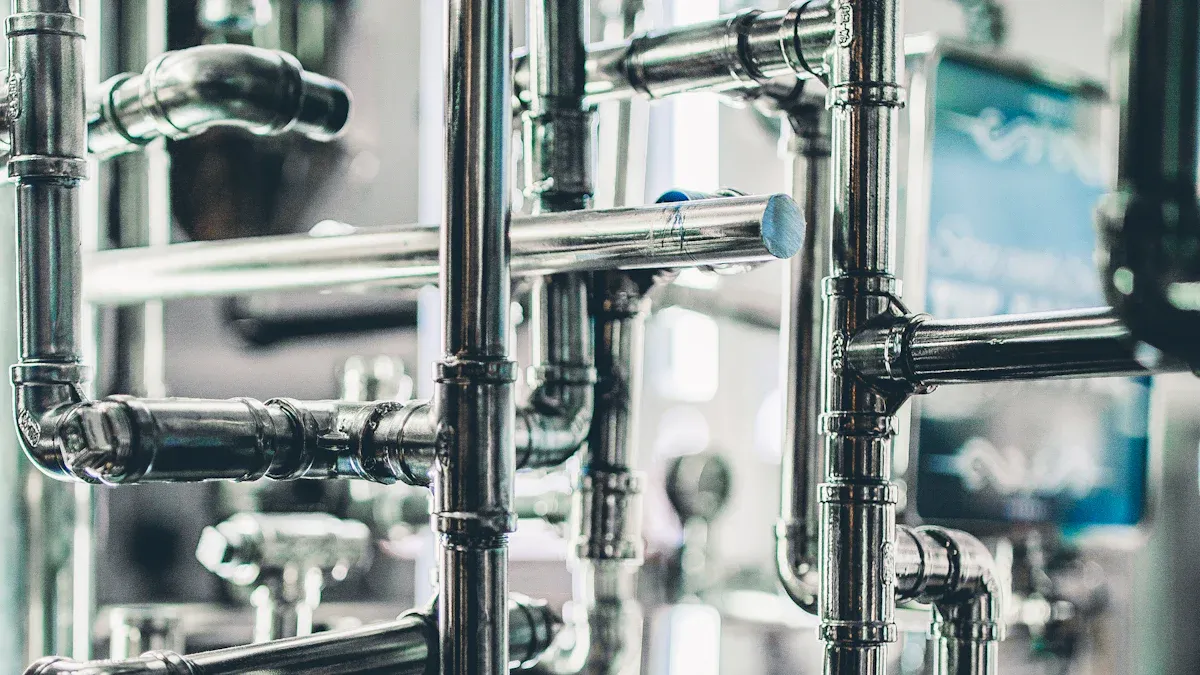
Manufacturers engineer 309S stainless steel pipe fittings as high-chromium, high-nickel austenitic components. They deliver exceptional resistance to extreme temperatures and corrosion. These fittings connect and control piping systems within severe industrial environments where standard grades like 304 and even robust grades like 904L stainless steel pipe fittings would falter. The low carbon content ("S") in the 309S grade significantly improves weldability. This quality minimizes carbide precipitation, thereby preventing intergranular corrosion after welding procedures.
Key Points:
- High-Performance Material: Engineered with high chromium and nickel for superior heat and corrosion resistance.
- Critical Applications: Used in severe environments where common stainless steel grades fail.
- Enhanced Weldability: The low carbon "S" designation prevents post-weld corrosion.
Key Takeaways
- 309S stainless steel pipe fittings resist high heat and corrosion. They work well in tough industrial places.
- The "S" in 309S means it has low carbon. This helps it weld easily and stops rust after welding.
- 309S fittings are good for furnace parts, heat exchangers, and chemical plants. They handle extreme temperatures and harsh chemicals.
- There are different types of 309S fittings. Butt-weld fittings are strong for high pressure. Socket-weld fittings are for smaller pipes. Threaded fittings are easy to use for low pressure.
- 309S costs more than regular stainless steel. But it lasts longer and needs less repair in hard conditions. This saves money over time.
Core Properties of SASA 309S Stainless Steel
The exceptional performance of 309S stainless steel stems from its carefully balanced chemical makeup and resulting physical properties. These characteristics make it a premier material for components operating in extreme heat and aggressive chemical environments. Understanding these core properties is essential for specifying the correct material for demanding applications.
Chemical Composition Breakdown
The alloy's composition is the foundation of its strength. Manufacturers produce 309S stainless steel with a high chromium content between 22-24% and a nickel content of 12-15%. This rich chemistry, governed by standards like ASTM A312, provides its signature resistance. The carbon content is intentionally kept low, typically between 0.08% and 0.20%, which is critical for weldability.
A typical chemical balance includes:
- Chromium (Cr): ~23%
- Nickel (Ni): ~14%
- Carbon (C): <0.20%
Superior High-Temperature Resistance
309S stainless steel excels in high-temperature service. It demonstrates excellent resistance to oxidation and scaling, maintaining its structural integrity where other grades would fail. The material offers reliable performance in continuous service at temperatures up to 1922°F (1050°C). Its destructive scaling temperature is even higher, near 2000°F (1093°C), providing a significant safety margin in thermal processing equipment.
This high-temperature strength is a clear advantage over more common stainless grades.
| Stainless Steel Grade | Maximum Operating Temperature |
|---|---|
| 304 | 1700°F (925°C) |
| 309S | 2000°F (1093°C) |
Robust Corrosion Resistance
The high chromium content in 309S Stainless Steel Pipe Fittings forms a passive, self-healing chromium-oxide layer on the surface. This layer provides outstanding protection against oxidation and sulfidation at elevated temperatures. It also offers solid resistance to many corrosive solutions, making it suitable for chemical and petrochemical processing environments.
Note: The low carbon ("S") designation is vital. It minimizes the formation of chromium carbides during welding, which preserves the material's corrosion resistance at the heat-affected zones and prevents premature failure.
Chapter Summary: The core properties of 309S stainless steel stem from its chemical composition, particularly its high chromium (22-24%) and high nickel (12-15%) content, which gives it excellent high-temperature resistance and corrosion resistance. It can operate continuously at temperatures up to 1050°C, and its low carbon content (<0.20%) significantly enhances weldability, effectively preventing post-weld intergranular corrosion.
Types of SASA 309S Stainless Steel Pipe Fittings
Manufacturers produce 309S stainless steel pipe fittings in several connection types to meet diverse industrial requirements. The selection of a specific fitting depends on factors like system pressure, pipe diameter, and the need for permanent or temporary connections. Each type offers distinct advantages for building robust and reliable piping systems in high-temperature environments. The three primary categories are butt-weld, socket-weld, and threaded fittings.
Butt-Weld Fittings (Elbows, Tees, Reducers)
Butt-weld fittings are the premier choice for critical, high-performance applications. Technicians weld these components directly, edge-to-edge, onto pipes or other fittings. This method creates a continuous, strong, and leak-proof metal structure. The resulting smooth inner surface minimizes pressure drops and turbulence within the pipeline. Common butt-weld fittings include:
- Elbows: Change the direction of flow.
- Tees: Create a 90-degree branch from the main pipe.
- Reducers: Connect pipes of different diameters.
Socket-Weld Fittings
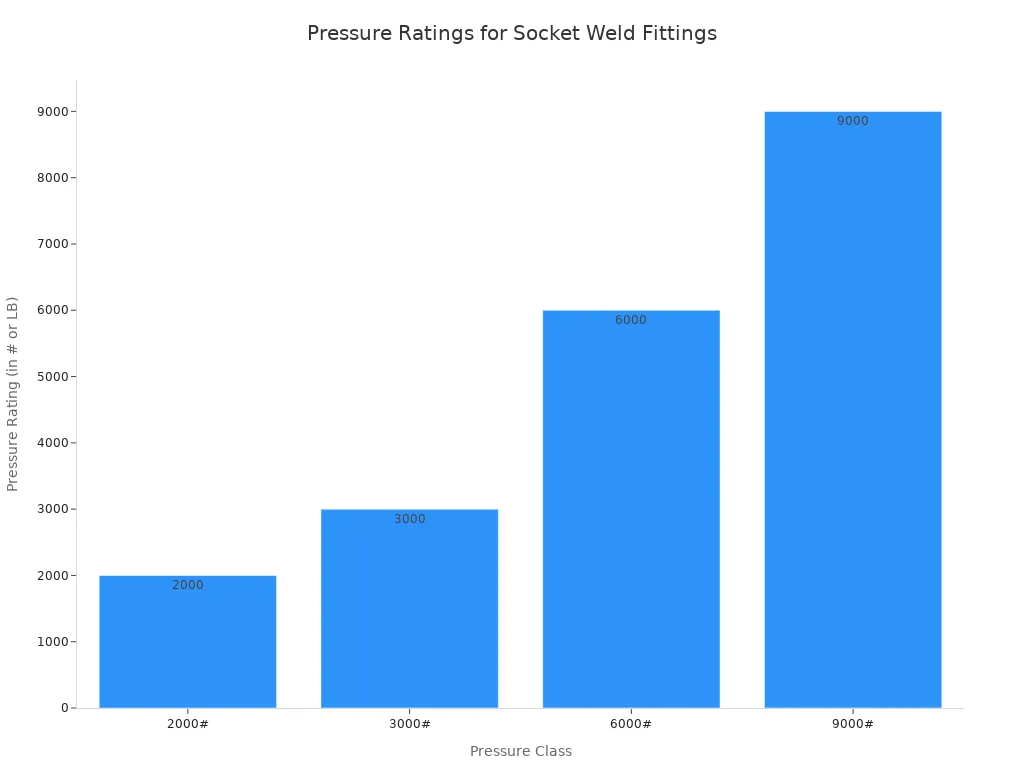
Socket-weld fittings offer a great alternative for smaller pipe diameters, typically 2 inches or less. For this connection, a pipe is inserted into a recessed area of the fitting. A welder then applies a fillet weld around the top. This design provides a good flow path and simplifies alignment during assembly. These fittings are available in various pressure ratings to handle demanding service conditions.
| Standard | Available Pressure Classes |
|---|---|
| ASME B16.11 | Class 3000, Class 6000, Class 9000 |
Threaded (Screwed) Fittings
Threaded fittings, also known as screwed fittings, feature threads that allow for easy installation and disassembly without welding. This makes them ideal for low-pressure, low-temperature systems where maintenance or modifications are frequent.
💡 Tip: While convenient, threaded connections are generally not recommended for the extreme temperatures and pressures where 309S steel excels, as weld-based connections offer superior strength and reliability.
Common thread types include:
Chapter Summary: 309S stainless steel pipe fittings primarily come in three connection types. Butt-weld fittings provide the strongest permanent connection through edge welding, suitable for high-pressure and high-temperature environments. Socket-weld fittings involve inserting the pipe into a recessed area of the fitting before welding, suitable for small-diameter pipes. Threaded fittings are easy to install and disassemble but are generally used for non-critical applications with low pressure and temperature requirements.
Key Manufacturing Standards for SASA 309S Fittings
Standardization is crucial for ensuring the safety, reliability, and interchangeability of industrial components. Manufacturers produce 309S stainless steel pipe fittings in compliance with globally recognized standards. These specifications govern everything from material composition to final dimensions, guaranteeing that each fitting meets stringent quality requirements for high-temperature service.
ASTM A403 for Wrought Fittings
ASTM A403 is the foundational material standard for wrought austenitic stainless steel pipe fittings. It dictates the essential properties of the raw material used to create components like 309S elbows, tees, and reducers.
This specification covers the chemical composition, mechanical properties (such as tensile strength and elongation), heat treatment requirements, and manufacturing processes for fittings intended for pressure piping applications. The designation
WP309Swithin this standard confirms the fitting is made from the correct low-carbon, high-chromium-nickel alloy.
ASME B16.9 for Dimensions
The American Society of Mechanical Engineers (ASME) B16.9 standard provides the blueprint for dimensional accuracy. It defines the precise center-to-face dimensions, tolerances, and overall measurements for factory-made butt-weld fittings. Adherence to this standard ensures that a 309S fitting from one manufacturer will perfectly match a pipe or fitting from another, simplifying design and installation.
Key dimensional tolerances specified by ASME B16.9 include:
| Dimension Type | NPS Range | Tolerance (inch [mm]) |
|---|---|---|
| Outside Diameter (O.D.) | 1/2" - 2-1/2" | +0.06, -0.03 [+1.6, -0.8] |
| Inside Diameter (I.D.) | 1/2" - 2-1/2" | ±0.03 [±0.8] |
| Overall Length (Reducers) | 1/2" - 48" | Varies from ±0.06 [±2] to ±0.19 [±5] |
| Angularity of End | 1/2" - 48" | Varies from ±0.03 [±1] to ±0.19 [±5] |
MSS-SP-43 and MSS-SP-97
The Manufacturers Standardization Society (MSS) offers supplementary standards for specialized fittings. These standards often address unique designs or applications not fully covered by ASTM or ASME.
- MSS-SP-43: This standard specifically covers lightweight, corrosion-resistant butt-welding fittings. It is often used for lower-pressure systems where a thinner wall thickness is advantageous.
- MSS-SP-97: This specification details the requirements for integrally reinforced forged branch outlet fittings. These components, such as Weldolets® and Sockolets®, provide a strong, reliable branch connection from a main pipe run.
Chapter Summary: The manufacturing of 309S fittings adheres to strict industry standards to ensure quality. The ASTM A403 standard specifies the chemical composition and mechanical properties of the material. The ASME B16.9 standard unifies the dimensions and tolerances of butt-weld fittings, ensuring interchangeability. Standards such as MSS-SP-43 and MSS-SP-97 provide specifications for special fittings like lightweight fittings and integrally reinforced branch outlet fittings.
Understanding the 309 Family: A SASA Grade Comparison
The "309" designation represents a family of stainless steels, not a single material. The primary distinction among these grades lies in their carbon content, which engineers precisely control to optimize performance for specific applications. Understanding the differences between Grade 309S, 309H, and the standard Grade 309 is critical for selecting the correct fitting for a given industrial environment.
Grade 309S (Low Carbon)
Grade 309S is the preferred choice for applications involving extensive welding. The "S" in its name signifies a low carbon content, which standards cap at a maximum of 0.08%.
| Element | 309S Maximum Content |
|---|---|
| Carbon (C) | 0.08% |
This controlled, low-carbon chemistry is its most significant advantage. During welding, high temperatures can cause carbon to bond with chromium, forming chromium carbides at the grain boundaries of the metal. This process, known as sensitization, depletes chromium from the surrounding area and makes the material vulnerable to intergranular corrosion, or "weld decay."
Key Benefit: The low carbon content in 309S stainless steel minimizes carbide precipitation. This preserves the material's corrosion resistance in the heat-affected zone of a weld, ensuring long-term structural integrity and preventing premature failure.
Its austenitic structure also prevents the formation of brittle microstructures after welding, reducing the risk of cold cracking. This makes 309S fittings exceptionally reliable for fabricated assemblies like complex piping manifolds, exhaust systems, and furnace components that require strong, durable welds.
Grade 309H (High Carbon)
In contrast, Grade 309H is engineered for maximum strength at extreme temperatures. The "H" designates a high carbon content, with a specified range typically between 0.04% and 0.10%.
This intentionally higher carbon level significantly enhances the material's mechanical properties under thermal stress. It provides superior creep strength, which is the material's ability to resist slow deformation under a constant load at high temperatures. This makes 309H the ideal material for load-bearing components in high-heat environments.
Primary advantages of 309H include:
- Enhanced Creep Resistance: Maintains structural integrity under load at temperatures approaching 1100°C (2012°F).
- Improved High-Temperature Tensile Strength: Offers greater strength and stability compared to its low-carbon counterpart.
- Excellent Thermal Stability: Retains its mechanical properties reliably during prolonged exposure to heat.
Engineers specify 309H fittings for applications like tube hangers, boiler baffles, and structural supports inside industrial furnaces and kilns, where maintaining shape and strength over time is paramount.
Standard Grade 309
Standard Grade 309 is the original alloy from which the specialized 'S' and 'H' versions were developed. Its carbon content falls between that of 309S and 309H, typically around 0.20%. This grade offers a balance of properties but lacks the specialized optimization of the other two.
- It possesses better high-temperature strength than 309S.
- It is more susceptible to sensitization and weld decay than 309S.
- It has lower creep strength and thermal stability compared to 309H.
While once common, standard Grade 309 is now less frequently specified for new critical applications. Modern engineering practices favor the tailored performance of 309S for welded structures and 309H for high-temperature structural components. This ensures the material is perfectly matched to the primary demands of the application, maximizing system longevity and safety.
Chapter Summary: The 309 stainless steel family is divided into three main grades based on carbon content. 309S is a low-carbon grade (C ≤ 0.08%), designed specifically for welding applications, effectively preventing post-weld intergranular corrosion. 309H is a high-carbon grade (C = 0.04%-0.10%), designed to provide excellent high-temperature strength and creep resistance, suitable for high-temperature load-bearing structures. The standard 309 grade is a compromise between the two, offering balanced properties but lacking specialization, and is less commonly used in modern critical applications.
Primary Industrial Applications for SASA 309S Fittings
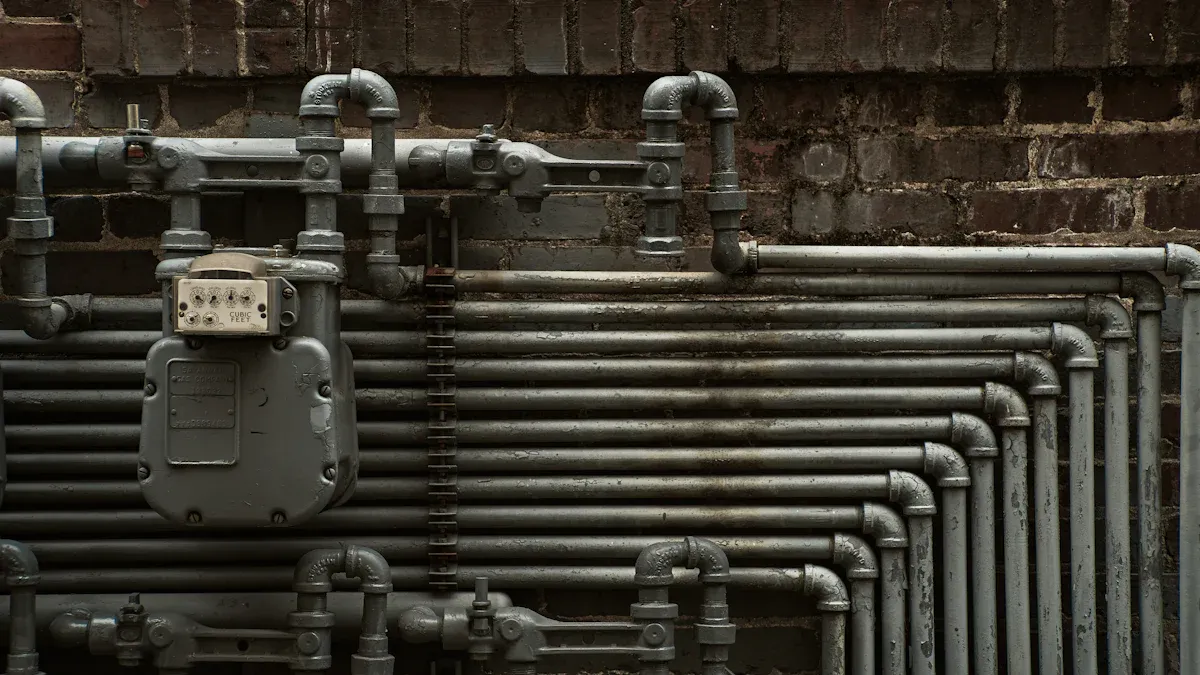
The unique combination of high-temperature strength and robust corrosion resistance makes 309S stainless steel a critical material for severe industrial environments. Engineers specify these fittings for applications where component failure is not an option. The material's reliability ensures operational safety and longevity in thermal and chemical processing plants.
Furnace Parts and Kiln Components
Industrial furnaces and kilns operate under extreme thermal stress, making material selection paramount. 309S stainless steel excels in these conditions. It is a preferred material for manufacturing durable internal components that must resist oxidation and maintain structural integrity.
Specific furnace parts commonly made from 309S stainless steel include:
- Radiant tubes and muffles within heat treatment equipment
- Burner components and flame shields
- Power boiler tube hangers
- Conveyor belts and rollers for thermal processing
Kiln linings and structural supports often operate at temperatures approaching 1093°C (2000°F). The excellent oxidation resistance and strength of 309S at these elevated temperatures make it an essential material for ensuring the long-term stability of these demanding thermal processing systems.
Heat Exchangers and Boiler Baffles
Heat exchangers and boilers are central to power generation and chemical processing. They rely on materials that can withstand constant thermal cycling and corrosive flue gases. 309S Stainless Steel Pipe Fittings are frequently used to construct these critical systems. Baffles made from 309S effectively direct the flow of hot gases to maximize heat transfer without degrading. The material's resistance to scaling prevents the buildup of insulating layers, maintaining thermal efficiency over time. Its superior strength at high temperatures ensures that tubes and shells do not deform under pressure.
Chemical and Petrochemical Processing
The chemical and petrochemical industries present a dual challenge of high temperatures and aggressive chemical media. Refineries and chemical plants use 309S fittings to manage various hydrocarbons and corrosive substances. The material demonstrates excellent resistance to a wide range of chemicals, including acids, alkalis, and salts. This makes it ideal for piping systems that transport crude oil and other chemical media under extreme pressure and heat. In these plants, engineers also use 309S tees and outlets to integrate smaller lines for additives, control chemicals, or sampling, ensuring a secure and corrosion-resistant connection.
Chapter Summary: Due to its excellent high-temperature performance and corrosion resistance, 309S stainless steel is widely used in harsh industrial environments. It is primarily used for manufacturing internal components of industrial furnaces and kilns, such as radiant tubes and burners, which operate at temperatures up to 1093°C. In heat exchangers and boilers, it is used to make baffles and pipes to resist thermal cycling and corrosive gases. Additionally, in the chemical and petrochemical industries, 309S fittings are used to transport corrosive media such as acids, alkalis, salts, and hydrocarbons, ensuring system safety and durability.
Power Generation Plants
Power generation plants, especially those fired by coal or gas, operate under some of the most demanding conditions imaginable. The combination of extreme heat, high pressure, and corrosive flue gases creates an environment where many materials quickly fail. 309S stainless steel provides the necessary durability for these critical applications, ensuring operational reliability and safety.
A primary challenge within fossil fuel boilers is the erosion of boiler tubes. The constant flow of abrasive particles and hot gases wears down the metal over time. To combat this, engineers use erosion protection shields to cover vulnerable areas. 309S stainless steel is a premier material for these shields.
- Superheater and Economizer Tubes: Technicians install erosion shields made from 309S on superheater tubes and economizers. These shields act as a sacrificial barrier, protecting the underlying pressure-bearing tubes from wear.
- Gas-Fired Applications: In gas-fired plants, 309S is also used for boiler climbing pipe erosion shields, which protect the heating sections of tubes.
The material's excellent heat resistance and strength in high-pressure environments make it ideal for these protective components. Beyond shields, manufacturers also use 309S plates to produce various heat exchangers and furnace tubes for power stations.
Exhaust Systems and Thermal Processing
High-performance exhaust systems and thermal processing equipment require materials that can handle intense heat and corrosive byproducts. 309S stainless steel excels in these applications due to its unique combination of strength, durability, and resistance to degradation.
The advantages of using 309S for these systems are clear:
- Excellent Corrosion Resistance: High chromium levels create a passive, self-healing oxide layer. This layer prevents rust and damage from moisture, road salt, and corrosive exhaust emissions, extending the equipment's lifespan.
- High-Temperature Strength: The material maintains its structural integrity at continuous service temperatures up to 1900°F (1038°C), preventing warping or failure in high-heat zones.
- Exceptional Durability: 309S is tough and resistant to wear and tear. An exhaust system made from 309S can last over three times longer than one made from mild steel.
- Low Maintenance: Its smooth, corrosion-resistant surface requires minimal upkeep, leading to significant long-term cost savings.
When compared to other specialized materials, 309S stainless steel offers a superior balance of performance and cost-effectiveness.
| Feature | 309S Stainless Steel | Other High-Temp Materials (e.g., Ceramics, 316L, 347) |
|---|---|---|
| High-Temp Stability | Excellent, stable up to 980°C for long periods. | Varies; 316L has lower temp resistance. |
| Corrosion Resistance | Superior, especially in sulfur-containing environments. | 316L excels in chlorides, but not sulfur. |
| Mechanical Strength | Offers better toughness and strength at high temps. | Ceramics can be brittle; other alloys may be weaker. |
| Workability | Good workability for easier fabrication. | 347 is less workable; ceramics are difficult to form. |
| Cost-Effectiveness | Provides a balanced, cost-effective solution. | Often more expensive or less balanced in performance. |
This balanced profile makes 309S Stainless Steel Pipe Fittings and related components a top choice for fabricating durable industrial exhaust manifolds, thermal oxidizers, and high-performance automotive exhaust systems where reliability is paramount.
Chapter Summary: In power generation plants, 309S stainless steel is mainly used to manufacture wear-resistant protective covers for boiler pipes to resist the high temperature, high pressure, and corrosive gases produced by burning coal or natural gas. In exhaust systems and thermal processing equipment, 309S is favored for its excellent corrosion resistance, high-temperature strength up to 1038°C, and outstanding durability. Compared to other high-temperature materials, it offers the best balance of performance, workability, and cost-effectiveness, especially excelling in sulfur-containing environments.
Fabrication and Welding with SASA 309S Steel
The low-carbon chemistry of 309S stainless steel makes it exceptionally well-suited for welding. Its austenitic structure resists the formation of brittle microstructures upon cooling, ensuring strong and ductile welds. Proper technique and material selection are key to maximizing the performance of fabricated components.
Weldability Considerations
Grade 309S offers excellent weldability. Its low carbon content is the primary reason, as it minimizes harmful carbide precipitation in the heat-affected zone. This quality preserves the material's corrosion resistance after welding. For stainless steel applications with a thickness greater than 1.6 mm, fabricators traditionally use TIG or pulsed MIG processes.
A modern process like TIP TIG provides significant advantages. It delivers robust, uniform root welds and addresses common defects found in other methods. Its excellent weld fluidity and rapid freeze characteristics make it a reliable, all-position welding solution for high-performance alloys like 309S.
Recommended Filler Metals
Selecting the correct filler metal is crucial for achieving a sound weld with properties matching the base material. The primary choice for welding 309S stainless steel is a filler metal with a matching or slightly over-alloyed composition.
- Primary Recommendation: Fabricators use AWS Class ER309/309L filler metals for most TIG and MIG welding applications.
- Dissimilar Metals: When welding 309S stainless steel to carbon steel, a 309 filler metal is also recommended. Its higher ferrite content helps reduce the risk of cracking.
These filler metals are governed by several American Welding Society (AWS) specifications:
- A5.4: For Shielded Metal Arc Welding (SMAW) electrodes.
- A5.9: For bare welding electrodes and rods (TIG/MIG).
- A5.22: For flux-cored and metal-cored electrodes.
Post-Weld Heat Treatment Needs
One of the significant benefits of using 309S stainless steel is that it generally does not require post-weld heat treatment (PWHT). The low carbon content prevents sensitization, so annealing is not necessary to restore corrosion resistance.
However, engineers may specify PWHT in certain critical situations. These conditions include:
- Fabricating heavy-section components where residual stresses are a concern.
- When the application demands the absolute maximum corrosion resistance.
- To mitigate any risk of stress corrosion cracking in severe service environments.
In most standard applications, 309S fittings can be put into service in the as-welded condition, simplifying fabrication and reducing costs.
Chapter Summary: 309S stainless steel has excellent weldability due to its low carbon content, effectively preventing post-weld corrosion. ER309/309L filler metal is recommended for welding, especially when joining dissimilar metals (such as carbon steel), where its effectiveness is significant. Thanks to its excellent chemical composition, 309S generally does not require post-weld heat treatment in most cases; it is only needed for heavy-section components or in extreme corrosive environments to relieve stress or maximize corrosion resistance.
Comparing SASA 309S to Other Stainless Grades
Selecting the right stainless steel grade is crucial for system performance and longevity. While 309S offers exceptional high-temperature properties, understanding how it compares to other common grades like 304, 316, and its close relative 310S helps engineers make informed decisions.
309S vs. 304
Grade 304 is the most widely used stainless steel, known for its good corrosion resistance and formability. However, its performance diminishes significantly at high temperatures. The primary advantage of 309S over 304 is its superior heat resistance, a direct result of its higher chromium and nickel content.
| Property | Grade 304 | Grade 309S |
|---|---|---|
| Max. Continuous Service Temp. | ~925°C (1700°F) | ~1090°C (2000°F) |
This substantial difference makes 309S the clear choice for applications like furnaces and thermal processing, where 304 would quickly oxidize and fail.
309S vs. 316
Grade 316 is renowned for its excellent corrosion resistance, particularly against chlorides and acids, due to the addition of molybdenum. While 316 excels in marine and chemical processing environments at ambient temperatures, it does not match the high-temperature strength of 309S. Engineers specify 309S for thermal stability, whereas they choose 316 for its superior pitting and crevice corrosion resistance in specific chemical media.
309S vs. 310S
Grade 310S is another high-temperature austenitic stainless steel, often considered a step up from 309S. The key difference lies in its even higher chromium and nickel content.
| Feature | 309S | 310S |
|---|---|---|
| Chromium (Cr) | ~23% | ~25% |
| Nickel (Ni) | ~14% | ~20% |
This richer alloy composition gives 310S better overall high-temperature performance. It exhibits superior oxidation resistance and creep strength, making it suitable for the most severe thermal environments, often operating continuously at temperatures approaching 1150°C (2100°F). While 309S is excellent, 310S provides an extra margin of safety and durability in extreme heat.
Chapter Summary: 309S stainless steel has different focuses compared to other grades. Compared to 304, 309S has superior high-temperature resistance due to its higher chromium and nickel content. Compared to 316, 316 is better in chloride corrosion resistance due to molybdenum, while 309S is designed specifically for high-temperature environments. Compared to 310S, 310S has higher chromium and nickel content, providing stronger oxidation resistance and high-temperature creep strength, making it suitable for more extreme temperature conditions.
Selection Criteria: Choosing the Right SASA Fitting
Engineers select the ideal fitting by following a systematic evaluation process. This approach ensures the chosen material provides maximum safety, longevity, and performance for the specific application. The decision hinges on three primary factors: operating temperature, the nature of the corrosive environment, and a careful balance between cost and performance.
Analyzing Operating Temperatures
The first and most critical selection criterion is the system's operating temperature. Grade 309S stainless steel is specifically engineered for high-heat service. It maintains its structural integrity and oxidation resistance at continuous temperatures up to 1090°C (2000°F).
💡 Key Consideration: If an application operates above the limits of common grades like 304 (around 925°C or 1700°F), 309S becomes a necessary upgrade. Specifying a material without adequate heat resistance leads to rapid degradation and premature system failure.
Assessing Corrosive Environments
Beyond heat, engineers must assess the chemical environment. While 309S offers broad corrosion resistance, its performance varies depending on the specific corrosive agents present. Its high chromium content provides excellent protection against oxidation and sulfidation at elevated temperatures. However, its suitability in other media requires careful consideration.
The following table compares its performance in different environments:
| Corrosive Agent/Environment | 309S Performance | Comparison to Other Grades |
|---|---|---|
| High-Temperature Oxidation | Superior resistance up to 1090°C | Outperforms 304 and 316 |
| Acidic & Alkaline Conditions | Good general resistance | Comparable to other austenitic grades |
| Chloride-Rich Environments | Susceptible to pitting | Less resistant than Grade 316 |
This analysis shows that while 309S excels in high-heat oxidation, Grade 316 remains the better choice for chloride-rich environments like marine applications.
Cost vs. Performance Evaluation
Finally, a cost-benefit analysis is essential. High-performance alloys like 309S have a higher initial procurement cost compared to standard stainless steels. However, this upfront expense is an investment in reliability.
- Reduced Downtime: Superior durability minimizes the need for unscheduled maintenance.
- Longer Service Life: Resistance to heat and corrosion extends the component's lifespan significantly.
- Lower Total Cost: Fewer replacements and repairs result in a lower total cost of ownership over the system's life.
For critical systems in severe environments, the long-term performance benefits of 309S fittings far outweigh their initial cost.
Chapter Summary: Selecting the correct 309S fitting requires following three main criteria. First, analyze the operating temperature to ensure it is within the heat resistance range of 309S (up to 1090°C). Second, evaluate the corrosive environment; 309S performs excellently in high-temperature oxidizing environments but is not as good as 316 in chloride-rich environments. Finally, conduct a cost-performance evaluation; although the initial cost of 309S is higher, its long-term durability and low maintenance costs make it more economically beneficial in demanding applications.
Engineers specify 309S Stainless Steel Pipe Fittings as the premier choice for high-heat, corrosive applications demanding excellent weldability. Understanding the key distinction between 309S (for welding) and 309H (for high-temperature strength) is critical for ensuring long-term system reliability. Real-world performance underscores this choice:
- Refinery case studies demonstrate five years of service without failure in high-temperature applications.
- Furnace applications show operational extensions of 20% compared to Type 304 pipes.
This knowledge allows engineers to confidently select 309S for demanding industrial environments like furnaces, kilns, and chemical processing plants.
Chapter Summary: 309S stainless steel pipe fittings are the preferred choice for high-temperature corrosive applications requiring excellent weldability. The key is to distinguish between 309S for welding and 309H for high-temperature strength. Real-world cases demonstrate that it can operate without failure for five years in refineries and extends the service life by 20% compared to 304 pipes in furnace applications, making it a reliable choice for engineers in demanding industrial environments.
FAQ
What is the main difference between 309S and 309H?
Grade 309S contains low carbon for excellent weldability, preventing post-weld corrosion. In contrast, Grade 309H has higher carbon content, providing superior strength and creep resistance at extreme temperatures. Engineers select the grade based on the primary application demand: welding or high-temperature load-bearing.
Can engineers use 309S fittings in marine environments?
Engineers typically avoid using 309S fittings for marine applications. While 309S offers good general corrosion resistance, Grade 316 stainless steel provides far superior protection against the chloride-induced pitting and crevice corrosion common in saltwater environments.
Is post-weld heat treatment required for 309S?
No, post-weld heat treatment is generally not necessary for 309S stainless steel. Its low carbon chemistry minimizes harmful carbide precipitation during welding. This feature preserves its corrosion resistance, allowing components to be used in the as-welded condition for most applications, simplifying fabrication.
Why is 309S more expensive than 304?
The higher price of 309S stems from its richer alloy composition. It contains significantly more chromium and nickel than Grade 304. These elements deliver the material's signature high-temperature strength and oxidation resistance, making it a premium material for severe service conditions.
Chapter Summary: This FAQ section clarifies the key characteristics of 309S. Key points include: 309S has good weldability due to low carbon, while 309H has high-temperature strength due to high carbon; 309S is not suitable for chloride-rich environments like seawater; 309S generally does not require post-weld heat treatment; its higher price compared to 304 is due to its higher chromium and nickel content and superior performance.
See Also
Mastering Pass Partition Plate Welding: Expert Techniques for 2025 Success
Choosing Pressure Vessel Materials: Adhering to ASME BPVC Section VIII Guidelines
Optimizing Heat Exchanger Performance: The Impact of Advanced Steel Processing
Tee Versus Strap Hinges: Understanding Their Distinctive Features in 2025
Innovative Materials Transforming Heat Exchanger Supply Chains and Performance