The Unseen Hero A 2507 Duplex Steel Elbow Explained
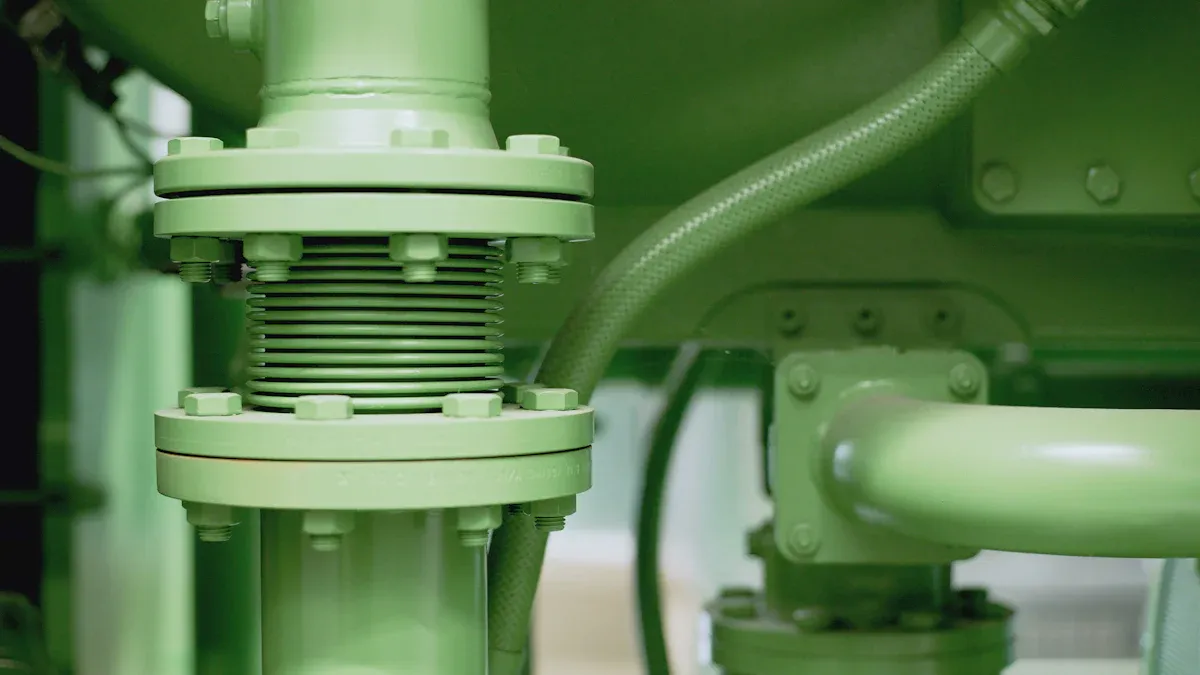
An ASTM A815 2507 Duplex Steel Elbow is a high-performance pipe fitting. It is made from super duplex stainless steel (UNS S32750). Engineers design this component for demanding, high-corrosion environments. Its primary function is to change the direction of flow within a piping system. The 2507 Duplex Steel Elbow provides exceptional mechanical strength. It also offers superior corrosion resistance, ensuring system integrity and longevity. This contrasts with materials like 904L Stainless Steel Pipe Fittings, offering a higher level of performance for extreme conditions.
Key Takeaways
- A 2507 Duplex Steel Elbow is a strong pipe fitting. It works well in tough places with lots of rust.
- This steel elbow fights rust better than many other metals. It also has great strength.
- The 2507 steel elbow is used in oil, gas, and chemical plants. It also helps make fresh water from salty water.
- Making these elbows needs special care. This ensures they work correctly and last a long time.
- Standards like ASTM A815 and ASME B16.9 make sure these elbows are safe and fit well.
Why 2507 Duplex Steel Excels: Core Properties
The exceptional performance of a 2507 duplex steel elbow stems from a powerful combination of material properties. Engineers select this material when standard stainless steels cannot withstand the operational pressures and corrosive agents of a demanding environment. Its balanced microstructure and specific chemical formulation give it a distinct advantage in strength, corrosion resistance, and overall durability.
Unmatched Corrosion Resistance
The primary advantage of 2507 duplex steel is its elite resistance to corrosion. It excels in environments rich in chlorides, which are notoriously damaging to many other metals. This material effectively resists several forms of corrosion:
- Pitting and Crevice Corrosion: These localized attacks can quickly compromise a system's integrity.
- Stress Corrosion Cracking (SCC): A combination of tensile stress and a corrosive environment can cause sudden failure in lesser materials.
A key metric for evaluating this resistance is the Pitting Resistance Equivalent Number (PREN). A higher PREN value indicates superior protection against localized pitting. The PREN for 2507 duplex steel significantly surpasses that of other common grades.
| Material Grade | Typical PREN Value |
|---|---|
| 316L Stainless Steel | ~25 |
| 2205 Duplex Steel | ~35 |
| 2507 Super Duplex Steel | >42 |
This high PREN value confirms its suitability for the most aggressive industrial settings, from offshore oil rigs to chemical processing plants.
Superior Mechanical Strength
2507 duplex steel possesses remarkable mechanical strength. Its yield strength, the point at which the material begins to deform permanently, is approximately double that of common austenitic stainless steels like 304 and 316. This high strength allows it to withstand extreme pressures and mechanical stresses without failure.
| Steel Type | Minimum Yield Strength (MPa) |
|---|---|
| Type 304 Austenitic | ~280 |
| 22%Cr Duplex | ≥450 |
| Superduplex (2507) | ≥550 |
💡 Design Advantage: Weight and Cost Reduction This superior strength offers a significant engineering benefit. Designers can use a lighter gauge, or thinner, material to achieve the same design strength as a thicker component made from a standard alloy. This capability leads to substantial weight savings, which in turn reduces overall fabrication and installation costs for piping systems.
The Power of Chemical Composition
The properties of 2507 duplex steel are a direct result of its carefully engineered chemical composition and the resulting microstructure. The material's formula includes high concentrations of key elements that work together to deliver its performance.
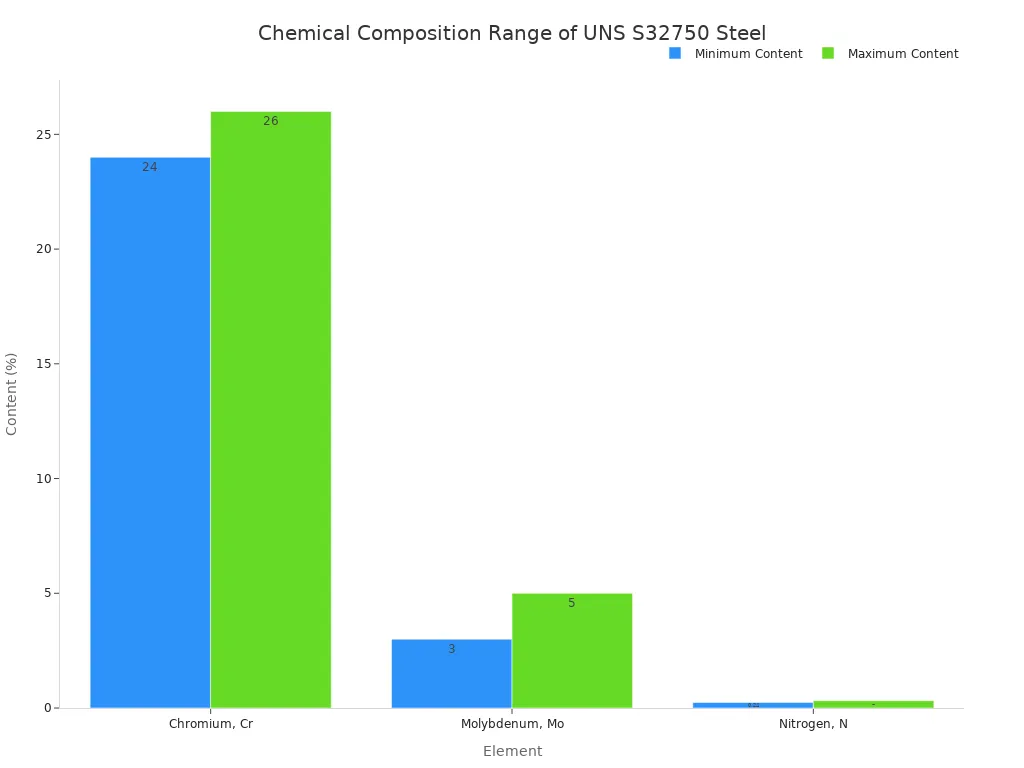
These elements create a "duplex" microstructure, which is a balanced, two-phase mix of austenite and ferrite. Each phase contributes unique characteristics:
- The Ferrite Phase: This part of the structure is primarily responsible for the material's high strength and hardness.
- The Austenite Phase: This ductile phase provides excellent toughness and plasticity, preventing cracks from growing and enhancing impact resistance.
This balanced structure is the secret behind the material's success. It combines the strength of ferrite with the corrosion resistance and toughness of austenite. Maintaining this precise balance during manufacturing is critical for ensuring that a 2507 Duplex Steel Elbow delivers its full potential for safety and long-term reliability in critical applications.
Critical Applications for the 2507 Duplex Steel Elbow in 2025
The advanced properties of 2507 duplex steel make it indispensable for industries facing extreme operational challenges. As processes become more demanding, the 2507 Duplex Steel Elbow serves as a critical component in ensuring system safety and efficiency. Its use is prominent in sectors where failure is not an option.
Oil and Gas Exploration
Upstream oil and gas operations expose equipment to some of the world's most corrosive environments. A 2507 elbow is essential for handling raw hydrocarbons that contain aggressive agents. The material provides superior resistance against:
- High concentrations of chloride ions
- Hydrogen sulfide (H₂S), creating sour service conditions
- Carbon dioxide (CO₂)
- Elemental sulfur
Its ability to withstand these challenges makes it compliant with key industry standards like NACE MR0175/ISO 15156, which governs materials for use in H₂S-containing environments.
Chemical and Petrochemical Processing
Chemical processing plants frequently handle highly corrosive substances that can quickly degrade standard metals. Alloy 2507 excels in these applications, particularly when dealing with aggressive chemicals. It is an ideal choice for systems that process warm chlorinated seawater and acidic media containing chlorides. The material offers robust performance against substances like hydrochloric acid, ensuring the long-term integrity of piping systems and preventing hazardous leaks.
Desalination and Water Treatment
Modern desalination plants rely on high-pressure processes like reverse osmosis (RO) to produce fresh water. These systems move highly concentrated brine, which is extremely corrosive. The 2507 Duplex Steel Elbow is perfectly suited for this demanding role.
💡 High-Pressure Performance: The elbow's high yield strength allows it to easily manage the intense pressures within RO units. Its exceptional resistance to chloride ions prevents pitting and crevice corrosion, even with continuous exposure to brine concentrations of 10,000 ppm or more. This ensures long-term reliability in critical brine and seawater transport lines.
Future-Facing Roles: CCUS and Hydrogen
As global industries pivot toward sustainability, the 2507 duplex steel elbow is positioned to play a vital role in emerging energy sectors. Its unique properties are an excellent match for the material challenges found in Carbon Capture, Utilization, and Storage (CCUS) and hydrogen infrastructure. These future-facing applications demand materials that can handle new types of corrosive agents and extreme operating conditions.
In CCUS systems, captured CO₂ is not always pure. It often contains impurities that create highly corrosive environments. The 25Cr super duplex stainless steel family, including 2507, directly addresses these issues. Engineers select it for components like well tubing due to its ability to overcome significant material hurdles.
- Corrosion from Impurities: Water, oxygen, and sulfur compounds in the CO₂ stream can form aggressive acids. These acids severely damage standard pipelines and storage components. The high chromium and molybdenum content in 2507 steel provides excellent resistance against this acidic attack.
- Brittle Fracture Risk: Rapid depressurization can cause temperatures to plummet to -80°C, a phenomenon known as the Joule-Thomson effect. These subzero temperatures can make lesser materials brittle and prone to fracture. 2507 steel maintains its toughness and high strength, ensuring operational safety under such cryogenic conditions.
The growing hydrogen economy presents another critical application. While hydrogen is a clean fuel, it can cause a phenomenon called hydrogen embrittlement in many metals, leading to reduced ductility and premature failure.
💡 Resisting Hydrogen Embrittlement The balanced duplex microstructure of 2507 steel offers inherent resistance to hydrogen-induced stress cracking. The austenitic phase within its structure helps trap hydrogen, preventing it from weakening the material. This makes a 2507 Duplex Steel Elbow a reliable choice for high-pressure hydrogen transport and storage systems, ensuring long-term integrity.
Design and Manufacturing Considerations
Proper design and manufacturing are essential for maximizing the performance of a 2507 duplex steel elbow. Engineers and fabricators must consider elbow geometry, construction methods, and specific welding protocols to ensure the final component meets stringent operational demands.
Common Elbow Types and Radii
Elbows are defined by their bend radius, which influences fluid flow and pressure drop. A larger radius creates a smoother turn, reducing resistance. Common radii options include:
- Short Radius (SR): An SR elbow has a bend radius equal to the pipe's nominal diameter (1D). Designers use it in tight spaces where flow rate is less critical.
- Long Radius (LR): An LR elbow, the industry standard, has a radius 1.5 times the pipe diameter (1.5D). It is ideal for high-pressure and high-flow systems.
- Larger Radii: For applications requiring minimal friction loss, custom radii like 3D, 5D, or even 10D are available. These create very gentle bends.
Seamless vs. Welded Construction
Manufacturers produce these elbows using either seamless or welded construction methods. Seamless elbows are formed from a single piece of material, offering uniform strength. Welded elbows are fabricated from plate material. While seamless processing costs more, welded construction is often more economical. Fewer production steps and less material waste contribute to the lower cost of welded fittings, which are also available in a wider range of large diameters. The choice depends on the specific application's pressure requirements and budget.
Welding and Fabrication Best Practices
Fabricating with 2507 duplex steel requires precise control to preserve its balanced microstructure. Welders commonly use methods like Gas Tungsten Arc Welding (GTAW) and Shielded Metal Arc Welding (SMAW). GTAW is particularly recommended for root passes to ensure a clean internal surface.
💡 Critical Temperature Control Unlike many other steels, 2507 duplex steel generally does not require preheating before welding, except to remove surface condensation. However, controlling the interpass temperature is crucial. Fabricators must keep this temperature below 300°F (150°C) to prevent the formation of undesirable phases that could compromise the material's strength and corrosion resistance.
Navigating Key Standards for 2025
Standardization is the bedrock of industrial safety and reliability. For a high-performance component like the 2507 Duplex Steel Elbow, adherence to key standards is non-negotiable. These specifications govern everything from material composition to final dimensions, ensuring every fitting performs as expected. Engineers and procurement specialists must navigate these standards to guarantee system integrity.
The Role of ASTM A815
ASTM A815 is the fundamental specification for wrought ferritic, ferritic/austenitic, and martensitic stainless steel pipe fittings. It acts as the primary quality gatekeeper for the material itself. The standard dictates precise manufacturing and heat treatment protocols to achieve the desired duplex microstructure.
💡 Manufacturing and Heat Treatment Requirements ASTM A815 specifies a controlled process to ensure optimal properties:
- Manufacturing Method: Fittings are typically produced through cold forming.
- Heat Treatment: After forming, a solution annealing heat treatment is mandatory. The component is heated to a range of 1880–2060°F (1025–1125°C) and then rapidly cooled, often by a water quench. This process locks in the balanced austenite-ferrite microstructure.
Furthermore, ASTM A815 mandates strict verification of the final product. It requires chemical and product analyses to confirm the material's composition aligns with the requirements for elements like chromium, molybdenum, and nitrogen. The standard also ensures mechanical properties, including tensile strength, yield strength, and hardness, meet specified minimum values. This proof of compliance is delivered through essential documentation like Material Test Reports (MTRs) and Compliance Certificates.
Dimensional Standards: ASME B16.9
While ASTM A815 governs the material, ASME B16.9 governs the physical form. This standard covers the overall dimensions, tolerances, ratings, and markings for factory-made wrought steel butt-welding fittings. Its primary goal is to ensure interchangeability.
Adherence to ASME B16.9 means an elbow from one manufacturer can be seamlessly replaced with a compliant elbow from another. This global specification eliminates design modifications and simplifies international project execution. The standard sets strict tolerance ranges for critical dimensions. For example, it mandates a minimum wall thickness of 87.5% of the nominal thickness, though this may not apply to localized areas that require extra thickness for structural integrity.
It also defines precise center-to-face dimensional tolerances, which vary by pipe size.
| Nominal Pipe Size (NPS) | Tolerances for 90° & 45° LR/SR Elbows | Tolerances for 3D Radius Elbows |
|---|---|---|
| 1/2" to 8" | ± 2 mm | ± 3 mm |
| 10" to 24" | ± 2 mm | ± 3 mm |
| 26" to 30" | ± 3 mm | ± 6 mm |
| 32" to 48" | ± 5 mm | ± 6 mm |
These tight controls prevent installation misalignment and ensure the fitting integrates perfectly into the piping system.
Essential Quality and Testing Protocols
Verification does not end with dimensional checks. A comprehensive suite of testing protocols confirms the internal and external integrity of each fitting. Non-Destructive Testing (NDT) is a critical part of this process, allowing inspectors to identify potential flaws without damaging the component.
For super duplex fittings, 100% Radiography Testing (RT) is a common requirement for both seamless and welded constructions. This method provides a clear view of the internal structure, revealing any hidden defects. Other essential NDT methods include:
- Dye Penetrant Testing (DP): Detects surface-breaking cracks or imperfections.
- Ultrasonic Testing (UT): Identifies subsurface flaws using sound waves.
- Hydrostatic Testing: Confirms the fitting can withstand its rated pressure without leaking.
All this information culminates in the Material Test Report (MTR). This document is the fitting's official birth certificate, providing complete traceability and proof of quality. An MTR for a 2507 elbow will include:
- Material Grade and Heat Number: Identifies the specific batch of steel.
- Chemical Composition: A detailed breakdown of elemental percentages.
- Mechanical Properties: Confirmed values for tensile strength, yield strength, and hardness.
- Corrosion Test Results: Often includes PREN verification.
- NDT Results: A record of all non-destructive tests performed.
- Manufacturer Certification: A statement of compliance with all specified standards.
The 2507 Duplex Steel Elbow is an indispensable component for critical industrial systems. Its superior strength and elite corrosion resistance ensure operational safety and deliver significant long-term value. This reduces overall life-cycle costs compared to lower-grade alloys. As industries evolve toward more demanding processes, market forecasts project rapid growth for super duplex steels in sectors like desalination and energy. This trend confirms the 2507 Duplex Steel Elbow will become even more crucial for ensuring reliability in the demanding applications of 2025 and beyond.
FAQ
What makes 2507 steel "super duplex"?
The "super" designation reflects its enhanced chemical composition. It contains higher levels of chromium, molybdenum, and nitrogen than standard duplex steels. This chemistry gives it superior strength and corrosion resistance, especially against pitting in harsh environments.
Is 2507 duplex steel magnetic?
Yes, 2507 duplex steel is magnetic. Its balanced microstructure contains a ferrite phase, which is inherently magnetic. This property is a key differentiator from common non-magnetic austenitic stainless steels like 304 or 316L.
Why is the PREN value so important?
The Pitting Resistance Equivalent Number (PREN) quantifies a material's resistance to localized pitting corrosion. A higher PREN indicates better performance.
💡 Key Takeaway The PREN for 2507 steel is over 42, confirming its elite capability to withstand aggressive, chloride-rich media found in marine or chemical processing applications.
Can you weld a 2507 elbow to other stainless steels?
Yes, fabricators can weld 2507 steel to other stainless steels, including different duplex and austenitic grades. Welders must use specific filler metals and controlled procedures. This ensures the final weld joint maintains its required strength and corrosion resistance.
See Also
Mastering Pass Partition Plate Welding: Expert Strategies for 2025 Success
Optimizing Heat Exchanger Performance: The Power of Advanced Steel Processing
Simplifying AHRI 400/401 Heat Exchanger Compliance: Your Easy Guide
Unlock Superior TIG Welding with WT20 Thoriated Tungsten Electrodes
Future of Seamless Steel Pipe: Molybdenum Plug Evaluation for 2025