Future-Proofing Water How 2026 Trends Are Changing Wastewater Plants

A waste water treatment plant must change its core model. The old linear "treat and discharge" system is no longer enough. A circular, resource-oriented approach is vital for 2026.
This strategy is essential. It helps you meet stricter regulations and manage rising operational costs. Key steps involve:
- Adopting smart technologies.
- Implementing resource recovery.
- Considering modular systems.
Key Takeaways
- Wastewater plants must change from old ways to new ways. They need to get clean water, energy, and nutrients from wastewater.
- New rules and costs mean plants must use smart tools. These tools include digital systems, ways to get resources back, and small, easy-to-move treatment units.
- Plants should check how they are doing now. Then, they can start small projects that give big results. This helps them get ready for the future.
The Core Pressures Forcing Industry-Wide Change
The wastewater industry is at a turning point. Old methods are becoming obsolete. New pressures from governments and the public are forcing every waste water treatment plant to evolve. Understanding these forces is the first step toward building a resilient facility.
Navigating Stricter Regulations and Rising Costs
Governments worldwide are tightening rules for water discharge. These new regulations increase operational complexity and costs. For example, Europe is updating key directives with significant changes expected by 2026.
- Industrial Emissions Directive (IED): This revision introduces much stricter penalties. Serious violations could lead to fines of up to 3% of a company's Union turnover.
- Urban Wastewater Treatment Directive (UWWTD): This update sets an energy neutrality target for 2045. It also requires monitoring for new pollutants like PFAS and microplastics.
These rules mean plants must invest in better technology. Non-compliance is no longer a financially viable option. The cost of inaction now outweighs the cost of modernization.
Answering Demands for Sustainability and Water Reuse
Communities and corporations now demand better environmental stewardship. They see water as a finite resource, not just a byproduct to be discarded. This shift creates opportunities for water reuse and circular economy models.
A great example is the partnership between Microsoft and the City of Quincy, Washington. They created a utility to treat and reuse water for cooling a large data center. This project significantly reduces the data center's use of local groundwater. It shows how industry can lead in creating fit-for-purpose water systems. This initiative helps Microsoft move toward its goal of becoming water-positive by 2030, proving that sustainability can align with business objectives.
The 2026 Toolkit: Key Innovations Redefining Operations
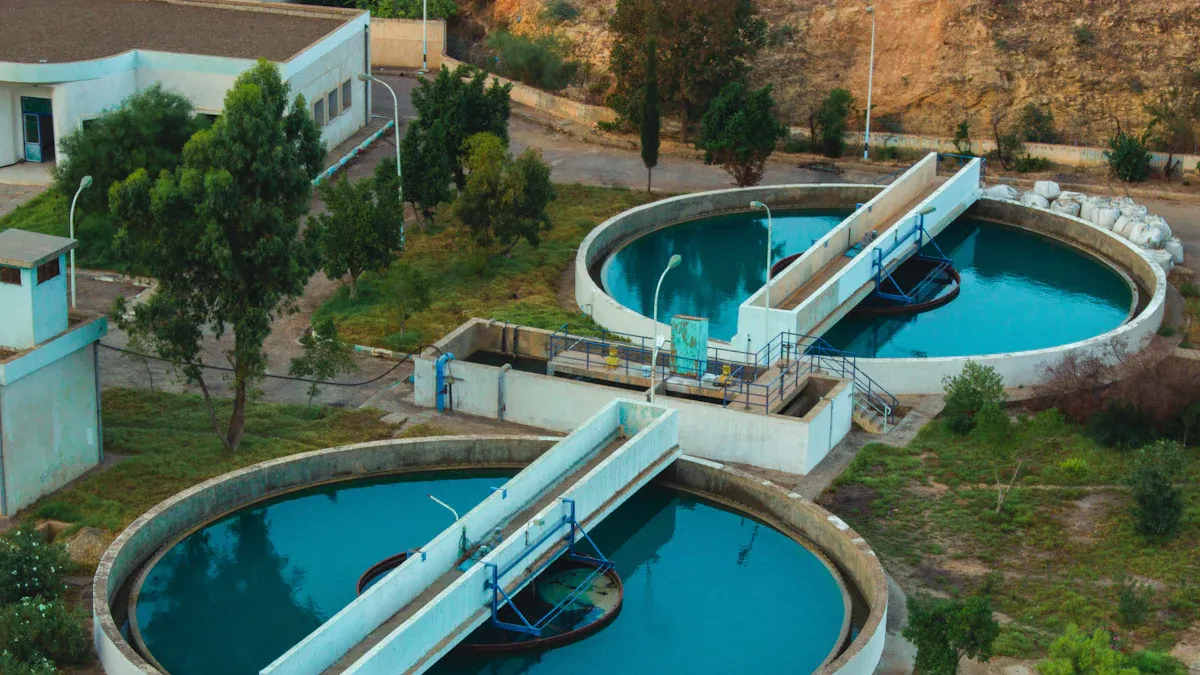
The pressures on the wastewater industry are real. The solutions are innovative and available now. Plants must adopt a new toolkit to thrive by 2026. This toolkit focuses on smart technology, resource recovery, and flexible infrastructure. These innovations are not just ideas. They are practical tools redefining how a modern waste water treatment plant operates.
Trend 1: Smart Operations Through Digitalization
Digitalization transforms a plant from a reactive facility to a predictive one. It uses data to make smarter, faster decisions. This trend involves integrating sensors, artificial intelligence (AI), and advanced software to optimize every process.
IoT sensors are the eyes and ears of a smart plant. They collect real-time data on water quality, equipment performance, and energy use. New advancements like sensor miniaturization and edge computing make this data more accurate and immediately useful. Edge computing processes data near the source. This reduces delays and allows for faster responses.
AI and machine learning act as the brain. These systems analyze data to find patterns and predict future events. One key application is predictive maintenance. AI can forecast equipment failures before they happen. This allows teams to schedule repairs, reduce downtime, and save money.
- The City of Houston used an AI program to monitor pumps and motors. It cut unscheduled maintenance by over 30%.
- Veolia in Europe uses AI and sensors to watch equipment health. This has lowered maintenance costs and downtime.
- Singapore's Public Utilities Board (PUB) uses machine learning to predict issues with key equipment, making its plants more reliable.
Digital twins are another powerful tool. A digital twin is a virtual model of a physical plant. It uses real-time data to simulate operations. Operators can test changes in the virtual world before applying them in the real world. This helps optimize performance and prevent problems.
| Facility/System | Improvement Area | Performance Metric |
|---|---|---|
| Gothenburg Sewage Network | Untreated water discharges | 50% reduction |
| Gothenburg Sewage Network | Process efficiency | More stable flows |
| Singapore Public Utilities | Event prediction | 5-day prediction for decisions |
Digital twins provide a complete view of plant operations. They empower operators to make informed decisions quickly and effectively, reducing risks and improving efficiency.
Trend 2: Resource Recovery and the Circular Economy
Wastewater is no longer just waste. It is a valuable source of clean water, energy, and nutrients. The circular economy model treats wastewater as a resource stream. This approach creates new revenue opportunities and improves sustainability.
The most valuable resources to recover are water, energy, and nutrients like nitrogen and phosphorus. Recovered water can be used for irrigation or industrial processes. This reduces the strain on local freshwater supplies. Energy can be generated from biogas produced during anaerobic digestion.
Nutrient recovery is becoming a major focus. Nitrogen and phosphorus are essential for agriculture, but they can harm ecosystems if discharged into rivers. Recovering them turns a pollutant into a valuable fertilizer product.
Several technologies make this possible:
- Struvite Precipitation: This process recovers phosphorus and nitrogen together to create struvite. Struvite is a slow-release fertilizer.
- Ammonia Stripping: This method removes ammonia from wastewater. It can then be captured and converted into an ammonium sulphate fertilizer.
- Deammonification: This energy-efficient biological process removes nitrogen. It reduces aeration energy needs by up to 60% compared to traditional methods.
Combining these technologies with anaerobic digestion creates a powerful system. The plant can produce renewable energy and valuable nutrients, turning a cost center into a profit center.
Trend 3: Decentralized and Modular Treatment Systems
The traditional model of a single, massive treatment plant is facing challenges. Long pipelines are expensive to build and maintain. Centralized systems are vulnerable to failure. A new approach is gaining ground: decentralized and modular treatment.
Decentralized systems treat wastewater closer to where it is generated. This could be for a single industrial park, a new housing development, or a remote community. These systems use modular units, which are pre-fabricated, containerized treatment plants.
Modular systems like Fluence's Aspiral™ are designed for easy transport and setup. Their "plug-and-play" nature makes them ideal for remote locations or as a quick way to add capacity.
This approach offers major advantages.
Lower Capital Costs: Modular systems can cut capital costs in half compared to traditional plants. They eliminate the need for extensive and expensive pipeline networks. Collection networks can account for 75% of the cost of a centralized system. Avoiding this expense frees up capital for other community needs.
Flexibility and Scalability: A community or business can start with the capacity it needs today. It can easily add more modules as it grows. This avoids the massive upfront investment of building a large plant for future demand.
Increased Resilience: Decentralized networks are more resilient. If one unit goes offline for maintenance, it does not affect the entire system. This localization of issues prevents widespread service disruptions during failures or natural disasters. This is a key benefit for improving infrastructure in urban areas.
Practical Steps for Modernizing Your Waste Water Treatment Plant
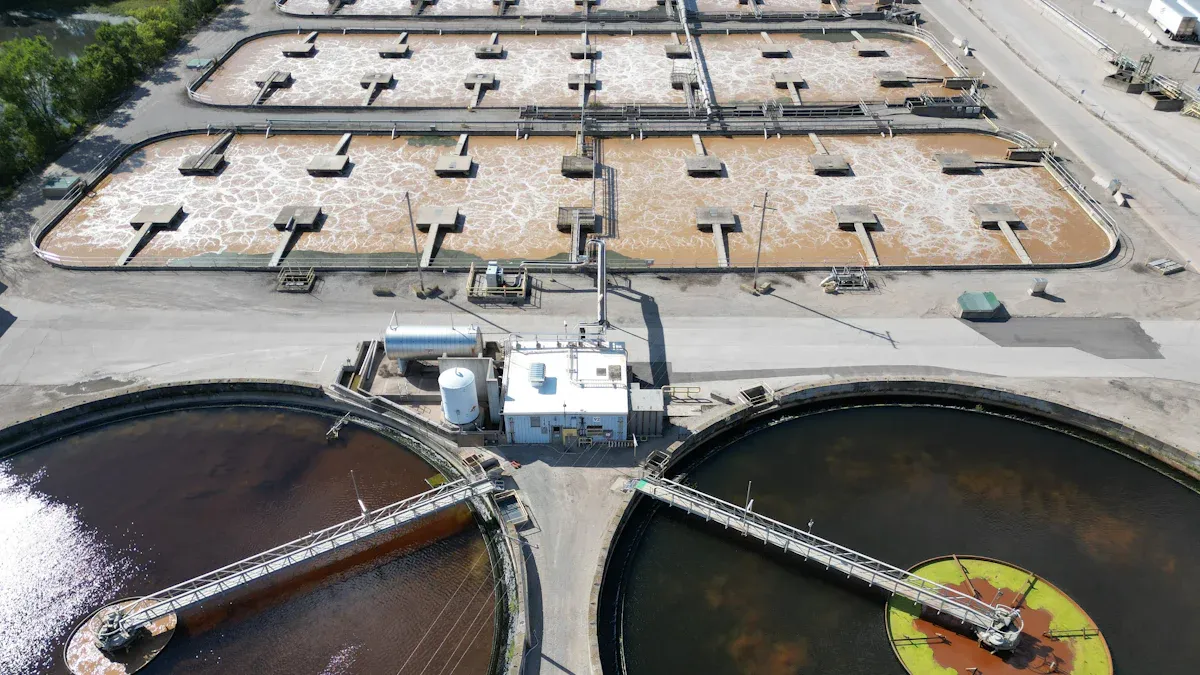
Understanding the trends is one thing. Acting on them is another. Modernizing your facility does not require a complete overhaul overnight. It is a journey you can begin with practical, manageable steps. A clear plan transforms a big goal into a series of achievable wins.
Conduct a Comprehensive Plant Audit
The first step is to know where you stand. A comprehensive plant audit is like a health check-up for your facility. It gives you a clear picture of your current performance. This data is the foundation for all future decisions. The audit identifies inefficiencies, risks, and opportunities for improvement.
An audit examines the core components of your system. It also measures key performance indicators (KPIs) to see how well things are running.
-
Components Evaluated:
- Pumps, filters, and aeration systems
- Settling tanks
- Feed and control equipment
- Flow switches and reverse osmosis systems
- Technology infrastructure like sensors and modems
-
Key Performance Indicators (KPIs) Measured:
- Energy consumed per unit of water treated
- Amount of chemicals used
- Ratio of maintenance time to operation time
You can partner with specialized firms for this process. Companies like Veolia North America, AESC Inc., and Nalco Water offer expert audits. For example, Nalco Water provides a Level 1 audit for a full system review and a Level 2 audit that also suggests new solutions for operational problems. These experts compare your plant's performance to industry best practices.
Prioritize High-ROI Pilot Projects
An audit will give you a lot of data. The next step is to use that data to choose the right starting projects. You do not have to fix everything at once. Instead, focus on pilot projects with a high Return on Investment (ROI). ROI measures the financial return you get from an investment. High-ROI projects deliver the biggest impact for the lowest cost or effort.
Calculating ROI for a technology upgrade involves a few key factors:
- Capital Investment: The total cost to buy, install, and set up the new equipment.
- Operational Savings: The reduction in annual costs. This includes lower energy and chemical use, less sludge disposal, and reduced labor.
- ROI Calculation: The net savings show you how quickly the investment pays for itself.
When choosing a pilot project, look for quick wins. For example, installing AI-powered predictive maintenance software on a few critical pumps can immediately reduce downtime and repair costs. A successful pilot project proves the value of new technology. It builds support within your organization for larger changes. It also helps your team learn new skills on a smaller, more manageable scale.
Develop a Phased Implementation Plan
After successful pilot projects, you can create a long-term plan. A phased implementation plan breaks down the full modernization of your waste water treatment plant into logical stages. This approach makes the project more affordable and less disruptive.
A good plan starts by prioritizing the most critical systems first. Use the data from your energy audit to find the biggest energy users. You can then implement changes in two ways:
- Passive Measures: These are simple, low-cost actions like fixing leaks or optimizing pump schedules.
- Active Measures: These are larger investments, such as installing automation systems or new treatment technologies like an MBR.
As you roll out new technologies, it is important to be aware of potential challenges. Each system has unique requirements for success.
| Technology | Common Challenge | Key to Success |
|---|---|---|
| Membrane Bioreactors (MBRs) | Membrane clogging and fouling from insufficient pretreatment. | Implement a rigorous pretreatment process to protect the membranes. |
| Anammox Process | Long start-up times and high sensitivity to temperature and oxygen. | Maintain a strict operational and control routine with skilled operators. |
| Anaerobic Digestion | High initial capital costs and issues with methane dissolving in cold water. | Pair with technology to strip and capture dissolved methane for energy use. |
By planning in phases and preparing for these challenges, you can ensure a smooth and successful modernization. This step-by-step process builds a resilient, efficient, and future-proof facility over time.
Building a Resilient Future: People and Partnerships
Technology alone cannot future-proof your plant. Success depends on skilled people and strong partnerships. Investing in your team and choosing the right collaborators are critical steps for building a resilient operation.
Upskilling Your Team for Data-Driven Operations
A smart plant needs a smart team. Operators must develop new skills to manage data-driven systems. Training programs are essential for this transition. They help your staff gain confidence with new tools and processes.
Key skills for the modern operator include:
- Analytical Thinking: To evaluate test results and make informed decisions.
- Computer Skills: To use software for monitoring plant processes and entering data.
- Mechanical Skills: To maintain and repair pumps, motors, and other equipment.
Organizations like the Veolia Academy offer free online courses. These programs help individuals prepare for careers in the water industry and earn state certifications.
Forging Strategic Technology Partnerships
You do not have to navigate modernization alone. Strategic partners provide expertise and support. A good system integrator (SI) understands both operational technology (OT) and information technology (IT). They help connect your physical equipment to your digital systems securely. Choosing a single-source provider offers several advantages.
| Benefit | Description |
|---|---|
| Customized Solutions | They design systems that meet your exact needs without extra costs. |
| Long-Term Support | They provide ongoing help to ensure your system adapts to future changes. |
Staying Ahead of the Regulatory Curve
Regulations are always changing. Proactive plants stay informed and prepared. In the U.S., the Environmental Protection Agency (EPA) sets the national standards for wastewater discharge. Staying ahead means engaging with regulators and planning for future rules.
A great way to prepare is by testing new technologies early. This helps you understand how to meet stricter limits on pollutants like PFAS and microplastics before they become mandatory.
The future of wastewater treatment rests on three pillars: digitalization, resource recovery, and modular systems. Proactive changes transform your waste water treatment plant into a resilient and profitable operation. Begin your facility assessment now to secure a competitive advantage and ensure long-term success. This is the path forward.
FAQ
What is the first step to modernize my plant?
Start with a comprehensive plant audit. This audit identifies your facility's current performance, risks, and biggest opportunities. It provides the data needed for smart decision-making.
What does a circular economy mean for wastewater?
It means treating wastewater as a source of valuable resources. Plants can recover clean water, energy, and nutrients. This approach turns a waste product into a revenue stream.
Why are modular systems a key trend?
Modular systems offer flexibility and lower initial costs. They allow plants to add capacity only when needed. This avoids large, expensive construction projects built for uncertain future demand.