2026 Trends in Chicken Bone Detector Technology for Safer Food
The chicken bone detector market is set to reach $73.54 million in 2026, reflecting a 7.6% annual growth rate.
| Year | Market Size (USD Million) | CAGR (%) |
|---|---|---|
| 2025 | 68.33 | N/A |
| 2026 | 73.54 | 7.6 |
| 2034 | 113 | N/A |
Manufacturers now leverage artificial intelligence and dual-energy X-ray systems to deliver higher detection accuracy. These innovations reduce product recalls and enhance consumer safety. The industry responds to rising demand for bone-free poultry and stricter food safety regulations.
AI-Powered Chicken Bone Detector Systems
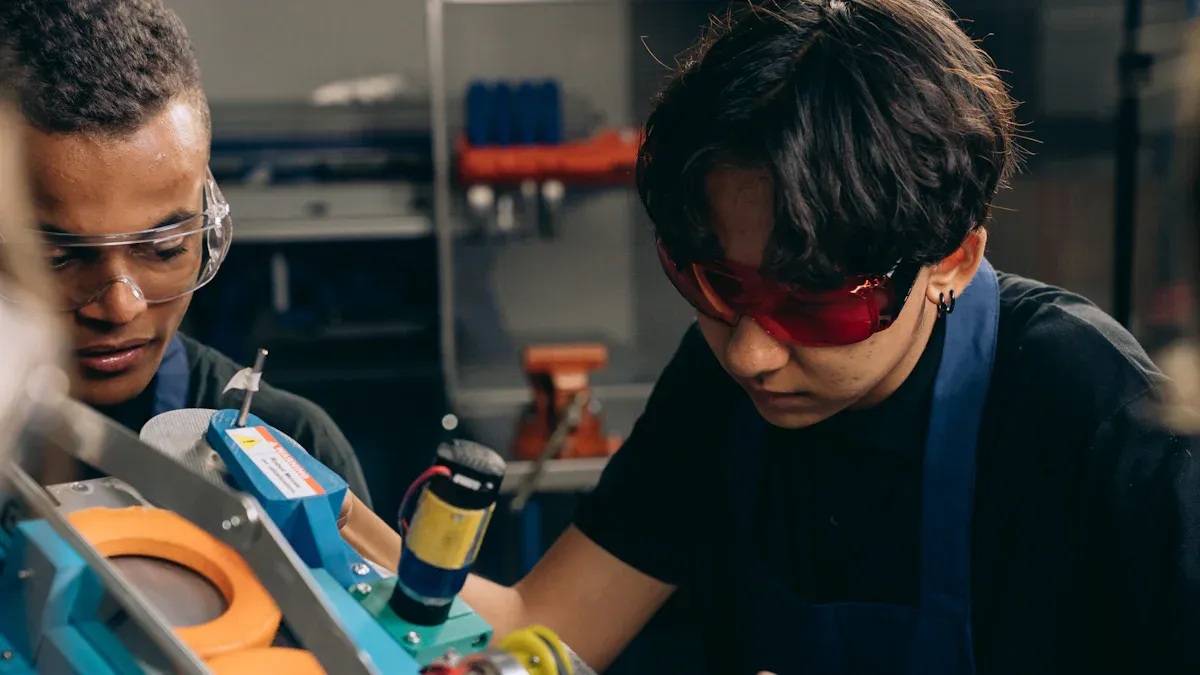
Machine Learning Enhancing Detection Accuracy and Speed
AI-powered chicken bone detector systems have transformed poultry processing in 2026. These advanced solutions use complex machine learning algorithms trained on extensive datasets. The technology enables the systems to identify even the smallest bone fragments that traditional detectors often miss.
- AI-driven poultry x-ray detection systems now deliver significantly higher accuracy.
- Machine learning models reduce false rejects by up to 30%, minimizing unnecessary waste.
- Self-learning capabilities allow these detectors to adapt and improve over time, responding to new types of contaminants and product variations.
- The systems excel at identifying subtle contaminants, which boosts overall food safety.
Chicken bone detector technology powered by AI not only increases detection speed but also ensures consistent performance throughout production shifts. These improvements help processors meet strict food safety standards and reduce the risk of costly recalls.
Tip: Companies that invest in AI-powered detection systems often see a rapid return on investment due to reduced waste and improved product quality.
Real-World Applications of AI in Chicken Bone Detection
Poultry processing plants have adopted AI-based chicken bone detector systems to achieve measurable improvements in efficiency and safety. The following table highlights real-world examples and their outcomes:
| Evidence Description | Key Outcomes |
|---|---|
| AI vision systems utilize high-resolution cameras to detect variations in poultry products, enhancing cutting precision and reducing waste. | 40% reduction in waste through optimized cutting paths. |
| Neural networks trained on thousands of poultry examples continuously improve decision-making capabilities. | Achieves 95% optimization within weeks of implementation. |
| Real-time adjustments allow for instantaneous detection of anomalies like bone fragments. | Maintains consistent quality and throughput rates. |
| AI systems achieve millimeter precision in cutting, adapting to individual bird variations. | 99.2% accuracy in targeting high-value cuts compared to 87.5% in manual processing. |
These applications demonstrate how AI-driven chicken bone detector systems deliver both operational and safety benefits. Processors now maintain higher throughput rates and consistent product quality. The technology adapts quickly to new challenges, ensuring that food safety remains a top priority in the poultry industry.
Advanced Imaging in Chicken Bone Detector Technology
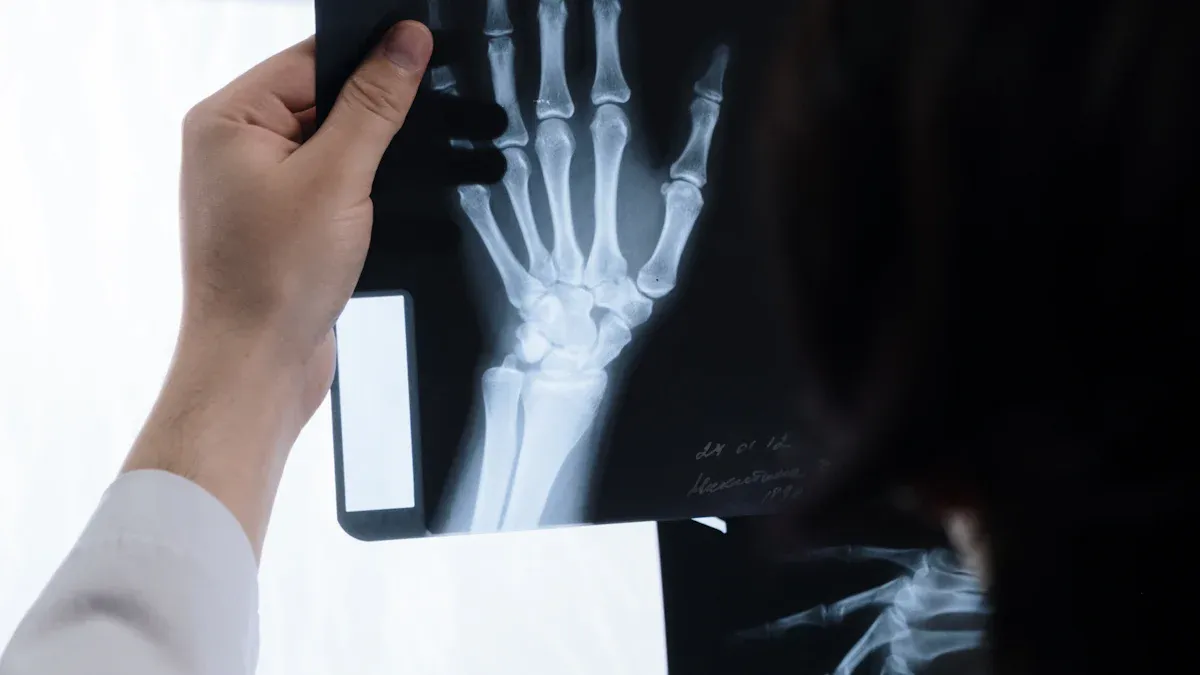
X-ray and Hyperspectral Imaging Breakthroughs
Advanced imaging has become a cornerstone in modern poultry processing. X-ray systems now detect a wider range of contaminants, including small calcified bone pieces that older technologies often miss. Hyperspectral imaging represents a significant leap forward. This technology analyzes poultry products in real time, using a spectrum of light to identify bone fragments and other foreign materials without damaging the product.
Traditional metal detectors struggle with non-ferrous metals and can lose accuracy when food contains high moisture, salt, or fat. X-ray systems offer broader detection capabilities, but they sometimes face challenges with implementation and the size of detectable fragments. Hyperspectral imaging addresses these issues by providing non-destructive, high-resolution analysis that adapts to different product types and processing conditions.
Advantages Over Conventional Detection Methods
Advanced imaging techniques, especially when combining ultrasound imaging with multivariate image analysis, achieve accuracy rates above 95% for identifying bone fragments in chicken breast fillets. Conventional methods rely heavily on manual inspection, which introduces subjectivity and reduces reliability.
The latest high-speed food x-ray inspection machines, such as those using PXT™ dual energy photon-counting technology, deliver higher resolution images and fewer false rejects. These improvements lead to increased productivity and less rework in processing plants.
| Feature | Description |
|---|---|
| Technology | PXT™ dual energy photon-counting x-ray technology |
| Speed | High-speed food x-ray inspection machine |
| Resolution | Higher resolution images than previously possible |
| False Rejects | Fewer false rejects due to improved detection capabilities |
| Productivity | Increased productivity and reduced rework |
Chicken bone detector systems that use these advanced imaging technologies help processors achieve safer, more efficient operations.
Real-Time and Inline Chicken Bone Detector Solutions
Integration in Poultry Processing Lines
Modern poultry processing lines now rely on real-time and inline detection systems to ensure product safety and quality. These solutions integrate advanced technologies directly into the production flow, allowing for immediate identification and removal of bone fragments.
Key components of these systems include:
- The Maximizer RMI Advanced Chicken Bone X-Ray Detection System, which delivers superior detection of bones and contaminants while maintaining hygienic operation.
- PXT™ dual energy photon-counting x-ray detectors, which enhance image resolution and data capture for more precise inspections.
- SimulTask™ PRO software, which enables real-time analysis and sets a new industry standard for inline detection.
The following table outlines how these technologies fit into a typical processing line:
| Component | Description |
|---|---|
| Vision Inspection System | Operates independently or with X-ray systems to detect surface and larger bones. |
| Conveyor Belt | Provides on-line imaging of chicken parts for real-time inspection. |
| Image Database | Stores over 1,700 categorized images of chicken parts for reference and analysis. |
| Detection Algorithm | Uses image acquisition, pre-processing, color, and shape analysis for accurate bone detection. |
| Fusion System | Combines vision and X-ray technologies to improve accuracy and reduce false alarms. |
Boosting Food Safety and Operational Efficiency
Real-time chicken bone detector systems significantly improve both food safety and operational efficiency. These technologies provide rapid and sensitive detection of chicken residues and bone fragments, outperforming traditional methods such as manual inspection. Color and fluorescence spectrometry identify contamination levels that human senses cannot detect, which helps maintain hygiene and reduce the risk of foodborne illness.
Machine learning classifiers further enhance the accuracy of these systems, allowing processors to distinguish between clean and contaminated surfaces quickly. As a result, poultry plants experience fewer recalls, higher throughput, and consistent product quality. Real-time detection not only protects consumers but also streamlines operations, making it an essential part of modern poultry processing.
Compact and Cost-Effective Chicken Bone Detector Devices
Miniaturization and Affordability Trends
Manufacturers have shifted focus toward smaller, more affordable detection devices. These compact systems use advanced dual energy photon-counting X-ray technology, which allows them to identify bone fragments as small as 1 mm. This level of precision was not possible with older, bulkier machines. The miniaturization trend has reduced both the footprint and the cost of ownership for processors.
- Compact detectors require less space on the production floor.
- Maintenance needs have decreased due to simplified designs.
- High reliability results from advanced technology, minimizing downtime.
The dual energy technology in these devices addresses the limitations of traditional systems. Older machines often miss small bone fragments because bones and meat have similar densities. The new technology improves detection reliability and enhances consumer safety.
| Feature | Compact Chicken Bone Detector | Traditional Systems |
|---|---|---|
| Detection Size | Down to 1 mm | Varies, often larger |
| Technology | Dual energy photon-counting X-ray | Standard X-ray |
| Reliability | High, due to advanced technology | Moderate, struggles with small fragments |
Expanding Access for Small and Medium Processors
Smaller and medium-sized poultry processors now benefit from these compact devices. Lower costs and easier installation make advanced detection technology accessible to more businesses. Companies no longer need to invest in large, expensive equipment to achieve high food safety standards.
- Compact systems fit into existing processing lines without major modifications.
- User-friendly interfaces reduce training time for staff.
- Enhanced detection capabilities improve product quality and reduce recalls.
These trends ensure that the advantages of modern chicken bone detector technology reach a wider segment of the industry. As a result, more processors can deliver safer products to consumers.
Regulatory and Industry Adoption of Chicken Bone Detector Technology
Meeting New Food Safety Standards
Food safety regulations continue to evolve in 2026. Processors must adapt quickly to maintain compliance and protect consumers. Multifunctional X-ray inspection systems play a critical role in this process. These advanced systems detect a wide range of contaminants, including chicken bones, and help companies meet strict regulatory requirements.
- Multifunctional X-ray systems enhance food safety by identifying contaminants such as bone fragments.
- Processors rely on these technologies to comply with new and evolving food safety regulations.
- High-resolution imaging, such as PXT™ technology, ensures the detection of bone fragments as small as 1 mm.
Regulatory agencies now require documented safety management systems. Companies must demonstrate that their detection equipment meets or exceeds hygiene standards. The adoption of advanced imaging and detection systems supports these efforts and reduces the risk of non-compliance.
Industry Case Studies and Success Stories
Regulatory agencies evaluate the effectiveness of new detection technologies using measurable criteria. The following table highlights key findings and their implications for regulatory evaluation:
| Key Findings | Implications for Regulatory Evaluation |
|---|---|
| Ultrasonic detection effectively identifies bone fragments in chicken breasts. | Supports the need for advanced detection systems to meet hygiene regulations. |
| Amplitude ratio can differentiate between samples with and without bone fragments. | Provides a measurable criterion for evaluating detection technology effectiveness. |
| New hygiene regulations require documented safety management systems. | Highlights the regulatory framework guiding the implementation of detection technologies. |
Many poultry processors report fewer recalls and improved product quality after implementing these systems. The chicken bone detector has become a standard tool for meeting both industry and regulatory expectations.
- In 2026, advanced imaging and AI-powered systems drive major improvements in food safety.
- Chicken bone detector technology continues to evolve, promising even greater accuracy and efficiency.
Ongoing innovation ensures safer poultry products for consumers and sets new industry standards for quality.
FAQ
What is the smallest bone fragment current detectors can identify?
Advanced detectors in 2026 can identify bone fragments as small as 1 millimeter. This precision greatly reduces the risk of contamination in poultry products.
How do AI-powered systems improve food safety?
AI-powered systems analyze data in real time. They adapt to new contaminants and consistently deliver higher detection accuracy than manual inspection.
Are compact detectors suitable for small processors?
Yes. Compact detectors fit into limited spaces and require minimal training. Small and medium processors can now access advanced food safety technology.
See Also
Essential Checkweighers Food Plants Must Have for Efficiency
Key Capsule Checkweighers to Explore for 2025 Purchases
Innovative Materials Transforming the Heat Exchanger Market
Top Locations for Purchasing X-Ray Inspection Machines in China
Is Investing in Automated Virus Sampling Tube Lines Worth It?