What Are Ketones, Nitrites, and More? A Urine Strip Guide

A Urine Test Strip is an at-home tool that measures substances in your urine. These substances, like ketones and nitrites, offer clues about your metabolic function, kidney health, and potential infections. Products like the 14 Parameter Urine Test Strips for Urinalysis Tests for Ketone Calcuim help you monitor common conditions affecting millions worldwide.
| Condition | Prevalence (Worldwide) |
|---|---|
| Diabetes | 537 million adults |
| Chronic Kidney Disease | ~10% of the global population |
| Urinary Tract Infections | ~150 million people annually |
Key Takeaways
- Urine test strips help you check your health at home. They show things like ketones and nitrites in your urine. These clues can tell you about your body's health and if you might have an infection.
- Understanding your urine test results helps you know when to see a doctor. High ketones or positive nitrites and leukocytes mean you should get medical help right away. Other results might mean you need to watch your health and talk to your doctor later.
- Urine test strips are for screening, not for diagnosing. They help you find possible problems early. A doctor must make a diagnosis and create a treatment plan.
A Guide to 14 Parameter Urine Test Strips for Urinalysis Tests for Ketone Calcuim
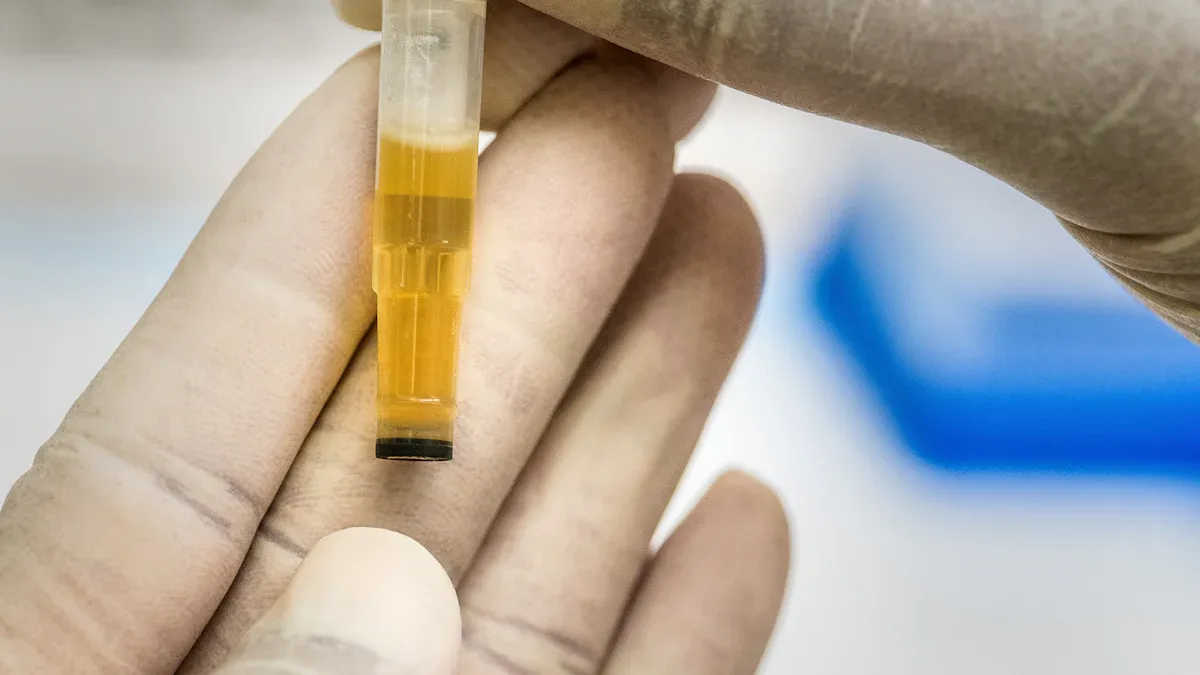
Understanding what each panel on a test strip measures helps you make sense of your results. A comprehensive tool like the 14 Parameter Urine Test Strips for Urinalysis Tests for Ketone Calcuim gives you a wide view of your health. Below is a guide to what each parameter means and the standard reference ranges.
| Parameter | Standard Reference Range |
|---|---|
| Leukocytes | Negative |
| Nitrite | Negative |
| Urobilinogen | 0.1–1.0 mg/dL |
| Protein | Negative (1–14 mg/dL) |
| pH | 5.0–8.5 |
| Blood | Negative |
| Specific Gravity | 1.000–1.030 |
| Ketones | Negative |
| Bilirubin | Negative |
| Glucose | Negative |
| Ascorbic Acid | Negative |
| Creatinine | 10–300 mg/dL |
| Microalbumin | 0–20 mg/dL |
| Calcium | 5–20 mg/dL |
Ketones: Fat Metabolism and Diet Clues
Ketones are substances your body makes when it burns fat for energy instead of glucose. This process, called ketosis, is a key part of low-carb or ketogenic diets. The production of ketones follows a specific metabolic path:
- Your body breaks down fatty acids into a molecule called acetyl-CoA.
- During fasting or low-carb diets, the liver uses a substance called oxaloacetate to make glucose.
- This makes oxaloacetate unavailable to combine with acetyl-CoA in the usual energy cycle.
- As a result, the liver diverts the excess acetyl-CoA to create ketone bodies.
- These ketones then enter your bloodstream and can show up in your urine.
A 14 Parameter Urine Test Strips for Urinalysis Tests for Ketone Calcuim can detect these ketones. For people on a ketogenic diet, "trace" or "small" ketone levels are normal. However, very high levels can be a sign of diabetic ketoacidosis (DKA), a serious condition.
| Urine Ketone Levels | Interpretation |
|---|---|
| <20 mg/dL | Small |
| 30–40 mg/dL | Moderate |
| >80 mg/dl | Large |
Nitrites: A Telltale Sign of a UTI
A positive nitrite test is a strong indicator of a urinary tract infection (UTI). Your diet normally contains nitrates. Certain bacteria, most commonly E. coli, have enzymes called nitrate reductases. These enzymes convert the harmless nitrates in your urine into nitrites. The presence of nitrites signals that these specific bacteria are likely in your urinary tract. While the nitrite test is very specific (94.3%), meaning a positive result strongly suggests a UTI, it is slightly less sensitive than the leukocyte test.
Leukocytes: Your Body's Infection Fighters
Leukocytes are white blood cells that fight infection. When your body detects an infection or inflammation in the urinary tract, it sends neutrophils (a type of leukocyte) to the area. These activated neutrophils release an enzyme called leukocyte esterase. A 14 Parameter Urine Test Strips for Urinalysis Tests for Ketone Calcuim detects this enzyme, indicating an immune response.
Note: While a UTI is a common cause, elevated leukocytes can also result from other conditions like kidney stones, prostatitis in men, certain cancers, or general inflammation in the body.
Glucose: A Primary Indicator for Diabetes
Normally, your urine should be free of glucose. Your kidneys filter glucose from your blood but reabsorb it. However, there is a limit to how much glucose the kidneys can reabsorb. This limit is called the renal threshold for glucose, typically around 180-200 mg/dL. If your blood sugar level exceeds this threshold, the excess glucose spills into your urine. This is a primary sign of uncontrolled diabetes. While less common, glucose can also appear in urine due to certain kidney conditions or pregnancy.
Protein: An Early Warning for Kidney Health
Protein in the urine, or proteinuria, can be an early sign of kidney disease. Healthy kidneys filter waste from your blood but keep large molecules like protein in. Damaged kidneys may let protein leak into the urine. Proteinuria can be:
- Transient (Temporary): Caused by factors like intense exercise, fever, dehydration, or emotional stress. It usually resolves on its own.
- Persistent: A more serious sign that may point to chronic kidney disease, diabetes, or high blood pressure.
If a test strip shows a positive result for protein, guidelines recommend a follow-up quantitative test, like an albumin-to-creatinine ratio (ACR), to confirm the finding and assess kidney health more accurately.
Blood: What It Means in Your Urine
Finding blood in your urine (hematuria) can be alarming, but it has many possible causes. Test strips can detect even tiny amounts you cannot see.
- Macroscopic hematuria means the blood is visible, turning urine pink, red, or brown.
- Microscopic hematuria means the blood is only visible under a microscope.
Benign causes include strenuous exercise or contamination from menstruation. However, blood in the urine can also signal more serious issues like a UTI, kidney stones, or injury to the urinary tract. A 14 Parameter Urine Test Strips for Urinalysis Tests for Ketone Calcuim provides an initial screen for this important marker.
pH: The Acidity of Your Urine
The pH level measures how acidic or alkaline your urine is. The scale runs from 0 (most acidic) to 14 (most alkaline), with 7 being neutral. A normal urine pH ranges from 5.0 to 8.5. Your diet greatly influences your urine pH.
- Acidic Urine: Diets high in protein can make urine more acidic.
- Alkaline Urine: Diets rich in fruits and vegetables tend to make urine more alkaline.
Persistently acidic or alkaline urine can be significant. Acidic urine increases the risk for uric acid kidney stones, while alkaline urine can promote the formation of calcium phosphate stones and increase the risk of certain UTIs.
Specific Gravity: A Measure of Hydration
Specific gravity measures the concentration of your urine. It compares the density of your urine to the density of water. The normal range is typically between 1.005 and 1.030.
- High Specific Gravity: Indicates concentrated urine. This is often a sign of dehydration but can also point to kidney issues.
- Low Specific Gravity: Indicates dilute urine. This usually means you are well-hydrated, but persistently low values could signal a kidney problem where the kidneys cannot concentrate urine properly.
Urobilinogen and Bilirubin: Liver Health Markers
Bilirubin and urobilinogen are pigments related to the breakdown of old red blood cells. Their presence in urine provides important clues about liver and gallbladder health.
- The liver processes old red blood cells, creating bilirubin.
- This bilirubin travels to the intestine, where bacteria convert it into urobilinogen.
- Most urobilinogen is excreted in stool, but a small amount is reabsorbed into the blood and filtered by the kidneys into urine.
Normally, urine contains no bilirubin and only a small amount of urobilinogen. Elevated bilirubin in urine can suggest liver disease like hepatitis or a bile duct obstruction. High urobilinogen may indicate conditions like hepatitis or cirrhosis. A 14 Parameter Urine Test Strips for Urinalysis Tests for Ketone Calcuim helps monitor these crucial liver function markers.
Creatinine and Micro Albumin: Kidney Function Check
Creatinine is a waste product from muscle metabolism that healthy kidneys filter out at a steady rate. Microalbumin is a small type of protein. Testing for these two substances together provides a powerful check on kidney function. The albumin-to-creatinine ratio (ACR) is a more accurate marker for kidney damage than measuring albumin alone because it corrects for variations in urine concentration. An elevated ACR is an early sign of kidney damage, often seen in people with diabetes or high blood pressure. Using a 14 Parameter Urine Test Strips for Urinalysis Tests for Ketone Calcuim allows for this important screening.
Calcium: A Clue for Kidney Stone Risk
Your body tightly regulates calcium levels. Excess calcium is excreted in the urine, a condition known as hypercalciuria. This can be caused by genetic factors, a high-sodium diet, certain medications, or underlying conditions like an overactive parathyroid gland. High levels of calcium in the urine significantly increase the risk of forming calcium oxalate kidney stones, the most common type of kidney stone.
Tip: To help reduce the risk of calcium oxalate stones, experts often recommend limiting high-oxalate foods like spinach and rhubarb and ensuring you get enough dietary calcium with meals.
Ascorbate (Vitamin C): Potential for Interference
Ascorbate is Vitamin C. While essential for health, high concentrations in your urine can interfere with the results of some test pads. Specifically, it can cause false-negative results for glucose and blood. For example, one study found that the presence of Vitamin C caused a 42.3% false-negative rate for glucose tests. The 14 Parameter Urine Test Strips for Urinalysis Tests for Ketone Calcuim includes an ascorbate pad to help you know if your results for other parameters might be affected.
When to See a Doctor Based on Your Results

Your test strip results provide valuable health clues. Knowing how to interpret them helps you decide on the next steps. Some results require quick action, while others suggest monitoring.
Seek Immediate Medical Consultation
You should seek immediate medical consultation if your results show any of the following:
- High Ketones combined with symptoms like extreme thirst, frequent urination, or confusion. This could signal diabetic ketoacidosis (DKA).
- Positive Nitrites and Leukocytes along with symptoms like fever, back pain, or severe discomfort. This points to a potentially serious UTI.
- Positive Bilirubin, which can be a sign of liver or gallbladder issues.
- Any amount of Glucose if you have not been diagnosed with diabetes.
When to Monitor and Consult Your Doctor
Not every abnormal result is an emergency. You can monitor some findings and consult your doctor if they persist. A repeated positive result for protein, blood, or trace ketones (if you are not on a low-carb diet) means you should talk to your doctor. Consistently high or low pH levels also warrant a discussion. Tracking these results over a few days gives your doctor a clearer picture of your health patterns.
Important Disclaimer: Screening vs. Diagnosis
Your test strip is a screening tool, not a diagnostic one. It helps you spot potential issues early. A diagnosis is a formal medical conclusion made only by a qualified healthcare professional. 🩺
You can use the information from a 14 Parameter Urine Test Strips for Urinalysis Tests for Ketone Calcuim to start an informed conversation with your doctor. A doctor uses your results, symptoms, and other tests to make an accurate diagnosis and create a treatment plan.
Understanding parameters like ketones and nitrites empowers you to monitor your health proactively. You can use this knowledge to make informed decisions about your well-being.
Use this guide to know when to seek professional medical advice. It is not a tool for self-diagnosis. 🩺
FAQ

How do I use the test strips correctly?
Using the strips is a simple process. You can follow these steps for an accurate reading:
- Collect a fresh urine sample in a clean cup.
- Dip one strip into the urine and remove it quickly.
- Compare the strip's colors to the chart on the bottle.
When is the best time to test my urine?
Tip: 💡 You should test your first-morning urine. This sample is the most concentrated. It can give you more accurate results for parameters like nitrites and protein.
Can I use an expired test strip?
No, you should not use expired strips. They can provide inaccurate results. Always check the expiration date on the bottle before you perform a test.
See Also
Tablet Sampling Machines: Your Essential Guide to Lab Equipment Selection
Canine Flu Virus Antigen Tests: Uncovering the Most Accurate Diagnostics
Understanding 60% Nitric Acid: Its Composition and Diverse Industrial Uses
Aminoguanidine Bicarbonate: Exploring Its Synthesis and Important Practical Applications
Nozzle Solutions: A Comprehensive Guide for Diverse Applications and Professionals