Can 1,4-Butanediol Improve Drug Safety in 2026?
You see rapid growth in 1,4-Butanediol use in pharmaceuticals, with the market reaching $11.06 billion by 2026. 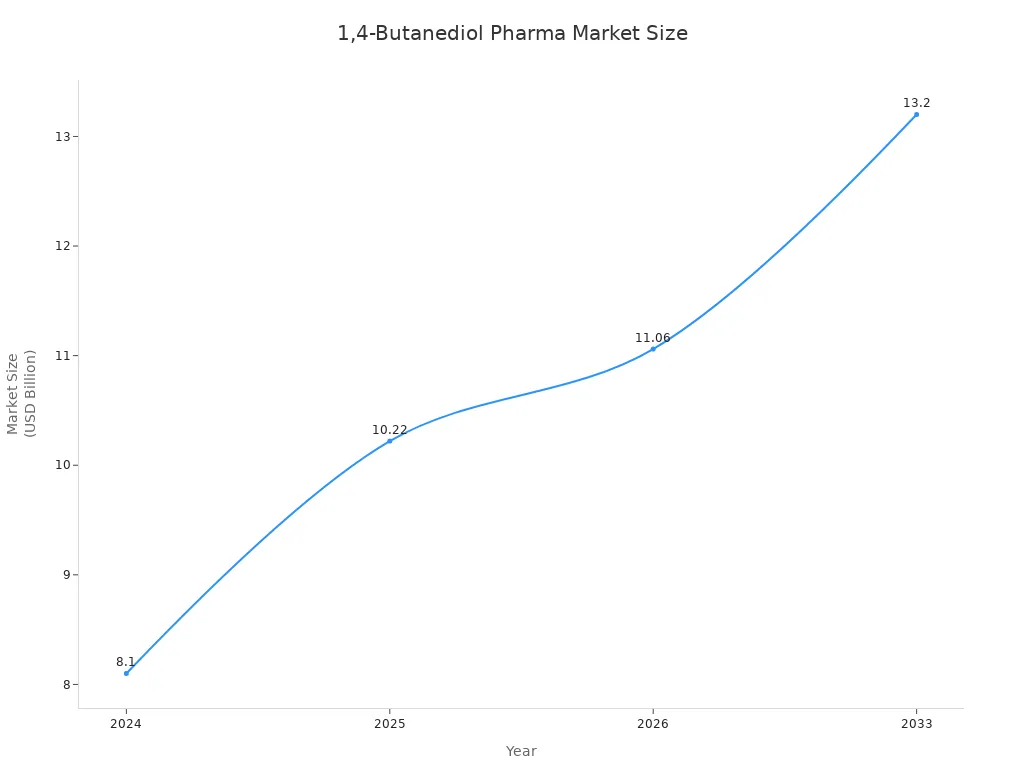
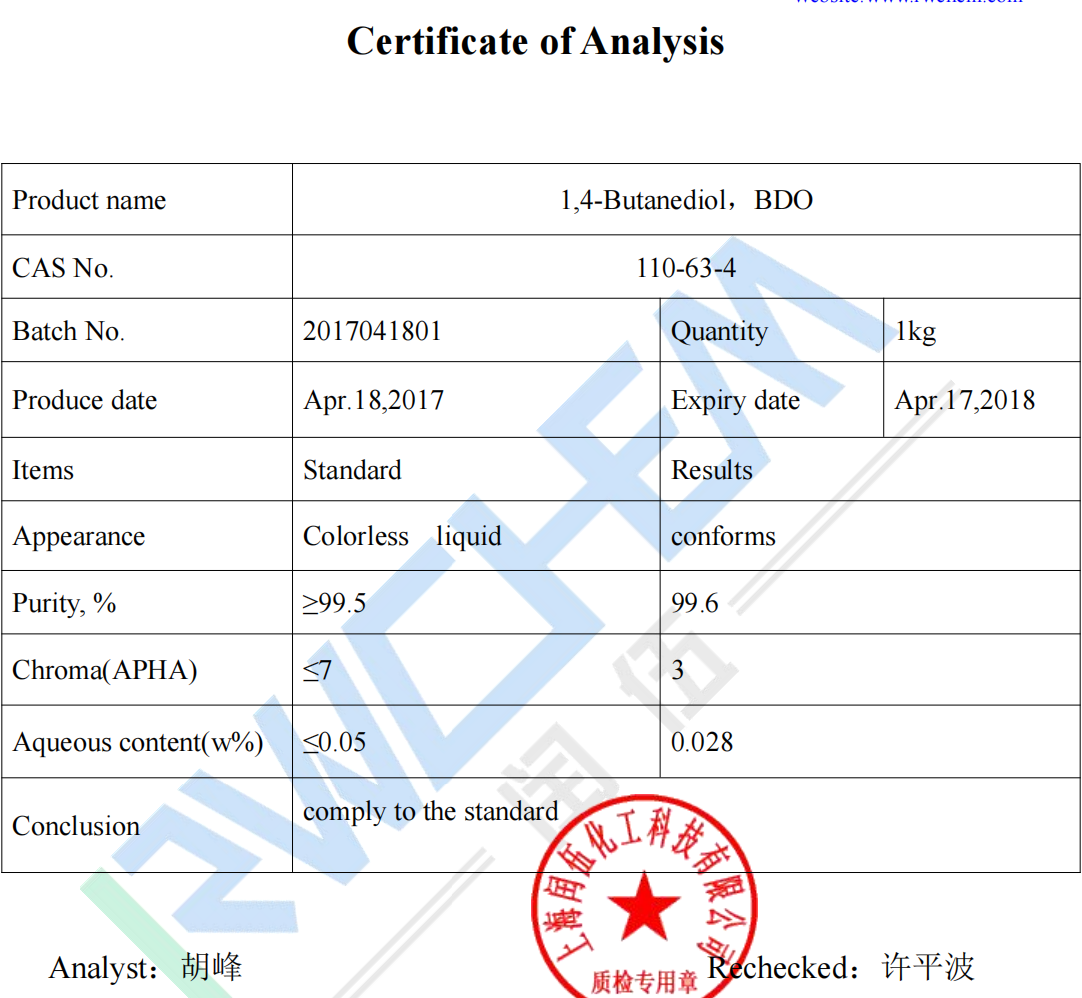
1,4-Butanediol 1,4-BDO CAS 110-63-4 with safe shipping may help improve drug safety as it serves as a key intermediate and critical solvent. You benefit from its use in medical devices and specialty polymers. Ongoing research and new regulations will shape its impact on drug safety.
Key Takeaways
- 1,4-Butanediol acts as a key solvent and stabilizer in pharmaceuticals, ensuring drugs are safe and effective.
- Strict regulations and safety checks help maintain high standards for 1,4-Butanediol in drug manufacturing, protecting consumer health.
- The market for 1,4-Butanediol is expected to grow significantly by 2026, driven by increased demand for safer and more effective pharmaceuticals.
1,4-Butanediol Applications in Pharmaceuticals
Current Uses and Safety Roles
You see 1,4-Butanediol used in many pharmaceutical products today. This chemical acts as a solvent and stabilizer in injectable drugs. It helps dissolve other ingredients and keeps them stable during storage. You also find it as a key intermediate in the synthesis of active pharmaceutical ingredients. Many companies use it to make specialty drugs, anesthetics, and sedatives. Its chemical stability and high purity make it a good choice for these uses.
Here is a table that shows how 1,4-Butanediol is used in pharmaceuticals:
| Use Type | Description |
|---|---|
| Excipient | Acts as a solvent and stabilizer in injectable drugs and polar solvent formulations. |
| Intermediate | Functions as a precursor in the synthesis of drugs or active pharmaceutical ingredients (APIs). |
| Regulatory Status | Recognized as Generally Recognized As Safe (GRAS) by the US FDA for certain applications, aiding its incorporation in pharmaceutical formulations. |
You benefit from strict regulations that guide the use of 1,4-Butanediol. In the European Union, manufacturers must follow REACH rules and provide detailed safety data. In the United States, the EPA sets standards for cleaner production methods. These rules help keep the use of this chemical safe and reliable.
Note: 1,4-Butanediol is intended for safe industrial and commercial use. Regulatory agencies watch its use closely because it can convert to GHB, a controlled substance. This makes safety and compliance very important in pharmaceutical manufacturing.
Mechanisms for Enhancing Drug Safety
You want drugs to be safe and effective. 1,4-Butanediol helps achieve this in several ways. Its excellent miscibility with water allows it to blend well with other ingredients. This property helps create uniform mixtures, which means you get the right dose every time. Its stability at room temperature and high boiling point make it a reliable ingredient in drug formulations.
You also see 1,4-Butanediol used in environments that follow good manufacturing practices. Its high purity and chemical stability reduce the risk of unwanted reactions. This helps prevent contamination and ensures that drugs meet strict quality standards.
- In North America and the EU, you find 1,4-Butanediol in many regulated pharmaceutical products.
- Its use in anesthetics, sedatives, and specialty drugs shows its value in making safe medicines.
- Regulations like the U.S. EPA Toxic Substances Control Act and EU REACH require companies to register and report how they use this chemical.
You should know that the global market for 1,4-Butanediol in the pharmaceutical sector reached about $7.7 billion in 2024. This shows how important it is in making safe and effective drugs.
Tip: When you choose products made with 1,4-Butanediol, you benefit from strict safety checks and high-quality standards. This helps protect your health and ensures the medicines you use are safe.
1, Evidence, Risks, and Future Outlook
Recent Studies and Regulatory Trends
You see many new studies about drug safety and 1,4-Butanediol. Researchers focus on how this chemical works in medicines and how it affects your health. Many countries have strict rules for using chemicals in drugs. In the United States, the FDA and EPA check how companies use and make this chemical. In Europe, REACH rules require companies to share safety data. These rules help protect you from unsafe products.
You notice that some countries control related substances very closely. For example, the USA and EU classify GHB as a controlled substance. The UK also makes it illegal to have GHB. However, 1,4-Butanediol and GBL are not regulated in the same way. This difference means that companies must follow local laws and keep up with changes in regulations.
You also see new technology making a difference. Scientists develop biobased production methods to make this chemical safer and better for the environment. Improvements in catalysis help companies make it more efficiently. Industry 4.0 technology helps factories produce more while using less energy and creating less waste.
Risks, Limitations, and Controversies
You should know that some risks and controversies exist. People debate how safe 1,4-Butanediol is in medicines. Some worry about its connection to GHB, which can be misused. Others point out that it is not regulated as strictly as GHB or GBL, even though it can be used to make them.
Here are some main arguments and concerns:
- The USA and EU classify GHB as a controlled substance to stop abuse.
- The UK makes it illegal to have GHB.
- 1,4-Butanediol and GBL are not regulated, so some people use them as alternatives to GHB.
You also see some limitations in its use for drug safety. The table below shows some of these limitations:
| Limitation | Description |
|---|---|
| Serious Side Effects | Potential for serious side effects, especially when combined with alcohol. |
| Lack of Evidence | Insufficient evidence supporting its safety and effectiveness. |
| Legal Considerations | Classified as a controlled substance in various jurisdictions. |
| Adverse Effects | Includes nausea, vomiting, dizziness, sedation, vertigo, and potentially death in high doses. |
Other possible side effects include trouble breathing, tremors, hallucinations, and even death. You should always use medicines as directed by your doctor.
Industry leaders agree that more research is needed. Some studies show that 1,4-Butanediol diglycidyl ether (BDDE) in dermal fillers can cause allergic reactions. There are reports of dermatitis and hypersensitivity. Experts call for more independent studies to check for harmful by-products and long-term effects.
Predictions for 2026
You can expect big changes by 2026. The market for this chemical will grow because more companies want it for pharmaceuticals and other uses. Analysts predict that the market will reach 2.66 million tons in 2026 and 3.18 million tons by 2031. The market grows at about 3.64% each year.
You will see more companies use bio-based and greener production methods. These new ways help protect the environment and make safer products. The rise of bioplastics and sustainable solutions creates new chances for this chemical in drug safety.
Here are some trends you should watch:
- The market for 1,4-Butanediol will keep growing in pharmaceuticals.
- Companies will use more bio-fermentation and lower-carbon methods.
- New technology will make production safer and more efficient.
- More research will help answer questions about safety and side effects.
Tip: Stay informed about new studies and regulations. This helps you make safe choices when using medicines that contain 1,4-Butanediol.
You will likely see 1,4-Butanediol improve drug safety in 2026. Studies show it supports drug manufacturing and acts as a common solvent. You should watch these trends:
- Drug manufacturing uses 1,4-Butanediol.
- The pharmaceutical sector grows with new health demands.
- Research and regulations continue to evolve.
FAQ
What is 1,4-Butanediol used for in medicine?
You find 1,4-Butanediol in medicines as a solvent and stabilizer. It helps mix ingredients and keeps drugs safe during storage.
Is 1,4-Butanediol safe in pharmaceuticals?
You benefit from strict safety checks. Regulatory agencies test 1,4-Butanediol to make sure it meets high standards for use in medicines.
How does 1,4-Butanediol help improve drug safety?
1,4-Butanediol blends well with water. This property helps create even mixtures, so you get the correct dose every time.
See Also
Sustainable Strategies for Enhancing 2 5-Furandicarboxylic Acid Production
Enhancing Pharmaceutical Efficiency with Advanced Capsule Decapsulation Technology
Exploring N,N-Dimethyl-N,N-Diphenylurea's Versatile Industrial Applications
Contemporary Techniques for Synthesizing Aminoguanidine Bicarbonate and Uses
Key Applications and Synthesis Techniques for Aminoguanidine Bicarbonate